


Newsroom·Disability advocacy·News
CDC Plan Would Cut Disability Questions From a Key Health Survey
The CDC has proposed cutting disability questions from the National Health Interview Survey, the nation's longest-running health survey. Here is what would be lost, why disability data matters, and how to comment by October 20.
 Pastora Tori Matthews
For nearly 70 years, the National Health Interview Survey has asked Americans about their health, including whether they have trouble walking, hearing, remembering or getting through the day. Now the Centers for Disease Control and Prevention (CDC) has proposed a redesign that would cut many of those questions, and disability data is at the center of the fight.
The proposal, published in the Federal Register on August 20, 2026, would shrink the adult questionnaire sharply for 2028. The Associated Press reports that questions about memory, fatigue, arthritis, difficulty walking and climbing stairs, and the use of hearing aids, canes, wheelchairs and scooters are among those proposed for removal. The public can comment until October 20. This guide explains what is at stake and how to be heard.
01
What the National Health Interview Survey is
The National Health Interview Survey, often called NHIS, is the country’s longest-running household health survey. The AP reports that it was first conducted in 1957 and is updated every 15 to 20 years, most recently seven years ago. U.S. Census Bureau workers carry it out for the CDC, it costs about $40 million a year, and about 30,000 households answer it each year.
Researchers, public health agencies and advocates rely on NHIS to see how Americans’ health is changing, and who is being left behind. Much of what the country knows about disabled people’s health starts with disability data from surveys like this one. For disabled people, it is one of the few sources of national disability data that follows people’s daily lives: whether they can climb stairs, whether they use a hearing aid, whether fatigue keeps them from working.
02
What the CDC wants to cut

The numbers vary by source, but the direction for disability data is the same. STAT reports that the adult questionnaire would go from 482 questions to 150. The AP reports that the survey now has 490 adult health questions and that officials expect about 200 to 225 in 2028, meaning at least half could be cut.
STAT reports that the plan would strike questions about hearing aids, fatigue, cognition, and mobility supports such as wheelchairs and scooters. The Federal Register notice says that “many of the more detailed questions on particular topics that were fielded annually from 2019 to 2027 are not included in the draft adult questionnaire for 2028.”
The notice says the 2028 draft keeps “foundational measures of disability and functional status based on the Washington Group Short Set,” a brief set of six questions used around the world. Advocates say that short set alone will miss many disabled people, because it asks about difficulty with a few basic activities rather than the supports people use to manage them.
03
Who could disappear from the count
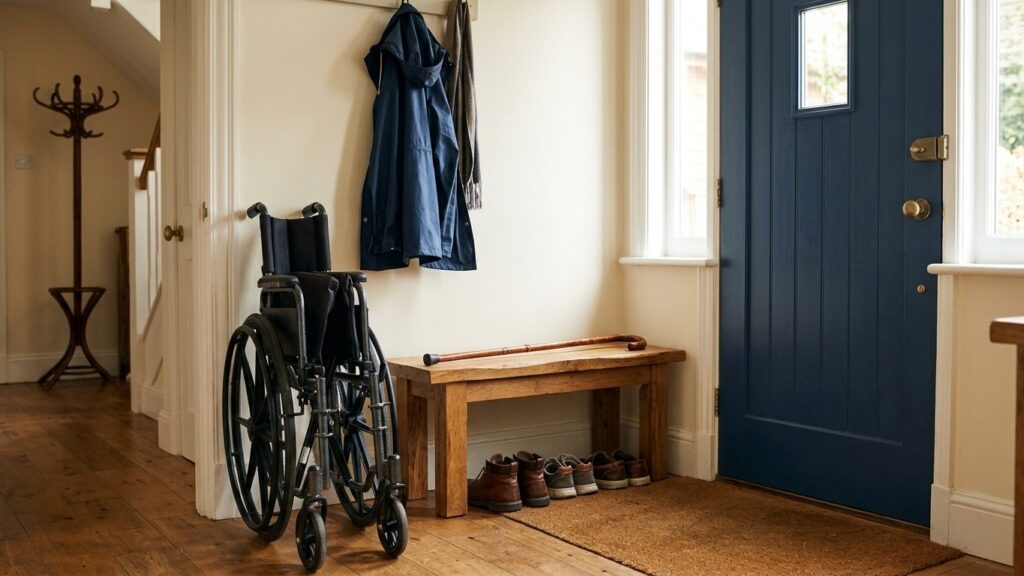
When disability data shrinks, real people drop out of the picture, and the loss is not spread evenly. The AP reports that some advocates and researchers estimate that as many as a quarter of wheelchair users, and “more than a third of people who are blind or deaf,” could be miscategorized as not disabled under the new design.
People with intellectual and developmental disabilities could be hit hardest. STAT reports that a recent paper co-authored by CDC statisticians suggests the survey could miss 75% of people with intellectual and developmental disabilities.
“We just won’t know any of that anymore,” Scott Landes, a Syracuse University sociology professor who researches people with disabilities, told the AP. To STAT, he described the choice in front of researchers this way: “You’re making us choose between bad and worse.”
04
Why the CDC says it is changing the survey
The CDC’s redesign page says the changes respond to “rising costs, growing difficulty in reaching households.” It says the new questionnaires aim to “improve the measurement of contemporary health topics” and “reduce respondent burden through shorter and less complex instruments.”
Stephen Blumberg, the CDC official who oversees the survey, told the AP that “People are busy,” and that “Fewer people see sharing information with the government as their civic duty.” The redesign should bring the interview down to about half an hour, the AP reports. A shorter interview may be easier to answer, but advocates say it comes at the cost of disability data that cannot be gathered anywhere else.
STAT reports that a spokesperson for the Department of Health and Human Services declined to explain why questions tracking certain disabilities were removed, but indicated the changes were driven by a push to lower the cost of data collection.
05
Words to know
- Disability data: information that shows how many people are disabled, what barriers they face, and how their health and lives compare with everyone else’s.
- National Health Interview Survey (NHIS): the CDC’s long-running household survey of Americans’ health, carried out by Census Bureau workers.
- Washington Group Short Set: a set of six questions used in many countries that asks about difficulty seeing, hearing, walking or climbing steps, remembering or concentrating, self-care, and communicating.
- Functional disability: difficulty doing basic activities, which is what the short set measures, rather than the supports a person uses or the condition behind it.
- Public comment: a chance for anyone to tell a federal agency what they think about a proposal before it is final. Comments go into the public record.
- Docket: the file that holds a proposal and every comment on it. This one is CDC-2026-1387.
06
Why disability data matters
Data can sound abstract. It is not. Disability data is how the country learns whether disabled people can see a doctor, afford medicine, keep a job or live at home. It is how researchers notice when a policy change hits disabled people harder than everyone else, and how advocates prove it.
“Data collection isn’t that sexy, but it’s absolutely essential for decision-making, right?” Katy Neas, CEO of The Arc, told STAT. She called the changes a “head-scratcher.” Jean Hall, a disability scholar and professor emerita at the University of Kansas, said, “It just feels like there’s one hit after another.”
Without good disability data, harm becomes harder to see, and harder to prove when advocates ask lawmakers to fix it. If a change in Medicaid, transit or housing leaves disabled people worse off, and no national survey asks the right questions, the harm can be real and still invisible in the numbers that drive policy.
07
Disability data in a hard season
Jean Hall’s words to STAT, “one hit after another,” describe more than this survey. This fall, the federal government asked a court to erase the integration mandate from its Section 504 rules, and the office that runs special education began moving to HHS without a permanent leader. Federal Medicaid changes are already arriving in states.
Each of those changes will affect disabled people’s health, homes and schooling. Disability data is how anyone would measure that effect. A survey that asks fewer questions about wheelchairs, hearing aids, fatigue and memory would make it harder to see whether these policy changes are helping or hurting.
That is the deeper reason advocates are pushing back. Cutting disability data does not cut disability. It only makes disabled people’s lives harder to see at the moment more of those lives are being reshaped by policy.
If you care about any of the other changes this year, the comment on this survey is one of the simplest things you can do. It protects the disability data that will show, years from now, what those changes did.
08
What the CDC would keep
The proposal does not erase disability from the survey entirely, and it is worth being precise. The Federal Register notice says that in 2027, questions on social functioning and age of disability onset will remain, along with questions on vision and other difficulties with taste, smell, hearing and communication.
For 2028, the draft keeps the Washington Group Short Set as its foundation for disability data. The concern from advocates is not that disability disappears from the survey. It is that the survey would see a narrower slice of disabled life, and miss many of the people who most need to be counted.
09
What happens after October 20
The October 20 deadline closes the first round of comments, not the whole process. Under the federal Paperwork Reduction Act, an agency that wants to collect information from the public usually publishes a first notice with 60 days for comment, then a second notice with 30 more days when it sends the plan to the White House Office of Management and Budget for approval.
That means there will likely be another chance to weigh in on disability data before the 2028 survey is final. Watch for a second Federal Register notice on the National Health Interview Survey, and for any sign that the CDC has restored disability questions in response to public comments.
It also means comments filed now matter. They are the record the CDC must respond to, and the record advocates, researchers and members of Congress will point to if the final survey still drops the disability data people asked to keep.
10
Disability data and the people behind it
Every number in a health survey stands for a person who answered a question. When the survey asks whether someone uses a hearing aid, it could be asking about a grandmother who missed half of every family dinner before she got hers. When it asks about trouble climbing stairs, it could be asking about a man who has not been upstairs in his own home in years.
Disability data is how those stories add up to something policymakers cannot ignore. Without it, disabled people are left to prove their needs one case at a time, while decisions about budgets and programs are made using numbers that leave them out.
That is why the comment period matters. It is not only a technical debate about survey design. It is a decision about whether disabled lives stay visible in the country’s health statistics.
11
How to comment by October 20

Public comments are part of the official record, and the CDC must consider them. According to the CDC, comments on the redesign are due by October 20, 2026, under docket number CDC-2026-1387.
- Online: open the Federal Register notice at regulations.gov, document CDC-2026-1387-0001, and click the blue “Comment” button.
- By mail: Jeffrey M. Zirger, Information Collection Review Office, Centers for Disease Control and Prevention, 1600 Clifton Road, N.E., MS-D74, Atlanta, Georgia 30329.
- Questions: email healthsurveys@cdc.gov.
Your comment does not need to be technical. Say who you are, which questions matter to you and why. If you use a hearing aid, a cane, a wheelchair or a scooter, or live with fatigue or memory loss, say that these questions describe your life, and that losing them means losing disability data about people like you.
12
A sample comment you can adapt
If you are not sure where to start, here is a short comment you can change to fit your own life:
“I am a disabled person [or: I love someone who is disabled]. I am writing about docket CDC-2026-1387. Please keep the National Health Interview Survey questions about difficulty walking and climbing stairs, memory, fatigue, and the use of hearing aids, canes, wheelchairs and scooters.
These questions describe how people like me actually live. Without them, disability data will undercount us, and policies will be made as if we are not here. Please keep disability data strong in the 2028 survey.”
Keep it in your own words if you can. Personal comments carry weight because no one else can write them for you.
A few tips make any comment stronger. Name the docket number, CDC-2026-1387, so it lands in the right file. Name the specific questions you want kept, such as those on hearing aids, wheelchairs, fatigue or memory. Explain in a sentence or two what those questions show about your life that the short set would miss.
Keep it respectful, because comments are public. And if your family includes more than one disabled person, each of you can comment. Every comment adds to the record that disability data matters to the people it describes. If you need help writing or submitting a comment, ask a friend, a caseworker or a local disability organization to sit with you.
13
What Bloom is doing
Bloom’s newsroom will report on what the CDC decides after the comment period closes, and on any other change to how disabled people are counted. You can follow that reporting in our Disability Advocacy newsroom, along with our story on the caregiving crisis, which is exactly the kind of harm that good disability data helps reveal.
Bloom’s disability advocacy work rests on a simple idea: disabled people deserve to be seen, and that starts with being counted accurately and fully.
And if this news leaves you feeling erased, you are not. Faith in Bloom offers pastoral care with no condition attached.
14
Frequently Asked Questions
It is the country’s longest-running household health survey, first conducted in 1957. Census Bureau workers run it for the CDC, it costs about $40 million a year, and about 30,000 households answer it each year, the AP reports.
The AP reports that questions about memory, fatigue, arthritis, difficulty walking and climbing stairs, and the use of hearing aids, canes, wheelchairs and scooters are among those proposed for removal. STAT reports the adult questionnaire would drop from 482 questions to 150.
The CDC says the redesign responds to “rising costs, growing difficulty in reaching households,” and aims to shorten the questionnaire. An HHS spokesperson indicated the changes were driven by a push to lower costs, STAT reports.
Yes, in a narrower way. The Federal Register notice says the 2028 draft keeps “foundational measures of disability and functional status based on the Washington Group Short Set.” Advocates say that will miss many disabled people.
Advocates and researchers estimate that up to a quarter of wheelchair users and more than a third of people who are blind or deaf could be counted as not disabled, the AP reports. A paper co-authored by CDC statisticians suggests the survey could miss 75% of people with intellectual and developmental disabilities, according to STAT.
Comment by October 20, 2026, on regulations.gov under docket CDC-2026-1387 (document CDC-2026-1387-0001), or by mail to the CDC’s Information Collection Review Office in Atlanta. Questions go to healthsurveys@cdc.gov.
Disability data shows whether disabled people can get care, work and live at home, and whether policy changes hurt them. Without it, harm to disabled people can be real but invisible in the numbers that drive decisions.
No. Say who you are and which questions describe your life. Personal comments about hearing aids, mobility aids, fatigue or memory carry weight because they show what the survey would miss.
Sovereignty over Servitude. 🌸
Support this work
Everything Bloom publishes is free to read and free to share.
Bloom Ministries is a registered 501(c)(3) in Salem, Oregon. Monthly giving is what lets us say yes before the money is in hand.
Keep reading
 Disability advocacy · 17 November 2026Ambulance Company AMR to Pay $2.2 Million Over No-Beard Policy
 Trans advocacy · 16 November 2026Online Passport Pilot: What Trans and Disabled Applicants Need to Know
 Disability advocacy · 16 November 2026Medicaid Expansion Is Back on the Table in Four States. Can It Pass?
