

Newsroom·Justice for survivors·News
World Court Rules Myanmar Committed Genocide Against the Rohingya
For the first time, the World Court has found a country responsible for genocide. On November 19, the International Court of Justice ruled 9-6 that Myanmar committed genocide against the Rohingya in 2017 and must make reparations.
 Pastora Tori Matthews
Nine years after Myanmar’s military drove hundreds of thousands of Rohingya from their homes, the world’s highest court has found that what was done to them was genocide. On Thursday, November 19, 2026, the International Court of Justice ruled 9-6 that Myanmar committed the Rohingya genocide, the first time the court has ever found a country responsible for that crime, according to Al Jazeera.
The court ordered Myanmar to prosecute those responsible, let survivors go home safely and compensate the Rohingya people, UN News reported. The judgment is final and can’t be appealed. For more than a million Rohingya refugees, it is the first ruling by the world’s top court that they were targeted for destruction as a people.
01
What the World Court decided
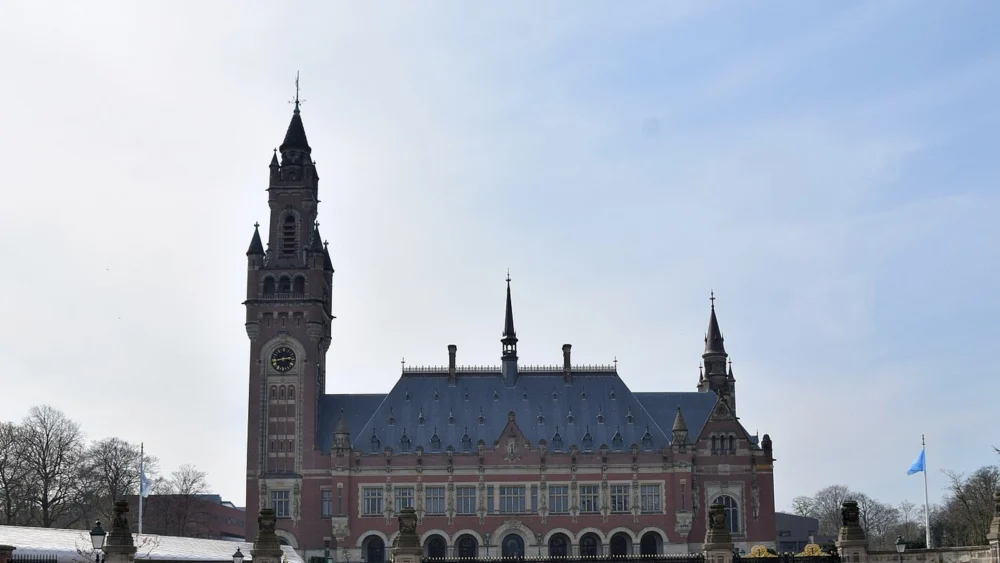
The International Court of Justice is the principal court of the United Nations, and it sits in the Peace Palace in The Hague. Its president, Judge Yuji Iwasawa of Japan, read the Rohingya genocide judgment aloud in a session that lasted three hours, UN News and Al Jazeera reported.
Nine of the court’s 15 judges found that Myanmar “has committed genocide against the Rohingya group in northern Rakhine state, in violation of its obligations under the Genocide Convention,” Iwasawa said, according to Al Jazeera. In the Rohingya genocide judgment, the court also found that Myanmar failed to prevent and to punish genocide, according to UN News.
The Rohingya genocide case was brought by The Gambia, a small country in West Africa, under the 1948 Genocide Convention. Al Jazeera reported that the ruling is only the fourth time since the Holocaust that an international court has found that genocide was committed, and the first time a country itself has been held responsible.
02
The Rohingya genocide findings, in brief
The court’s findings, as UN News and Al Jazeera reported them, include these:
- Myanmar’s security forces “and other State organs” intentionally committed three acts banned by Article II of the Genocide Convention: killing members of the group, causing serious bodily or mental harm, and imposing measures intended to prevent births within the group.
- An estimated 10,000 Rohingya were killed during the 2017 military operations, which Myanmar called “clearance operations.”
- Nearly 400 villages, about 40 percent of the almost 1,000 villages in three townships of northern Rakhine State, were partly or totally destroyed.
- Security forces “killed thousands of Rohingya civilians, perpetrated widespread acts of sexual violence,” the court said, and committed acts of extreme violence against children.
- High-ranking officials spread speech portraying the Rohingya as “subhuman and a violent threat,” Al Jazeera reported.
- Destroyed villages were cleared, built over and resettled by people who were not Rohingya, so those who fled had little or no way to return.
In the Rohingya genocide ruling, the court said the “only reasonable inference” from the evidence was that Myanmar’s forces intended to destroy a “substantial part” of the Rohingya, according to Al Jazeera. That intent is what turns mass atrocity into genocide under the law.
03
Who the Rohingya are
The Rohingya are a largely Muslim ethnic group whose home is mainly Rakhine State, in western Myanmar on the border with Bangladesh. Before 2017, about 1.4 million Rohingya lived in Myanmar, a minority among the country’s 137 ethnic groups, according to Al Jazeera.
Myanmar’s government doesn’t recognize them and calls them “illegal migrants” from Bangladesh. A 1982 citizenship law left most Rohingya stateless, Al Jazeera reported, and successive governments, civilian and military, kept them excluded.
That history matters to the Rohingya genocide case. The Genocide Convention protects national, ethnic, racial and religious groups from being destroyed as groups. The Rohingya were set apart by their faith, their ethnicity and their lack of citizenship all at once.
04
2017: the operations at the heart of the Rohingya genocide case
In 2013, an armed group called the Arakan Rohingya Salvation Army, or ARSA, was formed. In late 2017, after ARSA attacked police posts, Myanmar’s armed forces launched what they called clearance operations across northern Rakhine State, Al Jazeera reported.
Myanmar has argued throughout the Rohingya genocide case that its military was responding to armed attacks. The court heard from one witness called by Myanmar, who described an ARSA attack that allegedly killed around 100 civilians, according to UN News. The court also heard three witnesses from the Rakhine villages of Min Gyi, Chut Pyin and Maung Nu.
The 2017 operations drew worldwide condemnation as some 700,000 Rohingya fled across the border to Bangladesh, according to UN News. Al Jazeera put the number higher, at more than 730,000. Thousands more died at sea on boats crossing the Bay of Bengal, Al Jazeera reported.
05
How the Rohingya genocide case reached The Hague
The Gambia, a Muslim-majority country, filed the Rohingya genocide case in November 2019 with the backing of the 57-member Organisation of Islamic Cooperation, Al Jazeera reported. Its legal team was led by then-Justice Minister Aboubacarr Tambadou, and The Gambia was itself emerging from years of repression under the dictator Yahya Jammeh.
Aung San Suu Kyi, then Myanmar’s civilian leader, came to The Hague in person to defend her country and called The Gambia’s claims “incomplete and misleading.” In January 2020, the court ordered Myanmar to take emergency measures to prevent genocide against the Rohingya.
At hearings in January 2026, The Gambia’s team, led by Justice Minister Dawda A Jallow, argued that Myanmar’s military “deliberately targeted” the Rohingya for “destruction,” Al Jazeera’s explainer reported. Myanmar, now led by Min Aung Hlaing, who commanded the 2017 crackdown and later seized power in the 2021 coup, denied the allegations.
06
Why genocide is so hard to prove
Genocide isn’t defined by how many people are killed. Under the Genocide Convention, it requires proof of a specific intent to destroy a national, ethnic, racial or religious group, in whole or in part. That bar is notoriously hard to clear, Al Jazeera explained, and until the Rohingya genocide ruling the court had never found it met by a country.
The court’s own history shows how high the bar is. In 2007, it found that the Srebrenica massacre in Bosnia was genocide, but held that Serbia didn’t commit it, only that Serbia failed to prevent it, the Associated Press reported. In 2015, in a case between Croatia and Serbia, the court found genocidal acts but no genocidal intent.
International lawyer Toby Cadman told Al Jazeera the court had never before ruled that a state had the specific intent to commit genocide. Oxford professor Janina Dill told the AP that the 9-6 split and the separate opinions “highlight the lingering doctrinal complexities.”
07
What the Rohingya genocide ruling orders Myanmar to do
The Rohingya genocide ruling orders Myanmar to repair what it did. According to UN News and Al Jazeera, Myanmar must:
- Stop any ongoing violations, including by passing laws that give full effect to the Genocide Convention.
- Investigate everyone reasonably suspected of genocidal acts and, where warranted, prosecute and punish them.
- Give assurances and guarantees that it won’t happen again.
- Allow the safe, voluntary and dignified return of displaced Rohingya, inside Myanmar or abroad, and reunite families.
- Return or replace damaged community property, search for the disappeared and ensure proper burials.
- Provide physical and psychological rehabilitation and protect the Rohingya from persecution.
- Compensate the Rohingya group and its members, with the amount to be decided later.
Myanmar must report to the court within two years on the restitution it has adopted and on the amount and form of compensation, UN News reported. The court will set compensation in a later phase of the case.
08
What Rohingya genocide survivors and advocates said
“For decades, the Burmese military tried to erase our identity, deny our existence, and dismiss our suffering,” said Wai Wai Nu, executive director of the Women’s Peace Network and a former political prisoner, according to Al Jazeera. She said the ruling “permanently shattered that state-sponsored lie.”
Yanghee Lee, a founding member of the Special Advisory Council for Myanmar, called it a “deeply emotional day for all Rohingya people,” adding that “justice has been decided, but not yet delivered.”
Before the ruling, Kyaw Min Sabber of the Rohingya Human Rights Initiative told Al Jazeera: “The Rohingya hope to receive justice and enjoy safety both inside and outside Myanmar.” Matthew Smith of Fortify Rights, who stood with survivors in the Peace Palace, said, “This is a huge day for the Rohingya people and all people of Myanmar.”
09
How governments and the UN responded to the Rohingya genocide ruling
UN Secretary-General António Guterres welcomed the Rohingya genocide judgment as a “powerful recognition of the Rohingya victims of genocide,” UN News reported. He said ending impunity in Myanmar remains essential to national reconciliation.
The Gambia called the Rohingya genocide ruling “a historic day for international justice” and urged Myanmar to comply “fully and without delay,” according to Al Jazeera. Britain said it would expel Myanmar’s defense attaché and called for an urgent UN Security Council session, Al Jazeera reported. Amnesty International said it hopes the ruling “marks the beginning of a long overdue process of accountability in Myanmar.”
Eleven countries joined the case in support of The Gambia: Canada, Denmark, the Netherlands, Germany, the Maldives, the Democratic Republic of the Congo, Slovenia, Ireland, Belgium, France and Britain, according to Al Jazeera.
10
Can the Rohingya genocide ruling be enforced?
The International Court of Justice can’t enforce its own rulings, Al Jazeera explained, but its judgments carry weight. The Gambia could now bring the case to the UN Security Council and ask for action.
Cadman told Al Jazeera that a lot depends on what comes next, including whether the Security Council takes it up and whether there are sanctions or other remedies. The judgment is binding on Myanmar as a party to the case, UN News reported.
11
A timeline of the Rohingya genocide case
These dates come from UN News, Al Jazeera and the Associated Press:
- 1982: A citizenship law leaves most Rohingya stateless.
- 2013: The Arakan Rohingya Salvation Army is formed.
- 2017: Myanmar’s military launches clearance operations; some 700,000 Rohingya flee to Bangladesh.
- November 2019: The Gambia files its case at the International Court of Justice, backed by the Organisation of Islamic Cooperation.
- January 2020: The court orders Myanmar to take emergency measures to prevent genocide.
- 2021: A military coup overthrows Aung San Suu Kyi’s elected government.
- January 2026: The court hears the case on the merits.
- November 19, 2026: The court finds Myanmar responsible for genocide, 9-6.
- Within two years: Myanmar must report on restitution and compensation.
12
Where Rohingya refugees are now
More than 1.3 million Rohingya remain displaced across South and Southeast Asia, including 1.2 million in camps in Cox’s Bazar, Bangladesh, according to UN figures cited by Al Jazeera. About 520,000 remain in Myanmar under severe restrictions.
Going home is very uncertain. Myanmar’s 2021 coup set off a civil war that has killed an estimated 100,000 people and displaced more than 3.5 million, Al Jazeera reported, and fighting between the army and the Arakan Army in Rakhine State has made conditions worse.
That is why survivors talk about the Rohingya genocide ruling as a beginning. Smith said reparations must be shaped by survivors themselves and must include safe return, citizenship and trauma support. “No amount of money can undo a genocide, but meaningful reparations can help restore rights, dignity, and a measure of justice,” he said.
13
What happens next
Myanmar now owes the court a report on how it will make amends, and the court will set compensation in a later phase. The Gambia may ask the Security Council to act. Advocates hope the Rohingya genocide ruling will push efforts to hold individual perpetrators criminally accountable, which is a separate process from this case between states.
The Rohingya genocide judgment will also shape other genocide cases. The court has more cases on its docket under the Genocide Convention, the AP reported, and lawyers will study how it treated the question of intent.
14
What you can do
- Read what the court found, as UN News reported it, and share the facts rather than graphic images.
- Learn the history from Al Jazeera’s explainer on what the Rohingya genocide ruling means for the Rohingya people.
- Listen to Rohingya-led voices, such as the Women’s Peace Network and the Rohingya Human Rights Initiative, quoted in this report.
- Ask the people who represent you what they will do to support accountability and safe return for Rohingya refugees.
- If stories of mass violence stir up your own trauma, reach out for support before you read more.
15
Why this matters for Bloom’s readers
Bloom serves people who know what it is to be treated as less than human because of who they are. The Rohingya genocide ruling says, in the most authoritative court on earth, that a government can’t erase a people and call it security.
Bloom’s Bloom Charter declares the dignity of every person, and Bloom has reported on what the law owes people who flee danger, from Venezuelans with Temporary Protected Status to people facing 10-day immigration appeal deadlines. We’ll keep following the Rohingya genocide case.
16
What Bloom is doing
Bloom stands with the survivors of the Rohingya genocide, who waited nine years to hear a court say the truth out loud. I believe no faith, no ethnicity and no lack of papers makes anyone less than a whole person, and the world should keep its word to protect them.
News of mass violence can stir up old wounds. If it does, Bloom’s crisis support page lists people you can call any hour, including RAINN at 800-656-4673 for survivors of sexual violence and 988 by call or text. Bloom’s support groups are a place to be known, and Faith in Bloom offers pastoral care with no condition attached.
A monthly gift keeps Bloom’s newsroom reporting on human dignity everywhere, and a one-time gift helps too.
17
Frequently Asked Questions
On November 19, 2026, the International Court of Justice ruled 9-6 that Myanmar committed genocide against the Rohingya in northern Rakhine State and failed to prevent and punish it. It ordered prosecutions, guarantees of non-repetition, restitution and compensation.
Yes. It is the first time the International Court of Justice has found a state responsible for committing genocide. In 2007 it found Serbia failed to prevent the Srebrenica genocide but didn’t commit it.
The Rohingya are a largely Muslim ethnic group from Rakhine State in western Myanmar. A 1982 law left most of them stateless, and about 1.2 million now live in camps in Bangladesh.
The court found that an estimated 10,000 Rohingya were killed in the 2017 operations, according to UN News. Nearly 400 villages were partly or totally destroyed.
No. The judgment is final, binding on the parties and without appeal, UN News reported.
Not on its own. The court has no enforcement power, but The Gambia could ask the UN Security Council to act.
Myanmar must report to the court within two years on restitution and compensation. The court will decide the amount and form of compensation in a later phase.
Sovereignty over Servitude. 🌸
Support this work
Everything Bloom publishes is free to read and free to share.
Bloom Ministries is a registered 501(c)(3) in Salem, Oregon. Monthly giving is what lets us say yes before the money is in hand.
Keep reading
 Justice for survivors · 20 November 2026Argentine Court Rules Three Women Were Killed for Being Lesbians
 Justice for survivors · 20 November 2026Jury Convicts 4 Men in Joanne Young Case: No One Can Consent for You
 Arizona Legislature · 20 November 2026Survivors Ask Supreme Court: Who Decides What Clergy Must Report?
