

Newsroom·Legislation·News
Judge Blocks Connecticut’s ICE Mask Ban and Use-of-Force Law
Connecticut can't make federal immigration agents unmask, wear a name tag or answer to state prosecutors for deadly force, a federal judge ruled Friday. The state's own police are still bound, and Oregon built its law differently.
 Pastora Tori Matthews
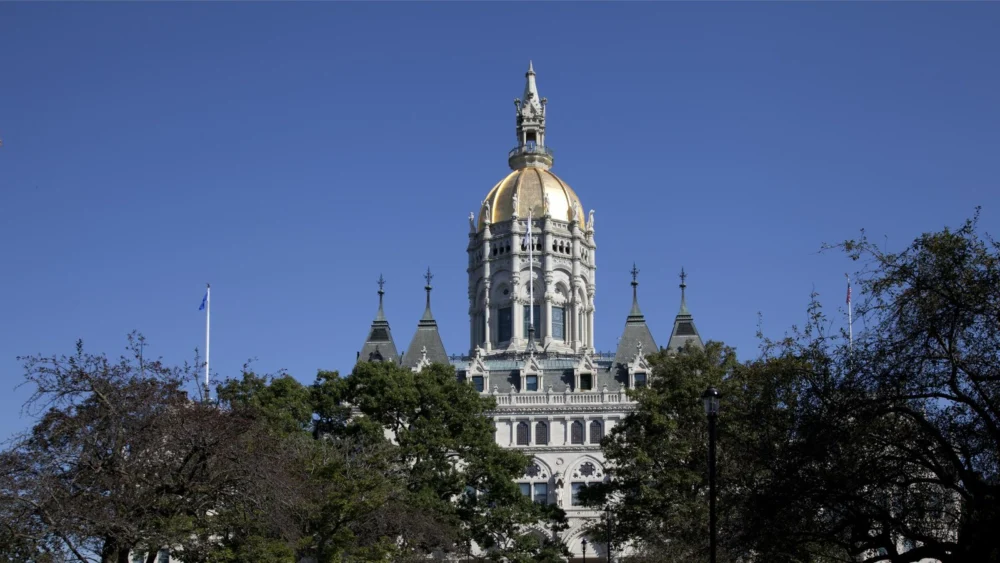
Connecticut's legislature passed the mask ban in May.
Federal immigration agents working in Connecticut can keep their faces covered and their names off their uniforms, a federal judge ruled Friday, blocking the state’s mask ban and its new limits on deadly force for every federal officer in the state. U.S. District Judge Vernon D. Oliver found that the four challenged sections of Connecticut’s law, Public Act 26-14, passed as SB 397, likely violate the Supremacy Clause, the part of the Constitution that makes federal law supreme over state law.
The order, filed November 20, 2026, in Hartford, is a preliminary injunction, not a final judgment. It changes nothing for Connecticut’s own police, who still must follow the mask ban and the state’s rules on force. But a law Connecticut passed after federal agents shot and killed two protesters in Minneapolis can’t now be used to unmask, investigate or prosecute the federal officers it was written for, at least while the case goes on.
01
What the judge decided about Connecticut’s mask ban
Judge Oliver granted most of what the Justice Department asked for in its lawsuit, United States v. Connecticut. His 39-page memorandum and order bars the State of Connecticut, Gov. Ned Lamont and Chief State’s Attorney Patrick Griffin from enforcing Sections 3, 4, 5 and 6 of the law “as to federal officers, agents, and employees.” It bars Inspector General Eliot Prescott, whose office reviews deadly force by police, from enforcing Sections 3, 4 and 5.
Two pieces went Connecticut’s way. The judge dismissed Attorney General William Tong from the case, finding he has no power to enforce the challenged sections, so there’s nothing to order him to stop. And he refused to enjoin Prescott on Section 6, the mask ban itself, because the inspector general has no power to enforce it anyway.
The heart of the ruling is old constitutional law. The Supremacy Clause bars states “from interfering with or controlling the operations of the Federal Government,” Oliver wrote, quoting the Supreme Court, and federal officers “are immune from state prosecution when acting within the scope of their federal authority.” Under that rule, he concluded, Connecticut can’t enforce its mask ban or hold federal agents to its own standards for names or force.
02
The four sections the ruling blocks
The mask ban gets the headlines, but most of the order is about the law’s rules on force. Here’s what each blocked section does, as the judge described it:
- Section 3 orders an investigation whenever an officer’s use of force causes a death, or a person dies in an officer’s custody, and gives state investigators “the unrestricted right to access the scene and collect evidence,” even when only federal officers were involved.
- Section 4 sets Connecticut’s test for justified force. Force is justified “only” when an officer’s “actions are objectively reasonable,” and deadly force requires, among other things, a reasonable belief that no reasonable alternative exists and a look at whether the officer tried to de-escalate.
- Section 5 lets the inspector general prosecute an officer whose use of force the office finds unjustified under Section 4.
- Section 6 is the mask ban. It bars officers enforcing state or federal law from wearing “any facial covering or personal disguise” while dealing with the public, with exceptions for health, safety and an approved undercover assignment, and requires a badge and name tag during planned arrests and other public contacts. Breaking it is a class D misdemeanor, punishable by up to 30 days in jail.
Section 6 also strips an officer who knowingly breaks the mask ban of “any privilege or immunity” in a civil lawsuit for damages. The law reached federal agents through its definition of “peace officer,” which expressly includes federal law enforcement officers. All four sections took effect immediately when the law was signed.
03
Why the judge says the Supremacy Clause wins
Oliver opened with a nod to the country’s mood. He wrote that “many Americans have expressed their opposition to the escalation of immigration enforcement in their communities,” and that some states have answered with laws meant to curb what is “perceived as an abuse of federal law enforcement power.” Connecticut, he wrote, “is one of those states.”
To explain why the mask ban can’t stand, he walked back to the founding. The opinion recounts how Congress, weak under the Articles of Confederation, had to flee Philadelphia in 1783 when unpaid soldiers threatened it and Pennsylvania refused to protect it. It quotes Alexander Hamilton’s warning that without the Supremacy Clause, federal law would “amount to nothing.”
On the use of force, the judge found real harm in the threat of state charges. Federal officers “may hesitate before acting in intense, dangerous situations that require immediate decisive action,” he wrote, or try to follow Connecticut’s standard instead of their federal training. On the mask ban and name tags, he found the law “places federal officers and their families at a heightened risk of retributive attacks.”
He also rejected the idea that good intentions could save the law. However “well-intentioned or well-reasoned SB 397 may be,” he wrote, “the Supremacy Clause overrides Connecticut’s policy arguments.” He closed by borrowing a line from Justice Neil Gorsuch’s concurrence in a 2026 Supreme Court case, predicting that “those disappointed by today’s result will appreciate the [Supremacy Clause] for the bulwark of liberty it is.”
04
What the ruling does not do
The order is narrower than the headlines. It’s a preliminary injunction, not a final decision, and it applies only “as to federal officers, agents, and employees.” Connecticut’s state and local police remain bound by the mask ban, the badge-and-name-tag rule and the new use-of-force standard, WFSB reported.
It also doesn’t make federal agents untouchable. Connecticut’s own brief argued that “federal employees do not enjoy blanket immunity from criminal prosecution,” and the judge agreed: “It is true,” he wrote. Federal officers “will always be subject to state prosecution” when their actions exceed federal authority, the order says, and federal immunity covers only conduct within that authority that was “necessary and proper.”
And it doesn’t decide whether masked enforcement is wise. The court “does not discount the importance of open and transparent law enforcement,” Oliver wrote, citing cases on the public’s interest in accountable police. His point was narrower: Connecticut, however good its reasons, can’t be the one to impose those rules on federal agents.
05
How Connecticut’s mask ban got here: a timeline
- Early 2026: Federal agents shoot and kill two protesters in Minneapolis during a large enforcement operation, sparking outrage in Connecticut and across the country, CT Insider reported.
- February 19: A federal judge blocks California’s mask ban for federal agents.
- March 5: Oregon lawmakers approve House Bill 4138, a mask and identification law for every officer in the state.
- April: The Ninth Circuit halts California’s rule that officers display their agency and name or badge number.
- May 1 and May 4: Connecticut’s legislature passes SB 397, and Lamont signs it. The mask ban and the force rules take effect immediately.
- Within days: The Justice Department sues Connecticut, citing the Supremacy Clause.
- August: ICE agents, many of them masked, arrest more than 100 people over several days in Danbury and other cities near the New York line.
- Early September: Both sides argue the case at a hearing in Hartford.
- October 15: The Justice Department sues Portland over the city’s own mask and identification policy.
- November 20: Oliver blocks the four sections as applied to federal officers.
- Monday, November 23: A hearing is set in the federal government’s suit against New Jersey’s law.
06
What each side says about the mask ban
Lamont’s office didn’t soften its reaction. “We are disappointed by today’s ruling and condemn ICE’s treatment of Connecticut residents,” spokesperson Cathryn Vaulman said in a statement to CT Insider. “Masked, armed agents without visible badges have surrounded cars in traffic and stormed homes and workplaces,” she said. The law “was meant to hold federal law enforcement officers to the same standards of accountability as local and state police.”
Tong’s office is “reviewing the decision and evaluating next steps,” spokesperson Elizabeth Benton said. The Justice Department, which brought the case, didn’t immediately respond to CT Insider’s request for comment.
The Department of Homeland Security, ICE’s parent agency, said in an unsigned statement that only federal agencies can investigate what federal officers do on duty. It said agents wear masks “to protect themselves and their families from real-world threats including agitators,” and added, “we will not abide by unconstitutional bans.”
Even before Friday, the law had little bite in practice. ICE agents openly defied it, some local officials said it “has no teeth,” and Lamont himself said the state wouldn’t arrest federal officials for breaking it, CT Insider reported.
07
Other states have hit the same wall
Connecticut’s mask ban isn’t the only one to lose in court. Oliver’s ruling follows similar decisions by federal courts in California, New York and Pennsylvania, CT Insider reported. The Justice Department has also sued over mask and identification rules in New Jersey, Maryland, Philadelphia, Denver, Milwaukee and St. Paul, according to OPB.
California’s case set the pattern. A federal judge blocked its mask ban in February, and in April a unanimous Ninth Circuit panel halted its identification rule, CalMatters reported. That rule, unlike a federal-only mask ban, reached federal, state and local officers alike, the Oregon Capital Chronicle noted.
Judge Mark J. Bennett’s opinion answered the argument that treating every officer the same should save a state law. The clause “prohibits states from enacting a law that directly regulates federal operations even if the law regulates state operations in the same manner,” he wrote in the panel’s decision. Oliver relied on the same California case in finding that Connecticut’s law harms the United States.
08
Oregon’s mask ban was built differently
Oregon wrote its law with these cases in view. House Bill 4138 applies to local, state and federal officers alike and requires them to display a name or identifying number, their agency and a badge, OPB reported in March. It limits face coverings, with exceptions for undercover work and for health and safety. Sen. Wlnsvey Campos told the Senate that people stopped by an officer “deserve to know who they are and who they work for.”
The bigger difference is the penalty. Oregon’s mask ban creates no crime at all. It gave agencies 180 days to adopt policies that generally bar masking, and it lets Oregonians go to court for an order against an agency that fails to adopt or follow one. Rep. Farrah Chaichi, who sponsored it, described the penalty as a court telling an agent to “knock it off and stop doing this action that is illegal.”
Washington’s mask ban took a civil route too. Its law encourages people to sue individual officers in their official capacity when a masked officer detaining them won’t give a name or badge number, the Oregon Capital Chronicle reported. Legal observers told the outlet that relying on civil suits is one reason the Justice Department, as of June, hadn’t challenged either state’s law.
Portland’s own mask ban is already in court. The City Council adopted its mask ban and identification policy 8-4 in May, and the Justice Department sued the city on October 15. “Laws like these impede federal law enforcement’s ability to keep Oregonians safe,” U.S. Attorney Scott Bradford said. The complaint doesn’t address Oregon’s statewide law, OPB reported.
The same tension between state and federal power runs through Bloom’s report on how the sale of the Tacoma ICE detention center to the federal government could shut out Washington’s health inspectors. Friday’s ruling doesn’t decide any Northwest case, but it adds one more federal judge to the list holding that states can’t police federal agents directly.
09
Why names and faces matter
Strip away the doctrine and the question is simple: who is standing in front of you? Portland Councilor Sameer Kanal argued that identifiable officers “promote transparency in their duties and strengthen trust between agencies and the communities they serve.” The judge himself called open and transparent law enforcement important.
The federal government sees the same masks as protection. DHS says agents face real threats, and the judge agreed that unmasking raises the risk of retaliation against officers and their families. Under Friday’s ruling, rules for how federal agents dress, identify themselves and use force have to come from federal law, which means Congress and federal agencies, not state capitols.
For families who have watched masked arrests on their own streets, a ruling against a mask ban can land hard. A name on a uniform is a small thing until you need it: to file a complaint, to name a witness, to tell a court who did what. Wanting that isn’t hostility to law enforcement. It’s the ordinary accountability every officer owes the people they serve.
10
What happens next for the mask ban
The case over Connecticut’s mask ban goes on in Hartford, since a preliminary injunction isn’t a final decision. Tong’s office says it is reviewing the decision and evaluating next steps. In New Jersey, a hearing on the federal government’s challenge to that state’s law is set for Monday, CT Insider reported.
Congress may matter more than any courtroom. Members of Connecticut’s delegation have vowed stricter oversight of ICE when the new Congress takes over in January, CT Insider reported. A federal rule for federal agents is exactly the kind of rule the Supremacy Clause leaves standing.
In the Northwest, watch the Portland case and any challenge to Oregon’s or Washington’s laws. Bloom will report each ruling as it comes.
11
What you can do
A ruling about federal power can leave people feeling powerless. You aren’t. Here’s what still holds after the mask ban ruling:
- Know which rules still bind whom. In Connecticut, state and local officers must still follow the mask ban, wear a badge and name tag, and meet the state’s use-of-force standard. Only federal officers are covered by Friday’s injunction.
- Know your rights before you need them. “Regardless of your immigration status, you have guaranteed rights under the Constitution,” the ACLU’s know-your-rights guide says. Read it with your family and keep it handy.
- Keep a record. If you witness an arrest, note the time, the place and any agency markings you can see, from a safe distance. Records help lawyers, reporters and courts later.
- In Oregon, use the civil remedy. House Bill 4138 lets Oregonians seek a court order against an agency that fails to adopt or follow a no-masking policy. A legal aid office or civil rights group can explain how.
- Read the ruling yourself. The full order is public, and its opening pages lay out exactly what Connecticut’s law requires and why the judge blocked it.
- Don’t carry fear alone. If enforcement in your community has left you afraid, Bloom’s crisis support page lists places to turn right now, and 988 answers by call or text.
12
What Bloom is doing
Bloom reads the record so you can see what a ruling actually decides, and what it leaves standing. We’ve followed the clash between federal immigration enforcement and the courts from a Maine judge’s order freeing an 18-year-old seized without a warrant to a contempt finding against ICE officials in Colorado, and we’ll report Connecticut’s next move, New Jersey’s hearing and the Portland case.
If the masked arrests in your town have shaken your sense of safety, Faith in Bloom offers pastoral care with no condition attached. If this reporting helps you, a monthly gift keeps it steady for the long haul, and a one-time gift helps too.
13
Frequently Asked Questions
Not permanently. On November 20, 2026, U.S. District Judge Vernon D. Oliver issued a preliminary injunction barring Connecticut from enforcing its mask ban and three use-of-force sections against federal officers while the case continues.
Yes. The injunction covers only federal officers, agents and employees. State and local police remain bound by the mask ban, the badge-and-name-tag rule and the state’s use-of-force standard.
He found it likely violates the Supremacy Clause, which bars states from regulating federal operations and makes federal officers immune from state prosecution when they act within their federal authority.
Only for conduct outside their federal authority. The order says federal officers “will always be subject to state prosecution” when they exceed that authority, but they can’t be charged under the blocked sections.
Not directly. Oregon’s House Bill 4138 covers all officers and carries no criminal penalty, relying on court orders instead. The Justice Department sued Portland over the city’s own policy in October.
The lawsuit continues in federal court in Hartford. Attorney General William Tong’s office says it is reviewing the decision, and a hearing on New Jersey’s similar law is set for November 23.
Sovereignty over Servitude. 🌸
Support this work
Everything Bloom publishes is free to read and free to share.
Bloom Ministries is a registered 501(c)(3) in Salem, Oregon. Monthly giving is what lets us say yes before the money is in hand.
Keep reading
 Wisconsin Legislature · 21 November 2026Judge Lets Former Students’ Title IX Suit Against Oconto Falls Proceed
 Legislation · 21 November 2026Paris Court Convicts 3 Officers of Racist Assault on Michel Zecler
 Ohio Legislature · 21 November 2026Ohio Judge Won’t Let Damages Cap Shrink Rape Survivor’s $98M Award
