

Newsroom·Legislation·News
Denmark’s Top Court Says ‘Ghetto Law’ Evictions Weren’t Discrimination
Families forced from their homes under Denmark's ghetto law lost their final appeal on November 23, when the Supreme Court found no ethnic discrimination. Tenants' groups say some 11,000 people must move by 2030.
 Pastora Tori Matthews
Families who were ordered out of their apartments at the Nøjsomhed estate in Helsingør, north of Copenhagen, lost their final appeal in Denmark on Monday, November 23, 2026. Denmark’s Supreme Court ruled that ending their leases under the country’s so-called “ghetto law” wasn’t ethnic discrimination. The court upheld a 2022 ruling by the Eastern High Court against seven of the evicted tenants.
The decision keeps the ghetto law in force for every neighborhood it reaches. Tenants’ associations estimate that some 11,000 people across Denmark will have to leave their homes by 2030 under it. It also puts Denmark’s highest court on a different footing from the European Court of Justice, which said in December 2025 that the ghetto law could amount to discrimination. Here’s what the court decided, why, what it means for the people who live in these homes, and what comes next.
 News · 23 Nov 202621 States Sue HUD to Stop Housing Aid Cutoff for Mixed-Status FamiliesAbout 20,000 families could lose federal housing help on December 14 because one member lacks eligible immigration status. On November 23, 21 states…
 News · 21 Nov 2026Paris Court Convicts 3 Officers of Racist Assault on Michel ZeclerThree officers beat Michel Zecler in his own Paris studio, then wrote a report blaming him. On November 20, a court found the assault racist and the…
 News · 20 Nov 2026Judge Strikes HUD's $1.3 Billion Shift Away From Permanent HousingA federal judge ruled Friday that HUD broke the law when it steered $1.3 billion in Continuum of Care homelessness money away from permanent housing.…
 News · 13 Nov 2026HUD's Mixed-Status Families Rule: What Changes on December 14HUD's final Section 214 rule takes effect December 14. Every assisted household member, at any age, must document citizenship or eligible status, and…
01
The ghetto law ruling at a glance
- The ruling: Denmark’s Supreme Court (Højesteret) found the Nøjsomhed evictions were neither direct nor indirect discrimination based on ethnic origin.
- The homes: the housing association Boliggården ended 91 leases to keep the estate from being classed a “hard ghetto,” Reuters reports.
- The law: areas where more than half of residents are counted as “non-Western” can be forced to cut nonprofit family housing to 40 percent by 2030.
- The people: tenants’ associations estimate 11,000 people will have to move by 2030.
- The conflict: the European Court of Justice ruled in December 2025 that the ghetto law could amount to ethnic discrimination, and left the final call to Danish courts.
02
What Denmark’s Supreme Court decided
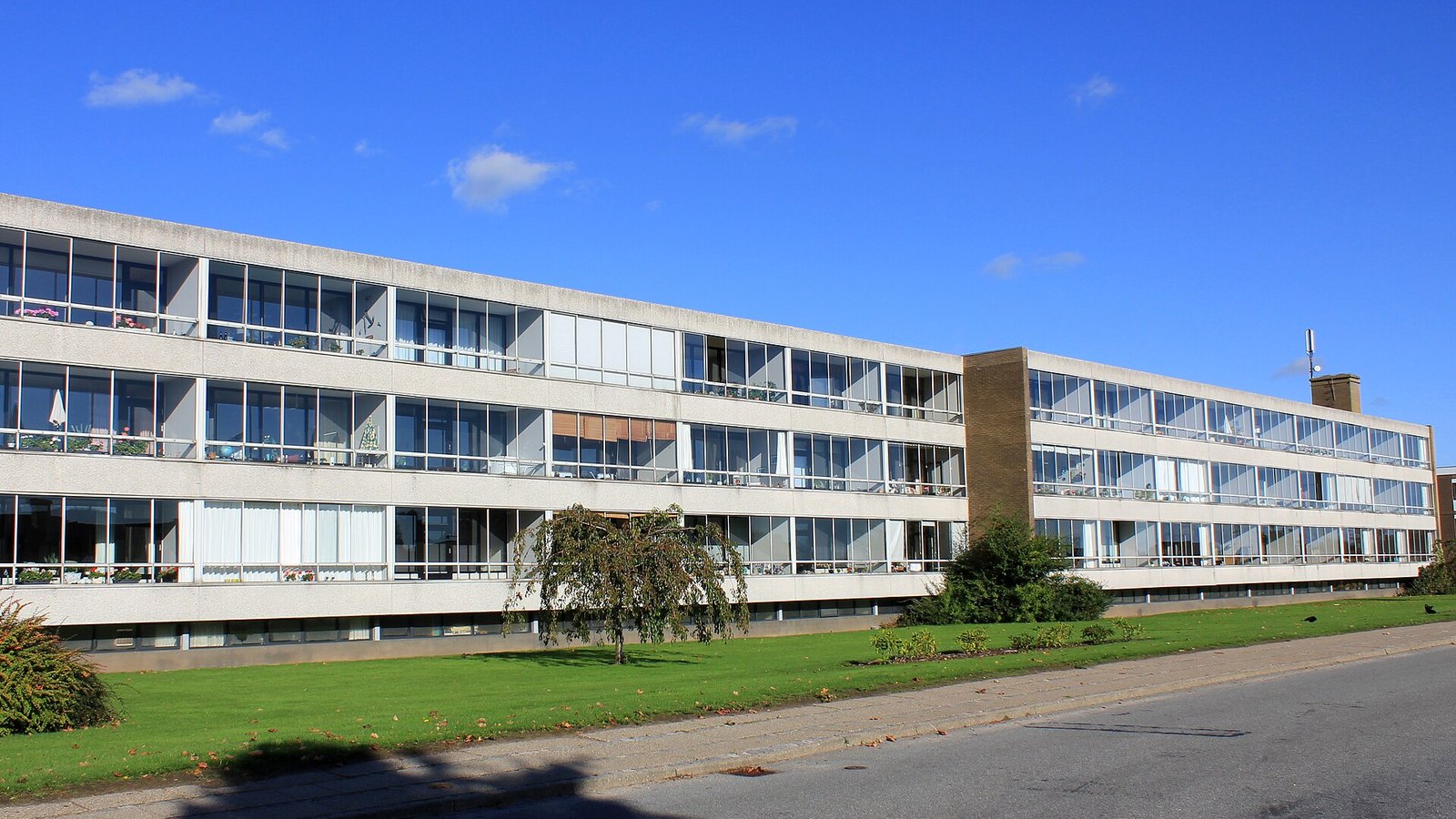
The case came from Nøjsomhed, a nonprofit housing estate run by Boliggården in Helsingør. The government put it on its list of what it then called ghettos in 2018, DR reports. In 2019 Boliggården adopted a development plan to get the estate off the list. In January 2020 it told tenants in seven stairwells that they would have to move out for a full rebuild.
The tenants argued that the terminations were discrimination based on ethnic origin. Seven of them sued. The Supreme Court’s main question, DR reports, was whether the ghetto law’s criterion of “immigrants and descendants from non-Western countries” amounts to direct or indirect discrimination based on ethnic origin. On November 23 the court answered no to both, and upheld the Eastern High Court’s 2022 judgment.
Housing Minister Jacob Mark welcomed the decision. In a statement, he said the ghetto law “strengthens security, social cohesion, and integration,” Reuters reported.
03
How the court reasoned
The court looked at who the ghetto law’s category actually sorts. It wrote “that applying the criterion of the law involves dividing people into two groups,” Al Jazeera reported: immigrants and descendants from non-Western countries, and everyone else. “Both groups include a very large majority of different ethnic origins,” the court found, and “there will simultaneously be persons with the same ethnic origin in both groups.”
The judges also noted that there had been “no information about the ethnic background of the residents who have been evicted.” They concluded that the category “must be regarded as a neutral criterion and not as a criterion relating to ethnic origin.”
The court went further on direct discrimination. Even if the housing association aimed to bring the share of non-Western immigrants and descendants at Nøjsomhed down to 50 percent or below, that wouldn’t be direct discrimination, Reuters reports, because the criterion itself is lawful. On indirect discrimination, the court’s summary said there was “no information in the case that provided a basis for establishing” it, according to DR (Bloom’s translation from Danish).
04
What happened to the families in Nøjsomhed
Boliggården’s plan covered seven stairwells with 96 apartments, AFP reported before the hearing. Most of the tenants whose leases ended were of foreign origin. Reuters puts the number of leases the association ended at 91.
By the time the Eastern High Court ruled in June 2022, the residents in the case had already moved to temporary housing, and two had been permanently rehoused, The Local Denmark reported, citing the Ritzau news agency. That ruling was split. Two of the three judges found it not proven that residents were evicted based on an assessment of their ethnicity, and one judge found that they were.
Nøjsomhed itself came off the government’s list in December 2021, DR reports, because fewer than 1,000 people still lived there. If the families had won in the Supreme Court, AFP reported, they would likely have been rehoused in homes similar to the ones they had to leave. With Monday’s ruling, that path is closed in the Danish courts.
Boliggården said in a written statement that it knew its decision had affected people and their homes, Reuters reports. It said rehousing the residents had been important to the association.
05
How the ghetto law works
The ghetto law runs on lists. Every December 1, the Danish government names “parallel societies,” Al Jazeera explains. These are social housing areas of at least 1,000 people where more than 50 percent are “non-Western” immigrants and descendants. An area must also meet two of four criteria on unemployment, crime, education and income.
Areas on the list for five years become “transformation areas,” which the government used to call “hard ghettos.” They must cut public family housing to 40 percent by 2030 through sales, demolition or conversion. AFP describes the requirement as renting at least 60 percent of homes at market rates by 2030.
An estate with the same social problems but fewer non-Western residents faces no such obligation. A separate list of “prevention areas” uses a 30 percent threshold, Al Jazeera reports. In 2021 the government dropped the word “ghetto” from the law, but the ghetto law’s lists and deadlines stayed.
Nonprofit social housing in Denmark is home to more than one million people and is open to all, according to Al Jazeera.
06
Who Denmark counts as non-Western
The label comes from Statistics Denmark. “Non-Western” covers every country except the 27 member states of the European Union and a short list of others: Andorra, Australia, Britain, Canada, Iceland, Liechtenstein, Monaco, New Zealand, Norway, San Marino, Switzerland, the United States and the Vatican, DW reports.
It also reaches people born in Denmark. A “descendant” is someone born in Denmark when neither parent is both a Danish citizen and born in the country. That means a Danish citizen born and raised in Copenhagen can still be counted among non-Western residents under the ghetto law.
In 2020 the UN Human Rights Office said the effect is that the label “disproportionately means Denmark’s non-white, non-European ethnic populations.” Amani Hassani, an urban ethnographer at Brunel University London, told Al Jazeera the category is “actually creating a racial category in real time.” She added, “It is a question of ancestry.”
07
Why the government says it needs the ghetto law
The government says the goal is integration. The ghetto law was part of a plan called “One Denmark without Parallel Societies: No Ghettos in 2030,” Al Jazeera reports. Officials have described it as a way to fight segregation and parallel societies in disadvantaged neighborhoods, many of which struggled with high crime, according to AFP.
In 2021 Kaare Dybvad Bek, then interior minister, said too many non-Western foreigners in one area “increases the risk of an emergence of religious and cultural parallel societies.” Today’s housing minister, Jacob Mark, belongs to the Socialist People’s Party, which voted for the ghetto law in 2018. The law has broad political support in Denmark, Al Jazeera reports, even as tenants and tenants’ associations have criticized it widely.
08
What the European Court of Justice said in 2025
On December 18, 2025, the Court of Justice of the European Union ruled in Case C-417/23, cases brought by tenants in Copenhagen’s Mjølnerparken and in Slagelse. The Open Society Justice Initiative, which backed the Mjølnerparken residents, said the ruling came from the court’s Grand Chamber. The question was whether the ghetto law breaks the EU’s Race Equality Directive, which bans discrimination based on racial or ethnic origin.
The European Court of Justice said nationality or country of birth alone isn’t enough to show that someone belongs to an ethnic group. But it added that a criterion covering several ethnic origins can still be linked to ethnic origin. Context like the ghetto law’s preparatory documents can count, the court’s press release said.
It said less favorable treatment may take the form of “an increased risk” of early lease termination “and, therefore, of losing their home.” It said “certain offensive and stigmatising classifications” in a law could also count. If a Danish court found indirect discrimination, it would have to weigh whether the ghetto law was proportionate and respected “the fundamental right to respect for the home.”
The European court didn’t strike the ghetto law down. “The Court of Justice does not decide the dispute itself,” its press release explains. It sent the cases back to Danish judges to apply its answers.
09
Where the two courts part ways
The European Court of Justice warned that the mere fact a criterion covers several ethnic origins doesn’t, on its own, clear it. Denmark’s Supreme Court pointed to that very fact: both groups, it said, include many ethnic origins. Reuters reports that the European court had said the ghetto law could amount to discrimination if ethnic origin was a decisive consideration when it was adopted.
The European court also pointed to the risk residents face. Residents of these areas, it said, face a higher risk of early lease termination than people in areas with similar social problems but fewer non-Western residents. Denmark’s Supreme Court found no evidence that particular ethnic groups were put at a disadvantage.
“The EU ruling gives the Danish courts a certain leeway, and you could say that’s being fully taken advantage of,” Professor Frederik Waage of the University of Southern Denmark told Reuters. That’s the gap at the heart of this story: the same ghetto law, read one way in Luxembourg and another by Denmark’s own highest court.
10
What the tenants and their lawyer said
“We’re obviously disappointed,” one of the plaintiffs told AFP after the ruling. Before the hearing, the same plaintiff had said, “There must be room for everyone in public housing areas, regardless of social background, skin colour, ethnic origin, level of education.”
Eddie Khawaja, the families’ lawyer, said the court looked at the wording of the ghetto law rather than how it worked on the ground. “I’m disappointed that the Supreme Court has read the law but not listened to my argument about what the reality is,” he told DR (Bloom’s translation from Danish).
Earlier this month he told Al Jazeera that “non-Western” is “a proxy for ethnic origin.” His clients were almost all employed and well educated, he said. “They are part of the community with the wrong ethnicity.”
Khawaja has said that cutting crime and raising education, incomes and employment were good aims, “but we are just saying, fine, regulate on that.” Instead, he argued, politicians made ethnicity “a decisive factor.”
11
What rights advocates and scholars say
The Open Society Justice Initiative called the 2025 European ruling a major victory for the Mjølnerparken residents. Its executive director, James Goldston, said the decision sends a vital message that “governments cannot stigmatize, segregate, or dispossess people on the basis of who they are or where their families come from.”
The Mjølnerparken case was brought with Almen Modstand, a grassroots group resisting the ghetto law since it began, and the Centre for Muslim Rights in Denmark, the Justice Initiative says. The Danish Institute for Human Rights and two UN Special Rapporteurs intervened in support of the residents.
After Monday’s ruling, Tine Birkelund Thomsen, head of equal treatment at the Danish Institute for Human Rights, told DR the decision sets a precedent. Speaking of residents with similar claims, she said “their case has of course become weaker when it comes to discrimination on the grounds of ethnic origin under EU law” (Bloom’s translation from Danish).
12
Gellerup, Mjølnerparken and the cases still waiting
Nøjsomhed was the first ghetto law case to reach Denmark’s Supreme Court since the European ruling. It won’t be the last. More discrimination cases are coming from Mjølnerparken, Gellerup and elsewhere, DR reports. Khawaja told DR he now has to go on to other cases, “which I will probably lose” (Bloom’s translation from Danish).
The Mjølnerparken case is still before the Eastern High Court, Al Jazeera reported this month. Mjølnerparken came off the list in 2023 when its population fell below 1,000, but it still has to finish its plan by the end of 2029. In Gellerup, in Aarhus, seven blocks with 408 flats were marked for demolition, a member of Almen Modstand told Al Jazeera. Residents voted against the plan, and the wider housing association overruled them.
Brabrand Boligforening, the social housing association behind Gellerupparken and Toveshøj, said it would study the ruling with its lawyers before telling residents what it means. “At the same time, we know that many are waiting for answers about their own situation,” its chair, Keld Albrechtsen, said in a press statement (Bloom’s translation from Danish).
13
Why housing is a civil right
A home isn’t a line on a list. It’s where children learn to walk, where neighbors trade what they know in the laundry room, where elders expect to grow old. The European Court of Justice named that plainly when it spoke of “the fundamental right to respect for the home.”
The ghetto law asks a family to carry the weight of a statistic about where they or their parents were born. Two estates with the same unemployment, the same crime and the same incomes are treated differently because of one number. Whatever the courts call that, the families feel it at the door.
In the United States, the Fair Housing Act bans housing discrimination because of race, color, national origin, religion, sex, familial status and disability, HUD says. National origin discrimination “can be based either upon the country of an individual’s birth or where his or her ancestors originated,” the Justice Department says.
Bloom has followed how housing rules sort families by who they are. Read our reporting on 21 states suing HUD over aid for mixed-status families and on what HUD’s mixed-status families rule changes. In France, a Paris court this month convicted three officers in the racist assault on Michel Zecler.
14
A timeline of the ghetto law
- 2010: Denmark publishes its first official “ghetto list.”
- 2018: Parliament adopts the ghetto law, and Nøjsomhed goes on the list.
- 2019: Boliggården adopts a development plan for Nøjsomhed.
- January 2020: tenants in seven Nøjsomhed stairwells are told they’ll have to move.
- May 2020: Mjølnerparken residents file their challenge against the housing ministry.
- 2021: the government drops the word “ghetto,” and Nøjsomhed leaves the list in December.
- June 2022: the Eastern High Court rules against seven Nøjsomhed tenants.
- December 18, 2025: the European Court of Justice rules in Case C-417/23.
- November 6, 2026: a two-day Supreme Court hearing begins.
- November 23, 2026: Denmark’s Supreme Court upholds the 2022 ruling.
- 2030: the deadline for transformation areas to cut family housing to 40 percent.
15
What happens next
For the Nøjsomhed families, the Danish courts are done. Thomsen noted that the Supreme Court didn’t rule on the European Convention on Human Rights, and said residents must now consider what to do after the judgment, DR reports. No source Bloom reviewed says whether the families will take the case to a European court.
The other cases go on. The Mjølnerparken residents’ case asks for a declaration that ghetto law measures are unlawful under EU law and the European Convention on Human Rights, the Open Society Justice Initiative says. It’s still before the Eastern High Court. In Gellerup, Albrechtsen told DR, whether residents are asked to leave will depend on cases in the district court and the high court.
The government updates its lists every December 1, so a new list is due next week. Bloom will keep following the ghetto law cases as they move.
16
What you can do
- Read the European Court of Justice’s press release on Case C-417/23.
- Follow the Mjølnerparken case through the Open Society Justice Initiative, which keeps a page on the tenants’ lawsuit and offers email updates.
- Support the groups named in the case: Almen Modstand, the Centre for Muslim Rights in Denmark and the Open Society Justice Initiative.
- Share the facts, not the label. Explain that non-Western residents include Danish citizens born in Denmark.
- If you live in the United States and believe you’ve faced housing discrimination, you can file a complaint with HUD or bring your own lawsuit, the Justice Department says.
- Pray for, write to or stand with families who are losing homes anywhere because of where they or their parents were born.
17
Where to get help
If you’ve been turned away from housing in the United States because of your race, national origin or religion, HUD’s Fair Housing Act page has a link to file a complaint.
If this story touches your own fear of losing a home, you don’t have to carry it alone. If you’re in crisis in the United States, call or text 988, any hour of the day.
18
What Bloom is doing
If the fear of losing a home is weighing on you, Bloom’s free support groups are open, and you can attend without speaking. Faith in Bloom offers pastoral care with no condition attached. If this news is heavy, Bloom’s crisis support page lists people you can call at any hour.
I believe no family should lose its home because of where its grandparents were born. A monthly gift keeps Bloom reading rulings like this one line by line, and a one-time gift helps too.
19
Frequently Asked Questions
It ruled that ending tenants’ leases at the Nøjsomhed estate in Helsingør under the ghetto law wasn’t direct or indirect ethnic discrimination. It upheld the Eastern High Court’s 2022 ruling.
It’s a 2018 law aimed at what the government calls parallel societies. Areas where more than half of residents are counted as non-Western, and that meet social criteria, can be forced to cut nonprofit family housing to 40 percent by 2030.
Tenants’ associations estimate that some 11,000 people across Denmark will have to leave their homes by 2030 under the ghetto law.
Under the Statistics Denmark definition the ghetto law uses, it covers immigrants and descendants from every country outside the EU except a short list that includes Britain, Norway, the United States, Canada, Australia and New Zealand. It also covers some people born in Denmark.
Yes. In December 2025 the European Court of Justice said the ghetto law could amount to discrimination and left the final decision to Danish courts. Denmark’s Supreme Court found the law’s criterion neutral.
Not entirely. Other cases from Mjølnerparken and Gellerup are still in Danish courts, and a human rights official noted the Supreme Court didn’t rule on the European Convention on Human Rights.
Sovereignty over Servitude. 🌸
Support this work
Everything Bloom publishes is free to read and free to share.
Bloom Ministries is a registered 501(c)(3) in Salem, Oregon. Monthly giving is what lets us say yes before the money is in hand.
Keep reading
 Virginia Legislature · 23 November 2026Appeals Court Lets Virginia Limit ICE Deals but Keeps Mask Law Blocked
 Massachusetts Legislature · 23 November 2026Massachusetts Sues ICE to Stop Warrantless Courthouse Arrests
 Louisiana Legislature · 23 November 2026Former ICE Detainees Sue GEO Group Over Sexual Abuse, Forced Labor
