

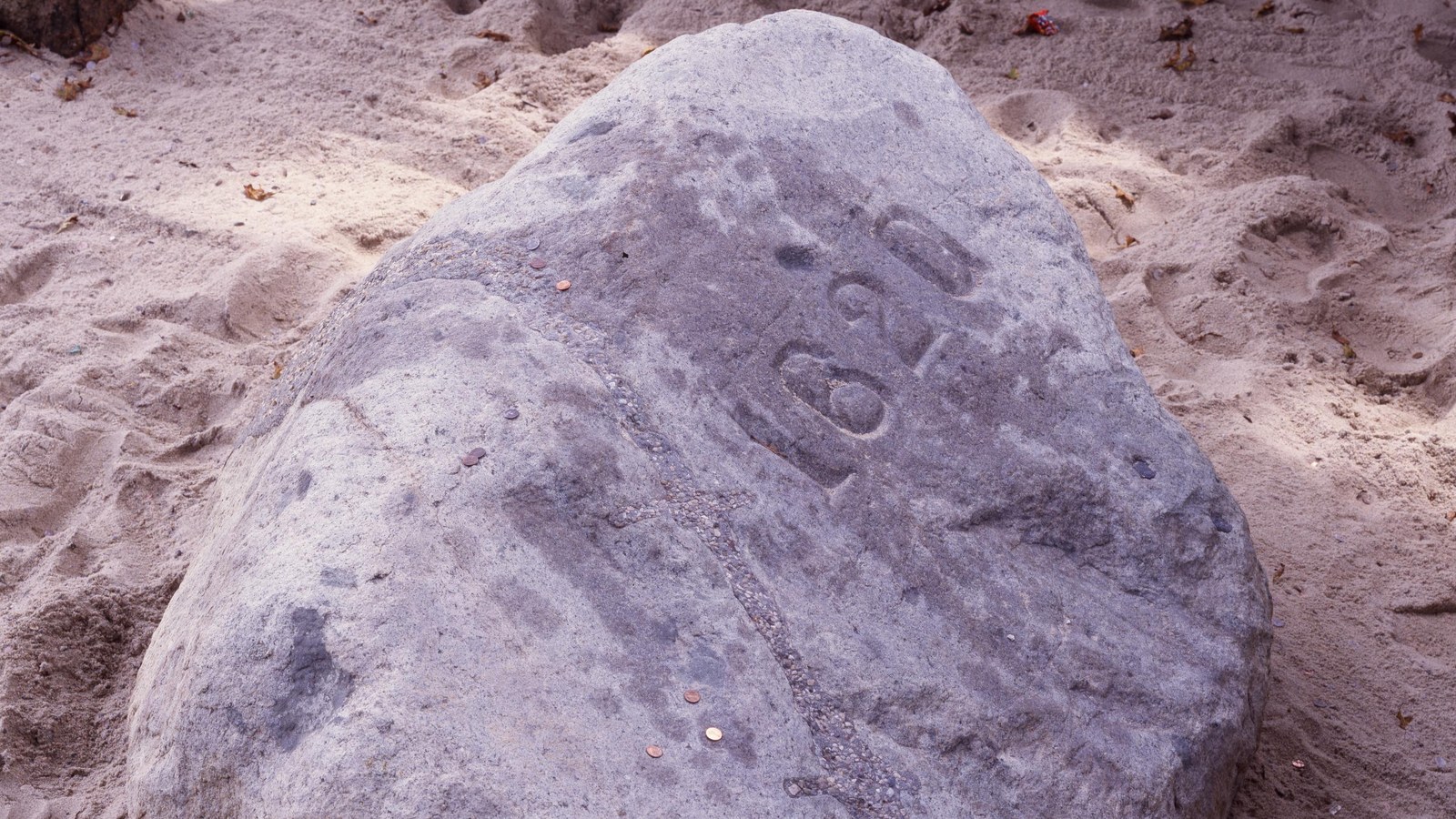
Newsroom·Massachusetts Legislature·News
Judge Weighs Plymouth Day of Mourning Dispute Before Thanksgiving
A Thanksgiving gathering held in Plymouth every year since 1970 is now in a judge's hands. On November 23, 2026, a Superior Court judge heard the fight over its stage and took it under advisement, three days before the Day of Mourning.
 Pastora Tori Matthews
Every Thanksgiving since 1970, Native people and their supporters have gathered at noon on Cole’s Hill in Plymouth, Massachusetts, for the National Day of Mourning. On Monday, November 23, 2026, three days before this year’s gathering, its terms went before a judge: Plymouth Superior Court Judge Brian Glenny heard arguments over whether the town must set up a stage for the speeches, then took the matter under advisement.
His ruling will decide, at least for this year, whether a 1998 agreement signed after police arrested 25 people at the 1997 Day of Mourning still obliges Plymouth to provide a stage without first requiring insurance. The United American Indians of New England (UAINE) says the town is breaking that agreement. The town says the agreement never required a new stage or mentioned insurance, and that it has offered alternatives. Either way, the organizers say they’ll be on Cole’s Hill on Thursday.
 News · 22 Nov 2026Supreme Court Asked to Bar Suing Protest Leaders for Others' ViolenceCan someone who leads a protest be made to pay for a stranger's violence? DeRay Mckesson asked the Supreme Court on Friday to say no. The appeals…
 News · 20 Nov 2026Mizzou Student Group Sues AG Over Demand for Member, Donor NamesMissouri's attorney general wants the name and address of every member and donor of a University of Missouri student group going back to 2021. The…
 News · 20 Nov 2026Judge Blocks Connecticut's ICE Mask Ban and Use-of-Force LawConnecticut can't make federal immigration agents unmask, wear a name tag or answer to state prosecutors for deadly force, a federal judge ruled…
 News · 19 Nov 2026FIU Drops Charges Against Seven Students Over Silent ICE ProtestFlorida International University dropped misconduct charges against seven students who stood in silence wearing "ICE OFF FIU" shirts, and wiped the…
01
The Day of Mourning case at a glance
- The court: Plymouth Superior Court, Judge Brian Glenny, on Monday, November 23, 2026. He took the matter under advisement and didn’t say when he’d rule.
- The case: UAINE and its co-leader Mahtowin Munro against the Town of Plymouth and Town Manager Derek Brindisi, civil action 2583CV01090.
- The request: a renewed emergency motion, filed November 16, for a temporary restraining order, a preliminary injunction and a declaration that the 1998 agreement still binds the town.
- The dispute: whether Plymouth must set up a stage on Cole’s Hill for the Day of Mourning, and whether it can first require insurance.
- The town’s position: the 1998 agreement doesn’t require a stage or mention insurance, and the town has offered other options.
- The Day of Mourning itself: Thursday, November 26, 2026, at noon on Cole’s Hill, above Plymouth Rock. Organizers say it goes ahead whatever the ruling.
02
What happened in court on Monday
Lawyers for both sides spent Monday arguing over what a 28-year-old agreement means. Judge Glenny heard both sides of the yearlong Day of Mourning dispute and took the matter under advisement, the Plymouth Independent reported. He didn’t say when a ruling might come, but lawyers said the judge understands “time is of the essence.”
WCVB reported that the judge is expected to issue a written ruling. UAINE’s lawyer, Daniel Guenther, said a ruling “could come at any time. We expect to hear something before Thursday.”
Town Manager Derek Brindisi said the town will abide by the judge’s ruling and is happy to support it. “We don’t want to be here in court,” Brindisi told reporters outside the courthouse. Select Board Chair Deb Iaquinto and board members Kevin Canty and Bill Keohan were in the courtroom. After the hearing, Munro said, “I can assure you we will be there Thursday.”
03
The judge’s question about the showmobile
Much of the hearing turned on one small word: its. In the 1998 agreement, Plymouth agrees to make its showmobile, a mobile stage, available to UAINE “for use during the National Day of Mourning speeches.”
The town used its own showmobile until 2014. Then it became dilapidated and was deemed unsafe, Guenther told the judge, and until 2025 the town provided another stage without objection. “It’s unclear why, in 2025-2026, it’s suddenly a burden, or impossible, or something they won’t do anymore,” he said.
Judge Glenny asked whether the words “its showmobile” obliged the town to provide a stage indefinitely, even if it didn’t own one. “It sounds like something they will provide should they have it, not that it will go out and buy one,” he said, according to the Independent. A question from the bench isn’t a ruling.
Town attorney Kathleen McKay pressed the point. “The town purchasing a showmobile is not something they can do,” she said. The town’s lawyers said the group could rent a 10-by-10 stage for less than $1,000, and had the means, having raised more than $31,000 over the past several years.
04
What the 1998 agreement says
UAINE publishes the full agreement with its October 19, 1998 statement announcing the settlement. Its key terms for the Day of Mourning are plain:
- UAINE may hold a demonstration, which may include a march, between noon and 3 PM every Thanksgiving Day, beginning at Cole’s Hill. Plymouth “will not require UAINE to apply for a permit” to do it.
- UAINE gives the town notice of the route, time and expected number of marchers by November 1, and uses its best efforts to keep order.
- Plymouth makes its showmobile available for the speeches. If UAINE brings its own stage and sound system, Plymouth “will cooperate to facilitate its installation and powering on the Day of Mourning.”
- The National Day of Mourning is listed as a formal event on the town’s official calendars.
The text says nothing about insurance, and both sides agree on that. They disagree about what the silence means. “There is no end date on the 1998 agreement,” Munro told CAI. Town officials now argue no agreement lasts forever, the Independent reported.
05
Why there is a 1998 agreement at all
On Thanksgiving in 1997, police confronted the Day of Mourning march. Some participants were pepper-sprayed and knocked to the ground, and 25 people were taken into custody, the Independent reported. The charges were later dismissed.
In 1998, UAINE agreed to drop a civil rights suit against Plymouth, and the town dropped the charges and agreed to let UAINE march every Thanksgiving without permits, GBH News reported. The settlement also paid for a plaque near the statue of Massasoit on Cole’s Hill. It says that to many Native Americans, Thanksgiving Day is “a reminder of the genocide of millions of their people, the theft of their lands, and the relentless assault on their culture.”
06
What Plymouth says
The town says it supports the Day of Mourning and asks only for the protection it asks of others. “We believe in the Day of Mourning. We are asking them to collaborate a little more than they have in the past,” Brindisi told The Boston Globe. He added, “As time evolves, we have to make sure that we are doing right by the taxpayers.”
In a statement, the town said “the only unresolved item” was UAINE’s request that the town set up its stage on state Department of Conservation and Recreation (DCR) property. “While a stage is not required under the original 1998 agreement, the Town has offered multiple alternatives for a stage for UAINE’s consideration,” it said. The town says it “has gone above and beyond to accommodate UAINE’s event,” including accessible parking and help for elders.
Brindisi told CBS News Boston that once the town learned the stage stood on state property, “we realized that there was increased liability and increased risk.” WCVB reported that he also cited taxpayer dollars and precedent: if the town sets up a stage for one group, it would have to do so for all.
In court, the town’s lawyers called the stage a “gratuitous offer” that “changed with the times.” The town would be liable if anything went wrong on a stage it provided, they said. “Based on the plain language of this agreement, there is no requirement that the town needs to set up a stage,” town attorney Stacey Verde told the judge.
Iaquinto told the Independent, “We are very supportive of the day of mourning,” but “we require every other group to provide insurance. The town is between a rock and a hard place.” McKay said UAINE is “just looking to hold the town responsible for something, even if it’s not provided in the agreement of 1998.”
07
What UAINE asks the court to order
UAINE’s renewed emergency motion, filed November 16 by the Boston firm Sherin and Lodgen, asks the court to declare that the 1998 agreement “remains binding and valid.” It asks the judge to bar the town from requiring insurance, a bond, an indemnity agreement or municipal permits for the Day of Mourning.
It also asks for an order requiring the town to facilitate the Day of Mourning under the agreement and historical practice, including a stage on Cole’s Hill or “substitutionary performance acceptable to UAINE.”
According to the motion, DCR confirmed on November 5, 2026 that it would require no permits and that the town was free to keep setting up a stage. UAINE says it again agreed to give participants who use the stage its limitation-of-liability disclaimer. DCR doesn’t require the group to get a permit or insurance, department spokesman Peter Jasinski told the Globe.
08
The First Amendment argument
UAINE’s case rests on contract law and on free speech. Guenther argued the insurance requirement is unlawful because it makes the group pay a fee “as a prerequisite” to exercising its First Amendment rights, the Independent reported.
UAINE’s memorandum argues that a burden that turns “on how insurers or municipal risk managers price the controversy of that message is not content-neutral.” It adds: “The loss of First Amendment freedoms, even for minimal periods, constitutes irreparable injury.”
The town hasn’t said the message is the problem. It says liability is, and that every other group holding a public event complies with the same conditions. The memorandum itself says the town remains free to take lawful, content-neutral public safety measures. Who carries the risk when people gather to speak is a live question elsewhere, too: Bloom reported this week that the Supreme Court has been asked to bar suing protest leaders for others’ violence.
09
Why the stage matters to the Day of Mourning
For the organizers, the stage isn’t decoration. UAINE’s memorandum says “the stage is essential because speakers, including elders, must be seen and heard by the thousands gathered,” and that its ASL interpreter must be visible.
“We have deaf people who attend every year,” Munro told GBH. “We always have ASL interpreters, and it’s really important to us that the deaf community be included in our National Day of Mourning.”
Without a stage, Guenther told the judge, speakers might talk “out of the back of a truck and you lose the messaging,” CBS News Boston reported. The Globe reports the Day of Mourning can attract more than 1,000 people.
One option the town offered was Pilgrim Memorial Park, which has a hatch shell and power, Iaquinto said. Munro told GBH it was the only alternative offered. “We don’t want to be shunted off to a corner of a park so that we’re scarcely seen or heard. That’s not acceptable,” she said.
10
Last year’s court order
This is the second Thanksgiving in a row that the Day of Mourning has landed in court. In 2025, town officials demanded a permit and insurance, UAINE sued, and the town backed down after Plymouth Superior Court Judge Joseph Leighton suggested he was leaning toward UAINE, the Independent reported.
On November 25, 2025, the court entered an order on the parties’ joint agreement, UAINE’s motion says. The revised arrangement says the town will “facilitate, prepare, and enable the National Day of Mourning activities to take place consistent with the historical practices after the 1998 settlement.” In return, UAINE agreed not to hold the town responsible for injuries or other problems during the event. Talks continued for months, according to both sides.
11
Town Hall backlash and the closed-door votes
On November 10, the Select Board voted 5-0 in a closed-door session to seek a deal requiring UAINE to secure insurance for staging, the Independent reported. Messages flooded in, and supporters protested outside Town Hall.
At the board’s November 17 meeting, about 20 people spoke during public comment, CAI reported. The Reverend Rumni Saha, minister of First Parish Church in Plymouth, told the board, “An agreement is a commitment.” She added, “It does not become optional simply because honoring it becomes inconvenient or politically difficult.”
In a closed session that afternoon, Keohan moved for the town to pay for the insurance, estimated at a few hundred dollars, and supply a stage. Richard Quintal seconded it, but Iaquinto, Canty and David Golden voted it down, so the decision held, 3-2. Quintal offered to pay through his charitable nonprofit, and Golden questioned whether that would be a conflict of interest, according to Quintal.
12
A parade director’s offer
Olly deMacedo, longtime director of the America’s Hometown Thanksgiving Celebration, offered to pay for the insurance and provide a portable stage for the Day of Mourning. “I’d be more than happy to facilitate their needs,” he told the Independent.
In court, the town’s lawyers pointed to UAINE’s refusal of that offer. Munro said the stage is Plymouth’s responsibility under the agreement and the offer didn’t come from the town. “The town should make arrangements with him, not us,” she said.
13
What the Day of Mourning is
The first National Day of Mourning was held in 1970 to mark the 350th anniversary of the Pilgrims’ arrival in what is now Plymouth. UAINE calls it “a solemn, spiritual and highly political day.” Many participants fast from sundown the day before, and only Indigenous people speak, its 2026 orientation says.
The Day of Mourning opens with prayer and ceremony on Cole’s Hill, hears Indigenous speakers, marches through downtown Plymouth and closes with prayer, according to UAINE’s court filing as quoted by the Globe. “We’ve been doing National Day of Mourning since 1970, and we’re not going to stop,” Munro told GBH.
For people outside Plymouth, this can look like a fight over a platform. For those who come, the Day of Mourning is grief held in public, on a hill above the rock at the heart of the town’s own Thanksgiving story.
14
What Bloom could not confirm
Bloom hasn’t seen the town’s written court filings. Its arguments here come from what its lawyers and officials said in court and to reporters, and from its statement.
UAINE’s website describes the November 16 motion as filed in Plymouth District Court, but the motion’s caption, the Independent, CAI and the Globe all say Plymouth Superior Court. No insurer has confirmed the cost of coverage. As of Monday evening, Bloom hadn’t seen a ruling.
15
A timeline of the Day of Mourning dispute
- 1970: the first National Day of Mourning marks the 350th anniversary of the Pilgrims’ arrival.
- November 27, 1997: police confront the march, and 25 people are arrested.
- October 19, 1998: the charges are dropped, and UAINE and Plymouth settle.
- 2014: with its showmobile deteriorated, the town begins setting up a different stage, UAINE says.
- November 25, 2025: after UAINE sues, the court enters an order on the parties’ joint agreement.
- November 10, 2026: the Select Board votes 5-0 in closed session on the insurance condition.
- November 16, 2026: UAINE files its renewed emergency motion.
- November 17, 2026: residents speak at the Select Board, and the board holds its position 3-2.
- November 23, 2026: Judge Brian Glenny hears arguments and takes the matter under advisement.
- November 26, 2026: the Day of Mourning, at noon on Cole’s Hill.
16
What happens next
Judge Glenny’s written ruling could come at any time, and UAINE’s lawyer expects one before Thursday. If he grants the motion, the town would have to facilitate a stage on Cole’s Hill this year. If he denies it, the town’s insurance condition stands, and UAINE would have to find its own way to stage the Day of Mourning speeches.
Either way, Brindisi says the Day of Mourning will proceed as scheduled, and Munro says UAINE will be there. “I don’t want to be in this predicament next year,” Quintal told the Independent.
Bloom is following other fights over the right to gather and speak, including FIU dropping charges against seven students over a silent protest and a Missouri student group’s lawsuit over a demand for member names. We’ll update this report when the judge rules.
17
What you can do
- Know the time and place: Thursday, November 26, 2026, at noon sharp on Cole’s Hill, above Plymouth Rock. UAINE says the program and march last until about 3 PM.
- Follow the organizers’ requests. Don’t sell merchandise or hand out leaflets, and don’t eat during the outdoor program unless you must for medical reasons, out of respect for those fasting.
- If you can’t stand long or walk far, UAINE says it will have some chairs for elders and others, and will try to have a couple of cars for people who can’t walk the full route.
- Wear a mask, as UAINE asks, so no one gets sick from attending the Day of Mourning.
- If you can’t travel, watch UAINE’s livestream, linked from its website.
- Read the 1998 agreement yourself before you share an opinion.
- Whatever your view, you can tell the Select Board. UAINE’s alert lists the board’s email as selectmen@plymouth-ma.gov.
18
Where to get help
Grief can surface hard on a holiday that carries painful history. If you’re struggling, call or text 988 at any hour. If you’re hurt at any gathering, call 911.
19
What Bloom is doing
Bloom will keep reading the filings and will update this report when Judge Glenny rules. If a fight over your own right to gather has worn you out, Bloom’s free support groups are a place to say so. This is a day of mourning, and Faith in Bloom offers pastoral care with no condition attached.
I believe a people’s grief deserves to be seen and heard, and that a promise made after a wrong deserves care from everyone who signed it. If this news brings up fear or sorrow, Bloom’s crisis support page lists people you can call at any hour. A monthly gift keeps Bloom reading court records for you, and a one-time gift helps too.
20
Frequently Asked Questions
Plymouth Superior Court Judge Brian Glenny heard arguments from UAINE and the Town of Plymouth over the Day of Mourning stage. He took the matter under advisement and is expected to issue a written ruling.
It lets UAINE gather on Cole’s Hill and march every Thanksgiving without a town permit, and says Plymouth will make its showmobile available for the speeches. It doesn’t mention insurance.
The town says the agreement doesn’t require a new stage and that a stage on state land raises liability. It asks UAINE to provide insurance, build its own stage or hire a vendor.
Yes. UAINE says it will gather at noon on Thursday, November 26, 2026, on Cole’s Hill, whatever the ruling, and the town manager says it will proceed as scheduled.
It says speakers, elders and its ASL interpreters must be seen and heard by the crowd. Deaf participants attend every year.
Yes. UAINE says it will livestream the Day of Mourning from Plymouth, with the link on its website.
Sovereignty over Servitude. 🌸
Support this work
Everything Bloom publishes is free to read and free to share.
Bloom Ministries is a registered 501(c)(3) in Salem, Oregon. Monthly giving is what lets us say yes before the money is in hand.
Keep reading
 Massachusetts Legislature · 23 November 2026Massachusetts Sues ICE to Stop Warrantless Courthouse Arrests
 Legislation · 23 November 202621 States Sue HUD to Stop Housing Aid Cutoff for Mixed-Status Families
 Massachusetts Legislature · 23 November 2026LGBTQ Groups Warn Justices Third-Country Removals Endanger Refugees
