


Newsroom·Legislation·News
Supreme Court Lets Lead Challenger Exit AR-15 Ban Case Before Argument
Whether governments can ban AR-15s is still before the Supreme Court. On November 23, 2026, it dismissed lead challenger Cutberto Viramontes from the case at his request, and argument remains set for December 2.
 Pastora Tori Matthews
Cutberto Viramontes went to court in 2021 because he wanted to own an AR-15-style rifle that Cook County, Illinois, bans. On Monday, November 23, 2026, he left the case that carries his name at the Supreme Court: the docket now says it was “dismissed under Rule 46.2 only as to petitioner Cutberto Viramontes.” The AR-15 ban case itself is still set for argument on Wednesday, December 2.
That matters because the question the justices agreed to decide is among the largest in Second Amendment law: whether the Constitution protects the right to possess “AR-15 platform and similar semiautomatic rifles.” Cook County argues it’s doubtful any remaining challenger has standing without Viramontes, and has asked the Court to dismiss its half of the AR-15 ban case. Monday’s entry doesn’t address that request. The consolidated Connecticut case goes forward either way, and both sides agree on that.
 News · 22 Nov 2026Glock, Ruger Sue to Block Maryland's Convertible Pistol Sales BanFive gun makers and a Waldorf gun shop asked a federal court to stop Maryland's ban on selling Glock-style pistols that an illegal device can make…
 News · 21 Nov 2026Judge Halts New Mexico's 7-Day Gun Waiting Period After AG AgreesSince May 2024, most New Mexicans buying a gun have had to wait seven days to take it home. An order entered Friday, with the attorney general's…
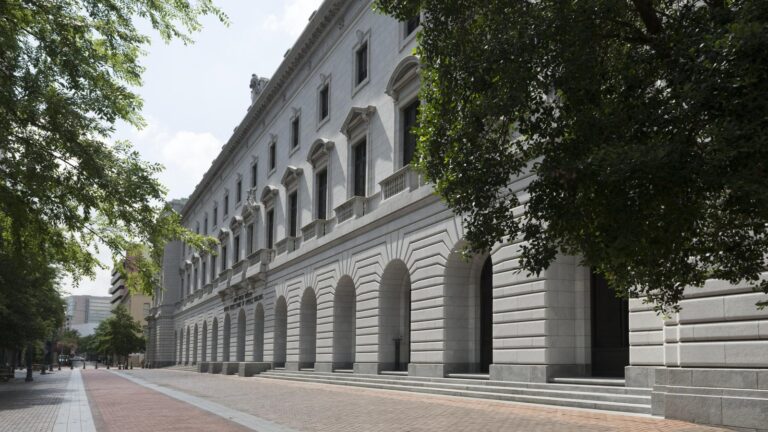 News · 20 Nov 2026Appeals Court: Second Amendment Covers Selling Guns, Not Just OwningA Fifth Circuit panel held that the Second Amendment's plain text covers the sale of firearms, sending back the case of a Louisiana man convicted of…
 News · 20 Nov 2026Appeals Court Revives Challenge to Gun License Pulled Over Club TiesSan Diego's sheriff revoked Kenneth Shilling's concealed carry license because he belongs to a motorcycle club. On Friday, the Ninth Circuit revived…
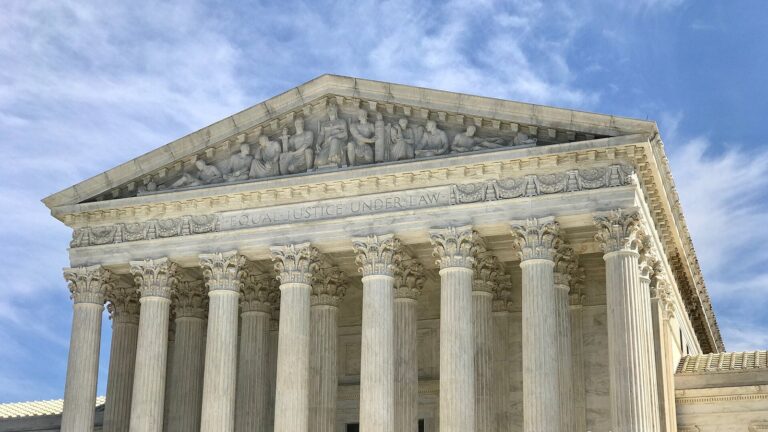 News · 16 Nov 2026Justices Turn Away Challenge to Maryland's 'Sensitive Places' Gun LawThe Supreme Court declined on Monday to hear a challenge to Maryland's law barring guns in sensitive places such as schools, transit, hospitals and…
01
The AR-15 ban case at a glance
- The order: on November 23, 2026, the docket in the AR-15 ban case, No. 25-238, recorded that it was dismissed under Rule 46.2 only as to Cutberto Viramontes.
- The cases: No. 25-238, which the Court’s docket now titles for Christopher Khaya against Cook County, consolidated with No. 25-566, Grant v. Higgins, over Connecticut’s law.
- The question: whether the Second and Fourteenth Amendments guarantee the right to possess AR-15 platform and similar semiautomatic rifles.
- The argument: Wednesday, December 2, 2026, one hour in total, with the United States also arguing.
- Still pending: Cook County’s November 5 request to dismiss its side of the AR-15 ban case as moot or improvidently granted.
- The decision: a ruling on the AR-15 ban question is expected later in the term, which usually runs until late June or early July.
02
What the docket in the AR-15 ban case shows
The docket entry is one sentence long: “Case dismissed under Rule 46.2 only as to petitioner Cutberto Viramontes.” It came 25 days after Viramontes asked to leave. His October 29 motion, filed by the Washington firm Cooper & Kirk, gave no reason. “This motion does not apply to any other petitioner,” it said, and the case “remains pending as to all other petitioners.”
The rest of the AR-15 ban docket hasn’t moved. It still shows the case “SET FOR ARGUMENT on Wednesday, December 2, 2026,” an entry first made on September 4. The Court’s online docket now titles the Illinois case for the remaining individual challenger, Christopher Khaya. Monday’s entry says nothing about Cook County’s suggestion of mootness.
The Rules of the Supreme Court let a petitioner file a motion to dismiss a case. Under Rule 46.2, an adverse party may object only on narrow grounds: the costs owed, or that the moving party doesn’t represent all the petitioners. If no such objection is filed, the Clerk enters the dismissal without further reference to the Court.
Here, the motion covered one petitioner, and the dismissal covers one petitioner. Nothing in the rule, or in Monday’s entry, decides whether the challengers still in the AR-15 ban case have standing. That is the separate fight Cook County opened on November 5.
The Center Square called this the Court’s landmark case challenging bans on semiautomatic rifles. Kostas Moros of the Second Amendment Foundation, one of the challengers, couldn’t speak to why Viramontes sought to leave, it reported.
03
Why Cook County says the AR-15 ban case is moot
Cook County’s suggestion of mootness, filed by Cook County State’s Attorney Eileen O’Neill Burke, argues that its side of the AR-15 ban case stood on Viramontes. In the district court, he said he wanted a Smith & Wesson rifle of the AR-15 style. “Without Viramontes’ involvement, it is doubtful that any petitioner has Article III standing to litigate the question presented,” the county wrote.
The other individual challenger, Christopher Khaya, has said he wants an IMI Galil, a rifle the county says is largely based on the AK-47 design rather than the AR-15. The county says the record has no facts on whether the Galil is similar to an AR-15 or in common use. It also notes that Khaya said in district court he’d most likely use it at the range.
As for the two gun-rights groups that sued, the Firearms Policy Coalition and the Second Amendment Foundation, the county says they named only two members in Cook County: Viramontes and Khaya. It added that “the most natural inference from the barebones motion is that Viramontes’ circumstances have changed in some significant fashion.”
04
Why the challengers say it’s still live
The challengers’ response, filed November 11, says the county’s attack on the AR-15 ban case is really about the scope of the question, not jurisdiction. “As both a jurisdictional and vehicle matter, Viramontes’s involvement is unnecessary,” it says.
They point to the question’s own words: “AR-15 platform and similar semiautomatic rifles.” An AK-47-style rifle like the Galil is “similar,” they argue, and the county’s own ordinance names the AR-15, the AK-47 and the Galil together as banned “assault weapons.” “Associational standing has rested from the outset on Khaya as well,” they wrote.
They also filed two new declarations. Khaya says he would acquire an AR-15 platform rifle in Cook County “were it lawful for me to do so.” Ed Smolen, an Elmwood Park resident and a member of both groups, says he has owned an AR-15 since 2011 and keeps it out of state. “If it were lawful to do so, I would possess my AR-15 at my residence in Cook County for lawful purposes including self-defense,” he declared.
On November 13, the county replied that the Court shouldn’t accept facts never put before the lower courts, offered “five years into this litigation.” It wrote: “Petitioners still do not explain why their lead plaintiff—the only individual who sought to purchase an AR-15—desires to remove himself from the case.”
Moros told The States, a Center Square outlet, that Khaya “wants to go on,” and that the Second Amendment Foundation is also a petitioner on behalf of all its members.
05
Connecticut’s AR-15 ban case goes on either way
Even Cook County says its argument wouldn’t end the larger fight. In a footnote, it wrote that the issue “would not prevent the Court from deciding the question presented” because the Connecticut case was consolidated with this one. Its November 13 reply says the parties agree nothing in this briefing affects the grant of review in Grant v. Higgins.
So the core AR-15 ban question will almost certainly be argued on December 2. What Monday’s order and the mootness filings could change is who argues for the Illinois challengers, and whether Cook County’s AR-15 ban is decided on the merits or set aside on standing.
06
The AR-15 ban question the justices agreed to decide
On June 30, 2026, the Court granted review in both cases, limited to the question presented in the Illinois petition, consolidated them and allotted one hour for argument. That question reads: “Whether the Second and Fourteenth Amendments guarantee the right to possess AR-15 platform and similar semiautomatic rifles.”
The Connecticut challengers had framed it differently in their own question, asking about semiautomatic rifles in common use, “including the most popular rifle in the country, the AR-15.” The Court took the Illinois wording for both, according to the Connecticut docket. Those words are now at the center of the standing fight.
07
The two AR-15 ban laws being challenged
Cook County is the second-largest county in the country, home to more than five million people in Chicago and 133 other municipalities, its brief says. The county first passed its assault weapons ordinance in 1993. It later added the federal ban’s features-based test and renamed the law the Blair Holt Assault Weapons Ban, for a Chicago high school student killed while protecting a friend on a bus. It was amended again in 2013.
The ordinance covers semiautomatic rifles that can accept a detachable large-capacity magazine and have certain features, and lists many rifles by name. Violations carry a fine of $5,000 to $10,000 and up to six months in jail. The Seventh Circuit upheld Cook County’s AR-15 ban in a decision dated June 2, 2025.
Connecticut’s AR-15 ban grew out of grief. On December 14, 2012, a gunman with an AR-15-style rifle killed 20 first-graders and six educators at Sandy Hook Elementary School in Newtown, Connecticut, the state’s brief recounts. Within months, it says, Connecticut passed a bipartisan law that prohibited the AR-15-style weapons used there.
That law lets owners of existing weapons obtain certificates of possession and keep them. The Connecticut challengers, groups and individuals who want to own banned rifles, sought a preliminary injunction. A federal district court denied it, and the Second Circuit affirmed in a decision dated August 22, 2025.
08
The challengers’ case: “common use”
The challengers argue the answer already lies in the Court’s 2008 Heller decision, which protected weapons “in common use.” Their merits brief cites surveys estimating that tens of millions of Americans own these rifles. One survey it cites puts the number at about 26 million people, with 83% of owners naming defense as a reason.
Because the rifles are common, they say, an AR-15 ban fails, and judges may not weigh a gun’s dangers against its usefulness. That choice, they write, is “a decision for the American people to make.” They add: “by definition, an arm in common use cannot be unusually dangerous.”
Moros put the history plainly, according to The Center Square: “there were no possession bans, purely possession bans before the 20th century. None at all.”
09
The governments’ case: “unusually dangerous”
Connecticut’s brief opens with its thesis: “The Second Amendment does not preclude Connecticut from banning an unusually dangerous weapon that has inflicted incalculable harm in the State.” It traces bans on especially lethal weapons from medieval England through Bowie knives and Tommy guns, and argues Connecticut’s AR-15 ban fits that tradition.
“No other commercially available weapon allows a shooter to inflict catastrophic injuries on as many victims as quickly as the AR-15,” Connecticut argues. It says the rifle was used in Newtown, Uvalde and Las Vegas. Congress passed a federal ban in 1994 and chose not to extend it in 2004, the state notes: “That single legislative choice does not forever determine the meaning of the Second Amendment.”
Cook County’s brief makes the same core claim: “The Second Amendment does not preclude Cook County from banning AR-15 platform weapons given their exceptional danger, lethality, and threat to public safety.” Janet Carter of Everytown told The States in September: “History has allowed governments to regulate especially dangerous weapons even if they are common.”
10
The United States joins the argument
The federal government isn’t neutral here. In its September 9 motion, the Solicitor General told the Court the United States had filed a friend-of-the-court brief supporting the challengers in the AR-15 ban case, “arguing that such a ban is unconstitutional.” It asked for 10 minutes of argument time, with 20 for the challengers and 30 for the governments.
The Court granted the motion on November 9. That means three sets of lawyers will share the hour on December 2.
11
Who else has weighed in
The AR-15 ban docket lists more than 80 friend-of-the-court briefs. Filers include the National Rifle Association of America, the National Sheriffs’ Association, Tennessee and other states, Massachusetts and other states, members of Congress, Sandy Hook Promise, the International Association of Chiefs of Police, the American Academy of Pediatrics and survivors of the Highland Park and Route 91 Harvest Festival shootings.
Faith bodies filed too. The United States Conference of Catholic Bishops filed in support of neither party, as did Professor Akhil Reed Amar. The Stated Clerk of the General Assembly of the Presbyterian Church (U.S.A.) also filed. Each brief speaks for its signers, and together they show how many Americans see their own lives in this case.
12
What’s at stake for gun owners and for communities
For people like Smolen, who say they want to keep a rifle at home for self-defense, the AR-15 ban case is about whether a right the Constitution names reaches what the Connecticut challengers call the most popular rifle in the country. For Cook County and Connecticut, it’s about whether a community that has lived through mass shootings can decide which weapons are kept within its borders. Cook County’s brief lists 11 states that ban AR-15 platform weapons, including California, Illinois, New Jersey and New York.
If the Court sides with the challengers, laws like these could fall or be narrowed. If it sides with the governments, Cook County’s and Connecticut’s laws stand, and other legislatures could weigh an AR-15 ban of their own. The Court could also decide the Connecticut case and set the Illinois one aside.
Both fears are real, and both are held by people who love their neighbors. A rifle owner who has followed every law and a parent who has lost a child are both asking the Constitution to keep them safe. Bloom won’t tell you how the justices should rule. We’ll ask you to listen to both sides before you decide.
13
What Bloom could not confirm
Viramontes’s reason for leaving the AR-15 ban case hasn’t been made public, and Bloom won’t guess at it. Bloom didn’t see a separate order on Cook County’s suggestion of mootness, and the docket entry doesn’t say who entered the dismissal. The survey figures above come from the briefs that cite them, not from Bloom’s own review.
14
A timeline of the AR-15 ban case
- December 14, 2012: the Sandy Hook shooting in Newtown, Connecticut.
- 2013: Connecticut passes its law, and Cook County amends its 1993 ordinance.
- August 2021: Viramontes, Khaya and two gun-rights groups sue Cook County.
- June 2, 2025: the Seventh Circuit rules for Cook County.
- August 22, 2025: the Second Circuit rules for Connecticut.
- June 30, 2026: the Supreme Court grants review and consolidates the cases.
- September 4, 2026: argument set for December 2.
- October 29, 2026: Viramontes asks to be dismissed.
- November 5, 2026: Cook County files its suggestion of mootness.
- November 9, 2026: the Court grants the United States time to argue.
- November 11 and 13, 2026: the challengers respond, and the county replies.
- November 23, 2026: the case is dismissed as to Viramontes only.
- December 2, 2026: oral argument.
15
What happens next
The justices could act on the suggestion of mootness before or after argument, or say nothing until they rule. Unless the docket changes, the AR-15 ban argument goes ahead on December 2, with the challengers’ lawyers, the Solicitor General’s office and the lawyers for Cook County and Connecticut sharing one hour.
A decision is expected later in the term. The Court’s procedures page says its sessions usually continue until late June or early July. Bloom has followed the Court’s other Second Amendment cases, including its decision to turn away a challenge to Maryland’s sensitive-places law. We’ll report the AR-15 ban argument when it happens.
16
How to follow the December 2 AR-15 ban argument
According to the Court’s oral argument page, an audio feed of each argument is live-streamed on the Court’s website. Arguments typically begin at 10 AM Eastern, 7 AM Pacific, and the Court usually hears two cases a day.
The Court posts the argument audio the same day, listed by case name, docket number and date, and posts the transcript that afternoon. Members of the public may apply for courtroom seats through an online lottery, and some seats are first come, first seated.
17
What you can do
- Read the question presented yourself. It is one sentence, and it’s the whole AR-15 ban case.
- Read one brief from each side of the AR-15 ban case before you share an opinion: the challengers’ brief, and Connecticut’s or Cook County’s.
- Listen to the oral argument on December 2, live or later that day, on the Court’s website.
- Check the AR-15 ban docket, No. 25-238, for any order on the suggestion of mootness.
- If you own a rifle covered by a law where you live, follow that law while the case is pending. Monday’s order changed no law.
- If you have a view, share it with your county board or state legislators. That’s where these laws are written.
18
Where to get help
If the AR-15 ban case and the news about violence are weighing on you, call or text 988 at any hour.
19
What Bloom is doing
Bloom will read the transcript and every order in the AR-15 ban case and report what the Court decides, in plain words. You’ll find our earlier reporting on an appeals ruling that the Second Amendment covers gun sales, a revived challenge to a revoked gun license, the lawsuit over Maryland’s convertible pistol ban and New Mexico’s paused waiting period.
I believe the whole Bill of Rights belongs to everyone, and that people who disagree about guns can still treat one another as neighbors. Bloom’s crisis support page lists people you can call at any hour. A monthly gift keeps Bloom reading these records for you, and a one-time gift helps too.
20
Frequently Asked Questions
Its docket recorded that the AR-15 ban case was dismissed under Rule 46.2 only as to petitioner Cutberto Viramontes, who had asked to leave. The other challengers remain.
Yes. The docket still shows argument set for Wednesday, December 2, 2026, and the consolidated Connecticut case goes forward regardless of the standing dispute.
Whether the Second and Fourteenth Amendments guarantee the right to possess AR-15 platform and similar semiautomatic rifles.
It argues it’s doubtful any remaining challenger has standing without Viramontes, and asks the Court to dismiss its side of the AR-15 ban case as moot or improvidently granted.
Later in the term. The Court says its sessions usually continue until late June or early July.
Yes. The Court live-streams argument audio on its website and posts the recording and transcript the same day.
Sovereignty over Servitude. 🌸
Support this work
Everything Bloom publishes is free to read and free to share.
Bloom Ministries is a registered 501(c)(3) in Salem, Oregon. Monthly giving is what lets us say yes before the money is in hand.
Keep reading
 Vermont Legislature · 24 November 2026Judge Frees Haitian Nurse After ICE Twice Fails to Bring Him to Court
 Legislation · 23 November 2026Court Unseals Records on How a Judge Limited the Search of Omar’s Home
 Washington Legislature · 23 November 2026Seattle Asks WIAA to Delay I-638 Sex Forms as Families Race Dec. 3
