

Newsroom·Nebraska Legislature·News
Nebraska Plans First Waiting List and Cuts for In-Home Care Waivers
 Pastora Tori Matthews
Families in Nebraska who care for disabled and older relatives at home learned Friday that the help keeping them there is about to shrink. Developmental disability provider rates will drop 4 percent on January 1, 2027, with another 4 percent cut in 2028, WOWT reported. In April the state plans its first-ever waiting list for the Aged and Disabled waiver, and in July it plans to end funding for home and vehicle modifications. Each is a Nebraska Medicaid waiver change, and each reaches people who count on care at home.
The state announced the changes on Friday, November 20, 2026, WOWT reported. The same day, the Nebraska Department of Health and Human Services announced it would cut Medicaid provider rates for a wide range of services beginning in 2027, the Lincoln Journal Star reported. As of Monday morning, Bloom found none of the Nebraska Medicaid waiver changes in a DHHS public notice, provider bulletin or waiver filing. Here’s what families were told, what each change means, and what you can do before it lands.
 News · 22 Nov 2026Nebraska Medicaid Will Charge Copays and Cap Therapy Sessions in 2027Adults 19 to 64 on Nebraska Medicaid, including many disabled people living at home, will owe copays from January 1, 2027. From February 1, therapy…
 News · 11 Nov 2026Nebraska Went First on Medicaid Work Rules: 1,100 Denied by AugustNebraska didn’t wait for the deadline. On May 1, 2026, it became the first state to enforce the federal Medicaid work rules that most states must…
 News · 19 Nov 2026Hundreds Rally at Indiana Statehouse to Save In-Home Medicaid WaiversHundreds of Hoosiers with disabilities and their caregivers rallied at the Indiana Statehouse on Tuesday to protect the Medicaid waivers that let…
01
The Nebraska Medicaid waiver changes at a glance
- January 1, 2027: developmental disability provider rates drop 4 percent, WOWT reported.
- 2028: another 4 percent reduction follows.
- April 2027: the state plans its first-ever waiting list for the Aged and Disabled waiver.
- July 2027: the state plans to end funding for home and vehicle modifications.
- The reason DHHS gives: the “long-term sustainability” of Nebraska Medicaid waiver services, and a Medicaid budget that still needs about $500 million more from the Legislature.
- Not yet posted: Bloom found no public notice, provider bulletin or waiver amendment carrying these changes.
02
What the state told Nebraska Medicaid waiver families
The state announced “changes to Medicaid waivers that help families care for loved ones at home,” WOWT reported. Those changes include “lower provider rates, a waiting list and the end of funding for home and vehicle modifications.”
For some households, it’s the second round. “An Omaha family that fought last December to keep caregiver hours now faces a new round of cuts,” the station reported.
WOWT’s report is the only detailed public account of the Nebraska Medicaid waiver changes Bloom could find. The dates and percentages for the new changes come from that report and from DHHS’s written statement to the station, and Bloom says so where it matters.
03
One Omaha family’s answer
Carly Moore is 24 and lives with restrictive lung disease, WOWT reported. Her mother, Linda Garcia, is her caregiver, and WOWT found Garcia reading “the state’s latest emails.” The family bought Moore’s chairlift before the funding change. “I’m fortunate that we got her chairlift before all this,” Garcia said.
Moore said her situation is worse than it was last year. “When we got the news on Friday, I was terrified of what’s going to happen next,” she said.
She had a message for the state. “Please listen to us. We are human beings,” Moore said. “We are not price tags. We are family members.”
Moore said other families she knows are scared, too, and she spoke to them. “I know it’s tiring. I know it’s exhausting. But please don’t give up,” she said.
04
What DHHS says about the Nebraska Medicaid waiver cuts
Jeff Powell, a DHHS spokesperson, answered WOWT’s questions in writing. “DHHS has had to make necessary adjustments to certain Medicaid reimbursement rates and programs to help ensure the long-term sustainability of these services,” Powell said.
The department still has a budget hole to fill. “DHHS will still need to request approximately $500 million in additional funding from the Legislature during the upcoming session to address rising Medicaid costs,” Powell said. “Without these adjustments, the additional funding request could exceed $1 billion.”
The state also told WOWT that Nebraska’s rates remain comparable to those of surrounding states. DHHS used the same yardstick in July 2025, when it adjusted rates for applied behavior analysis. Its news release then, with Powell as media contact, spoke of rates “commensurate with the rates of surrounding states.”
05
What a Nebraska Medicaid waiver does
A home and community-based services waiver, or HCBS waiver, lets a state’s Medicaid program pay for long-term care at home. Nebraska’s Aged and Disabled waiver “allows older adults and individuals with disabilities to receive long-term care in their homes or communities rather than in institutional settings,” DHHS says.
Nebraska runs several of these programs under section 1915(c) of the Social Security Act. They include the Aged and Disabled waiver, formally the Aged and Adult and Children with Disabilities waiver (NE.0187), and the Traumatic Brain Injury waiver (NE.40199). Two more serve people with developmental disabilities: the Comprehensive Developmental Disabilities Services waiver (NE.4154) and the Developmental Disabilities Day Services Waiver for Adults (NE.0394).
Each Nebraska Medicaid waiver pays for help a family can’t easily buy: hands-on care, respite for a tired caregiver, a ramp at the door. DHHS describes the objective of the Aged and Disabled waiver’s services as “avoiding institutionalization.”
06
Who the Aged and Disabled waiver serves
To be eligible, DHHS says, you must “receive Nebraska Medicaid, have a disability or be over the age of 65.” You must also “meet Nursing Facility Level of Care” and need waiver services. In plain words, these Nebraska Medicaid waiver participants need the level of care a nursing facility gives, and they get it outside a nursing home.
The Aged and Disabled waiver covers adult day health, assistive technology, chore and companion services, home-delivered meals, personal care, respite, and home and vehicle modifications, among others. It also covers Extra Care for Children with Disabilities, and Home Again, which helps nursing facility residents move to a more independent home.
Every participant has a service coordinator. “A Service Coordinator (SC) is provided to help you coordinate and oversee your waiver services,” DHHS says. Coordinators work in DHHS local offices, in the Early Development Network for some children under 3, and in Area Agencies on Aging for many people 65 and older.
07
A first waiting list for the Aged and Disabled waiver
“In April, the state plans its first-ever waiting list for the Aged and Disabled waiver,” WOWT reported. That’s all the public record says so far. Bloom found nothing from DHHS on who would be placed on the list, how many people this Nebraska Medicaid waiver will serve, or whether anyone already enrolled is affected.
A waiting list changes the question families ask. It’s no longer whether you qualify, but when help will come. For someone leaving a hospital, or a parent whose health is failing, that answer can decide whether care happens at home at all.
If you or someone you love may qualify for the Aged and Disabled waiver, don’t wait for April to ask. Call your local DHHS office or Area Agency on Aging now, and ask how the Nebraska Medicaid waiver waiting list would treat an application filed before it begins.
08
What home and vehicle modifications cover
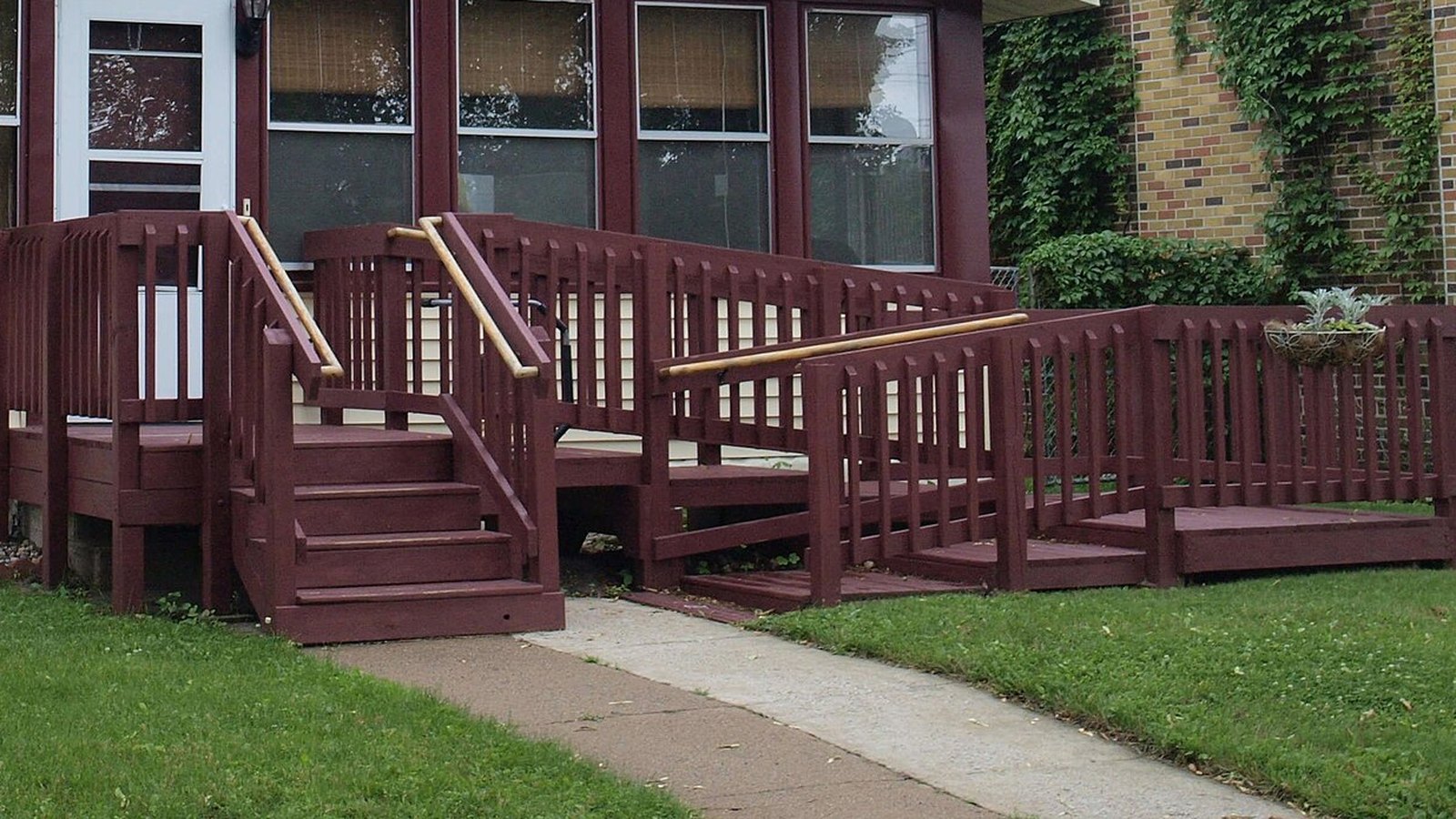
Under the Aged and Disabled waiver, home modifications “are physical changes to a private residence, automobile, or van, to accommodate the participant or improve their function,” DHHS says. Waiver funds can pay for adaptations “such as ramps, grab bars, widening doorways, and bathroom modifications.”
For a home under construction, the waiver can pay the difference between a standard fixture and the one a person needs, like a roll-in shower. It doesn’t pay for general repairs or upgrades: DHHS lists carpeting, roof repair, sidewalks, hot tubs, elevators and landscaping among the exclusions.
Vehicle modifications are changes “to an automobile or van that is the participant’s primary means of transportation in order to accommodate the special needs of the participant,” the DHHS page says. That can be the difference between getting to a doctor and staying home.
WOWT reported that the state plans to end funding for home and vehicle modifications in July. The station didn’t say whether that reaches only the Aged and Disabled waiver or every Nebraska Medicaid waiver program, and DHHS hasn’t said publicly.
09
A 4 percent cut for developmental disability providers
WOWT reported that developmental disability provider rates drop 4 percent starting January 1, and “another 4 percent reduction follows in 2028.” These are the rates the state pays agencies and independent providers who serve people on its developmental disability waivers. The DHHS providers page says its DD fee schedules “list rates for Medicaid HCBS Developmental Disabilities (DD) Waiver services.”
Four years ago, Nebraska went the other way. After the Legislature passed LB1011 and LB1014, the Division of Developmental Disabilities raised rates 17 percent for all DD services from July 1, 2022, a DHHS memo said, and 26 percent for some agency services.
Bloom couldn’t open the current DD fee schedule, which wouldn’t load without a login. So Bloom can’t tell you what a 4 percent cut means in dollars for any one Nebraska Medicaid waiver service. No source Bloom read said how providers will respond.
10
Two rate cuts, or one?
The Lincoln Journal Star reported Friday that DHHS “announced Friday it will cut Medicaid provider rates for a wide range of services beginning in 2027.” The headline on that Lee Enterprises story describes a “3% rate reduction for Medicaid providers.”
WOWT reported a 4 percent cut for developmental disability providers. Those may be two separate cuts, or the 3 percent may describe a different set of services. Bloom read only the free first paragraph of the Lee story and couldn’t find a 3 percent figure in any DHHS posting, so Bloom won’t merge the two numbers.
When DHHS posts the details, Bloom will report exactly which services each cut reaches.
11
What Bloom could not confirm
Bloom checked the DHHS pages where Nebraska Medicaid waiver changes would be posted. The Medicaid public notices page lists notices from November 20 on copays, behavioral health rates and a postpartum home visiting program, but none on the waivers. The provider bulletins page, last updated November 20, ends at Bulletin 26-24, which isn’t about these changes.
The DD providers page still shows a 2022 rate memo as its latest. The DHHS news releases page shows no release on the waivers. The DDA public comment page lists no new comment period.
Bloom also looked for a notice from Disability Rights Nebraska, whose homepage showed none, and from The Arc of Nebraska, whose site refused Bloom’s request. Bloom will update this report when DHHS posts the changes.
12
How the Aged and Disabled waiver got here
This isn’t the first fight over this Nebraska Medicaid waiver. DHHS opened a public comment period on proposed changes from December 5, 2025, to January 5, 2026. “Nearly 600 individuals participated via Zoom with hundreds of additional comments submitted through email and mail,” the department said.
On January 27, 2026, at Governor Jim Pillen’s direction, DHHS revised the proposal. It dropped a proposed 40-hour weekly cap on personal care for live-in caregivers and a 70-hour combined limit on personal care and companion services by legally responsible individuals, the January release said.
A second comment period followed. DHHS submitted the renewal on March 31, and CMS approved it on June 17, to take effect July 1, 2026, the DHHS public comment page says. DHHS kept a cost cap of 150 percent of average per-person nursing facility spending, which puts the cap at $138,657, with exceptions reviewed by a clinical team.
13
The money behind the changes
DHHS has tied this Nebraska Medicaid waiver to cost growth before. In its April 1 release, the department said it continues “to propose updates aimed at addressing significant cost growth, which has increased by more than 300% since 2016.”
Powell’s statement puts a number on the next step. Without the adjustments, DHHS says, its request to the Legislature could pass $1 billion; with them, it’s still about $500 million.
Nebraska Medicaid waiver families hear those numbers differently. A budget line is also a ramp that won’t be built, a van that can’t carry a wheelchair, a provider paid a little less. Both things are true at once, and lawmakers will weigh them in January.
14
What federal rules require before a Nebraska Medicaid waiver changes
Federal rules give families a say. Under 42 CFR 441.304(f), a state “must establish and use a public input process, for any changes in the services or operations of the waiver.” That process must be finished at least 30 days before the change takes effect or goes to CMS, whichever comes first.
The same section says a substantive change includes the “elimination or reduction of services” or “a constriction in the eligible population.” Such a change can only take effect once CMS approves it. A separate paragraph requires public notice of significant changes to how payment rates are set.
DHHS cited section 441.304(f) when it took comment on the Nebraska Medicaid waiver renewals and amendments last winter. Whether it will amend a waiver to make these changes, and when, it hasn’t said publicly.
15
A timeline of the Nebraska Medicaid waiver changes
- December 5, 2025, to January 5, 2026: first public comment period on the Aged and Disabled waiver renewal.
- January 27, 2026: DHHS drops the proposed caregiver hour limits.
- June 17, 2026: CMS approves the renewal, to take effect July 1.
- November 20, 2026: the state announces the Nebraska Medicaid waiver changes and Medicaid provider rate cuts.
- January 1, 2027: developmental disability provider rates drop 4 percent.
- January 6, 2027: the Legislature convenes.
- April 2027: first-ever Aged and Disabled waiver waiting list, as planned.
- July 2027: home and vehicle modification funding ends, as planned.
- 2028: a second 4 percent cut to developmental disability provider rates.
16
What happens next
The Nebraska Legislature says its 110th Legislature will convene January 6, 2027. That’s where DHHS will ask for the roughly $500 million Powell described, and where senators will decide how Nebraska pays for Medicaid.
The Nebraska Medicaid waiver changes come on top of others. Bloom reported on November 22 that Nebraska Medicaid will charge copays and cap therapy sessions in 2027. Nebraska was also the first state to enforce Medicaid work rules, as Bloom reported in its look at Nebraska’s Medicaid work rules.
Other states face the same choices. Bloom reported on November 19 that hundreds rallied at the Indiana Statehouse to save in-home Medicaid waivers. Bloom will keep following each Nebraska Medicaid waiver change as DHHS posts it.
17
What you can do
- If a home or vehicle modification under a Nebraska Medicaid waiver is pending or planned, call your service coordinator now. Ask what happens to it if it isn’t finished before July 2027, and write down the answer.
- If you may qualify for the Aged and Disabled waiver, ask your DHHS office or Area Agency on Aging about applying before April 2027.
- If you get services from a developmental disability provider, ask whether the January cut will change your staff or hours.
- Watch the DHHS public comment page. Before a Nebraska Medicaid waiver changes its services, federal rules require a public input process.
- When a comment period opens, write. Tell DHHS what a ramp, a van or a waiting list means for your family, in your own words.
- Contact your state senator before the session begins January 6, 2027. The Legislature’s website has a Find your Senator tool.
- Keep copies of every letter, email and service plan from DHHS, with dates.
18
Where to get help in Nebraska
Start with your Nebraska Medicaid waiver service coordinator, who helps “create your person-centered plan to ensure services address your needs,” DHHS says. DHHS’s main line is 402-471-3121, and its TDD line is 800-833-7352.
For legal help, Legal Aid of Nebraska runs a statewide AccessLine at 1-877-250-2016, Monday and Wednesday mornings and Tuesday and Thursday afternoons, Central time. People 60 and older can call its ElderAccessLine at 1-800-527-7249.
Disability Rights Nebraska is “the Protection and Advocacy system for people with disabilities in our state,” its site says. Its toll-free number is 800-422-6691. If you’re in crisis, call or text 988.
19
What Bloom is doing
Bloom’s disability advocacy offers free help with benefits applications and appeals after a denial, Medicaid included. Bloom’s free support groups include one on disability, chronic illness and benefits systems, and you can attend without speaking.
I believe a family’s right to stay together at home shouldn’t hang on a line in a budget. If this news frightens you, Bloom’s crisis support page lists people you can call at any hour, and Faith in Bloom offers pastoral care with no condition attached. A monthly gift keeps Bloom watching every Nebraska Medicaid waiver change line by line, and a one-time gift helps too.
20
Frequently Asked Questions
WOWT reported a 4 percent cut to developmental disability provider rates on January 1, 2027, and another in 2028. The state also plans a first-ever Aged and Disabled waiver waiting list in April and an end to home and vehicle modification funding in July.
Not as of Monday morning, November 23. Bloom found no public notice, provider bulletin or waiver amendment carrying them.
It’s a Nebraska Medicaid waiver that pays for long-term care at home for people on Medicaid who have a disability or are over 65 and need nursing-facility-level care. Services include personal care, respite, adult day health and modifications.
Physical changes to a home or to a car or van that a participant needs, like ramps, grab bars, wider doorways and bathroom changes. General repairs, elevators and landscaping aren’t covered.
DHHS hasn’t said. Ask your service coordinator, and if you may qualify for the Nebraska Medicaid waiver but aren’t enrolled, ask about applying before April 2027.
DHHS says it needs them for the “long-term sustainability” of the services. It says it still needs about $500 million more from the Legislature, and more than $1 billion without these changes.
Federal rules require a public input process before a state changes a Nebraska Medicaid waiver’s services. No comment period is open yet, so watch the DHHS public comment page.
Sovereignty over Servitude. 🌸
Support this work
Everything Bloom publishes is free to read and free to share.
Bloom Ministries is a registered 501(c)(3) in Salem, Oregon. Monthly giving is what lets us say yes before the money is in hand.
Keep reading
Nebraska Legislature · 22 November 2026Nebraska Medicaid Will Charge Copays and Cap Therapy Sessions in 2027Disability advocacy · 11 November 2026Nebraska Went First on Medicaid Work Rules: 1,100 Denied by August Iowa Legislature · 23 November 2026Iowa’s First Clinic for Sexual Assault Survivors Opens in Des Moines
