

Newsroom·Disability advocacy·News
Argentina’s Senate Votes 71-0 to Make Disability Protections Permanent
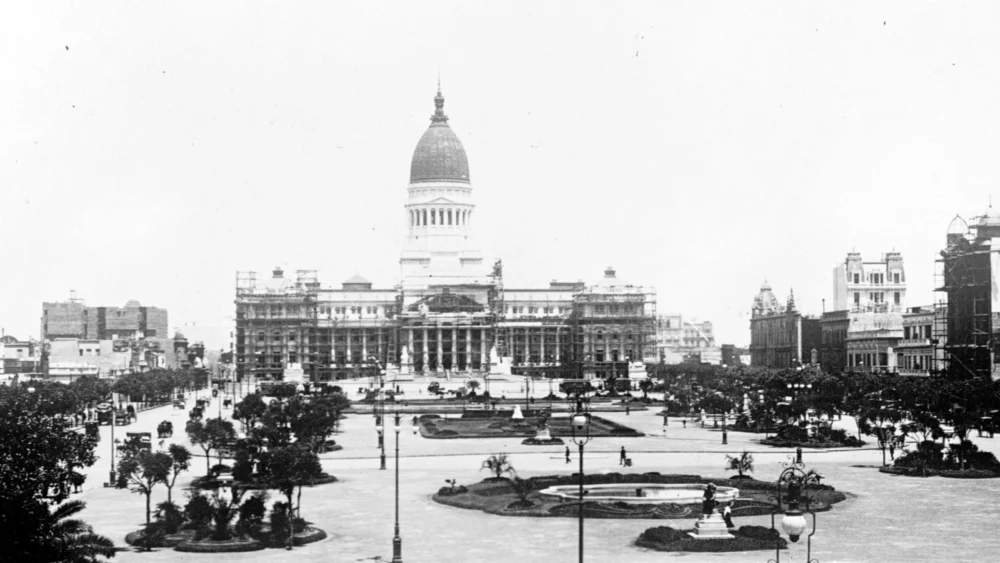
Disabled Argentines could keep their pensions when they take a job, and keep their health coverage, under a permanent law the Senate passed 71-0 on Thursday.
 Pastora Tori Matthews
Disabled people in Argentina could keep their monthly pension when they take a formal job, and keep their public health coverage, under a permanent disability law the Senate passed 71-0 on Thursday, November 19, 2026, Infobae reported. The vote came six weeks before the country’s emergency disability law, Law 27.793, runs out on December 31.
The new disability law turns a temporary rescue into standing rules. It writes the disability pension into law at 70% of Argentina’s minimum retirement pension, keeps the national fee schedule that pays for early intervention, day centers, residential homes and special transport, and orders the government to finish paying money it owes providers within 90 days. It isn’t final yet, because the president can still veto all or part of it. Here’s what the disability law does, how Argentina got here, how it compares with SSI in the United States, and what happens next.
01
What Argentina’s Senate passed
The vote came at 7:39 PM Buenos Aires time. Senators approved the disability law as a whole and article by article at once, with 71 votes yes, none no, no abstentions and one senator absent, according to the Senate’s vote record. The absent senator was Anabel Fernández Sagasti of Mendoza.
Its official name is the Law for the Strengthening, Sustainability and Permanent Efficiency of the Disability System, Agencia Presentes reported. It began as the national government’s proposal and took in demands from disabled people, carrying over the points of the emergency disability law, Presentes reported.
The Chamber of Deputies passed it first, after four hours of debate, Parlamentario reported, in a session that began October 21 and ran past midnight. The vote there was 237 in favor, nine against and four abstentions, the Buenos Aires Herald reported. With the Senate’s yes, Congress has finished its work, and the disability law goes to the president.
02
Why Argentina needed a new disability law
Start with Law 27.793. Congress passed it on July 10, 2025, and it declared a national disability emergency through December 31, 2026, with the option of one more year, according to the law’s text. It rests on Argentina’s duties under the United Nations Convention on the Rights of Persons with Disabilities, which Argentina gave constitutional rank through Law 27.044.
The emergency disability law told the government to fund disability pensions properly, to pay providers an emergency compensation for fees that fell behind inflation from December 2023 through 2024, and to tie provider fees to the index used for retirement pensions. It also let pension holders take formal jobs and keep the pension up to a set income line.
It had a hard road. President Javier Milei vetoed it in full on August 1, 2025, as the government later recounted in Decree 84/2026. The Chamber of Deputies overrode the veto on August 20, the Buenos Aires Herald reported. On September 4, the Senate followed, 63 votes to 7, in what the Associated Press called “the first such congressional reversal of his presidency.”
The government published Law 27.793 on September 22, 2025, but suspended its execution until Congress named a source of funding, Infobae reported at the time. On December 12, 2025, a federal court in Campana, hearing a collective rights case brought by a parent on behalf of their children, declared part of the suspension decree invalid and ordered the disability law applied immediately. The government appealed, and on February 4, 2026, it issued regulations for the emergency, citing the court’s orders, Decree 84/2026 says.
So for more than a year, the rights of disabled Argentines rested on an emergency that a court had to enforce, with an end date on the calendar. The new disability law is the answer Congress reached: the emergency’s main protections, written as permanent rules.
03
What the disability law does, article by article
Bloom read the text the Chamber of Deputies sent the Senate, filed as bill CD-18/26, in the Senate’s scanned PDF. Here’s what its 20 articles do, in plain English:
- Purpose (Articles 1 to 3): make disability policy permanent, predictable and transparent, under the UN disability convention.
- Fee schedule (Article 4): keeps one set of provider fees for every payer, updated with the index used for pensions, and keeps Law 26.816 on sheltered employment.
- Who qualifies (Article 5): a national disability certificate, identity papers, citizenship or five years of legal residence, individual net income under two minimum wages, no other pension, and a socioeconomic evaluation. A homeowner must show it’s the family’s only home.
- How much (Article 6): 70% of the guaranteed minimum retirement pension, updated under existing law.
- Money (Article 7): named Health Ministry programs, with the Treasury covering any shortfall.
- Employers (Article 8): keeps the break on social security contributions for employers who hire disabled workers on permanent contracts.
- Work, health, coordination and training (Articles 9 to 12): pension holders may work and get a health program, policy is coordinated with the Federal Disability Council, and providers must train staff in disability rights.
- Audits and transparency (Articles 13 and 14): audits with due process, and public reports on spending, fees and pensions.
- Provider debts (Article 15): a payment schedule within 30 days and full payment within 90.
- Final rules (Articles 16 to 19): repeals three articles of Law 27.793 on work, health and audits, which the disability law replaces with its own, takes effect the day after publication, and must be regulated within 30 working days.
04
Keeping a disability pension while working
For a disabled worker, Article 9 may matter most. A pension holder with a national disability certificate may hold a formal job or register as self-employed and keep the pension, as long as that income stays at or under two minimum wages, the disability law says. Above that line, the pension is suspended automatically for as long as the higher income lasts.
The way back is written in, too. When the job ends, for any reason, or income drops below the line, the holder can ask for immediate reinstatement and is paid from the day of the request. A person who tries a job and loses it doesn’t have to apply from scratch.
Uriel Weicman, a disability rights activist on the board of the Argentine Federation of Institutions of the Blind and Amblyopic (FAICA), told Presentes why it matters that this sits in a national law. A 2023 decree allowed the same thing, he said, but it was never put into effect and was later repealed.
Senator Patricia Bullrich, who leads the governing party’s bloc, called this compatibility one of the law’s main advances, La Nación reported. She said no one would have to keep waiting to be paid and to have their rights recognized.
05
Health coverage through Incluir Salud
Incluir Salud is the program that gives medical coverage to holders of non-contributory pensions, as Infobae described it in 2025. Under Article 10, holders of both the work-disability pension and the disability pension are entitled to a health program guaranteeing the basic services of Law 24.901. Infobae and La Nación both identified that program as Incluir Salud.
That clarity came from disabled people themselves. Verónica González Bonet, a journalist with the Network for the Rights of Persons with Disabilities, told Presentes her group worked with deputies because earlier drafts didn’t clearly cover every pension holder. As the disability law reads now, she said, coverage reaches both groups, and the fee schedule won’t be scrapped.
Coverage on paper isn’t care in practice. Weicman told Presentes that Incluir Salud has always been bureaucratic, and that people with union health funds or private plans get services more easily than self-employed workers.
06
Providers, the fee schedule and unpaid bills
Argentina built its system of disability services in 1997 with Law 24.901, a disability law that lists services such as early intervention, early education, day centers, therapeutic-educational centers, residential homes and special transport. Union health funds, called obras sociales, must cover them in full, and the state covers people who have no fund.
Providers are paid by a national fee schedule, the nomenclador. Presentes reported that the new disability law arrives amid a deep crisis: late payments to providers, a fee schedule losing value, and trouble getting and keeping pensions. Infobae reported that the final text keeps the non-contributory pension and its inflation updates, the universal fee schedule and a single unified fee.
La Nación reported that the law guarantees a monthly inflation update to the fee schedule, a mechanism the government’s 2027 budget bill had dropped. Article 15 sets a deadline for old debts: within 30 days of the disability law taking effect, the government must publish a schedule to finish paying the emergency compensation owed under Law 27.793, and it must pay within 90 days. The emergency’s end doesn’t erase the claims of providers who met its requirements.
Senator Pablo Bensusán of La Pampa warned about those debts during the debate, Infobae reported, and Senator Juliana di Tullio of Buenos Aires said the state owes providers nearly 80 billion pesos.
07
Audits, and the right to answer first
Article 13 orders the National Disability Secretariat in the Health Ministry to audit pensions regularly, starting with documents and income checked against government databases: the social security agency ANSES, the tax agency ARCA, the national registry of persons and a national tax and social data system.
The disability law requires what it calls inclusive due process. If a check shows someone no longer meets a requirement, the secretariat must formally notify the person and give a deadline to respond. Only after that may it suspend the pension as a precaution, and a holder who believes they still qualify may ask for immediate, provisional reinstatement until a final decision.
Senators disagreed about the audits so far. Bullrich spoke of false certificates, La Nación reported, while acknowledging irregularities that made beneficiaries prove their disability again and again. Di Tullio said the government had summoned 91% of pension holders for audits and suspended only 141. In the United States, Bloom has reported on a similar tension in CMS’s new fraud rule for home care.
08
Where the money is supposed to come from
Article 7 names the budget lines: Health Ministry programs for disability pensions, medical care for pension holders, and disability prevention. If they fall short, the Treasury covers the gap, and the Cabinet Office must shift funds as needed to keep every service running.
Senators cited the Congressional Budget Office’s estimates, Infobae reported. Senator Guillermo Andrada of Catamarca put the cost at about 600 billion pesos for this year, and Senator Agustín Monteverde of Buenos Aires City cited 1.2 trillion pesos for 2027.
The 2027 budget is still before the Chamber of Deputies. Senator Mariana Juri of Mendoza urged colleagues to make sure it carries these funds and not to settle for passing the disability law alone. Daniel Arroyo, the former deputy who wrote the emergency disability law, told Presentes that a law without a budget is only a set of ideas.
09
From emergency to permanent disability law: a timeline
These dates come from the laws, Decree 84/2026, the Senate’s records, the Associated Press, the Buenos Aires Herald, Infobae, Parlamentario and Vatican News:
- November 5, 1997: Law 24.901 creates Argentina’s system of basic disability services.
- July 10, 2025: Congress passes Law 27.793, the emergency disability law.
- August 1, 2025: The president vetoes it in full.
- August 20, 2025: The Chamber of Deputies overrides the veto.
- September 4, 2025: The Senate overrides it, 63-7.
- September 22, 2025: The law is published, with its execution suspended.
- December 12, 2025: A federal court in Campana orders it applied.
- February 4, 2026: Decree 84/2026 regulates the emergency.
- October 21, 2026: The Chamber of Deputies passes the permanent disability law, 237-9.
- November 9, 2026: Pope Leo XIV visits a home for disabled people in Claypole.
- November 19, 2026: The Senate passes it, 71-0.
- December 31, 2026: The emergency disability law expires.
10
What senators said on the floor
Senator Agustín Monteverde, who chairs the Budget committee and presented the bill on the floor, said the only way out of an emergency is stable rules that give people predictability, Infobae reported.
Senator Alicia Kirchner of Santa Cruz, who chairs the Population and Human Development committee, said the disability law was essential because the emergency was expiring, but that work remains. She questioned whether the social security agency, with 427 offices nationwide and 42.9% of them in Buenos Aires province, could carry the load.
Senator Ivanna Arrascaeta of San Luis, who chairs the Health committee, said disability has no political color, and that the country could keep lurching from emergency to emergency or build a lasting system with rules families recognize. Senator Martín Goerling of Misiones said the dignity of a disabled person and their family can’t be tied to an emergency that expires on December 31.
Bullrich spoke last, stressing the political and social agreement behind the disability law and saying both sides held part of the truth, Infobae reported. The Herald had put the bill’s essence in one line: it “closely resembles the emergency law but makes the funding permanent.”
11
What disabled Argentines say is still missing
The sharpest doubts came from outside the chamber. González Bonet told Presentes that, even with the emergency disability law in force, pensions aren’t being granted. She said workers in sheltered workshops got an update to their stimulus allowance that left out the last two minimum wage increases, and that compensation for inflation losses in 2024 and 2025 never came.
Weicman called for accessible ways to certify disability and a real voice for disability organizations in the Federal Disability Council.
Laura Alcaide, of the groups Orgullo Disca and Asamblea Discas en Lucha, told Presentes she doesn’t trust what the government approves in the name of disabled people’s wellbeing, because the emergency was never applied. She said the debate centered on services and providers rather than on pensions that don’t cover the basics, and that most organizations of disabled people weren’t invited to help write the disability law.
12
The pope’s words in the chamber
Ten days before the vote, on Monday, November 9, Pope Leo XIV visited the Pequeño Cottolengo Don Orione in Claypole, a home for people with disabilities founded in 1935 that has more than 400 residents, Vatican News reported. He told them people with disabilities aren’t a burden on society but a blessing.
In the English text Vatican News published, he said “a nation’s progress is also measured by how it welcomes all people with disabilities and particular needs.” La Nación reported it was one of the phrases senators repeated most in the debate on the disability law, and Senator Ana Marks asked that it not become empty words.
Faith has always measured a people by how it treats the ones easiest to overlook. On Thursday, many senators borrowed that measure. The test now is whether the money follows.
13
How it compares with SSI in the United States
American readers know a version of this question. Supplemental Security Income pays a maximum federal benefit of $994 a month to an eligible individual in 2026, rising to $1,029 in 2027 after a 3.6% cost-of-living increase, according to Social Security’s payment table. Bloom explained that raise in its report on the 2027 COLA for SSI and SSDI.
SSI treats work as a slope. Social Security doesn’t count the first $65 of earned income plus half of the rest, so “we reduce your SSI benefit only $1 for every $2 you earn over $65,” its work incentives page says. Medicaid may continue under section 1619(b) after earnings end the cash benefit, and expedited reinstatement can restore up to six months of temporary benefits.
Argentina’s disability law draws a line instead. The full pension stays until formal income passes two minimum wages, then pauses, and comes back on request when income falls. SSI also caps what you own at $2,000 for an individual, while Argentina’s text tests income and requires that a homeowner’s house be the family’s only home.
Neither design is perfect. A slope rewards every extra hour but trims the check, and a line keeps the check whole but can make a raise costly. Rules like these change, too, as Bloom reported when the VA moved to end reduced work tolerance for veterans who take jobs.
14
What happens next
The president now has ten working days to act. Argentina’s Constitution treats a bill not returned in that time as approved, lets the rest of a partly vetoed bill take effect only in limited cases, and lets Congress override a veto with two-thirds of both chambers. La Nación reported that the near-unanimous votes make a veto hard to sustain.
Once published in the Boletín Oficial, the disability law takes effect the next day, and the government must issue regulations within 30 working days. The 30-day payment schedule and 90-day deadline for providers run from that day.
The 2027 budget debate is expected in December’s extraordinary sessions, Presentes reported, and the emergency runs out on December 31. Bloom will follow this disability law through promulgation, the budget and the payments.
15
What you can do
If you or someone you love lives with a disability in Argentina or the United States, here’s what the records say:
- Keep your national disability certificate current. The disability law makes it the main gateway to the pension.
- If you take a formal job, track your income against two minimum wages. If your pension is suspended and the job ends, or your income falls, you can ask for immediate reinstatement.
- If you receive an audit notice, answer before the deadline. If your pension is suspended and you believe you still qualify, ask for provisional reinstatement while your case is decided.
- If you run a disability service, watch for the government’s payment schedule within 30 days of the law taking effect.
- If you get Supplemental Security Income and want to work, report your earnings and ask Social Security about section 1619(b) and expedited reinstatement.
16
What Bloom is doing
Bloom stands with disabled people and the families and workers who care for them, wherever they live. Bloom has reported on disability rights abroad, including India’s new disability rights committee, and on keeping care at home in the United States, including Indiana’s Medicaid waivers. I believe no one should have to choose between a paycheck and the support that lets them live, and Argentina’s senators said so with one voice.
If this news is heavy for you, Bloom’s crisis support page lists people you can call any hour, and Bloom’s disability advocacy page explains Bloom’s work for disabled people. Faith in Bloom offers pastoral care with no condition attached. A monthly gift keeps Bloom reporting on disability rights in every country, and a one-time gift helps too.
17
Frequently Asked Questions
It’s the Law for the Strengthening, Sustainability and Permanent Efficiency of the Disability System. The Senate passed it 71-0 on November 19, 2026, to replace the emergency Law 27.793 with permanent rules.
It was Argentina’s emergency disability law, passed in July 2025 and enacted over a presidential veto. It runs through December 31, 2026, and covered pensions, provider fees and a compensation for providers.
Yes. Under the disability law, a pension holder keeps the pension while formal income stays at or under two minimum wages, and can ask for reinstatement if income falls again.
Congress has passed it, but the president can veto all or part of it within ten working days. Congress can override a veto with two-thirds of both chambers.
The government must publish a payment schedule within 30 days of the law taking effect and pay providers who completed the paperwork their emergency compensation within 90 days.
SSI reduces the check by $1 for every $2 earned over $65. Argentina’s pension stays whole up to two minimum wages, then pauses until income falls.
Ten days before the vote, the pope visited a home for disabled people in Claypole and said a nation’s progress is measured by how it welcomes them. Senators repeated his words.
Sovereignty over Servitude. 🌸
Support this work
Everything Bloom publishes is free to read and free to share.
Bloom Ministries is a registered 501(c)(3) in Salem, Oregon. Monthly giving is what lets us say yes before the money is in hand.
Keep reading
 Disability advocacy · 20 November 2026Bipartisan Bill Would Stop Social Security Clawbacks From Children
 Disability advocacy · 20 November 2026Nine Federal Agencies Left Accessibility Flaws Unfixed, GAO Finds
 Tennessee Legislature · 20 November 2026Tennessee Hospital to Fix Accessible Parking and Pay $25,000
