

Newsroom·Justice for survivors·News
Argentine Court Rules Three Women Were Killed for Being Lesbians
A Buenos Aires court ruled Wednesday that Pamela Cobbas, Roxana Figueroa and Andrea Amarante were killed out of hatred because they were lesbians, and sentenced their attacker to life.
 Pastora Tori Matthews
Pamela Cobbas, Roxana Figueroa and Andrea Amarante were killed because they were lesbians, a court in Buenos Aires ruled on Wednesday, November 18, 2026, and it sentenced the man who attacked them to life in prison. Argentine activists have a word for what was done to them—lesbicide—and for two and a half years they asked the courts to say it out loud.
The verdict found that hatred of the women’s sexual orientation drove the May 2024 attack in the Barracas neighborhood of Buenos Aires. Amnesty International Argentina called the ruling a historic precedent in how Argentina’s courts answer lesbicide, while faulting the judges for leaving out the gender-violence aggravation every accuser had asked for. Here is what the court decided, who the women were, what Argentine law says, and why this lesbicide verdict reaches far beyond Buenos Aires.
01
What the court decided
Buenos Aires’ Oral Criminal and Correctional Court Number 5 convicted Justo Fernando Barrientos, 70, of three aggravated homicides and one attempted homicide in what activists call the Barracas lesbicide. The three judges, Adrián Pérez Lance, Juan Manuel Grangeat and Cinthia Oberlander, decided unanimously and imposed life imprisonment, Argentina’s Public Prosecutor’s Office reported. It’s the sentence the prosecutor and all three complainant teams had sought.
The court found each killing aggravated by hatred of the victims’ sexual orientation, by cruelty and treachery (the code’s terms are ensañamiento and alevosía), and by the use of a means capable of creating a common danger. Agencia Presentes published the verdict’s operative wording, which names the victims as Pamela Fabiana Cobbas, Mercedes Roxana Figueroa and Andrea Amarante. A fourth woman, Sofía Castro Riglos, survived, and the court counted the attack on her as attempted homicide with the same aggravations.
In short, the verdict:
- imposed life imprisonment for three completed homicides and one attempt;
- named hatred of the victims’ sexual orientation as an aggravating circumstance;
- did not apply the separate gender-violence aggravation, which would have classed the killings as femicide;
- rejected the defense’s requests for acquittal or for a conviction of simple homicide;
- turned down the reparation measures requested for Sofía, with reasons to follow;
- ordered Barrientos’s genetic profile added to Argentina’s national DNA registry for criminal investigations;
- set February 19, 2027, at 2 PM for the reading of its written reasons.
Before the verdict, Barrientos told the court he felt innocent, Perfil reported. His lawyer, Ricardo Antonio Richiello, had argued that his role wasn’t proved with certainty, Presentes reported.
02
Who Pamela, Roxana and Andrea were
The lesbicide verdict uses full legal names. The people who loved them use first names. Activists were there at every hearing to keep the memory of Andrea, Pamela and Roxana, and on Wednesday a tent outside the courthouse bore the words “Pamela, Roxana, Andrea, ¡presentes!” In Spanish, it declares each of them present.
Pamela Cobbas was 52, Mercedes Roxana Figueroa was 52 and Andrea Amarante was 42, according to the prosecutor’s office. They lived with Sofía in a single room of a boarding house on Olavarría Street, in precarious housing conditions, Perfil reported before the verdict. Presentes described them as two couples who formed a family. Sofía was Andrea’s partner, Amnesty International Argentina said.
Their neighbors were street vendors, self-employed workers, cardboard collectors, retirees and people who had been evicted or had lived on the street, Presentes reported. The women shared a bathroom, a kitchen and a little common space with everyone in the building. Samanta Pedrozo, a lawyer for the Argentine LGBT Federation, told the court they were four poor women who had come from living on the street, Presentes reported from closing arguments.
Pamela died on May 6, 2024. Roxana died on May 8, and Andrea on May 12.
A note on spelling: some outlets write Pamela’s surname as Cobas. Bloom follows the verdict’s wording as Presentes published it, which Amnesty International Argentina, the prosecutor’s office and the Buenos Aires Times also use: Cobbas.
03
Why the word lesbicide matters
Amnesty International Argentina defines a lesbicide as the killing of a woman motivated by prejudice and discrimination toward her sexual orientation, real or perceived. The word, as activists use it, carries a claim: that some killings of lesbian women aren’t random violence that happened to strike lesbians, but violence aimed at who they were and how they lived.
That’s why the families and activists didn’t only want a conviction. They wanted the lesbicide named. Outside the courthouse on Wednesday, someone had painted “Fue lesbicidio” in white on the street: it was lesbicide.
Before the verdict, Luciana Sánchez, the lawyer for Sofía, told Perfil that refusing to recognize the hate aggravation would erase the harm done to LGBT people and to the victims, and would reaffirm what the killer wanted, which was to erase who they were. The Coordinadora Lesbicidios Nunca Más (Lesbicides Never Again), which called the gathering at the courthouse, said that naming lesbicide gives account of a violence with its own history, its own logic and its own victims.
The verdict’s operative wording, as Presentes published it, speaks in the Penal Code’s language: homicide aggravated by hatred of the victims’ sexual orientation. For the activists outside, that was the lesbicide they had asked the court to name.
04
How Article 80 makes hate an aggravating factor
Argentina’s Penal Code punishes a simple homicide under Article 79 with eight to 25 years. Article 80 raises the penalty to life imprisonment for anyone who kills under any of a list of circumstances. Four of them mattered here:
- Clause 2: killing with cruelty, treachery, poison or another insidious procedure.
- Clause 4: killing for pleasure, greed, or racial, religious or gender hatred, or hatred of sexual orientation, gender identity or its expression.
- Clause 5: killing by a means capable of creating a common danger.
- Clause 11: killing a woman when a man commits the act and there is gender violence. This is the femicide clause.
Argentina’s Congress added sexual orientation, gender identity and its expression to Clause 4, and created the femicide clause, in Law 26.791, passed on November 14, 2012, and published on December 14, 2012. The same hate clause that the court applied to Pamela, Roxana and Andrea also covers killings driven by hatred of a person’s gender identity.
One detail of Article 80 explains the whole dispute over the verdict. The clauses that mattered here all carry the same penalty, life. Adding femicide wouldn’t have changed Barrientos’s sentence. It would have changed what the court’s record says about why three women died.
05
The femicide question in the lesbicide case
The prosecutor, Juan Manuel Fernández Buzzi, and all three complainant teams asked the court to apply both Clause 4 and Clause 11 of Article 80, according to the prosecutor’s office and Amnesty. In his closing argument on October 28, Fernández Buzzi said the victims lived harassed and discriminated against by Barrientos for being lesbians and for being women, the prosecutor’s office reported.
In the lesbicide verdict, the court accepted the hate aggravation but not the femicide one. Mariela Belski, executive director of Amnesty International Argentina, said that the court’s recognition of hatred of sexual orientation matters because this violence so often stays invisible, and that it sets a precedent for justice and reparation for LGBTI+ people, especially lesbians. But the women were also attacked as women, she said: prejudice and gender violence cross in lesbian lives, and a court’s answer has to be able to see both.
The judges haven’t said why they left femicide out. Their written reasons, due February 19, 2027, should explain it. Sánchez has also noted that the femicide aggravation wasn’t applied, Presentes reported.
06
What the prosecutor told the court
“The motive for the crime was hatred,” Fernández Buzzi told the court in his closing argument in the lesbicide trial, in the Buenos Aires Times’ translation. He said Barrientos felt superior and despised the four women because they didn’t fit the stereotype society assigns them, and that he took advantage of how vulnerable and precarious their lives were, according to the prosecutor’s office.
Witnesses testified that Barrientos had called the women by a slur for lesbians, a word Bloom won’t print, the Buenos Aires Times reported. Presentes reported that other neighbors used slurs too, and Carolina Cymerman, a public defender representing the families of Pamela and Roxana, said the prejudice around them carried a clear message: that these four lesbian women’s lives were worth less than others’.
The defense saw it differently. Richiello asked for acquittal on the benefit of the doubt and, failing that, a conviction for simple homicide without aggravations, Perfil reported, and he also challenged the constitutionality of a life sentence. The court rejected the defense’s requests.
07
A long road to the lesbicide verdict: a timeline
These dates in the lesbicide case come from the prosecutor’s office, Agencia Presentes and Perfil:
- Night of May 5 to 6, 2024: The attack at the Barracas boarding house.
- May 6, 8 and 12, 2024: Pamela, Roxana and Andrea die.
- During the investigation: The investigating judge refuses to let Sofía join the case as Andrea’s partner; the cassation court reverses him.
- December 2024: After repeated refusals, the Argentine LGBT Federation reaches the cassation court and wins standing to join the prosecution.
- May 18, 2026: The trial opens before Court Number 5, with three complainant teams and the prosecutor all citing the context of discrimination.
- October 26 and 28, 2026: Closing arguments; every accuser asks for life imprisonment with both the hate and femicide aggravations.
- November 2026: The defense asks for acquittal.
- November 18, 2026: Life imprisonment, with hatred of sexual orientation named in the verdict.
- February 19, 2027: The court’s written reasons.
Presentes counted 19 hearings in the lesbicide trial. The case moved, at almost every step, because lawyers and activists kept pushing. Sánchez told Perfil the investigating judge hadn’t wanted to gather evidence or recognize the crime as an attack on lesbians for who they were.
08
What a life sentence means in this lesbicide case
Article 80 calls for life imprisonment. Article 13 of the Penal Code lets a person serving life ask a judge for conditional release after 35 years, under conditions. Article 14 says that release won’t be granted to anyone convicted of an aggravated homicide under Article 80.
The court declared Article 14, along with Article 56 bis of Law 24.660, unconstitutional and inapplicable to Barrientos’s sentence, Presentes reported. The judges will explain that ruling in February too. Barrientos has spent two years in pretrial detention, according to Presentes.
09
What Sofía’s lawyer asked for, and what the court refused
Sánchez wanted the lesbicide answered with more than a prison term. According to Amnesty International Argentina, she sought free psychological and psychiatric care for Sofía for as long as she needs it, a benefit equal to a widow’s pension, and a request that the Buenos Aires Legislature consider expropriating the boarding house to make it a memorial space bearing the names of the four women.
She also asked for a program for lesbians’ autonomy, an end to discriminatory rules in shelters, data on violence against LGBTI+ people, a specialized prosecutor’s unit, and court protocols and training named for the victims. Before the verdict, she also asked that the national government publicly recognize the crime as a lesbicide, Perfil reported.
The court granted none of these measures and said it would explain why in its written reasons, Presentes reported. Sánchez said she’ll go to the cassation court after the reasons are released to try to reverse that.
She welcomed the conviction as “a very important recognition,” the Buenos Aires Times reported, then added: “The National Judiciary has an enormous debt to repay, and the sentence is not enough to satisfy us.”
10
Outside the lesbicide trial, a community kept watch
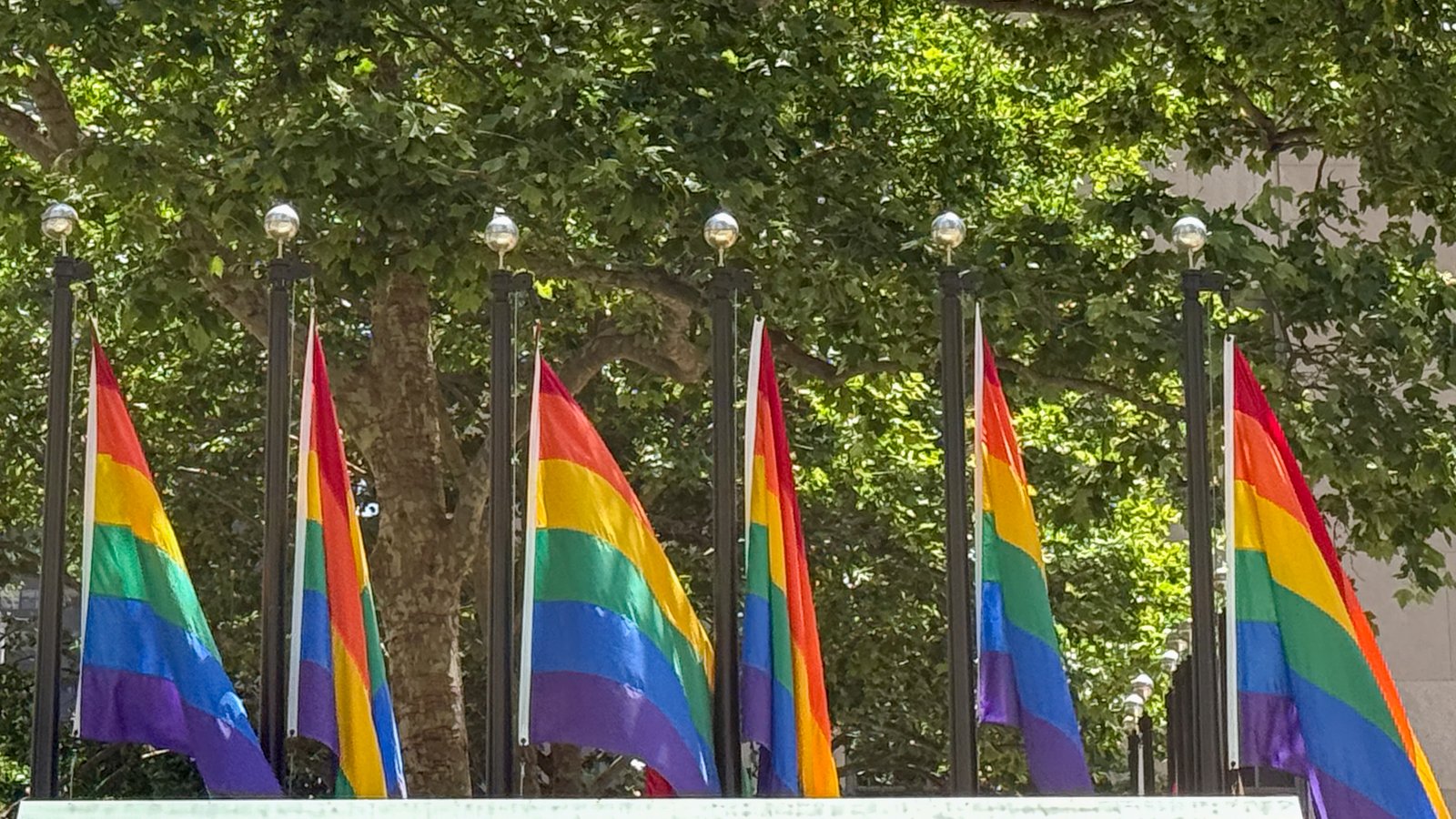
Activists gathered from 8 AM near the courthouse at Talcahuano 550, in the center of Buenos Aires, among LGBT flags and lesbian flags in orange, pink and white, Presentes reported. Rain began to fall almost at the moment the verdict was read. Then came tears, shouts, embraces and songs.
Since the killings, the call for justice for Pamela, Roxana, Andrea and Sofía has been carried at every Pride march, Presentes reported. More than 200 organizations, among them groups of the Mothers of the Plaza de Mayo, signed a document backing the trial, which the Argentine LGBT Federation’s lawyers pledged to file with the court, Presentes reported in October.
After the lesbicide verdict was read, Pia Lacelli of the Coordinadora read a statement. It said the ruling meant far more than one man’s conviction: it recognized that the attack was neither isolated nor cut off from hatred of lesbian lives. The group promised to keep pressing for prevention, reparation and protection, so that the memory of Andrea, Pamela and Roxana becomes real guarantees for every lesbian.
11
Why the lesbicide verdict matters beyond Argentina
This lesbicide verdict decides one case in one country, and parts of it may still go to Argentina’s appeals courts. It doesn’t bind any court outside Argentina. What it offers is an example: a court looked at three deaths and wrote down, in its own words, that hatred of who the women loved was the reason.
That matters because, as Amnesty’s Belski said, this kind of violence so often stays invisible. In English, the Buenos Aires Times and PinkNews quoted Amnesty as saying the ruling “sets a historic precedent in the judicial response to lesbicides.” Sánchez said in Amnesty’s statement that there had been no lesbicide convictions in Argentina since the code began naming discriminatory homicide based on sexual orientation. A motive no court ever records is a motive no one has to answer for.
The lawyers built on earlier work. Sánchez told Presentes when the trial opened in May that her team drew on a line of argument developed in the case of Diana Sacayán, whose killing Argentine activists call a travesticide, and in other cases where they represented victims. Presentes noted that the Inter-American Commission on Human Rights speaks of prejudice-based violence, crimes that don’t happen in isolation.
Today is the Transgender Day of Remembrance. Bloom’s report on the 62 trans people lost this year and its story on Minneapolis naming Stella Nez Perce ask the same thing the Barracas families asked: say the names, and say why. Across borders, from Portugal to Argentina, the law’s words about gender and sexuality still decide who is seen.
12
How U.S., Oregon and Washington law compare
The United States has its own hate crime law. Section 249 of Title 18 of the U.S. Code makes it a federal crime, under conditions the statute spells out, to willfully cause bodily injury because of a person’s actual or perceived gender, sexual orientation or gender identity, among other traits. The penalty is up to 10 years, or any term up to life if death results.
Oregon’s bias crime in the first degree, ORS 166.165, covers causing physical injury because of a person’s perceived sexual orientation or gender identity, among other traits; it’s a class C felony. Washington’s hate crime offense, RCW 9A.36.080, covers assault, property damage and threats because of perceived gender, sexual orientation, or gender expression or identity, and it’s also a class C felony.
Like Clause 4 of Argentina’s Article 80, the federal statute lists gender and sexual orientation side by side. The accusers in the lesbicide trial asked the court to recognize that the women were targeted on both counts, as lesbians and as women.
13
What happens next in the lesbicide case
The court will read its written reasons on February 19, 2027, at 2 PM. They should explain why the judges applied the hate aggravation but not the femicide one, why they denied Sofía’s reparations, and why they set aside the parole bar of Article 14. Sánchez plans to take the reparations question to the cassation court.
Amnesty International Argentina has asked the state to guarantee Sofía full reparation and the support she needs to rebuild her life, and to adopt effective policies to prevent violence against lesbians and other LGBTI+ people. Bloom will report the court’s reasons in the lesbicide case when it releases them.
14
What you can do
- Say their names. Pamela Cobbas, Roxana Figueroa and Andrea Amarante. Naming them, and naming the lesbicide, was the point of this fight.
- Know the law where you live. Federal law makes bias-motivated violence based on sexual orientation or gender identity a crime, and Oregon and Washington also cover threats.
- In Oregon, report bias. The Oregon Department of Justice’s Bias Response Hotline is 1-844-924-BIAS (1-844-924-2427), answered 9 AM to 5 PM Pacific on weekdays, with interpretation in more than 240 languages; you can also report online any time.
- If you’re in danger now, call 911.
- If this news is heavy, reach Trans Lifeline at 877-565-8860, The Trevor Project at 1-866-488-7386, 988 by call or text, or RAINN at 800-656-4673.
- Watch for February 19. Bloom will explain the court’s reasons.
15
What Bloom is doing
Bloom stands with lesbian women and with everyone who has buried someone because of who they loved. I believe a court that names hatred honors the dead, and I pray that Sofía receives the care and the home she still needs.
If this lesbicide verdict stirs old grief, Bloom’s crisis support page lists people you can call any hour, and Bloom’s support groups are a place to be known. Faith in Bloom offers pastoral care with no condition attached. A monthly gift keeps Bloom reporting cases like this one from courtrooms far from home, and a one-time gift helps too.
16
Frequently Asked Questions
Amnesty International Argentina defines a lesbicide as the killing of a woman motivated by prejudice and discrimination toward her real or perceived sexual orientation. Argentine activists use the word to insist that such killings be named.
On November 18, 2026, Buenos Aires’ Oral Criminal and Correctional Court Number 5 sentenced Justo Fernando Barrientos to life for killing three women and attempting to kill a fourth, aggravated by hatred of their sexual orientation.
Pamela Cobbas, 52, Mercedes Roxana Figueroa, 52, and Andrea Amarante, 42, who shared a boarding-house room in Barracas. Sofía Castro Riglos, Andrea’s partner, survived.
The court hasn’t said yet. Every accuser asked for the femicide aggravation under Article 80, Clause 11, and the judges will explain their decision on February 19, 2027.
It sets life imprisonment for killings under listed circumstances, including hatred of sexual orientation, gender identity or its expression, and the killing of a woman by a man amid gender violence. It’s the law behind the lesbicide conviction.
Sofía’s lawyer said she will go to Argentina’s cassation court after the written reasons are released, to challenge the denial of reparations.
Yes. Federal law and the laws of Oregon and Washington make bias-motivated violence based on sexual orientation or gender identity a crime.
Sovereignty over Servitude. 🌸
Support this work
Everything Bloom publishes is free to read and free to share.
Bloom Ministries is a registered 501(c)(3) in Salem, Oregon. Monthly giving is what lets us say yes before the money is in hand.
Keep reading
 Justice for survivors · 20 November 2026Jury Convicts 4 Men in Joanne Young Case: No One Can Consent for You
 Arizona Legislature · 20 November 2026Survivors Ask Supreme Court: Who Decides What Clergy Must Report?
 Justice for survivors · 20 November 2026House Bill Would Keep Military Domestic Violence Survivors Housed
