

Newsroom·Trans advocacy·News
Advocates for Trans Equality Names 62 Trans People Lost This Year
Every name is a person someone loved. Advocates for Trans Equality's 2026 Remembrance Report honors 62 trans people who died in the U.S. in the past year, 28 of them killed. Today, November 20, communities gather to say their names.
 Pastora Tori Matthews
Sixty-two trans people died in the United States between November 2025 and October 2026, and 28 of them were killed, according to the 2026 Remembrance Report that Advocates for Trans Equality released on November 18. Today, Friday, November 20, is the Transgender Day of Remembrance, and in churches, community centers and online gatherings across the country, people will speak those names aloud.
The Remembrance Report is more than a count. It honors each person by the name their own community used, and where it can, it tells who they were beyond how they died. Bloom will do the same, so you’ll find no detail here of how anyone died. Here’s what the numbers say and what they can’t, who is remembered, where people are gathering today, and what you can do.
01
If today is heavy for you
You don’t have to hold this day alone. A4TE’s support page says it plainly: “There are people on the other end who want to listen.” These lines are there for you:
- 988 Suicide & Crisis Lifeline: call or text 988, any time, day or night. Veterans can press 1.
- The Trevor Project, for LGBTQ+ young people: call 1-866-488-7386 or text START to 678-678, 24 hours a day, every day of the year, as its help page says.
- Trans Lifeline, peer support run by trans people: 877-565-8860, weekdays from 10 AM to 6 PM Pacific. It closed its hotline on Trans Day of Remembrance last year, so if no one answers today, call or text 988 or call The Trevor Project.
- BlackLine, peer support and counseling that centers Black, Indigenous and people of color: 1-800-604-5841.
- RAINN, for survivors of sexual violence: 800-656-4673.
- National Domestic Violence Hotline: 1-800-799-7233, or text 88788.
Bloom’s crisis support page lists more people you can call at any hour. If you worry that a call could bring police to your door, Trans Lifeline says it doesn’t do nonconsensual active rescue, and A4TE points readers to the line’s #SafeHotlines campaign. And you don’t have to be in crisis to reach out. As Trans Lifeline puts it, “you don’t need to be in a crisis to call.”
02
What the Remembrance Report found
The 2026 Remembrance Report covers November 1, 2025, to October 31, 2026. It records 62 deaths of trans people in the United States: 28 known killings, 21 suicides, and 13 deaths of natural or unknown causes. The people it remembers lived in 30 states and Washington, D.C.
This is the fifth year Advocates for Trans Equality has produced the Remembrance Report. A4TE built it from national and local news coverage, from national, state and local LGBTQI+ organizations, and from volunteer-led community efforts, its press release says. Families and friends also write in directly, and each person’s profile cites its sources.
The report draws its circle wide. It includes binary trans and nonbinary people, third gender, Two Spirit and Faʻafafine people, “and other non-cisgender people.” Transgender Day of Remembrance began as a vigil for people lost to violence, but over time it has grown to include people who died of natural or unknown causes, Metro Weekly reported. The Remembrance Report holds all of them.
03
Black trans women, half of those killed
Of the 28 people the Remembrance Report counts as lost to violence, 16 were Black, about 57%. Fourteen were Black trans women. That means Black trans women accounted for half of all known violent deaths of trans people in the past year, the Remembrance Report says.
“Every name in this report belonged to a person: an artist, a student, a parent, a friend,” said Bahari Thomas, A4TE’s director of public education. Thomas said trans people, and Black trans women above all, “deserve more than remembrance.”
“All of us deserve to live long, safe, and full lives,” Thomas said, “and that requires an end to the policies and political scapegoating that put us in danger.” The same pattern shows up in the world count below: the people most at risk are the people who stand where several kinds of exclusion meet.
04
Why every count is too low
A4TE is plain about the limits of its own work: “The count is almost certainly incomplete.” Police, news outlets and families often misname or misgender trans people after they die, the press release says, so many deaths are never recorded as the deaths of trans people at all.
That’s why the Remembrance Report warns against reading its numbers as a trend line. Because of that undercounting, “researchers cannot make comparisons or inferences about how fatal violence against trans people has changed over time,” the report says. Its figures come from publicly reported stories, and A4TE says they may change as more names come in.
The Remembrance Report also says trans people rely more and more on activists and organizations to record these deaths, “especially as the federal government actively erases gender identity data from its own surveys.” When the record goes quiet, communities keep it themselves.
The memorial lists one person in Charlotte, North Carolina, only as “Unknown.” A4TE asks anyone who knows of someone missing from the Remembrance Report, or who has a correction to a story, to write to remember@transequality.org.
05
When the loss is suicide
The Remembrance Report counts at least 21 people lost to suicide this year. Bloom names no one in that group and describes no death. Suicide-prevention groups ask the press to write this way, because coverage can harm, or it can “have the positive impact of encouraging help-seeking,” as SAVE’s media recommendations put it.
The Remembrance Report quotes The Trevor Project on why the risk is higher. LGBTQ+ young people aren’t inherently prone to suicide, Trevor says, but are “placed at higher risk because of how they are mistreated and stigmatized in society.” That means the harm comes from how people are treated, and how people are treated can change.
If you’re thinking about suicide, please tell someone today. Call or text 988, call The Trevor Project at 1-866-488-7386, or call Trans Lifeline at 877-565-8860 during its hours. If you’re worried about a friend, reach out, listen, and help them connect with one of these lines.
06
Who the Remembrance Report remembers
The memorial invites readers to “Move through these stories at your own pace.” The Remembrance Report’s front page puts the purpose in four words: “Give them their flowers.” Here are some of the people the Remembrance Report remembers, in the words of the memorial:
- SaVanna Wanzer, 63, of Washington, D.C., was a founder of D.C. Trans Pride and a highly acclaimed advocate for the Black trans community and people living with HIV.
- Victoria Cruz, 79, of New York, was “a veteran of the 1969 Stonewall uprising and unwavering advocate for survivors of violence.”
- Kiara St. James, 50, of New York, was known as “a prominent activist for the rights of transgender people and those living with HIV.”
- Rebecca Heineman, 62, of Texas, is remembered across the gaming industry for her pioneering leadership and across the LGBTQ+ community for her steadfast advocacy.
- Christina Maria Huerta Iraci, 57, of Aztec, New Mexico, co-founded Sasha’s Rainbow of Hope, an LGBTQIA+ advocacy and resource center.
- Asir Hare, 38, of Milwaukee, was a U.S. Navy veteran and the parent of two teenagers.
- Max Bolduc, 26, of Waterbury, Vermont, worked five years in memory care as a licensed nursing assistant. He “had a special heart for caring for others.”
- Leia Trysiss Ali, 35, of Las Vegas, belonged to the Society of Fa’afafine in American Samoa, whose members remembered her as “a loving, giving and kind human being.”
- Asia Williams, 38, and Sophie Lee, 27, of Baltimore. Asia enjoyed nail art and Southern soul food. Sophie was a talented ballroom performer, deeply loved by her Baltimore community.
Bloom has written about two others this month. Stella Nez Perce, 36, was named by the Minneapolis City Council on November 12. Her sister shared, in words the memorial keeps: “My sister lived life to the fullest and never hid who she truly was.”
Denise Foster, 55, of Hawaii, is remembered as “the youngest of nine children, someone who loved sharing family meals and spending days at the beach.” The memorial tells as many of the Remembrance Report’s 62 stories as it can, and you can read them at your own pace.
07
Remembered in the Pacific Northwest
The Remembrance Report remembers Juniper Blessing, 19, of Seattle. She was a student at the University of Washington, where she studied in the Department of Atmospheric and Climate Science. The memorial also lists one person in Boise, Idaho.
It lists no one in Oregon. That doesn’t mean no one in Oregon was lost. A4TE says its count is almost certainly incomplete, and the Remembrance Report can only hold deaths that were reported and names that were recorded rightly.
08
Trans Murder Monitoring counts 273 worldwide
TGEU, Trans Europe and Central Asia, published Trans Murder Monitoring 2026 on November 11. It recorded 273 trans and gender-diverse people reported murdered worldwide between October 1, 2025, and September 30, 2026: on average, one every 32 hours. Murders were reported in 35 countries, the second-highest number since the monitoring began, including the first reported cases in Romania and Cameroon.
The United States recorded 29 of those murders, about one in ten, a level similar to 2025’s 31. Seven in ten took place in Latin America and the Caribbean, and Brazil alone accounted for about one in three. Argentina recorded its highest total ever, 16, while Mexico’s 29 was its lowest since 2011. Europe recorded 13, as many as 2024 and 2025 combined, and most of those victims were international migrants.
The pattern TGEU sees year after year matches what the Remembrance Report found at home. Almost all victims, 95%, were trans women or transfeminine people, about three in four were Black or Brown, and one in three were sex workers. Since data collection began in 2009, Trans Murder Monitoring has recorded more than 5,500 murders.
“These murders are not just numbers in a report; they are our friends, colleagues, siblings, parents, and members of our communities,” said Purity Tumukwasibwe, a TGEU board member.
09
Why the two counts differ
You’ll see two U.S. numbers today, 28 and 29, and they measure different things. The Remembrance Report counts U.S. deaths from November through October: killings, suicides, and deaths of natural or unknown causes. Trans Murder Monitoring counts only reported murders, worldwide, from October through September.
TGEU cautions that its figures are raw counts, not adjusted for population. Places with long-established groups that monitor and report killings get more murders onto the record, so the figures “show where murders are reported, not where a trans person is at greatest risk,” TGEU says. Asia’s total fell from 51 to 32, but some monitoring partners there couldn’t provide data this year, citing a lack of funding and even electricity.
Both groups agree on the main point. The true number is higher than anyone has been able to count.
10
Justice after a death
TGEU’s findings raise hard questions for police, courts and prisons. Where the perpetrator was known, 12% were members of the police, military or army: 13 murders, up from five the year before. Nine trans people were murdered or died in suspicious circumstances in prisons or police stations, compared with four the year before.
When local authorities documented a response, a perpetrator was arrested in only one in five cases, 21%. “For families and communities, the absence of justice can be another loss,” TGEU writes.
In the United States, the Remembrance Report notes that 30 states still don’t prohibit the “trans panic defense,” which lets an accused attacker argue that finding out someone is transgender justified violence against them.
11
What advocates are asking for
A4TE’s Remembrance Report ties this year’s losses to the political climate. Thomas said lawmakers across the country introduced more than 700 anti-trans bills this year, and that $400 million was spent on what Thomas called hateful ads this election cycle. Thomas asked for “more than a moment of silence” and said everyone who wants to feel safer needs to see swift action.
TGEU asks governments and institutions to:
- repeal laws and policies that criminalize or restrict trans identities, legal gender recognition, trans-specific health care and the public expression of trans identities;
- adopt hate crime and anti-discrimination laws that explicitly protect trans people at work, in school and in other areas of life;
- train police and other professionals to respond to anti-trans violence, with attention to Black trans women and sex workers;
- base prison placement on self-determination and the person’s own wishes and welfare;
- end the criminalization of sex work and protect trans sex workers’ labor rights;
- support trans human rights defenders so they can keep organizing without fear.
These are the groups’ requests. Bloom reports them so you know what’s being asked, and of whom.
12
Where people are gathering today
Online, A4TE hosts “In Loving Memory: A Trans Community Gathering” from 6 to 7 PM Eastern, 3 to 4 PM Pacific. Its registration page says the gathering will “uplift the stories of those who passed, recognize them as beloved community members, and honor their memories with action.” ASL interpretation and CART captioning will be provided. Its partners are the Transgender Law Center, Keshet, PFLAG National, the National LGBTQ Task Force and the Human Rights Campaign.
In Oregon, Basic Rights Oregon’s November 17 newsletter lists these gatherings, in Pacific time:
- Portland: a vigil at Q Center, 5:30 to 9 PM, and an interfaith vigil at First United Methodist Church of Portland, 5 to 7 PM.
- Eugene: a vigil presented by TransPonder at the Farmer’s Market Pavilion, 6 to 8:30 PM.
- Central Oregon: a vigil presented by Gender Hive, 5 to 7 PM. Email info@genderhive.org for the location.
- Astoria: a vigil at the Lower Columbia Q Center, 5:30 PM.
- Ashland: a peer chat and memorial art night presented by Rogue Trans at 611 Siskiyou Blvd, 6 to 8 PM.
- Online: “Trans Diaspora of Resilience,” hosted by Black & Beyond The Binary Collective, 6:30 to 9 PM.
In Seattle, the Seattle Trans and Nonbinary Choral Ensemble performs “The Sound of Remembrance: A Mosaic Requiem” from 7 to 9:30 PM at Illsley Ball Nordstrom Recital Hall, 200 University Street, Seattle Pride’s calendar shows. The concert reshapes the centuries-old requiem into “a contemporary act of remembrance.” Tickets start at $55.
In the Washington, D.C., area, Metro Weekly lists vigils at Metropolitan Community Church of Washington, D.C., at 6 PM and St. Mark’s Episcopal Church on Capitol Hill at 7 PM. Gatherings are also set for 6 PM in Oakton, Leesburg and Bethesda, and at Lawyers Mall in Annapolis. Check with each host before you go.
13
How the day began: a timeline
These dates come from A4TE, TGEU and Metro Weekly:
- 1998: Rita Hester, a Black trans woman, is killed in Boston.
- 1999: Gwendolyn Ann Smith, a trans advocate and writer, founds Transgender Day of Remembrance with a candlelight vigil in Rita Hester’s memory.
- 2009: TGEU begins collecting data for Trans Murder Monitoring.
- 2022: The first edition of the Remembrance Report in the series A4TE now publishes.
- July 2024: Advocates for Trans Equality is introduced, after the Transgender Legal Defense & Education Fund and the National Center for Transgender Equality merged.
- November 11, 2026: TGEU reports 273 murders worldwide in the past year.
- November 18, 2026: A4TE releases the 2026 Remembrance Report, remembering 62 people.
- November 20, 2026: Vigils and gatherings in communities across the country and online.
As the Remembrance Report recalls, Smith once said “it is vitally important that those we lose are remembered, and that we continue to fight for justice.”
14
What you can do today
- Say a name. Read the Remembrance Report’s memorial at your own pace and speak one name aloud tonight.
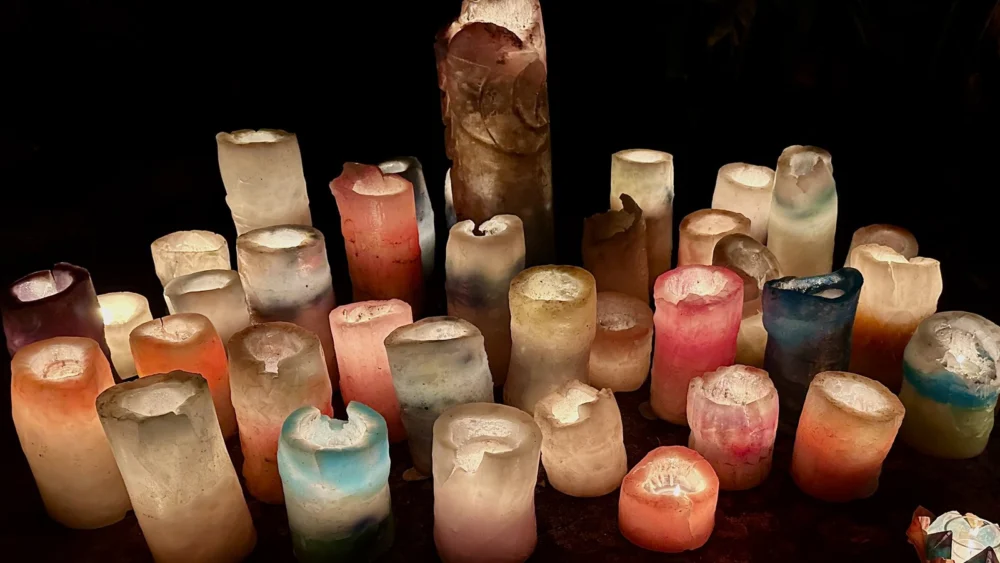
- Gather. Join A4TE’s online gathering or a vigil near you. If a crowd is too much, light a candle at home.
- Check on the trans people you love. A short message that says you’re thinking of them can carry a lot today.
- Use the right name. Misnaming after death keeps losses off the record. If you write an obituary, speak to a reporter or fill out a form for someone you’ve lost, use the name they lived by.
- Help the record. Send additions or corrections for the Remembrance Report to remember@transequality.org.
- Keep the numbers close. Save 988 and The Trevor Project, 1-866-488-7386, in your phone, and Trans Lifeline, 877-565-8860, for weekday hours.
- Ask your state lawmakers where your state stands on the trans panic defense and on hate crime laws that protect trans people.
15
What Bloom is doing
A list of names can feel like an ending. It isn’t. The Remembrance Report exists because people refused to let these lives be erased: families who wrote in, friends who corrected the record, volunteers who searched the news. Thomas said trans people deserve more than remembrance, and so do the living who carry this grief.
I believe each of these 62 people was a beloved child of God, and the way we say their names today should shape how we treat the people still with us tomorrow.
Bloom is holding these names today, and the people who grieve them. Bloom’s support groups are a place to be known by name and to grieve with others. Faith in Bloom offers pastoral care with no condition attached. If you need someone right now, Bloom’s crisis support page lists people you can call at any hour, and you can reach out today, tonight, or whenever the grief comes back.
16
Frequently Asked Questions
It’s Advocates for Trans Equality’s yearly memorial and data report on trans people who died in the United States. The 2026 Remembrance Report covers November 1, 2025, to October 31, 2026.
It remembers 62 trans people in 30 states and Washington, D.C.: 28 lost to violence, 21 to suicide, and 13 to natural or unknown causes. A4TE says the count is almost certainly incomplete.
TGEU’s Trans Murder Monitoring counts only reported murders worldwide from October to September, and it found 29 in the United States. The Remembrance Report counts all known U.S. deaths from November to October.
Black trans women accounted for half of known violent deaths in the Remembrance Report. Worldwide, TGEU found 95% of victims were trans women or transfeminine people.
“In Loving Memory” runs from 6 to 7 PM Eastern, 3 to 4 PM Pacific, today, November 20. ASL interpretation and CART captioning will be provided.
Its hours are weekdays from 10 AM to 6 PM Pacific, but it closed on Trans Day of Remembrance last year. If no one answers, call or text 988 or call The Trevor Project at 1-866-488-7386, both open around the clock.
Write to A4TE at remember@transequality.org. It also takes corrections to any story on the memorial.
Sovereignty over Servitude. 🌸
Keep reading
 Kentucky Legislature · 20 November 2026Kentucky SB 150 Trial Ends as Trans Students Await a Judge’s Ruling
 Georgia Legislature · 20 November 2026Augusta Man Gets Life Without Parole for Killing Felycya Harris
 New York Legislature · 20 November 2026Liverpool Students Walk Out Over Rule to Tell Parents About Gender
