

Newsroom·Trans advocacy·News
U.S. Ban Keeps Trans Australian Sailors Out of Submarine Training
Internal Australian Defence Force documents show trans and nonbinary Australian sailors can't start AUKUS nuclear submarine training, because sailors training in the U.S. must follow American rules.
 Pastora Tori Matthews
The U.S. military’s ban on trans service members now reaches sailors who don’t serve in the U.S. military at all. Internal Australian Defence Force documents, obtained by The Guardian through freedom of information requests, show that trans and nonbinary Australian sailors can’t begin training for the AUKUS nuclear submarine program, because that training happens in the United States under American rules.
Australia’s own military policy on gender identity hasn’t changed. But until Australia operates its own nuclear submarines, its sailors train inside the U.S. Navy’s system, and the documents say they must follow U.S. policy while they’re there. British sailors aren’t affected. Here’s what the AUKUS documents show and why the restriction falls on Australians alone.
01
What the documents say
The documents are briefings from inside the Australian Defence Force. London Loves Business reported, citing the documents obtained by The Guardian, that one briefing said: “ADF personnel undertaking duty in the US (including training) are required to comply with US policy.”
The next line is the one that matters for trans sailors. “Consequently, transgender and nonbinary ADF personnel and ADF career applicants are currently unable to commence the SSN (nuclear-powered attack submarines) training pathway,” the briefing said.
That sentence covers two groups. It reaches people already serving in the Australian Defence Force, and it reaches people who are applying to join. For a young trans Australian who wants a career on nuclear submarines, the AUKUS training pathway is closed before it starts.
The Australian Defence Force said its own policy on gender identity hadn’t changed, but acknowledged that “US government policy is different,” according to the same report. The restriction, in other words, doesn’t come from Canberra. It comes from the rules of the country where the training happens.
02
Where the U.S. rules come from
QNews reported that on the first day of his administration, President Donald Trump issued an executive order describing transgender people as those “expressing a false ‘gender identity’ divergent from an individual’s sex.” The order states that they “cannot satisfy the rigorous standards necessary for military service,” QNews reported.
That policy is being fought in American courts. Bloom has followed the challenge in our coverage of the transgender military ban case, which goes to trial in January. What the AUKUS documents show is a consequence the courtroom fight doesn’t capture: the policy’s reach beyond U.S. service members.
London Loves Business reported that a section of the U.S. Navy’s updated personnel manual specifically addresses Australian sailors in AUKUS submarine training. It requires personnel in American training pipelines to meet U.S. eligibility rules until Australia is able to operate its own fleet.
The American policy has moved fast. The Nightly reported in December 2025 that the Pentagon had begun removing around 1,000 active service members who are openly trans. Under formal guidance issued by Defense Secretary Pete Hegseth in May 2025, service members who hadn’t yet come out as trans were given 30 days to remove themselves, the outlet reported.
Those numbers describe Americans. The AUKUS documents show the same rules now shape the careers of people who never swore an oath to the United States.
04
What a minister said a year ago
The documents land differently because of what Australia’s government said publicly not long ago. In December 2025, The Nightly reported that Veterans’ Affairs and Defence Personnel Minister Matt Keogh was asked at the National Press Club about the Trump administration’s push against diversity policies in the U.S. armed forces.
“Certainly, we’re aware that there’s particular policy approaches that have been taken in the United States, and we need to have an awareness of that in terms of how we engage,” Keogh said, according to The Nightly.
The Nightly asked what his message would be to a trans recruit hoping to join the AUKUS program. Keogh said he’d give “the same message that I give to everyone,” which was: “please come and join our nuclear submarine program or any other program of the over 300 different roles that we have in the Defence Force.”
The same report said The Nightly had been told that Australia’s Defence Force Recruiting agency was closely watching the Pentagon’s policy and had decided to discourage trans applicants from pursuing AUKUS careers. Keogh said he wasn’t aware of the “specific issue,” The Nightly reported.
“But we are always seeking to encourage people of all backgrounds to join our defence force, because we want to see a defence force that reflects Australia,” Keogh said, according to the report. Eleven months later, documents made public this month describe a submarine training pathway that trans and nonbinary applicants can’t start.
05
Why British sailors aren’t affected
AUKUS is a partnership of three countries, but the restriction falls on only one. London Loves Business reported that British service members don’t face the same limits, because the United Kingdom already operates its own fleet of Astute-class nuclear-powered submarines and trains its own crews.
Australian sailors training aboard Royal Navy submarines are also unaffected, the report said. And the restriction doesn’t reflect any change in British recruitment policy. According to London Loves Business, the UK military continues to welcome trans and nonbinary personnel across its services.
So the difference isn’t about the AUKUS agreement itself. It’s about geography and dependence. An Australian sailor who trains with the Royal Navy follows British rules. An Australian sailor who trains in the United States follows American ones.
06
What AUKUS is
AUKUS was established in September 2021 to deepen defense and technology cooperation among Britain, Australia and the United States and to address security challenges in the Indo-Pacific, London Loves Business reported. Its central goal is to give Australia nuclear-powered submarines.
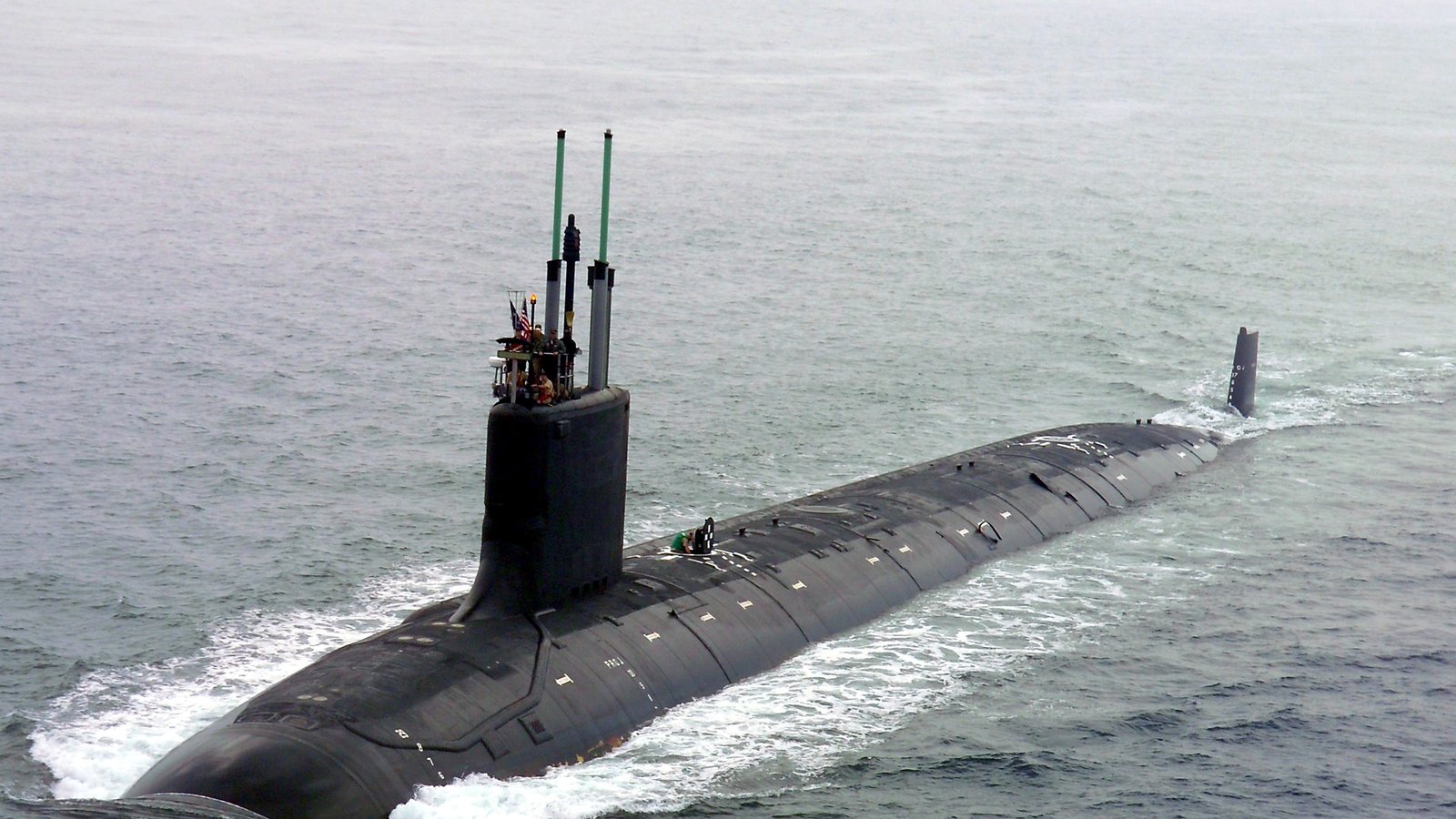
Under the agreement, Australia is expected to buy three U.S. Virginia-class submarines, with an option to buy two more, according to the report. Britain and Australia will also jointly develop a new nuclear-powered attack submarine, known as SSN-AUKUS, based on a British design. The program is meant to remain in service into the 2040s and beyond.
Australia doesn’t yet operate nuclear-powered submarines of its own. QNews reported that hundreds of Australian sailors and officers are training on U.S. nuclear submarines and at U.S. bases. That’s the pipeline the AUKUS documents now close to trans and nonbinary personnel.
07
How long the restriction could last
The answer depends on two timelines that neither Australian sailors nor Bloom’s readers control. The first is American policy. If the U.S. military’s ban changes, through the courts or through a new policy, the reason for the AUKUS restriction changes too.
The second is Australia’s own fleet. London Loves Business reported that until Australia’s fleet is operational, its sailors will remain dependent on American training infrastructure and “subject to Washington’s rules.” Once Australia trains its own crews on its own submarines, its own policy would presumably govern, but the documents Bloom reviewed don’t set a date for that.
In the meantime, a trans or nonbinary Australian who joins the Navy today can serve, but can’t start down the AUKUS nuclear submarine pathway in the United States. That’s a career ceiling written into another country’s rules.
That ceiling may last years. Australia’s submarine program is built around boats meant to serve well into the 2040s, and until Australian crews can train entirely at home, the pathway into them runs through American bases and American rules. A sailor who’d start training today could spend much of a career waiting on a policy decision made in Washington.
08
Why this matters beyond Australia
It would be easy to treat this as a foreign story. It isn’t only that. The AUKUS documents show how an American policy on trans service members travels: through training agreements, personnel manuals and the practical fact that partner nations train on American bases.
For Bloom’s readers in the United States, that’s a reminder that the military ban isn’t only about who can enlist here. It shapes partnerships, careers and the choices of other democracies that have made different decisions about trans service. Australia decided trans people can serve. The AUKUS training pipeline means that decision stops at the American border.
For trans service members and veterans everywhere, it’s also a reminder of something they already know. Policies written about you in one place follow you into rooms you never chose. Naming that plainly is part of how it changes.
09
A timeline of the AUKUS restriction
The story stretches across five years and two governments. Here’s how the pieces fit, based on the reports Bloom reviewed.
- September 2021: Britain, Australia and the United States establish AUKUS, with nuclear-powered submarines for Australia at its center.
- January 2025: On the first day of his administration, President Trump issues the executive order on trans military service described above.
- May 2025: Formal Pentagon guidance gives service members who hadn’t come out as trans 30 days to remove themselves, The Nightly reported.
- December 2025: Minister Keogh tells the National Press Club he’d encourage a trans recruit to “come and join our nuclear submarine program.”
- October 2026: Rear Admiral van Stralen says it “would be very difficult” to put a gender-diverse person into the training.
- November 2026: Documents obtained by The Guardian show trans and nonbinary personnel and applicants “are currently unable to commence” the training pathway.
10
What this means if you’re thinking about serving
If you’re a trans or nonbinary Australian considering a Navy career, the documents don’t say you can’t join. They say you can’t currently start the AUKUS nuclear submarine pathway that runs through the United States. Other roles remain open under Australia’s own policy, which the Australian Defence Force says hasn’t changed.
It’s worth asking recruiters directly, and in writing, which pathways are open to you and which aren’t. The Navy has said it will look for alternative career paths for gender-diverse recruits, according to QNews, so ask what those paths are, how they compare and whether they lead to submarine service later.
If you’re an American trans service member or veteran reading this, the AUKUS story is a reminder that the January trial over the U.S. ban matters beyond U.S. borders. Bloom’s newsroom will cover that trial as it happens.
11
What’s still unclear
It’s unclear how many Australian personnel or applicants are affected. The reports Bloom reviewed don’t give a number.
It’s also unclear whether Australia has raised the issue with the United States, or whether it has asked for an exception for its sailors. The documents describe compliance with U.S. policy, not negotiation over it.
There’s also the question of waivers. When the U.S. Navy announced its policy in March 2025, it said waivers for retention or accession could be considered case by case. The reports Bloom reviewed don’t say whether any waiver has been sought or granted for an Australian sailor.
Finally, it’s unclear whether the outcome of the American litigation over the ban would change the AUKUS restriction quickly. Bloom will follow both the AUKUS program and the U.S. case and report any change.
12
Why Bloom covers this story
Bloom reports on civil rights wherever a policy reaches the people we serve. Most of our coverage is American, because most of our readers are. But trans people serve in militaries around the world, and an American rule that follows them into a partner nation’s Navy is part of the same story.
It’s also a story about accountability. A government that tells recruits its doors are open owes them a clear answer when a partner’s rules close one. Bloom will keep asking for that answer.
13
What Bloom is doing
Bloom covers the military ban because trans people serve, and because the right to serve is part of full citizenship. We’ve followed the American case from its filings to its upcoming trial, and we’ll keep watching how the policy reaches beyond U.S. borders, including through AUKUS.
If you’re a service member, a veteran or a family member and today’s news is heavy, Bloom’s crisis support page lists Trans Lifeline at 877-565-8860, The Trevor Project at 1-866-488-7386, and 988 by call or text. Veterans can press 1 after dialing 988.
Bloom’s reporting runs on people who give a little every month. Become a monthly supporter, or give once if that fits your life better.
14
Frequently Asked Questions
An Australian Defence Force briefing said personnel training in the U.S. must comply with U.S. policy, so trans and nonbinary personnel and applicants “are currently unable to commence the SSN (nuclear-powered attack submarines) training pathway.”
No. The Australian Defence Force said its policy on gender identity hadn’t changed. The restriction applies because AUKUS submarine training takes place in the United States under U.S. rules.
No. The UK operates its own nuclear-powered submarines and trains its own crews, and Australians training aboard Royal Navy submarines aren’t affected, London Loves Business reported.
The Guardian obtained the internal Australian Defence Force documents through freedom of information requests, according to London Loves Business and QNews.
Rear Admiral Tish van Stralen said the Navy would seek alternative career paths for gender-diverse recruits who can’t enter the nuclear submarine program, QNews reported.
Yes. The policy is being challenged in U.S. courts, and Bloom has followed that case as it heads toward trial.
In December 2025, Minister Matt Keogh said his message to a trans recruit interested in AUKUS was “please come and join our nuclear submarine program,” The Nightly reported.
The reports tie it to U.S. policy and to Australia’s reliance on American training until it operates its own fleet. The documents Bloom reviewed don’t set an end date.
Sovereignty over Servitude. 🌸
Support this work
Everything Bloom publishes is free to read and free to share.
Bloom Ministries is a registered 501(c)(3) in Salem, Oregon. Monthly giving is what lets us say yes before the money is in hand.
Keep reading
 Colorado Legislature · 17 November 2026Supreme Court Turns Away Challenge to Colorado’s Misgendering Rules
 Trans advocacy · 16 November 2026Australia’s Top Research Body Backs Puberty Blockers as an Option
 Trans advocacy · 16 November 2026Online Passport Pilot: What Trans and Disabled Applicants Need to Know
