

Newsroom·Justice for survivors·News
Bipartisan Bills Would End Forced Arbitration for Kids Harmed Online
Two bipartisan Senate bills would let families of children harmed online, including survivors of sexual exploitation, take platforms like Roblox to court instead of being forced into private arbitration. Here is what they would change.
 Pastora Tori Matthews
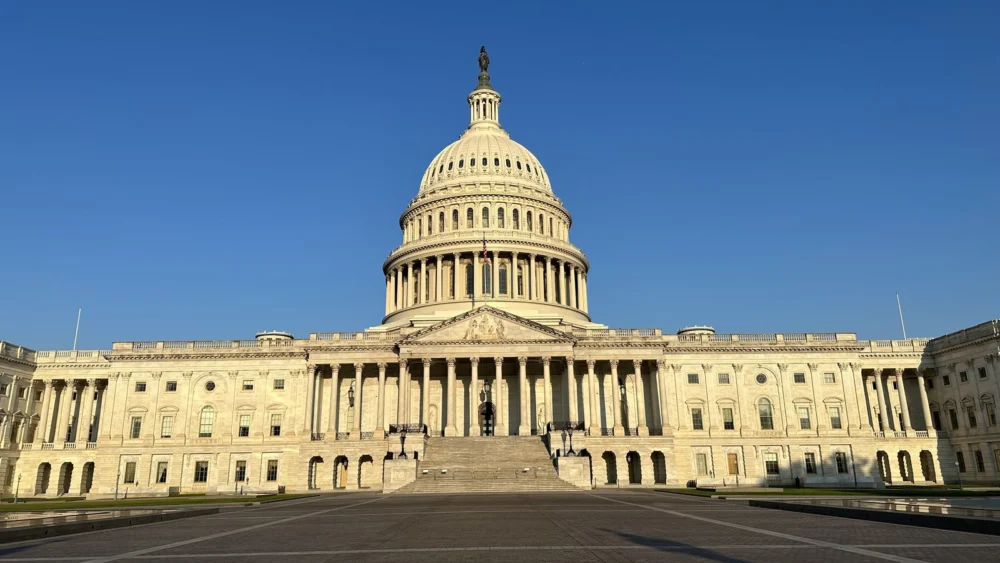
Children harmed on online platforms, including children sexually exploited online, could take those companies to court under two bipartisan bills introduced in the U.S. Senate on Monday, November 16, 2026. Both bills would end forced arbitration for those families: the fine print in a platform’s terms of service that sends their claims into private, closed-door proceedings instead of a public courtroom.
The bills arrived with the first-ever congressional hearing on Roblox, the gaming platform popular with young children, on Tuesday, November 17. Two survivors testified, and Roblox’s chief executive declined to appear, CBS News reported. Here is what the bills would do, why forced arbitration matters to survivors, and what parents can do now.
01
What the two bills would do
Senators Josh Hawley, a Missouri Republican, and Dick Durbin, an Illinois Democrat, introduced the No Forced Arbitration for Child Sexual Exploitation and Cyber Injuries Act. It would let families of children harmed by tech products or by sexual exploitation file lawsuits even if they agreed to terms of service requiring private arbitration, according to Hawley’s office.
The bill would close loopholes so that a click-through agreement can’t limit a child’s rights, and it would have a judge, not an arbitrator, decide whether the law applies to a child’s claim. It would allow class-action lawsuits. And it would preserve choice: survivors and their families could still pick confidential arbitration if they want it, or bring their claim in public court.
The same day, Senators Katie Britt, an Alabama Republican, Richard Blumenthal, a Connecticut Democrat, and Cory Booker, a New Jersey Democrat, introduced the Ending Forced Arbitration of Children Online Act. It would give families the right to take online platforms to court when a child is harmed, rather than being forced into private arbitration by terms of service agreements, the Alabama Reporter reported.
Two bills, five senators, both parties. The details differ, but the goal is the same: when a child is harmed online, forced arbitration shouldn’t decide where the family can seek justice.
02
Forced arbitration, explained
In arbitration, a private arbitrator rather than a judge or jury decides the dispute, usually in confidence. Forced arbitration happens when a company makes that process a condition of using its product. Many online platforms require users to accept arbitration clauses and class-action waivers as a condition of signing up, and those provisions can force families into private arbitration even when the user is a child and the claim involves serious harm, the Alabama Reporter reported.
At the hearing, Hawley asked Myriam Gilles, a law professor at Northwestern Pritzker School of Law, why it matters that these cases be heard in public. “The short answer, Senator, is that courts produce a public record, and arbitration is designed to do the exact opposite,” she said. Arbitration, she added, is designed to make everything as secret as possible, while “public accountability produces reform.”
Hawley also said Roblox’s terms include a limitation of liability that caps any claim against the company at $1,000 total, and that users agree to forced arbitration “no matter what your age is,” according to his office’s account of the hearing. Roblox’s response is below.
Class-action waivers matter too. When a company’s terms bar class actions, every family has to bring its own claim, alone, against a company with far more money and lawyers. The Hawley and Durbin bill would allow claims to be brought individually or together, as a class.
For a survivor, the difference is not abstract. A public trial can expose what a company knew and when. Forced arbitration keeps that record private, and the next family may never learn it.
03
The first congressional hearing on Roblox
The hearing was titled “Roblox and Online Gaming: Digital Playgrounds Endangering America’s Children.” Hawley chaired it as head of the Senate Judiciary Subcommittee on Crime and Counterterrorism, in the Dirksen Senate Office Building, according to his office’s account. Two abuse survivors and two experts testified, CBS News reported.
Roblox’s chief executive, David Baszucki, declined an invitation to testify. Hawley was blunt about what he believes children face. “If your children are on Roblox, they are being exposed in all likelihood to sexual predators,” he said, according to GamesIndustry.biz.
Hawley also said nearly 75% of American children between the ages of nine and 12 play Roblox regularly, and that predators pose as minors on the platform to gain children’s trust. Survivors described what happened to them as children on the platform, and parents of victims sat in the room. Bloom isn’t publishing the survivors’ accounts in detail.
One survivor, who testified under the name Woody Doe, said he was 11 when he started playing Roblox and was exploited. “There were no indications that this would have been something dangerous for a young man to get onto,” he said. “It seemed just like a virtual playground.” Asked how it affected him years later, he spoke of years of feeling inadequate. “I felt vulnerable,” he said.
The hearing grew out of a joint Senate Judiciary investigation that Hawley and Durbin opened in August. In a letter to the company then, the senators wrote that “the alleged criminal activity on Roblox warrants congressional scrutiny.” The subcommittee requested records on child safety, bullying and financial exploitation, among other topics, GamesIndustry.biz reported. “You trumpet Roblox as a safe digital playground for children as young as five,” the senators wrote. “But the public record raises serious questions about this promise of safety.”
04
The lawsuits behind the push
The bills come as Roblox faces nearly 200 lawsuits in federal court, CBS News reported. Families and state attorneys general claim online predators have been able to groom, extort and exploit children they met on the platform. The company has reached settlements with at least six states over online child safety issues, according to CBS News.
Roblox is enormous. It has 138 million daily active users, ranging in age from five to over 25, according to the company’s latest shareholder letter, CBS News reported. When a platform that size requires forced arbitration, the fine print shapes what happens to a very large number of children and families.
The lawsuits’ claims are allegations, and Roblox disputes them. That’s exactly what the bills are about: whether families get to ask a court to decide.
05
What Roblox says
Roblox rejects the claims. “The claims being made about Roblox are fundamentally misleading and ignore the rigorous safeguards we have in place to help protect users,” a company spokesperson told CBS News. The company pointed to mandatory age checks for chat, age-based content, a ban on sharing photos or videos in chat, and continuous monitoring and filtering of chat.
Roblox’s global head of public policy, Nicky Jackson Colaço, responded to the hearing’s focus on arbitration in a statement to WIRED that GamesIndustry.biz reported. “A legal position about arbitration is not a measure of a company’s safety record, and a hearing built around it fails to advance safety,” she said.
In a letter obtained by Bloomberg, Baszucki wrote that “Online safety cannot be solved by any one company,” GamesIndustry.biz reported. Roblox has added safety tools in recent years, including restricting users under 13 from direct messaging and adding facial recognition checks, according to GamesIndustry.biz. Last year, the company announced it would strengthen its age verification protections for minors, and its chief executive has said he believes those guardrails will become “the gold standard for safety and civility on the internet,” CBS News reported.
Roblox’s chief safety officer, Matt Kaufman, wrote this month that the company keeps working with law enforcement to “aggressively look for bad behavior and report it through the appropriate channels,” according to CBS News. None of those safety claims settles the legal question in the bills. Forced arbitration decides where a family can bring a claim, not whether a platform’s safety tools worked.
06
Why a public courtroom matters to survivors
Survivors of child sexual exploitation deserve to speak when they’re ready, and the law should meet them with an open door. Bloom has reported on that door from the courthouse side, in an Arkansas ruling that reopened old abuse claims and in Rhode Island’s fight over a law reviving clergy abuse lawsuits.
Forced arbitration closes that door before a case begins. “When a child is harmed online,” Britt said, “that family deserves their day in court should they choose.” Durbin said an agreement “buried in the terms of service shouldn’t limit a child’s or family’s rights to bring their claim before a judge or jury.”
Blumenthal said the measure “ensures that parents and survivors seeking Big Tech accountability can go to court and seek justice.” Booker said families “should not lose the right to seek justice in a courtroom just because companies inserted fine print” into their terms of service.
The bills don’t force anyone into court. Under the Hawley and Durbin bill, survivors and families could still choose confidential arbitration. The difference is who decides, and these bills put the choice back with the child’s family.
07
What the bills would not change
The bills wouldn’t decide any lawsuit against Roblox or any other company. Families would still have to prove their claims, and companies would still be able to defend themselves in court. What changes is the door: forced arbitration would no longer keep a child’s case out of a public courtroom if the family wants one.
The Hawley and Durbin bill also wouldn’t ban arbitration. A family that prefers a private process could still choose confidential arbitration. The bill takes the choice away from the company’s fine print and gives it to the people who were harmed.
Neither bill rewrites how online platforms must design their games or chat tools. Forced arbitration is one piece of a larger fight over children’s safety online, but it’s the piece that decides whether survivors can be heard in public at all.
08
Who is behind the bills
The push to end forced arbitration for children crosses party lines. Republicans Josh Hawley and Katie Britt and Democrats Dick Durbin, Richard Blumenthal and Cory Booker are sponsors of the two bills, according to Hawley’s office and the Alabama Reporter.
“I am investigating allegations that Roblox, a popular online gaming platform for kids, has become a breeding ground for sexual predators,” Hawley said when he introduced his bill. Durbin said he was proud to partner with Hawley on a bipartisan issue, and that he wouldn’t stop until the bill and other measures to protect children online are signed into law.
Britt framed it as a matter of accountability. “For too long, Big Tech has weaponized forced arbitration to shield themselves from accountability,” she said. Booker pointed to the range of harms children face online, from sexual exploitation and unsafe content to manipulation by AI chatbots.
09
A timeline of the push
These dates come from Hawley’s office, CBS News, the Alabama Reporter and GamesIndustry.biz:
- August 2026: Hawley and Durbin open a joint investigation of Roblox in the Senate Judiciary Subcommittee on Crime and Counterterrorism.
- Late October 2026: Roblox’s shareholder letter reports 138 million daily active users.
- November 16, 2026: Hawley and Durbin introduce the No Forced Arbitration for Child Sexual Exploitation and Cyber Injuries Act, and Britt, Blumenthal and Booker introduce the Ending Forced Arbitration of Children Online Act.
- November 17, 2026: The subcommittee holds the first congressional hearing on Roblox, the company’s chief executive declines to testify, and Hawley calls on Roblox to end forced arbitration voluntarily.
10
What parents can do now
The bills aren’t law yet. These steps can help families now:
- Talk with your child about which games they play and whom they talk to, and play together sometimes. Let them know they can come to you if anything online feels wrong.
- Check the safety settings. Roblox says it requires age checks for chat, places users under 16 in age-based accounts with protective defaults, and blocks images and video in chat.
- Read the terms of service before your family signs up. Look for arbitration clauses and class-action waivers, which many online platforms require.
- If an adult is targeting your child online, report it to the National Center for Missing & Exploited Children’s CyberTipline at report.cybertip.org or 1-800-843-5678, and call local police.
- Keep the account and messages, and let police or the CyberTipline guide you on what to save.
NCMEC’s CyberTipline is the nation’s centralized reporting system for the online exploitation of children, and its staff route reports to the right law enforcement agency, according to NCMEC.
Wherever you live. In Oregon, call the Oregon Child Abuse Hotline: 855-503-SAFE (855-503-7233). Anywhere in the country, RAINN’s National Sexual Assault Hotline is 800-656-4673.
11
What happens next
Both bills were just introduced, and each would need committee action and votes in the Senate and the House before it could become law. Their sponsors in both parties are pushing for that. Hawley closed the hearing with a direct appeal to the company: “you should also voluntarily end forced arbitration.”
For families with cases against Roblox, nothing changes yet, and forced arbitration clauses in today’s terms of service remain in force while Congress debates. Bloom will follow both bills, the lawsuits and any move by Roblox on forced arbitration.
12
What Bloom is doing
Bloom stands with survivors of sexual abuse at every stage, and access to a courtroom is part of justice. Bloom reported this week on Oregon’s lawsuit against OpenAI over children’s safety, and on the long fight to open courts to survivors. I believe no child should sign away their day in court by clicking a box they were too young to read.
If this story stirs up something you carry, you’re not alone, and what happened wasn’t your fault. Bloom’s crisis support page lists people you can call tonight, and Bloom’s support groups are there when you want company. Faith in Bloom offers pastoral care with no condition attached.
A monthly gift keeps Bloom following survivors’ rights from the first bill to the last vote, and a one-time gift helps too.
13
Frequently Asked Questions
Forced arbitration is when a company requires users to settle disputes in private arbitration instead of court, as a condition of using its product. Many online platforms put arbitration clauses and class-action waivers in their terms of service.
The No Forced Arbitration for Child Sexual Exploitation and Cyber Injuries Act would let families of children harmed by tech products or sexual exploitation sue even if they agreed to arbitration. It would allow class actions and let families choose court or confidential arbitration.
It’s a separate bipartisan bill from Senators Katie Britt, Richard Blumenthal and Cory Booker. It would give families the right to take online platforms to court when a child is harmed, rather than being forced into private arbitration.
Yes. The Hawley and Durbin bill would let survivors and their families choose whether to bring a claim in public court or in confidential arbitration. It would end forced arbitration, not arbitration a family chooses.
No. Roblox’s chief executive, David Baszucki, declined an invitation to testify. The company says the claims against it are misleading and points to safety features such as age checks for chat.
No. Both were introduced on November 16, 2026, and would need to pass both the Senate and the House and be signed before taking effect.
Report it to NCMEC’s CyberTipline at report.cybertip.org or 1-800-843-5678, and call local police. In Oregon, call 855-503-SAFE (855-503-7233). RAINN’s hotline is 800-656-4673.
Sovereignty over Servitude. 🌸
Support this work
Everything Bloom publishes is free to read and free to share.
Bloom Ministries is a registered 501(c)(3) in Salem, Oregon. Monthly giving is what lets us say yes before the money is in hand.
Keep reading
 Minnesota Legislature · 20 November 2026Minnesota Finds Bemidji Schools Failed to Protect Students From Staff
 New York Legislature · 20 November 2026New York Pays $1.2M After Conceding Fault in First Prison Abuse Trial
 Georgia Legislature · 20 November 2026Augusta Man Gets Life Without Parole for Killing Felycya Harris
