


Newsroom·Arkansas Legislature·News
Arkansas Supreme Court Upholds Law Reviving Expired Child Abuse Claims
The Arkansas Supreme Court ruled Thursday that lawmakers can revive childhood sexual abuse claims after the statute of limitations has run, sending four men's lawsuit back for further proceedings.
 Pastora Tori Matthews
This article discusses sexual abuse. It contains no graphic detail. Support: RAINN 800-656-4673; child abuse in Oregon 855-503-SAFE.
The Arkansas Supreme Court ruled on Thursday, November 5, that the state’s lawmakers have the power to revive childhood sexual abuse claims after the statute of limitations has run out. The decision reverses a lower court and sends a lawsuit by four men against James Darrell Nesmith, a former Little Rock pediatrician, back for further proceedings, KATV reports. To reach it, the majority overturned longstanding precedent that had barred the Legislature from reopening expired civil claims.
Justice Nicholas Bronni wrote for the majority. Chief Justice Karen Baker and Justice Shawn Womack dissented. The ruling doesn’t decide whether Nesmith did what the four men allege, and KATV is careful to say so. What it decides is who sets the clock on a survivor’s claim, and Arkansas’s highest court has handed that power back to the General Assembly. This report explains what the court decided, how the statute of limitations had shut these men out, what the ruling can and can’t do, and what it means for survivors in Oregon.
01
What the Arkansas Supreme Court decided
The question before the Arkansas Supreme Court was narrow, and it was old. Once the statute of limitations on a claim has expired, can a legislature pass a law that brings the claim back? For a long time, Arkansas courts said no. On Thursday, the majority said yes.
Justice Bronni put the holding in a single sentence. “And we now restore to the General Assembly its constitutional power to decide how long is too long to bring a claim,” he wrote, KATV reports. The word restore matters. In the majority’s telling, the power belonged to the Legislature all along, and the old precedent had taken it away.
Justice Womack saw the same decision as a break with history. “The majority departs from nearly two centuries of our vested-rights jurisprudence,” he wrote in dissent. Under that line of cases, once the statute of limitations had run, the person who might have been sued was treated as holding a settled right not to be sued over those events. Chief Justice Baker also dissented, and KATV’s report doesn’t give the full vote.
The practical result is easy to state. The four men’s lawsuit is alive again. It goes back to the circuit court for further proceedings, where their claims will be tested like any other. The ruling, KATV notes, does not determine whether Nesmith is guilty of the alleged abuse.
02
How the statute of limitations shut these survivors out

A statute of limitations is a deadline. It sets how long a person has to file a lawsuit, and once it passes, the courthouse door closes, however strong the claim. For survivors of childhood sexual abuse, that door can close long before they’re ready to speak about what happened to them.
The four men allege that Nesmith sexually abused them as children, between 1995 and 2007. By the time Arkansas lawmakers acted in 2021, the statute of limitations on their claims had already expired, according to a summary of the case published by the Arkansas Administrative Office of the Courts. Under the old rule, that was the end of it.
That year, the General Assembly passed Act 1036 of 2021, known as the Justice for Vulnerable Victims of Sexual Abuse Act. The court summary says the law extended the statute of limitations for child sexual abuse claims. It also did something bolder: it revived claims that had already expired.
The revival came with a window. A barred civil action “is revived,” the Act says, and “may be commenced not earlier than six (6) months after and not later than thirty (30) months after” the law took effect, the summary quotes. That’s a revival window of two years. The four men filed in 2022, inside it.
Then the courts said no anyway. The circuit court ruled for Nesmith because the claims had expired before the Act was passed. On February 5, 2025, the Arkansas Court of Appeals agreed. As the court summary puts it, a legislature may extend a limitations period only for claims that are not already barred when the new statute takes effect.
That reading left the revival window with nothing to revive. The survivors the window was written for, people whose claims had already expired, were the very people it couldn’t help. Thursday’s ruling reverses that. The Arkansas Supreme Court has now held that the General Assembly can revive time-barred claims of childhood sexual abuse, and these four men may go forward.
More detail (PG-13): what the record describes
The record and the reporting describe this case in legal terms, and so does this panel. The timeline below draws on KATV and the courts’ summary of the 2025 appeal.
- 1995 to 2007: The four men allege that Nesmith sexually abused them when they were children. Three say it happened during medical visits. The fourth says it happened at a home and at a church camp.
- 2021: The General Assembly passes Act 1036, extending the statute of limitations for child sexual abuse claims and reviving expired claims for a two-year window.
- 2022: The four men file suit, inside the revival window.
- In the circuit court: Nesmith wins summary judgment because the statute of limitations had run before the Act was passed.
- February 5, 2025: The Arkansas Court of Appeals affirms, in a decision cited as 2025 Ark. App. 59.
- November 5, 2026: The Arkansas Supreme Court reverses and sends the case back for further proceedings.
Court papers refer to the four men only by their initials, and this report does not repeat them. No court has ruled on whether the allegations are true.
03
Vested rights, and who decides how long is too long
At the Arkansas Supreme Court, the fight was about power: which branch of government decides when time runs out on a survivor’s claim.
The older rule treated an expired claim as finished business. Once the statute of limitations had run, the person who might have been sued gained a protection that the Legislature could not take back. Lawmakers could lengthen the time for claims that were still alive, the Court of Appeals reasoned, but not for time-barred claims. Justice Womack’s dissent defends that rule as nearly two centuries of Arkansas law.
The majority’s answer is that a statute of limitations is a choice the people’s representatives make, and that they may make it again. Any legislature weighs how long evidence stays fresh against how long a person harmed as a child may need before they can come forward. In Arkansas, Thursday’s ruling says, that weighing belongs to the General Assembly. Bronni’s phrase for it was the Legislature’s “constitutional power to decide how long is too long to bring a claim.”
Advocates for children argued for that result. CHILD USA filed a friend-of-the-court brief arguing that the Act “comports with Arkansas’ Due Process Clause,” according to its case page. The group describes the Act as “consistent with the national trend to permit revival of previously time-barred claims.”
The dissent’s worry, that people should be able to rely on the law as it stood, has deep roots and deserves a fair hearing. Bloom’s conviction is simpler. A child’s harm shouldn’t slip beyond the reach of justice because that child needed years to name it.
04
How a revival window works
A revival window is a set stretch of time in which survivors whose claims have already expired may file anyway. It doesn’t erase the statute of limitations for everyone, forever. It opens a door for a while, then closes it again.
Arkansas built its revival window into Act 1036. Expired claims could be filed starting six months after the law took effect and ending 30 months after it, which is two years in all. The four men filed in 2022, inside that revival window. Until Thursday, both courts that ruled on their case treated that window as if it couldn’t reach them.
New York used a revival window too, and the same week showed what one can produce. Its Child Victims Act, passed in 2019, let survivors sue until age 55 and gave older survivors until August 2021 to file, Insurance Journal reports. No law can give back lost years. But a statute of limitations that bends toward survivors gives them a place to stand.
05
What the ruling does, and doesn’t, do for survivors
Survivors may make real decisions based on this ruling, so precision matters. Here is what the ruling does, according to KATV:
- It settles, for Arkansas, that the General Assembly can revive childhood sexual abuse claims after the statute of limitations has expired.
- It overturns the longstanding precedent that had barred the Legislature from reopening expired civil claims.
- It sends the four men’s lawsuit against Nesmith back to the lower court for further proceedings.
And here is what it doesn’t do. It doesn’t find that Nesmith abused anyone; KATV notes that the ruling does not determine whether he is guilty of the alleged abuse. It doesn’t bind the courts of any other state. And it doesn’t, by itself, tell any other survivor what their own deadline is.
That last point matters most for readers in Arkansas. Whether this ruling helps a particular survivor depends on when they filed, which statute applies to them and the facts of their case. If you filed during the revival window and your case was dismissed because the statute of limitations had run, talk with your lawyer about what Thursday’s decision means for you. If you never filed, ask an Arkansas lawyer what deadline applies to you before you assume anything.
A first conversation with a lawyer can be just that, a conversation. You can ask questions, take notes and decide nothing that day. No one should feel rushed into a decision about their own story, and no one should be told their story no longer counts because a calendar page turned.
06
The same week in New York: an $800 million settlement
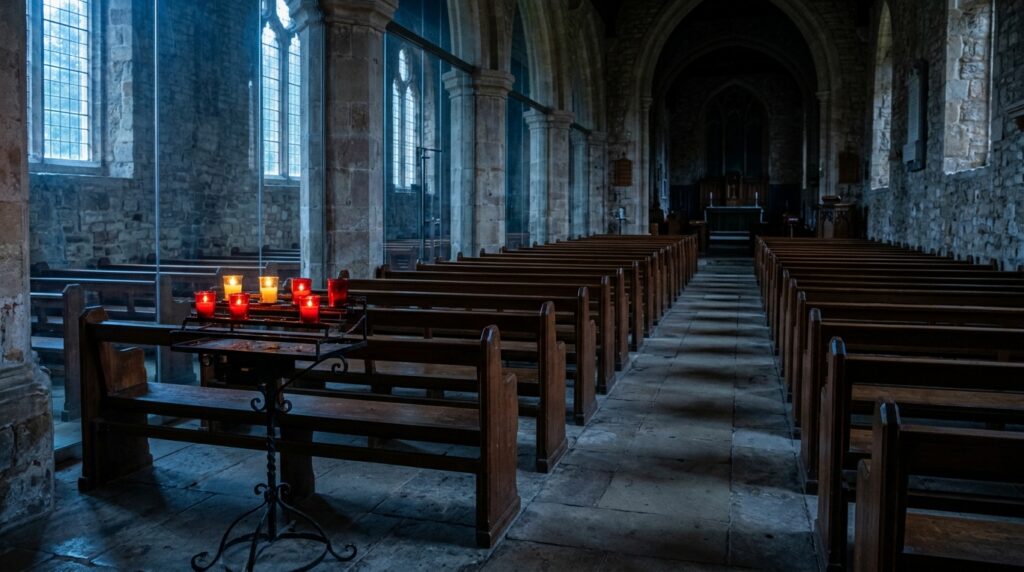
Revival laws are not abstractions. On the same day the Arkansas ruling came down, the Archdiocese of New York signed an $800 million settlement with sex abuse survivors, Insurance Journal reports. Archbishop Ronald A. Hicks announced it in a letter to parishioners. “As of today, November 5, 2026, we have signed that settlement agreement, making it official,” he wrote.
The compensation fund totals $804.25 million, drawn from the archdiocese and some parishes. Insurance Journal reports that it covers more than 1,300 outstanding claims; Jeff Anderson, whose firm represents more than 1,000 of the claimants, puts the number at 1,298. Survivors may take an expedited payment or have their individual claims evaluated, and about a third chose the $250,000 quick-pay option. The first payment, about $619.25 million, is due this year, and the second comes 15 months later.
The archdiocese avoided the bankruptcy filing it had threatened, and because it never filed, the settlement doesn’t need court approval. To pay, it sold its former Manhattan chancery and a ground lease under the Palace Hotel, cut its budget by 10 percent and laid off staff. According to Anderson, the church must also publish the names of “credibly accused” offenders. “This settlement represents accountability, an acknowledgment of the wrongs committed,” he said.
One piece is still unsettled. Chubb insured the archdiocese but isn’t part of the settlement, and it argues that its policies cover accidents, not knowingly allowed abuse or concealment of criminal activity. The archdiocese’s lawsuit against Chubb and its affiliate Century Indemnity Co. is pending in New York County Supreme Court, Insurance Journal reports.
The claims were filed under New York’s Child Victims Act and other laws. For a ministry rooted in faith, a church’s reckoning is painful news to report, and it’s right to report it. Churches are meant to be places of refuge for children. When one fails them, a public accounting is where repair begins.
07
The statute of limitations in Oregon

Bloom Ministries is based in Salem, Oregon, and our readers will reasonably ask what their own deadline is. Thursday’s ruling binds Arkansas courts only. It says nothing about Oregon law.
Oregon’s statute of limitations for civil claims of child abuse is ORS 12.117. As published online, it says a claim “must be commenced before the person attains 40 years of age.” If a survivor hasn’t discovered the connection between the abuse and their injury, the statute allows a claim “not more than five years from the date the person discovers” it. Whichever period is longer applies.
The statute’s definition of child abuse covers sexual abuse of a child, among other harms. It also says that it doesn’t create a new cause of action or expand an existing one. In other words, it sets the time limit; the right to sue comes from other law.
One caution matters. The online text Bloom read reflects the 2023 edition of the Oregon Revised Statutes plus changes from the 2024 session, according to the page itself. Laws change, and a survivor’s deadline is too important to guess. Before relying on any date, check the current statute of limitations with an Oregon lawyer.
Arkansas’s ruling shows what a legislature can do when it decides a clock ran too fast. It can set a new statute of limitations, and, in Arkansas at least, it can reopen claims that had already expired. Bloom believes no deadline should arrive before a survivor is ready to speak.
08
What Bloom is doing
Bloom’s newsroom will follow the Nesmith case as it returns to the circuit court, and we’ll report what the record shows, with links so you can read it for yourself. You can follow that reporting in our Justice for Survivors newsroom, alongside our coverage of the Epstein files and Michigan’s sex offender registry, two other places where the law decides whether survivors are heard.
Justice for Survivors is Bloom’s work to change the laws that shield abusers and fail survivors of sexual and domestic violence. A statute of limitations that runs out before a survivor can speak is one of those laws. Thursday’s ruling shows that such laws can change, and that a court can uphold the change. We’ll keep watching Oregon’s statute of limitations, and we’ll report it whenever lawmakers here take up the question Arkansas just answered.
You can read what Bloom stands for, and why this work is ours, in our mission.
If this story stirred up something heavy, you don’t have to carry it alone. RAINN answers at 800-656-4673. Oregon Child Abuse Hotline: 855-503-SAFE (855-503-7233). The 988 Suicide and Crisis Lifeline answers by call or text at 988, Trans Lifeline at 877-565-8860 and The Trevor Project at 1-866-488-7386. Bloom’s crisis support page lists more help.
And if what you need is someone to sit with you and listen, Faith in Bloom offers pastoral care with no condition attached.
09
Frequently Asked Questions
The Arkansas Supreme Court ruled that the General Assembly can revive childhood sexual abuse claims after the statute of limitations has expired. It reversed a lower court and sent four men’s lawsuit against former Little Rock pediatrician James Darrell Nesmith back for further proceedings, KATV reports.
A statute of limitations is a legal deadline for filing a lawsuit. Once the statute of limitations runs out, a court will usually throw out the claim, however strong it is.
Act 1036 of 2021, the Justice for Vulnerable Victims of Sexual Abuse Act, extended the statute of limitations for child sexual abuse claims and revived claims that had expired. Revived claims could be filed in a two-year revival window that opened six months after the law took effect.
No. KATV notes that the ruling does not determine whether Nesmith is guilty of the alleged abuse. It means the four men’s claims can go forward and be tested in court.
It depends on when they filed, which statute applies and the facts of each case. If you filed during the revival window and your case was dismissed because the statute of limitations had run, talk to your lawyer about Thursday’s ruling. If you never filed, ask an Arkansas lawyer what deadline applies to you.
Chief Justice Karen Baker and Justice Shawn Womack dissented. Womack wrote that the majority “departs from nearly two centuries of our vested-rights jurisprudence.”
As published online, ORS 12.117 requires a civil child abuse claim to be filed before the survivor turns 40, or within five years of discovering the connection between the abuse and the injury, whichever is longer. That text reflects the 2023 edition plus 2024 changes, so check the current statute of limitations with an Oregon lawyer.
RAINN answers at 800-656-4673, and the Oregon Child Abuse Hotline at 855-503-SAFE (855-503-7233). The 988 Suicide and Crisis Lifeline answers by call or text at 988, and Bloom’s crisis support page lists more help. Faith in Bloom offers pastoral care with no condition attached.
Sovereignty over Servitude. 🌸
Keep reading
 Disability advocacy · 17 November 2026Ambulance Company AMR to Pay $2.2 Million Over No-Beard Policy
 Legislation · 17 November 2026Class Action Accuses ICE of Warrantless Arrests Across Virginia
 Justice for survivors · 17 November 2026Federal Prisons Closed Dublin, but Sexual Abuse of Women Didn’t Stop
