

Newsroom·New York Legislature·News
Mamdani Plan Would Close Rikers Island by 2032. The Law Says 2027.
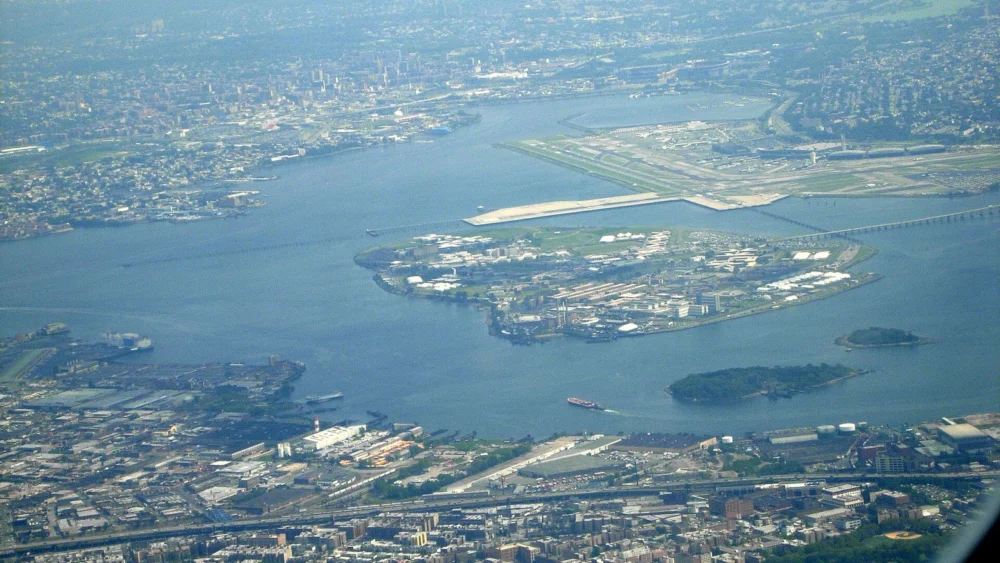
Most of the 6,600 people held on Rikers Island haven't been convicted of a crime. Mayor Zohran Mamdani's new plan would empty the island by the end of 2032, but the law still says August 31, 2027, and the City Council has to change it.
 Pastora Tori Matthews
About 6,600 people are held in the jails on Rikers Island, and on one day in August, about 85% of the people held there hadn’t been convicted of a crime. On Friday, November 20, 2026, New York City Mayor Zohran Mamdani released the city’s plan to move every one of them off the island by the end of 2032, the Mayor’s Office announced.
The 88-page plan would open four smaller jails in the boroughs between 2029 and 2032 and aims to cut the jail population to no more than 4,100 people. But city law still says Rikers Island must stop holding people by August 31, 2027, and the plan’s new date isn’t law until the City Council changes it. Here’s what’s decided, what isn’t, and what it means for the people inside and the families who wait for them.
01
What the Rikers Island plan decides
The Close Rikers: Strategic Plan comes from the city’s Office for Coordination of the Transition to Borough-Based Jails. Its core promise is plain: end all incarceration in the current jails on Rikers Island and relocate the jail population by December 31, 2032.
A 2025 city law, Local Law 140, required this report and set a deadline of May 1, 2026. It arrived more than six months late. “It is time to finally close Rikers Island,” Mamdani said. “We have a legal and moral obligation to close Rikers.”
Some of the work is already done. The administration opened a 104-bed therapeutic unit at Bellevue Hospital in April, closed the North Infirmary Command, and transferred that building and parts of two others out of the Department of Correction’s hands, so they can’t be reopened as jails without a significant legal process.
The Mayor’s Office says the city will invest $146 million next fiscal year in mental health care, substance use treatment, education, job training and victim services. The plan commits $290 million through fiscal 2030 to shrink the population on Rikers Island.
02
The new timeline, borough by borough
The plan replaces Rikers Island with four neighborhood jails and three hospital units. Here are the dates, from the plan and the city’s Close Rikers site:
- 2028: Two more hospital units open, at NYC Health + Hospitals/Woodhull (144 beds) and North Central Bronx (92 beds), mostly for people with significant mental health needs.
- 2029: The Brooklyn jail opens at 275 Atlantic Avenue. The plan aims for no more than 5,500 people in the city’s jails by then.
- 2031: The Bronx jail opens at 745 East 141st Street, and the Queens jail at 126-02 82nd Avenue in Kew Gardens.
- 2032: The Manhattan jail opens at 124-125 White Street.
- December 31, 2032: No one is held on Rikers Island. The target is no more than 4,100 people in jail, including no more than 220 women.
Each borough jail is designed for 1,040 beds, and with the hospital units the new system will hold 4,500 people. Brooklyn’s jail will also hold people from Staten Island. The city will close buildings on Rikers Island as new beds open, and it has committed $67.5 million toward demolishing a Rikers Island facility, with the first demolition project set for 2027.
03
Who is held on Rikers Island today
Behind every number is a person with a name and a family. The population on Rikers Island was 6,542 in late August, the plan says, and about 20,000 people pass through Rikers Island each year. On August 24, about 85% of the people there (5,579) were held pretrial, and about 60% of those were held on bail they couldn’t afford.
The burden doesn’t fall evenly. The jail population is 56% Black and 32% Latino in a city that’s 22% Black and 28.5% Latino, the plan reports. “Every night, thousands of New Yorkers who have been accused of a crime but not convicted sleep behind bars,” it says.
Most stays are short. Over half of the people who enter jail spend 30 days or fewer there, and nearly 75% go straight home from Rikers Island. Yet the plan warns that even a few days in jail “can mean losing a job, falling behind on rent or being separated from family.” That’s the quiet cost of pretrial detention, carried by people the law still presumes innocent.
04
Waiting years for a day in court
At the other end are people who wait years. The plan counts 1,470 people who’ve been jailed pretrial for over one year, 22% of the whole population. Of those, 289 have waited two to three years, and 210 have waited more than three. In fiscal 2026, 668 people spent more than two years in custody awaiting resolution of their cases, an 87% jump from the year before.
New York’s speedy trial law says felonies must be ready for trial within six months of indictment and misdemeanors within 90 days, the plan notes. Yet the city’s felony cases take 115 days longer to resolve than the rest of the state’s. The average stay for everyone leaving jail grew from 63 days in 2017 to 102 days in 2025.
So the plan treats court delay as the heart of the problem. The recent rise was “driven by the length of time people are staying, not by the number of people entering DOC custody,” it says. The city will form an Interagency Case Delay Task Force with the courts, district attorneys and defense lawyers, and speed up evidence sharing by the NYPD, the FDNY and the medical examiner.
Chief Administrative Judge Joseph Zayas said in a statement in the plan that the courts “must not accept a status quo that tolerates excessive delay.” In a video released with the plan, Mamdani said, “We do not want any New Yorker to spend a day longer in detention than necessary,” Gothamist reported.
05
Mental illness on Rikers Island
As the jail population has shrunk, the plan says, the people who remain are increasingly people with complex needs. Correctional Health Services reports that 61% of people in jail are enrolled in mental health services, 22% are diagnosed with a serious mental illness, and 29% are homeless or likely to be homeless when they leave.
People enrolled in mental health services stay almost three times longer than others, regardless of charge, and their share of releases rose from 25% in 2017 to 40% in 2025. The plan warns that people with serious mental illness “can decompensate while in custody.”
The Bellevue unit serves people with complex medical needs such as cancer and congestive heart failure, and the Woodhull and North Central Bronx units add 236 beds, for 340 therapeutic beds in all. The city will also work with the state Office of Mental Health to add psychiatric beds and shorten waits for people found unfit to stand trial.
For disabled New Yorkers, this is the center of the story. For medically vulnerable people in custody, the Mayor’s Office said, “a typical jail setting is not an appropriate place to receive the care they need.”
06
Why the island itself is the problem
The plan names four problems that recur in nearly every official review since the 1970s: unstable, gas-emitting ground; a decaying physical plant; buildings that can’t be cooled or ventilated; and an isolated location reached by a single road that mass transit doesn’t serve.
For families, that isolation is the daily cost of love. From central Brooklyn or the Bronx, the plan says, a trip to Rikers Island by public transit takes at least an hour and a half and several train and bus transfers.
Correction Commissioner Stanley Richards, the first formerly incarcerated person to lead the Department of Correction, said it in a video released with the plan: “At Rikers, out-of-sight, out of mind is the norm for both people in our custody and our staff.”
07
What the new borough-based jails are built to do
The borough-based jails sit closer to courts, lawyers and public transportation, so visits and court dates don’t swallow a whole day. Housing units will hold 20 to 40 beds, with single cells, natural light, temperature control and outdoor space.
Queens will hold all women in custody. After hearing from formerly incarcerated women and service providers, the city decided in 2019 to centralize “women and gender non-conforming individuals” in one standalone facility near Elmhurst Hospital, the plan says. It cut that facility from 450 beds to 250 by planning to divert more women into community programs.
The plan also promises to restore the city’s online bail payment portal, down since 2023, so families can post bail without traveling.
08
What the law says: August 31, 2027
Many reports call it the 2019 law. Here’s the record. On October 17, 2019, the City Council voted 36-13 to approve the plan to close Rikers Island and build four smaller jails, then aiming for 2026, NPR reported. Lawmakers invoked the names of former prisoners who died, among them Kalief Browder, who was held on Rikers Island for three years, the AP reported.
The hard date came later. Local Law 16 of 2021, first introduced in 2019 as Introduction 1592, passed the Council on February 11, 2021, and the mayor approved it on February 25. It added section 4-215 to the city’s Administrative Code.
The text is plain: “By no later than August 31, 2027, all portions of Rikers Island shall be fully transferred” to the city’s administrative services department “and shall no longer be used by the department of correction for the housing of incarcerated persons.” The same law requires transfers of unused parts of the island every six months, which is how the North Infirmary Command and parts of two other buildings changed hands in July.
The city has known for a while that it would miss 2027. “The deadline for 2027 is, at this point, not going to happen,” Councilmember Selvena Brooks-Powers, who chairs the Committee on Criminal Justice, told the Queens Eagle in September.
09
What still needs the City Council
This is the line between what’s decided and what isn’t. The plan’s 2032 date isn’t law yet. The administration still needs the City Council to formally adopt the plan, Gothamist reported, and the plan itself promises to work with the Council “on legislation to bring this plan into law.”
The Mayor’s Office said the City Council will introduce legislation to update the legal timeline to match construction. What that bill says is still open. In September, lawmakers told the Queens Eagle it could set a single new deadline or a series of deadlines that could be extended if the city meets specified benchmarks.
City Council Speaker Julie Menin said more time “is needed to fulfill the commitment the City Council made to New Yorkers in 2019 when we legislated closing Rikers Island.” She added: “To achieve this transition, we must reduce court processing times that have impacted the jail population.”
Councilmember Sandy Nurse, who sponsored the 2025 law that required Friday’s report, called the plan “the right move.”
10
The federal court is still watching Rikers Island
Whatever the Council does, a federal court keeps watch. In October 2015, the city entered a consent decree in Nunez v. City of New York over the use of force and other conditions at Rikers Island, the plan recounts. A court-appointed monitor has tracked reforms there since.
Citing “abnormal and unacceptable” conditions, a federal judge appointed an outside manager, the AP reported. That remediation manager, Nicholas J. Deml, took broad control of the jails in January, Gothamist reported. His Remediation Action Plan, filed July 14, 2026, says the court appointed him after holding the city in civil contempt of 18 provisions of four orders meant to stem violence and excessive force.
The remediation manager doesn’t soften what he found. The Department of Correction “struggles to perform even the most basic correctional functions,” he wrote, and violence is “demonstrably worse than when the Consent Judgment went into effect in 2015,” quoting a November 27, 2024 court order. He also wrote that staff “operate in environments characterized by violence, trauma, and significant operational strain.”
His first-year benchmarks run to April 2027. The city’s plan promises to follow his priority areas and to work with the remediation manager, the federal monitor and the Board of Correction on conditions today and in the new jails.
11
How the plan would shrink pretrial detention
The borough-based jails can’t hold everyone now on Rikers Island, so the plan aims to bring the population from about 6,600 to 5,500 by 2029 and 4,100 by the end of 2032. To get there, the city would:
- Expand diversion at arraignment, supervised release, and service hubs at or near courthouses for housing, benefits and behavioral health care.
- Build pretrial advocacy teams that prepare release plans, challenge unaffordable bail and bring bail appeals.
- Upgrade electronic monitoring as a step-down for people first held in jail.
- Open 190 more units of supportive housing for people coming home, and grow the Kinship Reentry Housing Program from 50 to 300 families.
- Add $50 million a year for education, job training and counseling inside the jails, beginning in fiscal 2028.
- Add $15 million for victim services and $1 million for the Bronx District Attorney’s office to expand mental health care and legal help for victims and survivors.
12
The doubts, stated plainly
Not everyone thinks the numbers will hold. The plan says its population estimate “is not meant to be a forecast,” and it doesn’t say what the city will do if the population stays above the target, Gothamist noted.
Elizabeth Glazer, who helped write the original closure plan as Mayor Bill de Blasio’s criminal justice director, warned that without broad reform the city “risks merely exporting the violence of Rikers into new ZIP codes when the neighborhood-based facilities are completed.”
District attorneys from the Bronx, Brooklyn, Manhattan and Queens backed the effort in a joint statement but said “we have a long way to go and many obstacles to overcome to do it correctly.” When the Council voted in 2019, critics argued that shrinking the jail population would put more violent criminals on city streets, the AP reported. The AP also reported that former Mayor Eric Adams opposed federal oversight and the borough jails.
The plan names the Correction Officers’ Benevolent Association as a partner; its president, Benny Boscio, didn’t respond to Gothamist’s request for comment. At least nine people have died in Department of Correction custody this year, not all of them on the island, Gothamist reported. The plan answers with a promise: “We will not transfer the historic and endemic failures of Rikers to new locations across New York City.”
13
A timeline of the fight to close Rikers Island
- Early 1930s: The first jail on Rikers Island opens.
- 1979: The first calls to close the island’s jails.
- October 2015: The city enters the Nunez consent decree.
- October 17, 2019: The Council votes 36-13 for four borough jails.
- April 2020: The jail population falls to a monthly average of 3,970.
- February 2021: Local Law 16 sets the August 31, 2027 deadline.
- September 10, 2025: The Council passes Local Law 140, which requires a closing plan.
- January 2026: A remediation manager takes broad control of the jails, and Stanley Richards becomes correction commissioner.
- November 20, 2026: The city releases its plan.
14
What happens next
The City Council’s bill is the next step: it will set the new legal timeline, whether one date or a series of benchmarks. The coordination office will post quarterly progress reports at closerikers.nyc.gov, including the daily population of each jail.
The remediation manager’s first-year benchmarks fall in April 2027, and the first demolition on Rikers Island is planned for 2027. Bloom will follow each step.
15
What families can do now
If someone you love is on Rikers Island tonight, 2032 can feel far away. Here’s what helps now, from the Department of Correction’s pages:
- Find them. The Person in Custody Lookup shows where someone in city custody is held, with basic case information. It doesn’t cover police, state or federal custody.
- Visit. In-person visits are walk-in only on Wednesdays, Thursdays, Saturdays and Sundays. Registration runs 1 to 6 PM Wednesday and Thursday and 7 AM to noon on weekends, and televisits run on Fridays, says DOC’s visit page. The schedule goes by the first letter of the person’s last name.
- Plan for coming home. Call 311 and ask for “Jail Release Services” for help with jobs, housing and other needs. DOC also publishes an LGBTQ+ Resources for Re-Entry guide listing affirming providers.
- If you’re a crime victim, the free VINE line, 888-846-3469, confirms custody status and, if you register, calls you when someone is released or transferred.
- Speak up. Tell your council member what you want in the Council’s bill, and read the city’s quarterly updates.
16
What Bloom is doing
Bloom stands with people held behind locked doors and the families who carry them through every visit and every court date. I believe a person waiting for a day in court is still a person, and their dignity isn’t on hold until a verdict comes.
Bloom has followed what happens inside. We’ve reported how a transgender jail case went back to the Tenth Circuit, how the harm to women didn’t stop when federal prisons closed Dublin, and how a sale could shut Washington’s health inspectors out of the Tacoma detention center. Bloom’s disability advocacy stands with people whose illness should be met with care, not a cell.
If this news is heavy for you, Bloom’s crisis support page lists people you can reach any hour: Trans Lifeline 877-565-8860 · The Trevor Project 1-866-488-7386 · 988 (call or text) · RAINN 800-656-4673. Faith in Bloom offers pastoral care with no condition attached.
A monthly gift keeps Bloom watching the Council, the courts and the jails until Rikers Island closes, and a one-time gift helps too.
17
Frequently Asked Questions
The plan sets December 31, 2032 to end all incarceration in the current jails. That date isn’t law until the City Council changes the current August 31, 2027 deadline.
Yes. Local Law 16 of 2021 says Rikers Island must no longer house incarcerated people by August 31, 2027. The Council is expected to introduce a bill to update it.
Brooklyn in 2029, the Bronx and Queens in 2031, and Manhattan in 2032. Two more hospital units are set for 2028.
About 6,600, according to the plan. The new system has room for 4,500, and the plan targets no more than 4,100 by the end of 2032.
A federal court in the Nunez case, through a court-appointed monitor and a remediation manager, Nicholas Deml, who took broad control of the jails in January.
Yes. The plan centralizes women and gender non-conforming people in a standalone, 250-bed facility at the Queens site, near Elmhurst Hospital.
Use the Department of Correction’s Person in Custody Lookup online. For help when they come home, call 311 and ask for Jail Release Services.
Sovereignty over Servitude. 🌸
Support this work
Everything Bloom publishes is free to read and free to share.
Bloom Ministries is a registered 501(c)(3) in Salem, Oregon. Monthly giving is what lets us say yes before the money is in hand.
Keep reading
 New York Legislature · 20 November 2026Liverpool Students Walk Out Over Rule to Tell Parents About Gender
 New York Legislature · 16 November 2026State Police Gave Light Penalties for Domestic Violence by Their Own
 New York Legislature · 16 November 2026New York Appeals Court Strikes Down Nassau County Trans Sports Ban
