

Newsroom·Pennsylvania Legislature·News
Groups Sue Park Service to Restore President’s House Slavery Exhibit
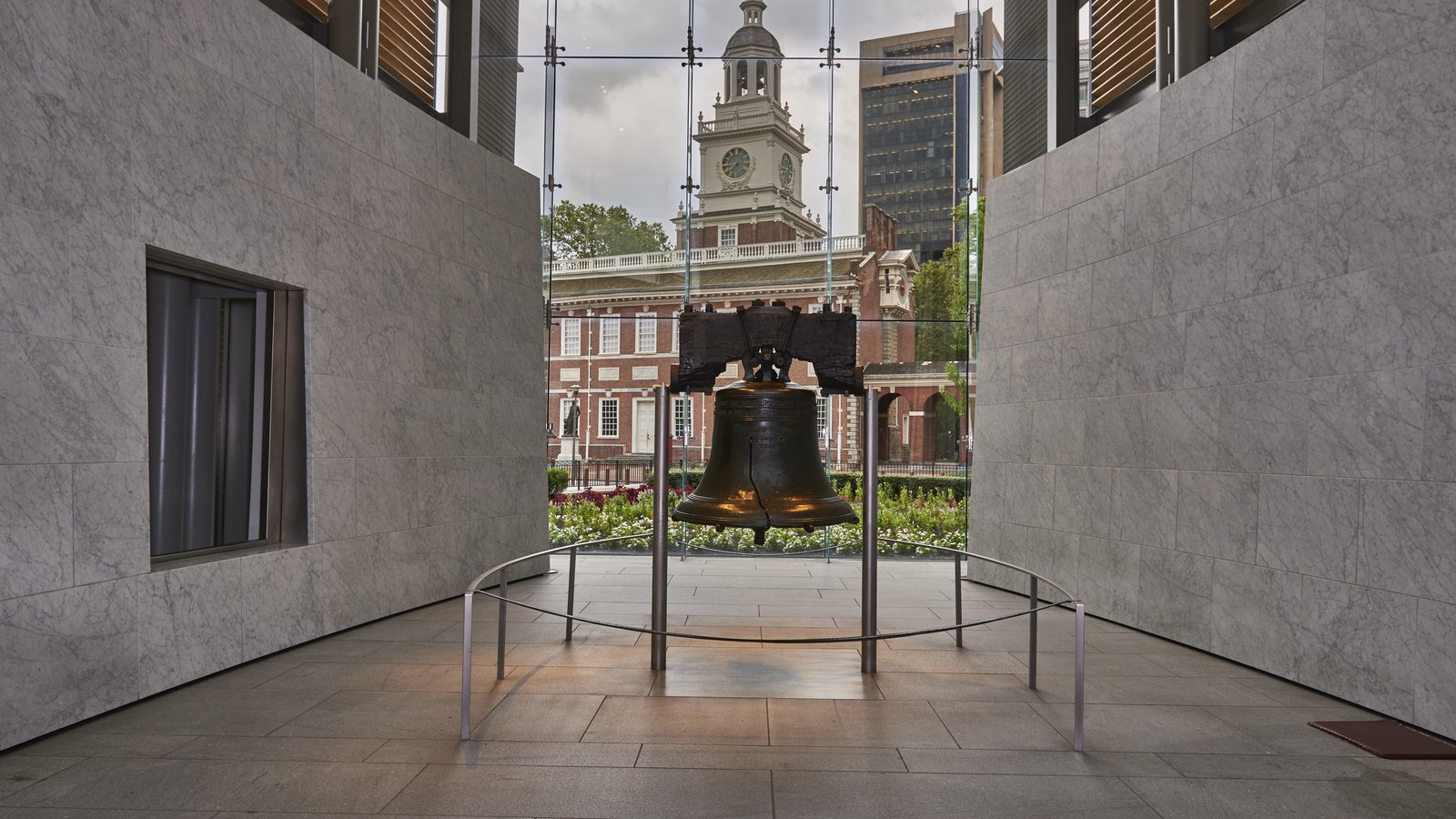
A new lawsuit asks a federal court to bring back the President's House slavery exhibit, which told the stories of nine people George Washington enslaved there. It was filed November 23, ten months after the panels came down.
 Pastora Tori Matthews
Ten months after National Park Service crews pulled down the President’s House slavery exhibit in Philadelphia, two groups asked a federal court on Monday, November 23, 2026, to put it back. Avenging the Ancestors Coalition and The Black Journey, a walking tour company, say that removing the panels about nine people George Washington enslaved at the nation’s first executive mansion violated the Fifth Amendment’s guarantee of equal protection.
If they win, the court could order the original slavery exhibit restored and set aside the Interior Department order behind its removal. The suit revives a legal fight that hit a dead end for the City of Philadelphia in August, when a federal appeals court refused to rehear the city’s appeal. Here’s who’s suing, what’s new in their argument, what the government has said, and what you can do.
 News · 23 Nov 202621 States Sue HUD to Stop Housing Aid Cutoff for Mixed-Status FamiliesAbout 20,000 families could lose federal housing help on December 14 because one member lacks eligible immigration status. On November 23, 21 states…
 News · 20 Nov 2026Judge Strikes HUD's $1.3 Billion Shift Away From Permanent HousingA federal judge ruled Friday that HUD broke the law when it steered $1.3 billion in Continuum of Care homelessness money away from permanent housing.…
 News · 19 Nov 2026Judge Blocks Brooke Rollins' Religious Emails to USDA StaffFederal workers can't be pressured to share the boss's faith. A judge ruled Thursday that Agriculture Secretary Brooke Rollins' Easter and Christmas…
 News · 18 Nov 2026Judge Orders Government to Reveal How It Built the Trans Military BanThe service members challenging the trans military ban will see the government's internal records on how it was built. Judge Ana Reyes set a 28-day…
01
The slavery exhibit lawsuit at a glance
- Filed: November 23, 2026, in the federal court for the Eastern District of Pennsylvania, case number 2:26-cv-08904.
- Plaintiffs: Avenging the Ancestors Coalition and The Black Journey: African-American Walking Tour of Philadelphia.
- Defendants: Interior Secretary Doug Burgum, the Department of the Interior, acting National Park Service Director Jessica Bowron, and the National Park Service.
- Claims: a violation of equal protection under the Fifth Amendment, and three claims under the Administrative Procedure Act.
- What it asks: a ruling that the orders behind the removal are unlawful, the slavery exhibit returned to its original condition, and a halt to further changes to what the site says about the nine.
- The government’s answer so far: none in the coverage Bloom reviewed.
02
Who is suing, and whom they’re suing
The complaint describes Avenging the Ancestors Coalition as a Black-led organization of historians, attorneys, elected officials, religious leaders, community activists and others. It was founded in 2002 to persuade the National Park Service to create a prominent slavery memorial at the President’s House site. Its founder, Michael Coard, served on the project’s oversight committee, the complaint says.
The Black Journey is a Black, woman-owned walking tour company founded in 2019 to highlight Philadelphia’s often overlooked Black history. One of its tours stops at the slavery exhibit. “Black history is American history,” said Raina Yancey, its founder and director, in the Legal Defense Fund’s announcement.
That announcement names only The Black Journey as the client. The complaint itself lists both groups as plaintiffs. The Legal Defense Fund and a University of Pennsylvania Carey Law School team that includes law professor Cara McClellan represent both. The firm WilmerHale represents The Black Journey.
The defendants are Interior Secretary Doug Burgum, his department, acting Park Service Director Jessica Bowron and her agency. The complaint says the secretary manages the National Park System through the Park Service’s director.
03
The nine people the slavery exhibit named
The complaint opens with the names the slavery exhibit honored. Here’s who they were, drawn from the complaint and the Park Service’s own page on the enslaved people in the Washington household:
- Austin, Ona Judge’s half brother, a postillion (a horseman) and stable hand. He died on December 20, 1794, after a fall from a horse, leaving a wife and five children.
- Christopher Sheels, Washington’s personal attendant from his teens. He tried to escape in 1799.
- Giles, a driver, postillion and stable hand, who returned to Mount Vernon in 1791 after being injured in an accident. He died before 1799.
- Hercules, the chief cook, celebrated for his mastery of his craft. He fled to freedom in February 1797 and settled in New York City.
- Joe Richardson, a coach postilion. His wife and their children were freed by Washington’s will, and the family took the name Richardson.
- Moll, nursemaid to Martha Washington’s two grandchildren.
- Ona Judge, Martha Washington’s personal maid and a talented seamstress. She escaped in 1796 and lived in New Hampshire until her death in 1848.
- Paris, a young stable hand, sent back to Mount Vernon in 1791. He died in 1794.
- Richmond, Hercules’s son, who came to Philadelphia at 11 and worked as a scullion in the kitchen.
The Washington family often called her “Oney,” the complaint notes, but she called herself Ona. Bloom uses the name she chose.
04
How the President’s House became a slavery memorial
Washington lived in the house at Sixth and Market Streets from November 1790 to March 1797, the Park Service’s site page says. Pennsylvania’s Gradual Abolition Act of 1780 freed enslaved people brought into the state by non-residents after six months. The complaint says Washington rotated the nine between Philadelphia and Mount Vernon to keep them from going free.
The house was demolished in 1832. In 2001, research showed that the new home of the Liberty Bell faced what had been the slave quarters Washington added to the house, according to the complaint. Black Philadelphians formed Avenging the Ancestors Coalition, and the city and the Park Service worked together, with public input, on what became the slavery exhibit.
The open-air slavery exhibit, “President’s House: Freedom and Slavery in the Making of a New Nation,” opened on December 15, 2010. The complaint calls it “the first slavery memorial of its kind on federal property in American history.” For more than fifteen years, it says, the site welcomed thousands of visitors from across the globe.
05
What the Park Service took down on January 22
On January 22, 2026, Independence National Historical Park’s superintendent, Steven Sims, got direction from Bowron “to remove the video and exhibits on the interior and exterior of the walls of the President’s House,” the complaint says, citing his sworn statement in the city’s case. The footprints in the concrete and the names on the memorial wall stayed.
Park Service workers used wrenches and crowbars to take the slavery exhibit’s panels down and turned off five motion-activated video screens, the complaint says. The panels covered the trans-Atlantic slave trade, the Fugitive Slave Acts and the Three-Fifths Compromise. They went into storage in the basement of the National Constitution Center. An inspection found them not destroyed, though some showed damage.
Two of the slavery exhibit’s removed panels told the stories of Ona Judge and Hercules. The panel on Hercules quoted Washington’s own worry about the people he enslaved learning of Pennsylvania’s law: “The idea of freedom might be too great a temptation for them to resist.”
06
The orders behind the removal
On March 27, 2025, President Trump issued Executive Order 14253, “Restoring Truth and Sanity to American History.” It directs the Interior secretary to make sure monuments and markers don’t contain content that would “inappropriately disparage Americans past or living.” It says they should instead “focus on the greatness of the achievements and progress of the American people.”
That’s the government’s stated reason for reviewing sites like the slavery exhibit. On May 20, 2025, Burgum issued Secretarial Order 3431, which the complaint says charged the Park Service’s director with carrying out the executive order by reviewing and removing “inappropriate content.” The Inquirer reports that the administration began scrutinizing the President’s House more than a year ago under the executive order.
The complaint adds one more detail from the city’s case. At a hearing, it says, the government’s lawyers told the court there was no administrative record of the Park Service’s actions at the site. Records matter in cases like this: Bloom reported last week that a judge ordered the government to reveal how it built the trans military ban.
07
What the replacement slavery exhibit says
On or about July 15, 2026, the Park Service began installing panels for a new exhibit, the complaint says, and it added more on September 30. The new title is “Visiting the President’s House Site: From Enslavement to Emancipation.” The complaint says that title “misrepresents the lives of the Nine Enslaved African Descendants,” because, it says, none of them experienced emancipation. Ona Judge and Hercules won their freedom by escaping.
The new panels that replaced the slavery exhibit do mention slavery, note that Washington enslaved people and name the nine, the Philadelphia Inquirer reported. The suit says the new version is incomplete and fails to recognize slavery’s brutality.
The Park Service’s page for the new exhibit says Washington rotated enslaved people “in acknowledgement of a Pennsylvania law requiring slaves to be set free after six months in residence.” It says Washington freed his slaves in his will, and adds, “Among all of the Founders, Washington carried out the largest manumission of enslaved people.”
The complaint counts what changed from the original slavery exhibit. Its panels showed sixteen depictions of enslaved, formerly enslaved or free people of African descent, it says, and the new ones show four, two of them Ona Judge. The new welcome panel refers to “household staff,” it adds, and twelve new panels describe the executive branch.
08
How the city’s injunction fell
The City of Philadelphia sued on January 22, the day of the removal. On Presidents Day, February 16, Judge Cynthia M. Rufe ordered the slavery exhibit restored to how it stood on January 21. The Inquirer reports that she compared the administration’s action to the Ministry of Truth in George Orwell’s novel 1984.
What came back of the slavery exhibit is described differently. The Inquirer reports the administration put back roughly half of the removed panels before the judge’s deadline. The complaint says the Park Service reinstalled 16 of 17 glass panels and four video screens on February 19, but none of the metal interpretive panels.
The government appealed and won an administrative stay. On June 18, the Court of Appeals for the Third Circuit vacated Rufe’s injunction. A unanimous three-judge panel found the removal wasn’t a final agency action that courts can review under the Administrative Procedure Act, the Inquirer reports. It also held that the city had no rights over the exhibit after donating the site to the National Park Service. In August, the court denied the city’s request to rehear the case.
09
What’s new: an equal protection claim
The heart of the new suit is the Constitution. The Fifth Amendment’s due process clause includes a guarantee of equal protection that binds the federal government, the complaint says. It argues the slavery exhibit’s removal treated Black history differently from the history of white Americans.
“Black people are uniquely impacted by the selective removal of their history,” the complaint says. It adds that history involving white historical figures at the President’s House site “remains undisturbed.”
Under the test the complaint cites, the groups don’t have to prove discrimination was the only reason for the removal, only that it was a motivating factor. The complaint relies on a 1977 Supreme Court case known as Arlington Heights, which lets courts weigh a decision’s impact, its history, the sequence of events and officials’ own statements. Citing news reporting on an internal Park Service database, it alleges that most of the material flagged for revision or removal concerns slavery and Black people.
“Under the constitution, we are all provided equal protection,” McClellan told the Inquirer. She said “the targeting of Black history and discussions of slavery violates the equality principle.” These are allegations. A court hasn’t ruled on them.
10
The Administrative Procedure Act claims
The suit also brings three claims under the Administrative Procedure Act, the law courts use to review what federal agencies do. One says removing the slavery exhibit violated the National Park Service Centennial Act. Another says it was arbitrary and capricious under the Organic Act, which tells the Park Service to protect historic objects and “leave them unimpaired for the enjoyment of future generations.” A third says it was contrary to constitutional right.
The groups ask the court to vacate Burgum’s order itself. The Inquirer notes the suit repeats the claim that his order was arbitrary and capricious, and that the Third Circuit rejected a similar argument in June. The new plaintiffs also say they were harmed directly, which the next section describes.
11
What the groups say the removal has cost them
The Black Journey built a new tour, “Ona Judge’s Philadelphia: A Journey to Freedom,” to keep teaching the paradox the slavery exhibit explained, the complaint says. Yancey spent more than 180 hours on it and traveled to New Hampshire, where Ona Judge lived out her life.
As of October 2026, the company had spent more than 200 hours and about $14,000 on research, development, marketing and contractors, the complaint says. Re-recording its audio tour will cost about $700 more, it estimates. It says removing the slavery exhibit sends a “message that the history of slavery and the lives of the Black people connected to that history are unimportant.”
“The preservation, dissemination, and celebration of our shared history must be accurate and complete,” said Avatara Smith-Carrington, assistant counsel at the Legal Defense Fund.
12
What the government has said
The National Park Service and the Department of the Interior “did not immediately respond to a request for comment,” the Inquirer reported. Bloom found no public statement from either about the new slavery exhibit suit.
The government’s view of the slavery exhibit is on the record in its orders and its new panels. The executive order says sites shouldn’t disparage Americans past or living, and the Park Service’s page presents Washington’s will as “his most public and personal anti-slavery act.” In the city’s case, the Third Circuit found the removal wasn’t reviewable under the Administrative Procedure Act. Bloom will report the government’s response to this slavery exhibit suit when it files one.
13
Why the truth about the nine matters to every American
Equal protection isn’t a gift a government hands to some people. It’s a promise the Constitution makes to everyone, and it’s only as strong as our willingness to keep it when the history is hard. A nation that can’t tell the truth about who cooked in its first president’s kitchen will struggle to tell the truth about who’s being left out today.
The President’s House is where liberty and slavery lived under one roof. The slavery exhibit didn’t hide George Washington’s greatness. It set his greatness beside the cost others paid for it, so visitors could hold both. That’s what honest memory does.
Near the end of her life, the Park Service writes, people who spoke with Ona Judge were struck by “her dignity, her faith in God, and her abiding love of freedom.” One removed panel, the complaint says, told how Reverend Richard Allen saw a chance for Philadelphia’s free Black community to expand the meaning of freedom. Their faith asked this country to be what it said it was. Saying their names is one way we answer.
14
A timeline of the President’s House slavery exhibit
- November 1790 to March 1797: Washington lives at the President’s House.
- 1796: Ona Judge escapes. February 1797: Hercules flees to freedom.
- 1832: the house is demolished.
- 2001: research ties the new Liberty Bell site to the house’s slave quarters.
- 2002: Avenging the Ancestors Coalition forms.
- December 15, 2010: the slavery exhibit opens.
- March 27, 2025: Executive Order 14253. May 20, 2025: Secretarial Order 3431.
- January 22, 2026: the slavery exhibit’s panels come down, and the city sues.
- February 16: Judge Rufe orders restoration.
- June 18: the Third Circuit vacates the injunction.
- July 15, or about then: new panels replace the slavery exhibit.
- August: the Third Circuit denies rehearing.
- September 30: more new panels are installed.
- November 23: the two groups file suit.
15
What happens next
The government will get its chance to answer the slavery exhibit suit in court, and the judge will decide whether the claims can go forward. The complaint asks for preliminary and permanent orders against the executive order and Burgum’s order. The coverage Bloom reviewed didn’t say whether the groups have filed a separate motion for faster relief, or which judge will hear the case.
This is one of several challenges to federal agency actions Bloom is following. Today, Bloom reported that 21 states sued HUD to stop a housing aid cutoff for mixed-status families. Last week, a judge blocked Agriculture Secretary Brooke Rollins’ religious emails to USDA staff, and another struck HUD’s $1.3 billion shift away from permanent housing.
16
What you can do
- Visit the site of the slavery exhibit. The President’s House Site is at Sixth and Market Streets, beside the Liberty Bell Center. It’s free, open daily from 7 AM to 10 PM, needs no ticket and is wheelchair accessible, the Park Service says.
- Find the nine names on the memorial wall, which the Park Service left in place. Say them out loud.
- Read the complaint yourself. It’s public, and it quotes the slavery exhibit’s removed panels.
- Read the Park Service’s own pages: the new exhibit page and its 2023 page on the enslaved people in the Washington household. Compare what each says.
- Follow the case by its number, 2:26-cv-08904, in the Eastern District of Pennsylvania. Bloom will report each ruling.
- Tell the park what you saw. Independence National Historical Park’s phone number is 215-965-2305.
- Teach the story. Ona Judge and Hercules belong in every lesson about the founding.
17
Where to get help
If this history stirs up grief or fear, you don’t have to carry it alone. Call or text 988 at any hour. Bloom’s crisis support page lists more people you can call, day or night.
If you plan to visit the slavery exhibit site, know that the Inquirer reports three mobile surveillance trailers now flank the site. The memorial is outdoors, and you can explore it at your own pace.
18
What Bloom is doing
Bloom will keep reading the filings in this slavery exhibit case and report each step in plain words. I believe a country is strong enough to tell the whole truth about its founding, and that the nine deserve nothing less.
Faith in Bloom offers pastoral care with no condition attached. A monthly gift keeps this reporting going, and a one-time gift helps too.
19
Frequently Asked Questions
Avenging the Ancestors Coalition and The Black Journey filed it on November 23, 2026. The Legal Defense Fund, a University of Pennsylvania legal clinic and WilmerHale represent them.
Interior Secretary Doug Burgum, the Department of the Interior, acting National Park Service Director Jessica Bowron and the National Park Service.
It claims the removal violated equal protection under the Fifth Amendment and broke the Administrative Procedure Act. These are allegations, and no court has ruled on them.
The new suit centers on equal protection, and its plaintiffs say they were harmed directly. The Third Circuit vacated the city’s injunction after finding the removal wasn’t reviewable and the city had no rights over the exhibit.
Austin, Christopher Sheels, Giles, Hercules, Joe Richardson, Moll, Ona Judge, Paris and Richmond. Ona Judge and Hercules escaped to freedom.
Yes. The slavery exhibit site is free and open daily from 7 AM to 10 PM at Sixth and Market Streets, and the nine names remain on the memorial wall.
Sovereignty over Servitude. 🌸
Support this work
Everything Bloom publishes is free to read and free to share.
Bloom Ministries is a registered 501(c)(3) in Salem, Oregon. Monthly giving is what lets us say yes before the money is in hand.
Keep reading
 Pennsylvania Legislature · 19 November 2026Nonbinary Runners Sue Philadelphia for an Elite Marathon Division
 Trans advocacy · 11 November 2026DOJ Official Behind Trans Care Subpoenas Resigns: What Stays
 New York Legislature · 23 November 2026New York’s Top Court Upholds Ban on Turning Away Section 8 Renters
