

Why I Built the Bloom Charter — And Then Locked Myself Out of It
I have been the person with power in the room and the person with none. Both rooms taught me the same thing, and it is why I gave up the pen.
 Pastora Tori Matthews
The boardroom and the waiting room. Both rooms taught me the same lesson.
01
Two Rooms
I have spent most of my adult life inside two rooms that most people never have to enter at the same time.
The first was the boardroom. I built a company from nothing into something that moved fifty million dollars a year. I sat at the table where things got decided. When I spoke, the room adjusted.
The second was the waiting room. I became disabled, and I sat in rooms where a caseworker decided, with a checkbox, whether I was disabled enough to be believed. I brought paperwork. I explained myself. I was asked to explain again, in a slightly different way, to a different person, on a different form.
I have been the person with power in the room. I have been the person with none. Both rooms taught me the same lesson, and that lesson is the whole answer to why I built the Bloom Charter — and why I built it so that I cannot change it. You can read the Bloom Charter exists.
02
What Both Rooms Taught Me
Here is the thing I watched happen in the boardroom, more than once: a policy changed because it was profitable, and not because it was right. And then, when the profit went the other way, the policy went with it.
That is not justice. That is weather.
And here is the thing I learned in the waiting room: endurance is not the same as progress. You can survive a system for years without the system ever changing, and everyone involved can congratulate you on your patience while nothing whatsoever improves. Survival is not the same as a life.
Progress that costs the powerful nothing is not progress. It is permission — and permission is revocable the moment it becomes inconvenient. Progress that costs the powerless everything is not progress either. It is just a longer wait, dressed up as virtue.
What I came to believe is that real change requires discomfort on every side of the table at the same time. The institution that has always held the pen has to feel what it costs to share it. And that includes me.
03
The Problem With Founding Documents

Most organizations write a founding document and then quietly revise it whenever leadership finds it inconvenient. Nobody announces the revision. There is rarely a record. The document says what the organization currently wants it to say, and the version that existed last year is simply gone.
I understand exactly how that happens, because I understand the pressure that produces it. A funder objects to a line. A partner is uncomfortable. A lawyer suggests softening a clause. Each individual edit is defensible. The cumulative effect is a document that has been sanded down to whatever offends no one — which is to say, a document that protects no one.
A charter only one person can revise is not a living document. It is a monument, and monuments do not grow.
So when I built this one, I did something that felt genuinely uncomfortable, and still does. I removed my own ability to change it.
04
What That Actually Means
This is not a promise. It is not a policy. It is not a commitment I could quietly abandon on a hard day.
The Charter’s core text — the Preamble and all eighteen Articles — has no edit function. Not a restricted one. There is no mechanism in the software that lets any account, at any permission level, change a single word of it directly. Mine included.
If I want to alter one clause, I submit a proposal like anyone else. It sits in public for a minimum of thirty days. It goes through review. Then it is ratified on the record, with my name on it, where anyone can see what I asked for and what happened. If I ever tried to route around that, the attempt would be blocked and logged publicly — visible to you, not to me alone.
Every revision ever made is published with an author and a word-by-word record of what changed. There is no private version. There is no draft nobody sees.
I want to be honest about why this matters to me personally. A document only I can change is a document only I can be pressured about. Removing my own access does not just protect the Charter from some future version of me who gets tired. It protects it from everyone who would otherwise have a reason to lean on me — and it means I can tell them, truthfully, that I could not do it even if I wanted to.
05
Why 1838
The name is not decoration.
In 1838, working people in Britain wrote six demands on a single sheet of paper and called it the People’s Charter. More than three million people signed it. Parliament rejected it in 1839. They signed again. Parliament rejected it in 1842. They signed again. Parliament rejected it in 1848.
And then, over the decades that followed, nearly everything they had demanded became ordinary law — so ordinary that the people who inherited those rights forgot anyone had ever been jailed for asking.
The Chartists lost every vote they were permitted to have. They were right anyway. They just did not live to see it.
That is the inheritance, and it comes with a warning attached. The lesson is not that patience wins. The lesson is that a demand stated plainly, publicly, and often enough outlives the institutions that refuse it. But it outlives the people too, and some of them died waiting for something that was always going to happen eventually.
That was 188 years ago. People are still being written out of the laws that govern them. We do not have decades to spare, so this Charter is not addressed to a legislature. It waits on no one’s permission. It is addressed to everyone, and it is already in force for anyone willing to hold it.
06
What Is Actually In It
Four Pillars, eighteen Articles. Not aspirations — the minimum terms of a dignified life, stated once so they need not be argued from nothing every time someone finds them inconvenient.
Dignity. Your stated name and gender are honored as fact, not negotiated as opinion. Your body is not a ballot measure. You cannot be erased from a curriculum for someone’s political comfort. Your identity is not a security threat. And accommodation systems serve the people they were built for.
Safety. Protection that is not conditioned on disclosure or on convincing a skeptical gatekeeper you have suffered enough. Crisis support built around the person rather than the paperwork. Institutions accountable for harm they enabled. And safety from the state itself, when the agency meant to protect you becomes the danger.
Autonomy. You are the final authority on your own name, gender, faith, and medical decisions. Equal standing in law and in doctrine. And a duty to remain uncomfortable — because a reform that costs the powerful nothing has not yet earned the name.
Truth and Accountability for the Silenced. A survivor is not disbelieved because the accused is wealthy. No settlement signed under unequal power proves that harm did not occur. Records documenting the exploitation of a child belong to the public. And passing a transparency law is not the same as obeying one.
07
The Fourth Pillar, and Why It Is There
I want to say something about Article 9, because it is the one that comes directly out of the waiting room.
It says that where a law already guarantees access — including the Americans with Disabilities Act — the absence of a new law is not the obstacle. The absence of enforcement is. A right that is not enforced is a right in name only.
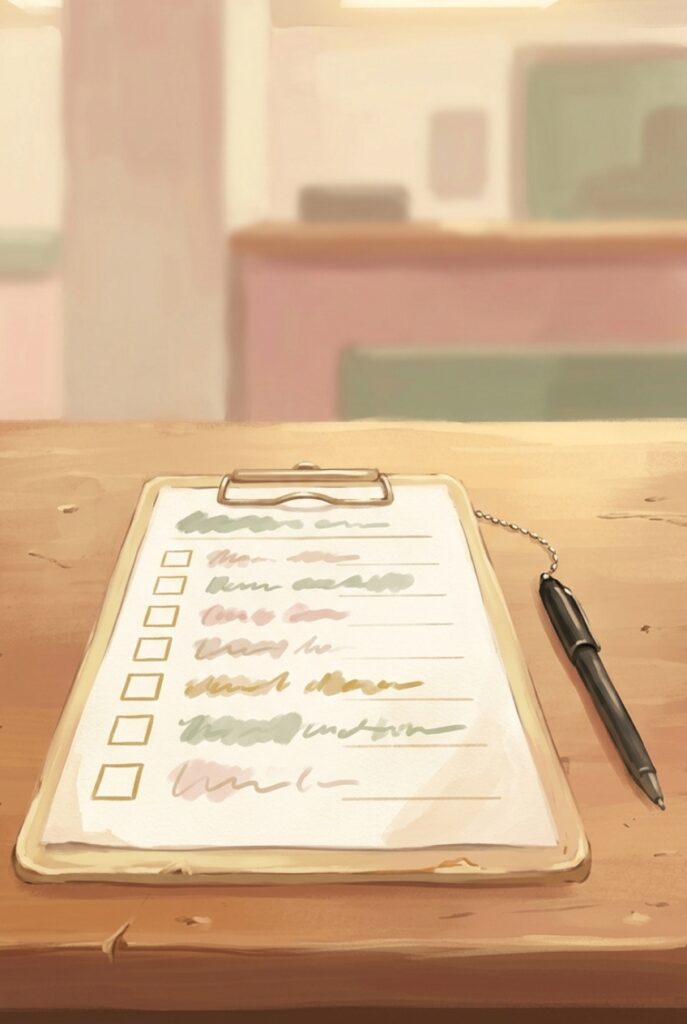
I did not need a new law. The law already existed. What did not exist was anyone willing to make it mean anything, and a form with a column of small empty boxes deciding whether I counted.
The fourth Pillar exists for a related reason. Bloom has written about this before, in our pastoral reflection on the Epstein files. Credibility should be earned by evidence. It is routinely purchased by status instead. That is not a partisan observation — it is an observation about power, and it applies identically regardless of who holds it.
08
The Record
There is one more thing on the site, and it is the part I think matters most over time.
The Record is a set of dated, sourced entries documenting real events that bear on specific Articles. Not commentary. Not opinion. What a source reported, when, and about whom — attached to the principle it tests.
Every entry carries a public “last verified” date, so a stale record is visibly stale rather than quietly wrong. And every entry can be marked resolved when the thing it documents actually gets fixed: a law passes, a policy reverses, charges are filed.
That resolved marker is the part I care about. It means this document can eventually show its own work — not just what is broken, but what stopped being broken, and roughly when. If the Chartists had kept a record like that, we would know precisely how long each of those six demands took. Instead we know only that it took longer than the people who asked.
09
What I Am Asking
The Charter is free to read, free to sign, and free to amend, forever. There is no paywall and no membership.
If you have read this far, add your name. It takes under a minute. You do not need an account. Your email is never shown, and if being visible is not safe for you, sign with a first name only — it counts exactly the same.
If you run an organization, look at the Covenant of Care. Seven written commitments, renewed publicly every year, and lapsed status is shown rather than hidden. It is designed to cost something. That is the point.
If you think a word of it is wrong, the amendment process is open to you on exactly the same terms it is open to me. That is not a gesture. I checked — I genuinely cannot do it any faster than you can.
The formal announcement is in our press release. This is the part that is not formal.
A signature does not guarantee anyone’s safety. I know that. But a declaration, made publicly and often enough, becomes harder to pretend never existed. And waiting is not a form of respect. It is the oldest form of refusal.
Sovereignty over Servitude. 🌸
10
Frequently Asked Questions
Can you really not edit the Charter?
Correct, and it is enforced in software rather than by policy. The Preamble and Articles 1 through 18 have no direct-edit function for any account at any permission level. Changing an Article requires a proposal, a minimum thirty-day public comment period, editorial review, and a recorded ratification. Attempts to bypass that process are blocked and logged publicly.
What can you change?
Standard content — the FAQ, the history page, the explainers — and the Record, which documents events rather than stating principles. Both still require a review step and a Steward approval, and both are logged. Nothing on the site is edited privately.
Do I have to be transgender or disabled to sign?
No. The Charter is written for transgender people, disabled people, survivors of sexual violence, and anyone marginalized by systems built to look away from them — and it is addressed to everyone who stands with them in accountable relationship rather than comfortable distance. Anyone may sign.
Is signing a legal commitment?
No. Signing is a public declaration of support. It is not a contract, not a membership, and not a financial commitment, and it creates no legal obligations. Your email is used once to confirm the signature is real and is never displayed.
Is it safe to sign if I am not out?
Sign with a first name only and leave the location blank. Your email is never public under any setting. The Charter serves privacy-sensitive communities and the signing form is built with that in mind — a first-name signature counts exactly the same as a full one.
What happens if a proposed amendment is bad?
It goes through the same public process as any other, and it can be declined with stated reasons on the record. The thirty-day comment window exists precisely so that a proposal is examined in the open before anyone rules on it. Nothing is decided privately, including refusals.
How can I support this work?
Bloom Ministries is a 501(c)(3) nonprofit, and the Charter is free to everyone with no paywall and no membership. If you are able to help keep it that way, you can give here. If you are not able, please take it freely — it was always meant for you first.
Pastora Tori Matthews is the Founder and Executive Pastora of Bloom Ministries, a trans-led, disabled-led 501(c)(3) nonprofit based in Salem, Oregon. Bloom serves as steward of the Bloom Charter. EIN 39-4922713.
Support this work
Everything Bloom publishes is free to read and free to share.
Bloom Ministries is a registered 501(c)(3) in Salem, Oregon. Monthly giving is what lets us say yes before the money is in hand.