

Newsroom·Maryland Legislature·News
Justices Turn Away Challenge to Maryland’s ‘Sensitive Places’ Gun Law
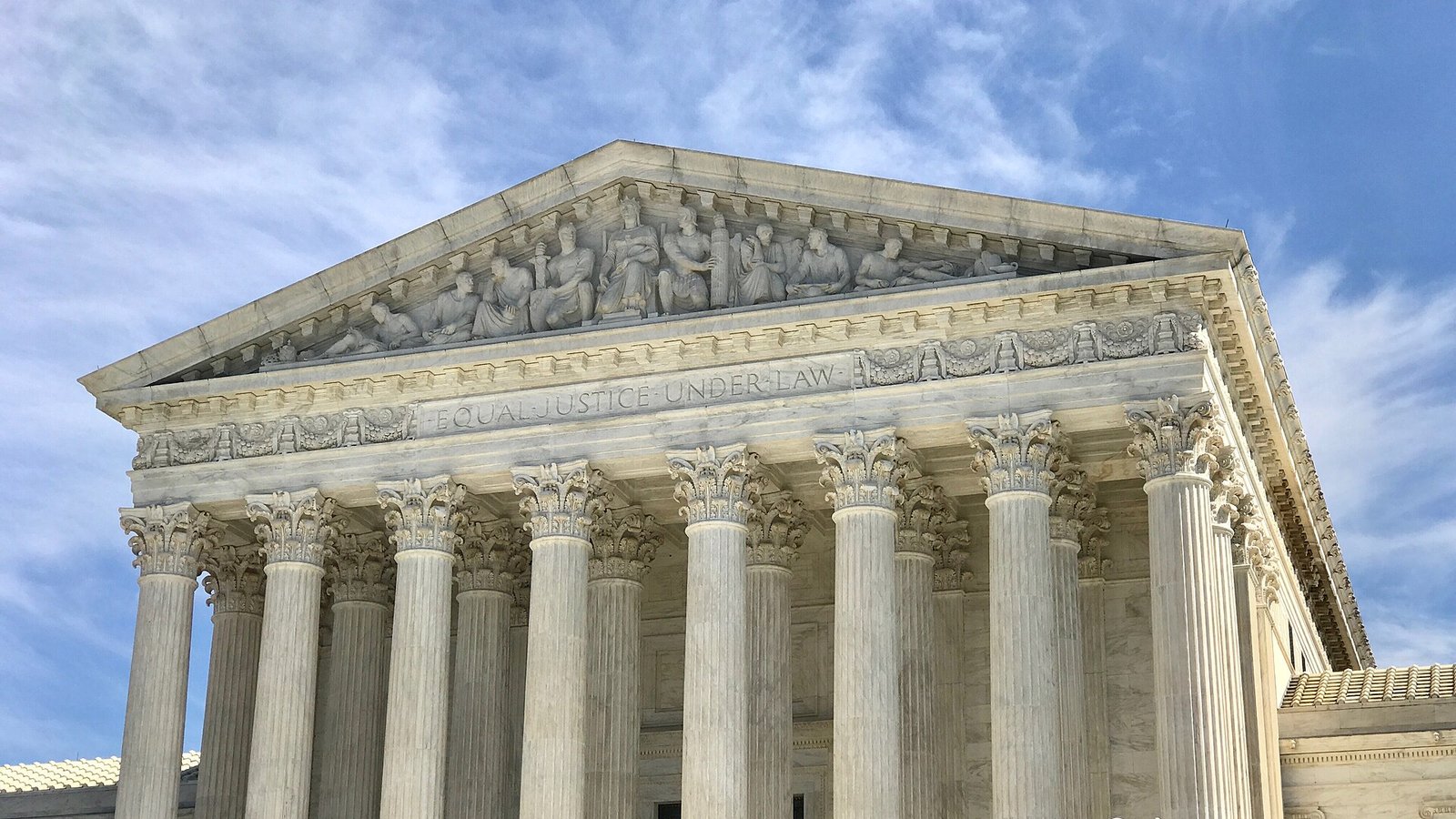
The Supreme Court declined on Monday to hear a challenge to Maryland's law barring guns in sensitive places such as schools, transit, hospitals and bars.
 Pastora Tori Matthews
The Supreme Court on Monday declined to hear a challenge to Maryland’s law barring guns in sensitive places such as schools, public transit, hospitals and bars. The docket in Novotny v. Moore, No. 25-1324, shows the result in two words, “Petition DENIED,” along with a statement from Justice Clarence Thomas.
The order leaves in place a Fourth Circuit decision upholding every disputed part of Maryland’s sensitive places law. But Justice Thomas, who wrote the Court’s landmark 2022 gun-rights decision, signaled he wants the Court to take up the question again in a narrower case. For anyone who carries, rides transit, works in a hospital or simply wants to know where the line falls, here’s what changed and what didn’t.
01
What the Supreme Court did
The case reached the Court in the spring. The docket shows the petition was filed by Katherine Novotny and others against Maryland Gov. Wes Moore and other officials, and it was considered at several of the justices’ private conferences before Monday’s order. The Court denied it on November 16, 2026.
The Associated Press reported that the Court turned the case away without comment, and that Justice Thomas wrote separately to say he’s skeptical about Maryland’s law and others like it. He nonetheless agreed with turning away this particular case.
According to Reuters, Thomas said the broad challenge brought by the plaintiffs would complicate the Court’s review. “In an appropriate and more narrowly focused case, however, we should consider the scope of states’ authority to ban firearms in ‘sensitive places,'” he wrote.
Maryland had filed its own petition too. The state’s docket in Moore v. Kipke, No. 25-1206, shows that petition was dismissed in August 2026 after the parties filed a joint stipulation. Monday’s order ended the challengers’ side.
02
What Maryland’s sensitive places law covers
Maryland already restricted guns in some places for years. Reuters reported that the state’s longstanding limits cover locations including public transit, casinos, schools and public protest sites. After the Supreme Court’s 2022 decision expanding gun rights, Maryland, like several other states, added more sensitive places.
The 2023 law prohibited guns in locations including college campuses, hospitals, power plants, amusement parks and places that sell alcohol or cannabis for on-site consumption, according to Reuters. Reuters also described the law as covering stadiums, bars and public parks. The AP summarized it as barring concealed weapons in schools, mass transit, bars and other areas deemed sensitive places. In other words, the law limits where a person with a concealed carry permit may take a gun.
Gun rights groups, including the Maryland affiliate of the National Rifle Association, and several Maryland gun owners sued, Reuters reported. They argued that many of the sensitive places restrictions violated their Second Amendment rights.
03
How the courts judge gun laws now
The yardstick is history. In 2022, in New York State Rifle & Pistol Association v. Bruen, the Supreme Court declared for the first time that the Second Amendment protects an individual’s right to carry a handgun in public for self-defense, Reuters reported.
Under the test set out in that decision, Reuters explained, gun laws must be “consistent with this nation’s historical tradition of firearm regulation,” not simply advance an important government interest. That’s why so much of the fight over sensitive places turns on what kinds of places Americans restricted guns in long ago.
The Second Amendment’s own words are short. As Reuters quoted it: “A well regulated militia, being necessary to the security of a free state, the right of the people to keep and bear arms, shall not be infringed.” Every court in this case has been asking how that sentence applies to a bus, a hospital or a bar today.
04
What the lower courts decided
The case moved in stages. Reuters reported that a federal judge in 2023 upheld some of Maryland’s sensitive places restrictions and blocked others, which led to appeals from both the challengers and the state.
On appeal, the Fourth Circuit, based in Richmond, approved all of Maryland’s disputed location bans, according to Reuters. The docket shows the Fourth Circuit decided the consolidated appeals on January 20, 2026. That ruling is what the Supreme Court left standing on Monday.
05
A timeline of the sensitive places case
- 2022: The Supreme Court decides Bruen, recognizing a right to carry a handgun in public for self-defense and setting a history-based test for gun laws.
- 2023: Maryland enacts its law adding sensitive places such as college campuses, hospitals, amusement parks and places serving alcohol or cannabis.
- 2023: A federal judge upholds some of the sensitive places restrictions and blocks others, and both sides appeal.
- January 20, 2026: The Fourth Circuit decides the consolidated appeals and approves all of Maryland’s disputed location bans.
- Spring 2026: Gun owners led by Katherine Novotny ask the Supreme Court to review the decision.
- August 2026: Maryland’s separate petition, Moore v. Kipke, is dismissed by joint stipulation.
- November 13, 2026: The justices consider the Novotny petition at conference.
- November 16, 2026: The Court denies the petition, and Justice Thomas writes a statement.
That timeline shows how long these questions take. Four years after Bruen, the Supreme Court still hasn’t decided where sensitive places begin and end, and Monday’s order means it won’t decide that in this case.
06
Why sensitive places laws spread after 2022
Bruen declared for the first time that the Second Amendment protects an individual’s right to carry a handgun in public for self-defense, Reuters reported. That changed the ground under every state’s carry rules, and states responded.
Reuters reported that Maryland was one of several states to enact new restrictions on carrying firearms in locations deemed sensitive after the 2022 ruling. These laws focus on where a person may carry. The result is a patchwork: a person with a concealed carry permit may lawfully carry on one block and be barred on the next because of a park, a bar or a transit stop.
That patchwork is why Justice Thomas’s statement matters. If the Court eventually takes a narrower sensitive places case, it could set national rules on which kinds of places states may put off-limits. Until then, each federal appeals court is drawing its own lines.
07
The arguments on each side
The challengers argued that many of Maryland’s sensitive places restrictions fail the Bruen test, because they aren’t consistent with the nation’s historical tradition of firearm regulation, Reuters reported. In their view, the law turned so much of public life into gun-free space that the right to carry recognized in 2022 shrank in practice.
Maryland officials defended the law on appeal, Reuters reported, and the Fourth Circuit agreed with the state on every disputed location. The state’s position prevailed below, and Monday’s order lets that result stand.
Justice Thomas’s statement reflects both sides of the problem. He wrote that he’s skeptical that Maryland’s restrictions are lawful, Reuters reported, but he agreed the broad challenge would complicate the Court’s review. A narrower case, he suggested, would let the Court answer the sensitive places question cleanly.
08
Where the Second Amendment cases stand
Monday’s order doesn’t stand alone. The AP noted that the Court has handed down several decisions backing Second Amendment rights, including a recent ruling striking down wide-ranging gun-carry restrictions in Hawaii. Reuters reported that, in a 6-3 ruling in June, the Court struck down a Hawaii law requiring gun owners to get a property owner’s permission before bringing a handgun onto private property open to the public.
Reuters also reported a unanimous June decision limiting a federal law that bars firearms possession by certain drug users. And the AP reported that the Court has upheld some restrictions too, “including a law aimed at protecting victims of domestic violence.”
Next comes a bigger case. Reuters reported that on December 2 the Court will hear a challenge to state restrictions on assault-style rifles. The AP described those as laws banning AR-15s and similar semiautomatic firearms.
09
What it means for survivors and disabled people
Bloom’s readers come to this issue from different places. Some carry a firearm because they’ve been threatened, assaulted or stalked, and the Second Amendment is part of how they protect themselves. Others are survivors who feel safer knowing guns are barred in a hospital, a public protest or a crowded bar. Both are real, and Bloom doesn’t tell readers which choice to make.
What the law does is draw lines on a map. For disabled people who rely on public transit and for patients in hospitals, the sensitive places list decides where firearms can and can’t be carried. Knowing that list is part of knowing your rights.
For survivors of domestic violence, the AP’s note matters. The Supreme Court has upheld a law aimed at protecting domestic violence victims even while expanding gun rights elsewhere. Sensitive places cases and domestic violence cases are different questions, and the Court has treated them differently.
10
What Justice Thomas’s statement signals
A statement respecting the denial of certiorari isn’t a ruling, but it’s a signal lawyers read closely. Justice Thomas wrote the Bruen decision, and he’s now said publicly that he’s skeptical of Maryland’s approach, Reuters reported.
His point was about the shape of the case, not only the merits. A challenge to many sensitive places at once gives the Court a sprawling record. A case about one kind of place, such as public parks or places that serve alcohol, would let the justices draw a clearer line. Advocates on both sides will be looking for that case now.
11
What this means for people who don’t carry
Most people affected by sensitive places laws will never carry a gun. They’re riding the bus, visiting a patient, studying on a campus or having dinner at a restaurant with a bar. For them, the sensitive places list is a description of the places where the state has decided guns don’t belong, and Monday’s order leaves that list as it was.
That’s part of why these cases draw so much attention. They’re about the daily geography of public life: where people gather, where they’re most vulnerable and who gets to decide the rules. Bloom will keep reporting each new decision in plain language.
12
What this means if you carry in Maryland
If you have a concealed carry permit and carry in Maryland, nothing loosened on Monday. The sensitive places restrictions the Fourth Circuit upheld remain the law, and violating them can carry legal consequences. Read the current list of places before you travel in the state.
If you’re visiting from another state, check Maryland’s rules before you arrive. Permit laws differ from state to state, and the sensitive places list covers ordinary places, such as bars, parks and transit, that a traveler might enter without thinking.
And if you’re simply trying to understand the Constitution, this is a good case to watch. Justice Thomas’s statement suggests the Court may take up a narrower sensitive places question in the future. When it does, the outcome could reach every state that passed laws like Maryland’s after 2022.
13
Questions readers are asking
Does this order apply outside Maryland? The order concerns Maryland’s law, and a denial doesn’t create a national rule. Other states’ sensitive places laws are being challenged in their own cases.
Can Maryland add more sensitive places now? The order doesn’t give Maryland new powers. Any new restriction would face the same Bruen test and could be challenged in court.
Did any justice dissent? The AP reported the Court turned the case away without comment, and Justice Thomas wrote a statement agreeing with the denial while voicing skepticism about the law.
14
What’s still unclear
The Court gave no majority explanation, so it’s unclear why the other justices voted to deny. A denial isn’t a ruling that Maryland’s law is constitutional; it leaves the Fourth Circuit’s decision in place for now.
It’s also unclear which future case might give the Court the “more narrowly focused” vehicle Justice Thomas described. Similar challenges to sensitive places laws in other states could reach the Court.
Bloom will follow the December 2 argument on assault-style rifle restrictions and report what it means for the sensitive places debate.
15
What Bloom is doing
Bloom is a registered 501(c)(3), and we don’t support or oppose any party or candidate. We cover the whole Bill of Rights, because the people we serve depend on all of it: the freedom to speak, the right to due process, and the Second Amendment questions that touch safety and self-defense. We report those questions straight, from the record.
If you’re in danger right now, or the news is stirring up trauma, Bloom’s crisis support page lists people you can reach, including 988 by call or text and RAINN at 800-656-4673. Bloom’s support groups are open to survivors.
Reporting like this runs on people who give a little every month. Become a monthly supporter, or give once if that fits your life better.
16
Frequently Asked Questions
It declined to hear the challengers’ appeal in Novotny v. Moore, No. 25-1324. That leaves in place a Fourth Circuit decision upholding Maryland’s disputed location restrictions.
Not as a final word. A denial doesn’t decide the merits for the whole country. It leaves the Fourth Circuit’s ruling in place.
He wrote that he’s skeptical of the law but agreed with denying this case, and that “in an appropriate and more narrowly focused case,” the Court should consider states’ authority to ban firearms in sensitive places.
Reuters reported locations including college campuses, hospitals, power plants, amusement parks, places serving alcohol or cannabis, stadiums and public parks, along with long-standing limits on public transit, casinos, schools and protest sites.
From the Supreme Court’s 2022 decision, it requires gun laws to be consistent with the nation’s historical tradition of firearm regulation, Reuters explained.
Reuters reported that the Court will hear a challenge to state restrictions on assault-style rifles on December 2.
Yes. The AP reported that the Court has upheld some restrictions, including a law aimed at protecting victims of domestic violence.
No. The sensitive places restrictions apply to people with concealed carry permits, which is why the challengers sued. Those restrictions remain in force after Monday’s order.
Sovereignty over Servitude. 🌸
Support this work
Everything Bloom publishes is free to read and free to share.
Bloom Ministries is a registered 501(c)(3) in Salem, Oregon. Monthly giving is what lets us say yes before the money is in hand.
Keep reading
 Trans advocacy · 11 November 2026DOJ Official Behind Trans Care Subpoenas Resigns: What Stays
 Justice for survivors · 17 November 2026Federal Prisons Closed Dublin, but Sexual Abuse of Women Didn’t Stop
 Colorado Legislature · 17 November 2026Supreme Court Turns Away Challenge to Colorado’s Misgendering Rules
