

Newsroom·Massachusetts Legislature·News
Judge Blocks Search of Immigration Lawyer’s Phone, Citing His Speech
A federal judge in Boston blocked the government from searching data copied from an immigration lawyer's phone, finding he's likely to prove agents seized it in retaliation for his public speech.
 Pastora Tori Matthews
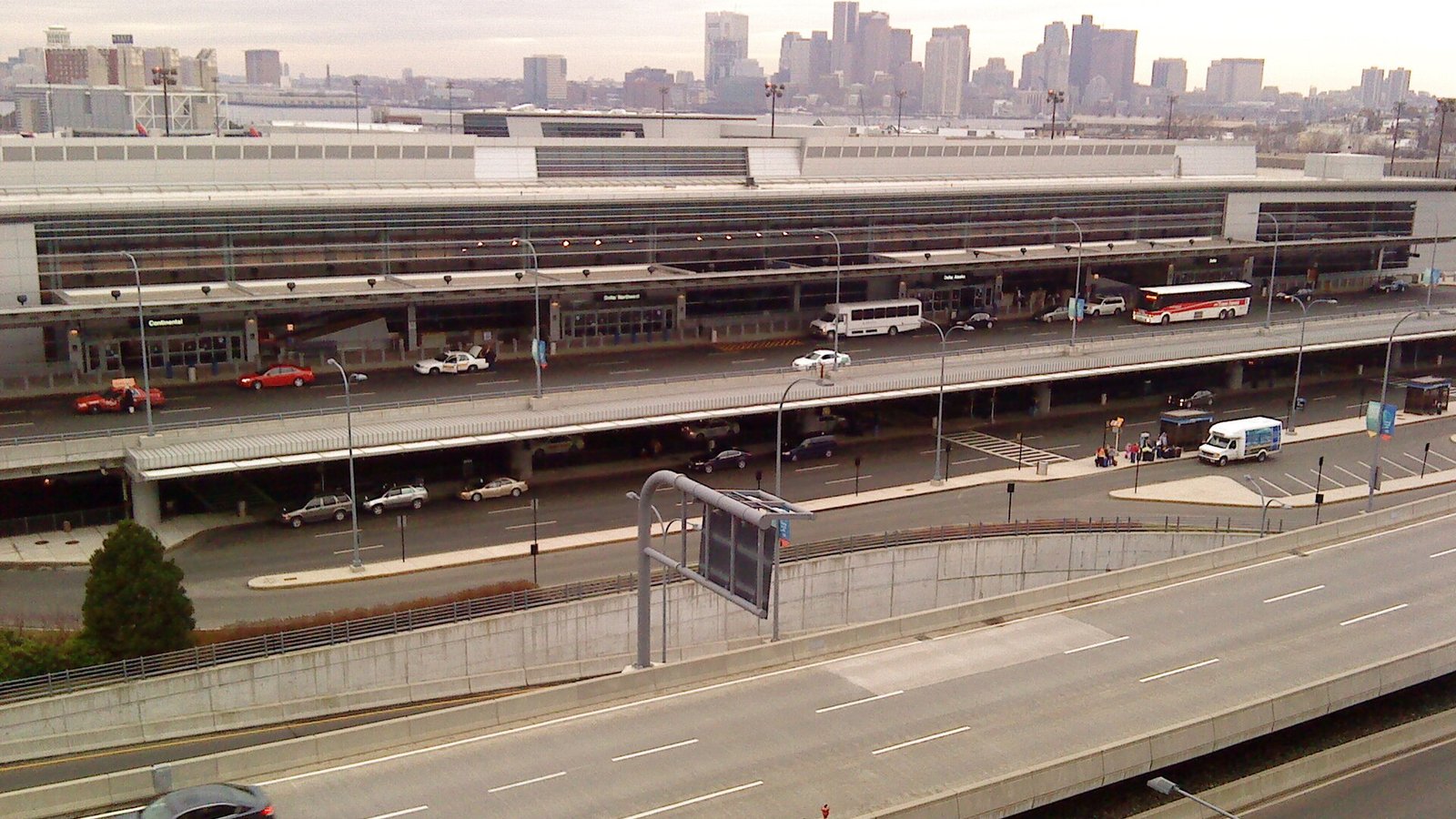
A federal judge in Boston, Massachusetts, has blocked a phone search of data that federal agents copied from an immigration lawyer’s phone at Logan Airport, finding he’s likely to prove the phone search was retaliation for his public speech. U.S. District Judge Allison D. Burroughs of the District of Massachusetts granted Andrew Lattarulo a preliminary injunction last week, according to Newsweek.
Lattarulo runs a popular Instagram account where he explains immigrants’ rights and criticizes federal immigration tactics. Agents seized his phone without a warrant when he returned from a weekend trip, and copied everything on it. The judge wrote that the evidence so far suggests he “would not have been searched except for his protected speech.” Here’s what happened, what the phone search ruling says, and what it means for anyone who crosses a border with a phone.
01
What happened at Logan Airport
Lattarulo is a part owner of Georges Cote LLP, a Boston law firm, and represents clients in immigration proceedings, Newsweek reported. Homeland Security Investigations, the investigative arm of Immigration and Customs Enforcement, was looking into whether the firm employed people who weren’t authorized to work in the United States.
The firm received a Notice of Inspection on September 8, 2025, and a Notice of Suspect Documents on September 25, according to the ruling as reported by Newsweek. Later that month, Lattarulo and his law partner, Audai Cote, took a weekend trip to Aruba.
Cote flew home on September 27 without incident. When Lattarulo returned the next day, three Customs and Border Protection agents and an HSI officer stopped him as he got off the plane, Newsweek reported. “The agents seized his cell phone without a warrant and then downloaded a complete copy of the data stored on the phone,” Burroughs wrote, according to Reason.
The agents kept the phone for eight days before returning it. They kept the copy, which included privileged attorney-client information, Reason reported. The data is in a format that can’t currently be read, but “the government intends to convert the data to an accessible format and search it if the Court permits,” Burroughs wrote.
02
What the lawyer says he was targeted for
Lattarulo’s Instagram account has more than 57,000 followers, Reason reported. His videos regularly get hundreds of thousands of views, according to the ruling as described by Newsweek.
When he first sued in October 2025, the lawsuit said one post with advice on dealing with ICE agents had about 388,000 views, the ABA Journal reported. Many of his videos “call out what Lattarulo describes as illegal practices utilized by federal agents,” the suit said, and his public statements are critical of the president’s immigration policy.
The lawsuit also said Lattarulo told the agents he was a lawyer and that the phone held privileged material, but was told it would be taken with or without his cooperation, according to the ABA Journal. He wasn’t asked for his passcode and didn’t give it.
03
A timeline of the phone search case
Here’s how the case unfolded, based on the reports Bloom reviewed.
- September 8, 2025: Lattarulo’s firm receives a Notice of Inspection from HSI.
- September 25, 2025: The firm receives a Notice of Suspect Documents.
- September 27, 2025: Law partner Audai Cote returns from Aruba without incident.
- September 28, 2025: Agents seize Lattarulo’s phone at Logan Airport and copy its data.
- October 2, 2025: Lattarulo sues in federal court in Massachusetts.
- Early October 2025: Burroughs grants a temporary restraining order barring a phone search while the case proceeds, the ABA Journal reported.
- November 2026: Burroughs grants a preliminary injunction, finding likely First Amendment retaliation.
The motion Lattarulo filed in October 2025 made one more point about timing. “The seizure was made eight hours after plaintiff had been inspected by United States Customs and Border Protection at a border crossing,” it said, according to the ABA Journal.
04
What his lawyers say
Lattarulo is represented by Patrick Hanley and Mary Lemay of Butters Brazilian LLP in Boston. “We are pleased by the Court’s detailed decision,” they said in a joint statement to Newsweek. “Attorney Lattarulo took this step to protect his clients, and as the case progresses, he will continue to take every legal step available to protect them. That’s what this case is all about.”
When the case was filed, the firm said it believed he was targeted because of his clients and his public posts. “We believe attorney Lattarulo was targeted because he represents clients in immigration-related proceedings, and he has amplified the government’s own enforcement priorities via social media to immigrant communities and anyone else who might be interested,” the lawyers said, according to the ABA Journal.
05
The client privilege problem
A lawyer’s phone isn’t like most phones. The lawsuit said Lattarulo’s phone held sensitive and confidential client information, as well as privileged communications with other attorneys, the ABA Journal reported.
That raises a problem bigger than one lawyer. Clients who talk to an immigration lawyer, a defense lawyer or a civil rights lawyer expect that conversation to stay private. A phone search that copies everything puts those clients’ secrets in government hands, even when the clients themselves are never suspected of anything.
In a different case, the 5th Circuit found that another immigration lawyer’s rights weren’t violated when the Department of Homeland Security used a “filter team” to protect privileged material found on his phone, the ABA Journal reported. Whether that kind of safeguard is enough is a question courts are still working out.
06
What the government says
The government denied targeting Lattarulo for his speech. It argued that the phone search was tied to HSI’s inquiry into the firm’s employment practices, Newsweek reported.
The government also told the court it had additional evidence supporting the phone search but declined to disclose it publicly because the investigation is ongoing, according to court filings described by Newsweek. And it argued that agents were allowed to search the phone at the border, under the long-standing rule that gives officers broad power to inspect what travelers bring into the country.
Bloom reports the government’s account because a preliminary ruling isn’t a final judgment. The case will continue, and the government will have more chances to make its argument.
07
Why the judge saw retaliation
Burroughs found that Lattarulo is “likely to succeed on the merits of this First Amendment retaliation claim,” Reason reported. She pointed to several facts.
The first was timing. Agents seized the phone just three days after the firm received the Notice of Suspect Documents, even though HSI policy generally gives employers 10 business days to respond, Newsweek reported. “That aggressive deviation from protocol strongly suggests that the seizure did not arise from an ordinary investigative motive,” Burroughs wrote.
The second was the method. The government “provided no evidence that searches of cell phones are frequently conducted during the kind of employment investigation at issue here,” she wrote, according to Reason. “The fact that the government, after Lattarulo spoke out publicly against it, elected to adopt a highly unusual investigative method that appears designed to inflict a maximal burden on Lattarulo lends substantial support to an inference that its actions were pretextual.”
The third was who didn’t face a phone search. Cote had the same or greater access to the firm’s employment records but hadn’t spoken publicly about immigrant rights, and he wasn’t searched, Newsweek reported. Cote “would have been a more logical target,” Burroughs wrote. Instead, “the government opted to wait until Lattarulo touched down in Boston the next day and subject only him to an intrusive cell phone search.”
08
What the phone search ruling does, and doesn’t, do
The preliminary injunction blocks any phone search of Lattarulo’s copied data while the case continues, Reason reported. It doesn’t order the government to destroy the data.
Because the First Amendment claim was enough to support the injunction, Burroughs didn’t decide whether the phone search also violated the Fourth Amendment, which protects against unreasonable searches and seizures. But she made her doubts clear.
“It appears that the government seized on a fortuitous border crossing following a weekend vacation as an opportunity to search for evidence of a domestic crime it was already investigating,” she wrote, according to Reason. The court wasn’t convinced the border search exception was meant “to apply to investigations into activity that occurred nowhere near the border and that has no relationship to the border crossing during which the search occurred.”
09
The border phone search question
The border search exception is the legal rule at the heart of this phone search case. Customs and Border Protection policy says agents can search electronic devices without a warrant at or near the border, including at international airports, with or without suspicion, Reason reported.
Courts don’t agree on how far that goes. “Seven federal appeals courts now hold that a warrant is never required to search a phone at the border, while the 4th and 9th Circuits require one in at least some cases,” the Pacific Legal Foundation’s Amy Peikoff wrote in Reason in October. “That means one of your constitutional rights currently depends on which airport you fly into.”
Not every lawyer who has challenged a phone search has won. Another immigration lawyer who sued over the seizure of his phone at Dallas-Fort Worth International Airport lost on appeal, the ABA Journal reported. The 5th Circuit found the government had reasonable suspicion in that case.
10
Why this matters for everyone
This isn’t only a story about immigration lawyers. The First Amendment protects the right to criticize the government, and the Fourth Amendment protects against unreasonable searches. When a government uses its power at the border to reach into the phone of someone who criticized it, both rights are tested at once.
A phone holds a person’s whole life: messages, photos, medical records, contacts and, for a lawyer, clients’ confidential information. A single phone search can expose people who never crossed a border and never agreed to it. That’s why the judge’s concern about attorney-client material matters well beyond one case.
It’s also about the chilling effect. When people see a critic’s phone taken and copied, some of them stop speaking. Others stop posting know-your-rights videos, or stop representing unpopular clients. A government doesn’t have to win in court to discourage speech; sometimes the phone search itself does the work. That’s why courts look closely at timing and motive in retaliation cases like this one.
Bloom covers abuses of power no matter who holds it or who’s on the receiving end. The principle here is simple and nonpartisan. A government shouldn’t be able to punish people for what they say, and it shouldn’t use a narrow exception to do what the Constitution otherwise forbids.
11
What travelers should know
If you’re traveling internationally, it helps to know the rules before you reach the counter. Under current policy, border agents can ask to inspect your phone, and courts are divided over when a phone search needs a warrant.
You can keep your phone locked. You don’t have to volunteer your passcode, though declining can lead to delays, and agents may hold the device. If you’re a lawyer, doctor or anyone carrying privileged or confidential information, say so clearly and ask that it be handled under the agency’s special procedures.
If a phone search happens, write down the names and badge numbers of the agents involved, the time and what was taken. Ask for a receipt for any device that’s held. If you believe you were singled out for your speech or your work, talk with a lawyer or a civil liberties organization as soon as you can.
12
What happens next
The preliminary injunction keeps the copied data off-limits while the case moves forward. The government can ask the court to reconsider, appeal to the 1st Circuit, or continue the case on the merits and try to show the phone search was ordinary police work.
Lattarulo, for his part, can keep pressing his Fourth Amendment claim, which the judge set aside for now. If the court eventually rules on it, the decision could add to the split among federal courts over when a border phone search needs a warrant.
For now, the practical result is simple. The government has a copy of a lawyer’s phone, and it can’t look at it. That’s an unusual place for a phone search to end up, and it’s a reminder that the courts can still check the government’s power when a person brings the facts forward.
13
What’s still unclear
It’s unclear what additional evidence the government says supports the phone search, since it hasn’t disclosed it publicly. It’s also unclear whether the court will eventually rule on the Fourth Amendment question, or order the copied data destroyed.
And it’s unclear whether the government will appeal the preliminary injunction. Newsweek reported that it had reached out to the Department of Homeland Security, ICE and CBP for comment. Bloom will report their response and the next ruling.
14
What Bloom is doing
Bloom will follow this phone search case and keep reporting on civil liberties at the border, in the courts and online. If today’s news weighs on you, Bloom’s crisis support page lists people who’ll listen, including 988 by call or text. For another recent look at how courts are handling constitutional rights, see our coverage of the Supreme Court and research grants.
Bloom’s reporting runs on people who give a little every month. Become a monthly supporter, or give once if that fits your life better.
15
Frequently Asked Questions
U.S. District Judge Allison D. Burroughs granted immigration lawyer Andrew Lattarulo a preliminary injunction blocking the government from searching data copied from his phone while his case continues.
She found Lattarulo is likely to prove the phone search was retaliation for his protected speech, pointing to its unusual timing, its unusual method and the fact that his law partner wasn’t searched.
No. The First Amendment claim was enough for the injunction. But the judge said she wasn’t convinced the border search exception was meant to cover investigations unrelated to the border crossing.
The government denied targeting Lattarulo for his speech and said the search was tied to an investigation into his law firm’s employment practices. It said it has additional evidence it hasn’t disclosed.
Under current federal policy, agents can search devices at the border without a warrant, but federal appeals courts are divided on when a warrant is required.
No. It blocks the government from looking at the data while the case continues, but doesn’t order it destroyed.
Keep it locked, note the agents’ names and badge numbers, ask for a receipt, and talk with a lawyer or civil liberties group if you believe you were targeted.
Sovereignty over Servitude. 🌸
Support this work
Everything Bloom publishes is free to read and free to share.
Bloom Ministries is a registered 501(c)(3) in Salem, Oregon. Monthly giving is what lets us say yes before the money is in hand.
Keep reading
 Trans advocacy · 11 November 2026DOJ Official Behind Trans Care Subpoenas Resigns: What Stays
 Justice for survivors · 17 November 2026Federal Prisons Closed Dublin, but Sexual Abuse of Women Didn’t Stop
 Colorado Legislature · 17 November 2026Supreme Court Turns Away Challenge to Colorado’s Misgendering Rules
