Newsroom·Florida Legislature·News
FIU Drops Charges Against Seven Students Over Silent ICE Protest
Florida International University dropped misconduct charges against seven students who stood in silence wearing "ICE OFF FIU" shirts, and wiped the charges from their records.
 Pastora Tori Matthews
Florida International University has dropped misconduct charges against seven students who staged a silent protest against the school’s agreement with Immigration and Customs Enforcement, and it will wipe the charges from their records. The students learned the news on Tuesday night, November 17, 2026, WLRN reported.
The students, known as the FIU Seven, stood up in a campus auditorium in March wearing “ICE OFF FIU” T-shirts and said nothing. The university charged them anyway. Months later, after a federal judge said the school likely violated their First Amendment rights, FIU has backed down. Here is what the letter says, what changed, and what the silent protest case means for students who want to speak.
01
What FIU’s letter says
In a letter dated November 17, Charles Andrews, FIU’s vice president for student affairs, told the students the case was closed and the penalties were rescinded, the Tallahassee Democrat reported.
“I have determined that continued maintenance and enforcement of the disciplinary findings and sanctions in this case no longer advance the educational and institutional objectives of the student conduct system,” Andrews wrote.
“Your conduct record within the Office of Student Conduct and Academic Integrity will not reflect this charge, nor will the original charge be used against you in any further cases,” he added, according to WLRN.
The decision came in part because of the federal judge’s preliminary ruling and in part because FIU’s Board of Trustees voted last week to amend the section of the student conduct code used against the students, WLRN reported, citing the letter. FIU didn’t respond to requests for comment from WLRN, the Miami New Times or the Tallahassee Democrat.
02
What happened at the silent protest
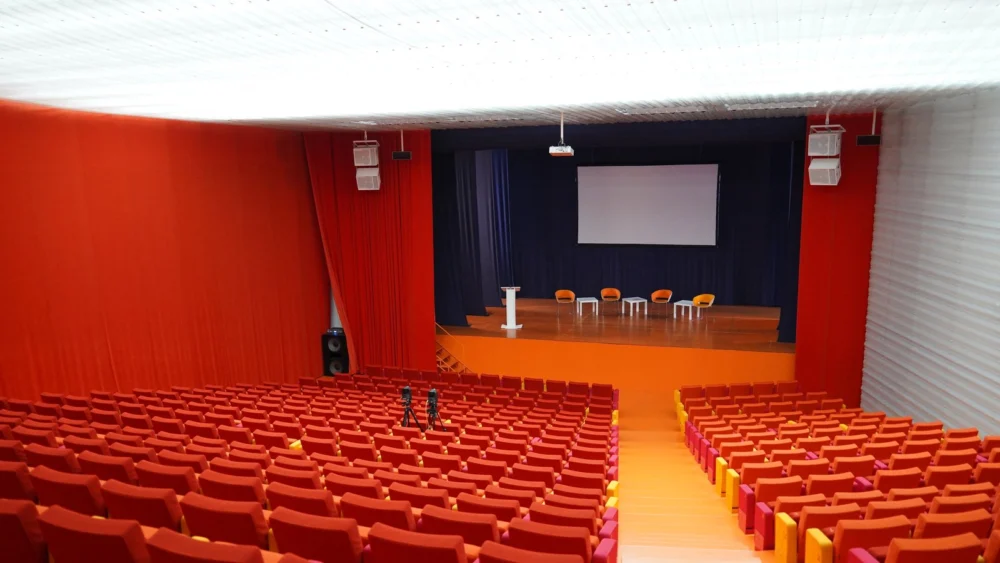
On March 13, FIU President Jeanette Nuñez held a “fireside chat” on campus with former Major League Baseball star Alex Rodriguez. Between 15 and 20 members of a student group called ICEBreakers got tickets. About half an hour into the program, they stood up and turned around, revealing white T-shirts that read “ICE OFF FIU” in red letters, WLRN reported. They made no noise, and the conversation on stage went on.
“It was a very silent demonstration,” Andrew Caro, then a senior, told the Miami New Times in April. “There were no chants, no boos, nothing disruptive. It was just us showing the shirts, showing the messaging, demonstrating that we were against ICE on FIU campus.”
Police body camera footage released by FIU shows Nuñez briefly joking about the silent protest. “Don’t worry, this is not for you,” she told Rodriguez. A few moments later, the students walked out on their own. No officer or security guard asked them to leave, WLRN reported.
Outside, after the silent protest, campus police demanded the students’ names. Faculty members stood with them and told officers the students had done nothing wrong. “It’s their First Amendment right,” several said, according to WLRN.
03
The charges and the video punishment
Three months after the silent protest, FIU told seven of the students it would pursue disciplinary charges for violating a campus rule against “expressive activities” inside university buildings. According to the Miami New Times, they were also accused of failing to “comply with a request or directive of a University Official or non-University law enforcement official.”
The school found the students “responsible” after a hearing in June. The punishment was a written reprimand and a two-minute video in which each student reflected on the policy and their own behavior. FIU said the videos had to be “original” and “thoughtful,” and the school could make students record them again until it was satisfied, WLRN reported. If they didn’t comply, the students would be restricted from signing up for classes and receiving financial aid, according to the Tallahassee Democrat.
The Foundation for Individual Rights and Expression, a national free speech group, had already warned FIU. “FIU must drop the charges, rescind the compelled ‘reflection’ video requirement, and stop trying to turn protected expression into state-scripted obedience,” FIRE wrote in an open letter.
Caro said he would not apologize in any video. “When I record my video, I have no intention of apologizing. I have no intention of admitting any wrongdoing,” he told WLRN.
04
The lawsuit and Judge Becerra’s ruling
In August, the seven students sued FIU in federal court over the silent protest charges with help from the Community Justice Project and the American Civil Liberties Union of Florida, saying the school violated their right to free speech. At the first hearing on August 20, U.S. District Judge Jacqueline Becerra of the Southern District of Florida sharply questioned FIU’s lawyer about how anyone could follow the rule.
“If you’re not sure and you’re an esteemed member of the Bar, do you think these 18- and 19-year-olds can figure out this policy,” Becerra asked FIU’s lawyer, listing what students would have to guess: whether they could stand, turn, or “leave at the same time.”
Three days later, on Sunday, August 23, she issued a preliminary injunction that temporarily blocked FIU from enforcing its indoor ban against the students and from taking further disciplinary action, WLRN reported.
“In short, when all is said and done, and for at least sixty years, the standard has been the same: student speech cannot be curtailed unless it materially disrupts the educational mission or involves substantial disorder or invasion of the rights of others,” Becerra wrote. “Based on the evidence submitted to date, it does not appear that any Plaintiff, or anyone else wearing an ‘ICE OFF FIU’ T-shirt, spoke or did anything other than sit, stand, and walk.”
05
FIU’s side of the silent protest case
FIU defended its rule in court. The only evidence it offered that the silent protest was disruptive was a sworn statement from FIU police detective Francisco Gamundi, written after the lawsuit was filed, WLRN reported.
“From my perspective, as someone in the room, the standing attendees disrupted the event, both by obstructing other audience members’ view of the event and causing a distraction when they stood up together and left the auditorium all at the same time,” Gamundi wrote.
The judge wasn’t persuaded. She noted that the statement came well after the fact and “does not appear to have been part of the students’ disciplinary proceedings.” An internal email from the FIU staffer who organized the event told investigators that the silent protest “did not disrupt the event,” and no one complained, according to WLRN.
FIU also pointed to United States v. Nassif, a case about protests inside the U.S. Capitol after January 6, 2021. Becerra wrote that “because the case dealt with speech outside of a school setting, the Court finds it entirely unpersuasive.” After the ruling, FIU spokesperson Madeline Baró said the university “will comply with the court’s order while considering our legal options.”
06
The rule change behind the reversal
The ban on “expressive activities” indoors wasn’t old. FIU’s Board of Trustees adopted it in June 2024, as pro-Palestinian sit-ins and protests were taking place at FIU and across the country, WLRN reported. Adam Saper, a Community Justice Project attorney who represents the students, said the silent protest case seemed to be the first time FIU had enforced the rule against anyone.
Last week, the trustees amended the rule behind the silent protest charges. The new language removes the outright ban on “expressive conduct” indoors and now explicitly allows “parades, marches, picketing, and demonstrations” inside, so long as they don’t create a substantial disruption of campus activity, WLRN reported.
That change matters well beyond seven students. Under the old rule, a silent protest of any size inside a campus building could bring charges. Under the new one, the question is whether there was a substantial disruption, the same question the judge asked.
07
Tinker v. Des Moines and the silent protest
The judge’s reasoning on the silent protest rests on a 1969 Supreme Court case, Tinker v. Des Moines. An Iowa school disciplined high school students for wearing black armbands to protest the Vietnam War. The court ruled that students do not “shed their constitutional right to freedom of speech or expression at the schoolhouse gate,” WLRN reported.
Under Tinker, schools can limit student speech when it is materially disruptive, indoors or out. A silent protest of students standing in T-shirts for a few minutes is close to the armbands the court protected more than half a century ago. FIU never alleged that the silent protest disrupted the event; it simply pointed to the indoor rule, according to WLRN.
“They’re saying you are not allowed to exercise your First Amendment. You’re not allowed to express yourself inside a university building,” Saper said.
08
What the 287(g) agreement is
The silent protest was about something larger than T-shirts. In 2025, FIU became the first university in the nation to sign what’s called a 287(g) agreement with ICE, WLRN reported. The agreement allows campus police officers to enforce immigration law on campus.
ICEBreakers formed to demand that FIU end the arrangement. Students said it makes immigrant students and others feel unsafe on campus, and that Nuñez wouldn’t meet with them, according to WLRN. The silent protest was their way of being seen when they couldn’t be heard.
Support for the silent protest’s cause has grown since. The FIU Student Government Senate voted 15 to 7 last month to oppose the university’s 287(g) agreement, WLRN reported.
Bloom has reported on what happens when immigration enforcement runs ahead of the law, from a federal judge in Colorado who found ICE officials in contempt for violating court orders to a lawsuit over warrantless ICE arrests in Virginia. The FIU silent protest case is about the right to say no to that enforcement out loud, or, in this case, in silence.
09
The students say the work isn’t over
The students are celebrating, but they say the reason for the silent protest hasn’t changed, and neither has their goal. “But I opened it up and then I was really happy to see that it was just us basically winning the conduct case,” Caro told WLRN.
“While this victory is one that I hold with pride and joy, we must not forget that ICE is still currently occupying our campus,” Caro told the Miami New Times. Max Fondren, the president of ICEBreakers FIU, called it “a full victory of our efforts to overturn FIU’s unconstitutional bans,” according to WLRN.
Katya Tripathi, another of the seven, said the point of the silent protest was never to be seen as free speech heroes. “I would do all of this 1,000 times over if it meant that I would have a chance to make a change to make actual people’s lives better,” she told WLRN. The group is asking for a town hall with Nuñez and University Police Chief Alexander Casas, according to the Miami New Times.
10
What happens next in the silent protest lawsuit
The federal lawsuit isn’t over. Saper said the students plan to continue it, because the school still acted in violation of their First Amendment rights, the Tallahassee Democrat reported.
“We are thrilled that after months of fighting us, FIU finally realized what we and the federal court have told them all along: Punishing students for protesting against ICE on campus is unconstitutional and wrong,” Saper said. “We will remain vigilant to ensure FIU is fully held accountable for violating its students’ rights, in or out of court.”
It’s unclear how dropping the charges will affect the case, WLRN reported. Fondren said student groups at the University of Florida, which has enforced its own ban on indoor protests since 2022, are hoping for ripple effects from the ruling and the rule change.
11
A timeline of the FIU silent protest case
These dates come from WLRN, the Miami New Times and the Tallahassee Democrat:
- June 2024: FIU’s Board of Trustees bans “expressive activities” inside university buildings.
- 2025: FIU becomes the first university to sign a 287(g) agreement with ICE.
- March 13, 2026: ICEBreakers members stage a silent protest during Nuñez’s fireside chat with Alex Rodriguez.
- June 2026: Seven students are found “responsible” and ordered to record reflection videos.
- August 2026: The students sue; on August 23, Judge Becerra issues a preliminary injunction.
- October 2026: The Student Government Senate votes 15 to 7 to oppose the 287(g) agreement.
- Week of November 9, 2026: The trustees amend the conduct code to allow indoor demonstrations without substantial disruption.
- November 17, 2026: FIU drops the charges and clears the students’ records.
12
Your rights at a silent protest on campus
This isn’t legal advice, but the FIU silent protest case points to steps any student can take before speaking up on campus:
- Read your school’s student conduct code and its rules on demonstrations, especially any limits on indoor expression.
- Know the Tinker standard: at public schools, courts ask whether speech caused a material disruption, the standard Judge Becerra applied here.
- If you’re charged, ask for the charges in writing and keep every letter, email and notice.
- Write down what happened right away, including who was there and whether anything was disrupted.
- Reach out to free speech and civil rights groups. The FIU students worked with the Community Justice Project and the ACLU of Florida, and FIRE wrote to the university on their behalf.
- Don’t record a statement or apology you don’t believe before you’ve talked to a lawyer or advocate.
A silent protest is one of the oldest forms of free speech there is. These students stood up in silence, and the law stood up with them.
13
What Bloom is doing
Bloom stands with immigrant families and the students who stand up for them, because the freedom to speak is the freedom every other right depends on. I believe no student should have to choose between their education and their conscience, and a silent protest should never cost a young person their classes or their financial aid.
If immigration enforcement is weighing on you or your family, Bloom’s crisis support page lists people you can call any hour, and Bloom’s support groups are a place to be known. A monthly gift keeps Bloom reporting on these cases from the first charge to the last ruling, and a one-time gift helps too.
14
Frequently Asked Questions
They’re seven Florida International University students, members of the group ICEBreakers FIU, who were charged after a silent protest against the school’s agreement with ICE on March 13, 2026.
A November 17 letter from FIU’s vice president for student affairs cited the federal judge’s preliminary injunction and the Board of Trustees’ change to the conduct code. The charges will be wiped from the students’ records.
During a campus event with FIU’s president and Alex Rodriguez, they stood up, revealed “ICE OFF FIU” T-shirts and stayed silent for a few minutes, then walked out on their own.
In August, U.S. District Judge Jacqueline Becerra said FIU likely violated the students’ First Amendment rights and temporarily blocked the school from enforcing its indoor expression ban against them.
No. The students’ lawyer said they plan to continue the lawsuit, and it’s unclear how dropping the charges will affect the case.
It’s an agreement with ICE that allows campus police officers to enforce immigration law on campus. FIU was the first university in the nation to sign one.
Sovereignty over Servitude. 🌸
Support this work
Everything Bloom publishes is free to read and free to share.
Bloom Ministries is a registered 501(c)(3) in Salem, Oregon. Monthly giving is what lets us say yes before the money is in hand.