

Newsroom·New York Legislature·News
New York Appeals Court Strikes Down Nassau County Trans Sports Ban
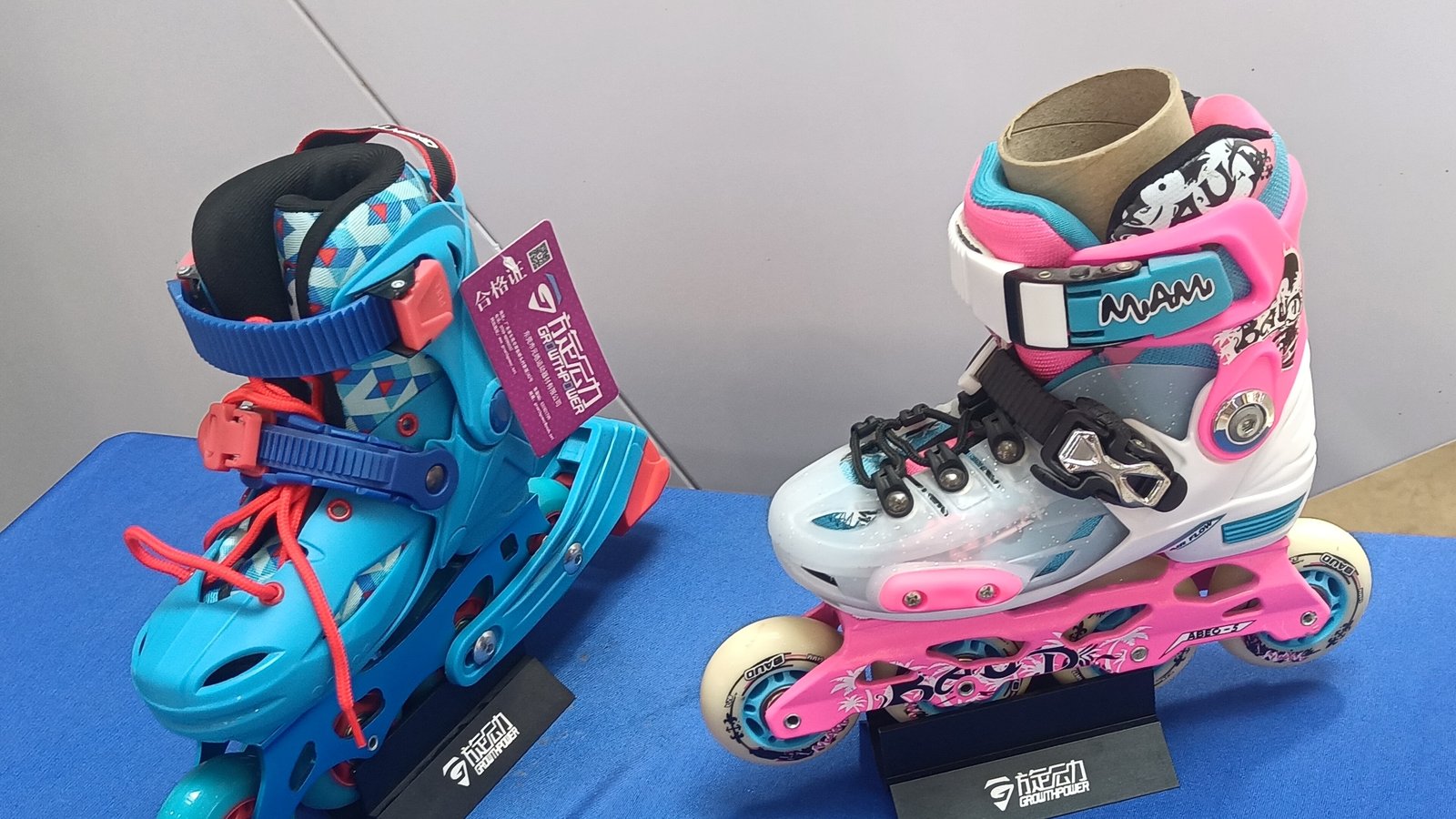
A unanimous New York appeals court ruled that Nassau County can't keep trans women and girls out of women's sports at county parks and facilities, because state civil rights law forbids it. The county says it plans to keep appealing.
 Pastora Tori Matthews
Nassau County can’t keep trans women and girls out of women’s sports at its parks and athletic facilities, a New York appeals court ruled. In a unanimous decision on Wednesday, November 4, the Appellate Division, Second Department, struck down the Long Island county’s law and held that New York’s civil rights laws forbid it.
The ruling ends, for now, a fight that began with an executive order in February 2024 and ran through two trial courts, a temporary injunction and two separate lawsuits. Nassau County says it intends to keep appealing. Here’s what the court decided, how the case got here, and what it means for trans people who use public facilities in New York.
01
What the appeals court decided
The four-judge panel ruled that the county law conflicts with state law. New York’s Human Rights Law and Civil Rights Law “expressly prohibit the County from restricting access to places of public accommodation based on a person’s gender identity or expression,” the court wrote, according to the New York attorney general’s office.
The court reversed a lower-court ruling that had upheld the Nassau County law and directed that a judgment be entered declaring the law invalid, Transvitae reported. The decision was unanimous.
The panel also quoted a state human rights regulation: “Discrimination on the basis of gender identity or expression is also sex discrimination,” Gayety reported. That line matters. It ties protection for trans people to the same rules that protect everyone from sex discrimination in public places.
02
What a public accommodation is
The phrase at the center of the ruling is “public accommodation.” In civil rights law, it means a place that serves the public, such as a park, a pool, a store or a restaurant. The court treated Nassau County’s athletic facilities as public accommodations, which brought them under the state’s rules against discrimination.
That’s why a fight about roller derby turned into a ruling about civil rights. Once a county opens a rink or a field to the public, state law decides who it can turn away. Under New York’s Human Rights Law and Civil Rights Law, gender identity or expression isn’t a permitted reason.
03
Two cases, one answer
Two separate challenges reached the appeals court, and both won on Wednesday. One was brought by the Long Island Roller Rebels, a women’s roller derby league represented by the New York Civil Liberties Union. The other was brought by New York Attorney General Letitia James, Gayety reported.
In the attorney general’s case, the judges sent the matter back to Nassau County’s trial court for a judgment “declaring that the local law is invalid on the grounds that it violates the New York State Constitution and the Municipal Home Rule Law,” according to Gayety. A county can pass laws to protect its residents, the judges explained, but it can’t contradict state law.
That’s the heart of the ruling. The question wasn’t whether trans women should play women’s sports in the abstract. It was whether one county could write its own rule for its parks when the state had already said public places can’t discriminate based on gender identity or expression. The court said it couldn’t.
04
How Nassau County got here
The case has a long history. Here’s the path, based on the reports and filings Bloom reviewed.
- February 22, 2024: County Executive Bruce Blakeman issues an executive order barring women’s and girls’ teams with trans players from county athletic facilities.
- May 10, 2024: State Supreme Court Justice Francis Ricigliano strikes down the order, finding that “the County Executive acted beyond the scope of his authority,” Gayety reported.
- June 24, 2024: The county legislature passes its own version of the ban by a vote of 12 to 5.
- July 15, 2024: Blakeman signs the law. The NYCLU and the attorney general each sue the same day.
- October 6, 2025: Justice R. Bruce Cozzens upholds the ban.
- October 8, 2025: The appeals court blocks enforcement while the case continues.
- November 4, 2026: The appeals court strikes down the Nassau County law.
The law denied county park permits to girls’ and women’s teams that included trans girls or women, Gayety reported. The attorney general’s office put its reach at more than 100 county sites, including ice rinks and swimming pools.
05
What the earlier order said
The October 2025 order that paused the ban offered a preview of Wednesday’s reasoning. Nassau County had argued that the Roller Rebels could keep using county facilities by registering as a mixed-sex league, which the local law allowed.
The judges rejected that idea. Doing so “would change the identity of the league,” they wrote, according to Gayety. A women’s league that welcomes trans women is still a women’s league, and the court didn’t think the county could force it to call itself something else.
The NYCLU announced that order on October 8, 2025, two days after the trial court had upheld the ban. That temporary injunction kept the ban from being enforced while the appeal went forward. Wednesday’s decisions went further, ruling against the law itself.
06
What the county says
Nassau County isn’t finished. “We are reviewing the decision with the intention to continue the appeals process,” County Attorney Thomas Adams said in a statement, ABC7 New York reported.
When the measure was enacted, Blakeman defended it by saying, “we will protect women from bullying by transgender males,” according to ABC7. After the appeals court paused the ban in October 2025, he said, “Nassau County will continue to protect the integrity and safety of women’s sports,” Gayety reported, citing the New York Post.
Bloom reports the county’s position because readers deserve to know what the other side argues. The appeals court weighed that position against state law and ruled the other way, unanimously.
07
Who the Roller Rebels are
The Long Island Roller Rebels call themselves Long Island’s first flat-track roller derby league, and the league says it marked 20 years in 2025, according to Gayety. When Nassau County’s ban arrived, the league had a choice: leave its trans teammates behind or lose access to county facilities. It chose its teammates.
“The Roller Rebels want trans women to know that they are welcome to join our league, and trans people belong in Nassau County,” said Curly Fry, the league’s president, according to Gayety, which cited News 12 Long Island. “Trans athletes aren’t going anywhere,” Fry said.
When the appeals court paused the ban in October 2025, Fry said the ruling “recognizes what we already knew,” adding that “trans people belong everywhere, including in sports,” according to the NYCLU’s announcement. “Nassau County tried to erase members of our community from the sport they love, but we refused to let that happen,” Fry said then.
The league’s lawyer praised that loyalty. “They have been steadfast in their solidarity with all kinds of teammates, but especially their trans teammates,” said Gabriella Larios, a senior staff attorney with the NYCLU, according to ABC7. With the ruling, the Roller Rebels can play again at county-run facilities, ABC7 reported.
08
What the advocates said
Larios described the ruling in plain terms. “Wednesday the court made it abundantly clear that any attempt to ban transgender girls from public spaces is prohibited by the state’s anti-discrimination laws,” she said, according to ABC7.
“For years the Long Island Roller Rebels have been fighting to play in the communities they live in and work in and contribute to as their authentic selves,” Larios said. “I want people to understand that this ban is unjust, and it is aimed at excluding trans people from places they have grown up, from communities that they feel safe in.”
Larios had made the same point when the ban was paused a year earlier. “Trans people deserve to be treated with dignity and respect, just like anyone else,” she said in the NYCLU’s October 2025 announcement. “This ban is nothing less than a cynical effort to shut trans people out of public spaces,” she said.
James was just as direct. “Nobody should have to fight to play the game they love,” she said in a statement. “Transgender athletes have the right to play on the court, field, or roller rink like everyone else, and today the Second Department made clear that Nassau County cannot ban them.”
“As long as I am attorney general, no New Yorker will be shut out of public life because of who they are,” James said.
09
Why state law decided this case
This ruling came months after the U.S. Supreme Court went the other way on a different question. On June 30, 2026, the Court upheld Idaho’s and West Virginia’s bans on trans girls and women in girls’ and women’s school sports, as Bloom explained in our coverage of Initiative 638. That decision said the federal Constitution and Title IX don’t require states to let athletes compete by gender identity.
The Nassau County case shows the other half of that picture. The federal ruling sets a floor, not a ceiling. A state can still decide, through its own civil rights laws, that public places can’t discriminate based on gender identity or expression. New York has done that, and the appeals court enforced it.
The decision centered on New York’s existing protections and didn’t set a nationwide standard, Transvitae reported. For trans people, that means where you live shapes what protects you. In New York, the state’s own law did the work.
10
What it means for other New York counties
The ruling came in a case about one county, but its logic reaches further. The court said the Human Rights Law and Civil Rights Law bar a county from restricting access to public accommodations based on gender identity or expression. Parks, pools, rinks and fields run by local governments fall within that reasoning.
That gives other counties and towns in New York a clear signal. A local government elsewhere in New York that tries to copy Nassau County’s approach would face the same state laws and, now, the same appellate decision. The Second Department covers Long Island, New York City’s outer boroughs and several counties north of the city, so its ruling carries weight across much of the state, from Brooklyn and Queens to Long Island and the counties just north of New York City.
The Nassau County case is also a reminder of who enforces these rights. The state’s attorney general went to court, and a community sports league stayed in the fight with civil liberties lawyers for more than two years. Rights on paper matter most when someone is willing to go to court over them.
Nothing in the ruling requires any league to accept or reject particular players. It says the county can’t use its permits and facilities to punish leagues that include trans women and girls.
11
What happens next
Nassau County says it intends to keep appealing. The next stop would be the New York Court of Appeals in Albany, the state’s highest court, which may decline to take the case, Gayety reported.
Larios told Gothamist that further appeals would be difficult for the county. “It is an uphill battle for them, and they would be flying in the face of very clear state law in pursuing that appeal,” she said, according to Gayety.
Until a higher court says otherwise, the Second Department’s ruling stands. The Roller Rebels can use county facilities, and the Nassau County law is on track to be formally declared invalid.
12
If you’re turned away from a public facility in New York
If you’re trans and a public park, pool, rink or recreation center in New York turns you or your team away because of your gender identity or expression, write down what happened right away: the date, the place, who you spoke with and what they said. Keep any emails, permit denials or written rules.
The attorney general’s office and the state’s Division of Human Rights both take discrimination complaints, and civil liberties groups such as the NYCLU have brought cases like this one. You don’t need to know the law to ask for help. You only need to describe what happened.
If the experience left you shaken, you don’t have to carry it alone. Bloom’s crisis support page lists people who’ll listen.
13
What’s still unclear
It’s unclear whether Nassau County will file a further appeal and, if it does, whether the Court of Appeals will agree to hear it. The county has said only that it intends to continue the process.
It’s also unclear how quickly the trial court will enter the formal judgment declaring the law invalid. Bloom hasn’t seen a date set for that step. The Roller Rebels can play at county facilities now, ABC7 reported, but the paperwork that ends the law is still to come.
Bloom will follow the Nassau County case and report the next ruling, whether it comes from the trial court, the Court of Appeals or the county itself.
14
What Bloom is doing
Bloom covers fights like this one because public life belongs to everyone. A park permit can look like a small thing until it becomes the tool a government uses to shut people out. When a court says no to that, it’s worth reporting clearly, along with what the other side says and what comes next.
If you need someone to talk to today, Trans Lifeline is at 877-565-8860, The Trevor Project is at 1-866-488-7386, and 988 is there by call or text.
Bloom’s reporting runs on people who give a little every month. Become a monthly supporter, or give once if that fits your life better.
15
Frequently Asked Questions
The Appellate Division, Second Department, ruled unanimously on November 4, 2026, that Nassau County’s law keeping trans women and girls out of women’s sports at county facilities violates New York’s Human Rights Law and Civil Rights Law.
The Long Island Roller Rebels, a women’s roller derby league represented by the NYCLU, and New York Attorney General Letitia James brought separate challenges. Both won.
In June 2026, the U.S. Supreme Court upheld Idaho’s and West Virginia’s school sports bans under the federal Constitution and Title IX. The Nassau County case turned on New York’s own civil rights laws, which go further.
Yes. ABC7 New York reported that with the ruling, the Roller Rebels can play again at county-run facilities.
County Attorney Thomas Adams said the county is “reviewing the decision with the intention to continue the appeals process.” The next step would be New York’s Court of Appeals.
The attorney general’s office put the law’s reach at more than 100 county sites, including ice rinks and swimming pools, Gayety reported.
Write down what happened and keep any documents. The attorney general’s office and the state Division of Human Rights take discrimination complaints.
Sovereignty over Servitude. 🌸
Support this work
Everything Bloom publishes is free to read and free to share.
Bloom Ministries is a registered 501(c)(3) in Salem, Oregon. Monthly giving is what lets us say yes before the money is in hand.
Keep reading
 New York Legislature · 16 November 2026State Police Gave Light Penalties for Domestic Violence by Their Own
 Trans advocacy · 11 November 2026DOJ Official Behind Trans Care Subpoenas Resigns: What Stays
 Justice for survivors · 17 November 2026Federal Prisons Closed Dublin, but Sexual Abuse of Women Didn’t Stop
