
Daily Offering · 26 November 2026 · St. Sylvester
Daily Offering: November 26, 2026 | Whose Memory Is in Benediction
The Lesson read this morning begins in the middle of a sentence, and the Missal did that on purpose. In the Douay the verse opens “Moses was beloved of God, and men,” and the Missal strikes the name out and starts at Diléctus. What…
The order of this offering
Before the readings
The Word
Offering and Canon
I
Opening Address
The Lesson read this morning begins in the middle of a sentence, and the Missal did that on purpose. In the Douay the verse opens “Moses was beloved of God, and men,” and the Missal strikes the name out and starts at Diléctus. What is left is a clause with nobody in it, waiting: beloved of God and men, whose memory is in benediction.
Welcome to Bloom’s Daily Offering for Thursday, November 26, 2026, the feast of St. Sylvester, Abbot, a feast of the third class in white, with a commemoration of St. Peter of Alexandria, Bishop and Martyr. It is the Thursday after the Twenty-Fourth and last Sunday after Pentecost. The Gloria is said and the Creed is not, the Preface is the Common Preface, and there is no vigil and no octave.
It is also Thanksgiving Day, a civil holiday with no place on this calendar. The Church gives us St. Sylvester and nothing else. But what she gives us is a set of texts about what lasts of a person after the person has gone, which is the one subject the national day and the liturgical day hold in common, and we are going to let them meet.
Bloom offers this Mass in the Independent Catholic tradition, from the 1962 Roman Rite, and is not affiliated with or recognized by the Roman Catholic Church. We say that at the door every morning, because honesty is the first thing a church owes the people who walk in.
II
A Word on Today’s Propers
This is a repeat day and it is said here plainly. The Introit, the Epistle, the Gradual and the Gospel have all been printed in this archive before, and the numbers are worth having, because they are not the same number.
The Introit is the widest text in the book. Os justi has been served here on sixteen earlier dates and was opened at length on St. Hyacinth, August 17, 2026. The Epistle, Gradual and Gospel narrow sharply, printed here exactly twice: on this same feast last year and on St. Francis Borgia, October 10, 2026.
Last year’s post preached the Gospel entire. Today one clause of it is touched, at the end, and no more; the rest is printed and not preached. The Epistle, printed twice here and opened never, is where this morning starts, and its first line is the one to hold: whose memory is in benediction.
What is left over is small and it is the whole day: the Collect and the Secret belong to Sylvester and to nobody else, were printed here once, and neither was opened. Every proper is printed on a repeat day. The repeating governs what is opened, not what is read.
III
Introit
Psalm 36:30-31, 36:1 (The alleluias the Common prints in brackets belong to Paschaltide and are not said today.)
English
The mouth of the just shall meditate wisdom: and his tongue shall speak judgment. The law of his God is in his heart.
Ps. 36:1. Be not emulous of evildoers; nor envy them that work iniquity.
Glory be to the Father, and to the Son, and to the Holy Ghost. As it was in the beginning, is now, and ever shall be, world without end. Amen.
The mouth of the just shall meditate wisdom: and his tongue shall speak judgment. The law of his God is in his heart.
Latin
Os justi meditábitur sapiéntiam, et lingua ejus loquétur judícium: lex Dei ejus in corde ipsíus.
Ps. 36:1. Noli æmulári in malignántibus: neque zeláveris faciéntes iniquitátem.
Glória Patri…
Os justi meditábitur sapiéntiam, et lingua ejus loquétur judícium: lex Dei ejus in corde ipsíus.
IV
Collect
(℣. marks what the priest says. ℟. marks the answer of the server and the people.)
English
Let us pray.
Most merciful God, Who, when the holy Abbot Sylvester was devoutly meditating upon the vanity of this world beside an open grave, didst deign to call him into the desert and to adorn him with the illustrious merits of his life: we humbly beseech Thee, that, following his example, despising the things of earth, we may enjoy to the full Thy everlasting fellowship. Through our Lord Jesus Christ, Thy Son, Who liveth and reigneth with Thee in the unity of the Holy Ghost, God, world without end. Amen.
℟. Amen.
Latin
Orémus.
Clementíssime Deus, qui sanctum Silvéstrum Abbátem, sǽculi hujus vanitátem in apérto túmulo pie meditántem, ad erémum vocáre et præcláris vitæ méritis decoráre dignátus es: te súpplices exorámus; ut, ejus exémplo terréna despiciéntes, tui consórtio perfruámur ætérno.
Per Dóminum…
V
The Commemoration
A second name is said after the Collect this morning. Peter of Alexandria was bishop of that city from the year 300 and was martyred in November of 311, and his own oration asks for protection on the ground of weakness rather than of record.
English
Look upon our weakness, O Almighty God: and because the weight of our own doing presseth us down, may the glorious intercession of blessed Peter, Thy Martyr and Bishop, protect us. Through our Lord Jesus Christ, Thy Son, Who liveth and reigneth with Thee in the unity of the Holy Ghost, God, world without end. Amen.
℟. Amen.
Latin
Infirmitátem nostram réspice, omnípotens Deus: et, quia pondus própriæ actiónis gravat, beáti Petri Mártyris tui atque Pontíficis intercéssio gloriósa nos prótegat.
Per Dóminum…
VI
Epistle
Ecclesiasticus 45:1-6 (The Missal cuts the name of Moses from the first line, so that the lesson falls on whichever saint is kept that day.)
English
Lesson from the book of Wisdom.
Beloved of God and men, whose memory is in benediction. He made him like the saints in glory, and magnified him in the fear of his enemies, and with his words he made prodigies to cease. He glorified him in the sight of kings, and gave him commandments in the sight of his people, and shewed him his glory. He sanctified him in his faith, and meekness, and chose him out of all flesh. For he heard him, and his voice, and brought him into a cloud. And he gave him commandments before his face, and a law of life and instruction.
Latin
Léctio libri Sapiéntiæ.
Diléctus Deo et homínibus, cujus memória in benedictióne est. Símilem illum fecit in glória sanctórum, et magnificávit eum in timóre inimicórum, et in verbis suis monstra placávit. Glorificávit illum in conspéctu regum, et jussit illi coram pópulo suo, et osténdit illi glóriam suam. In fide et lenitáte ipsíus sanctum fecit illum, et elégit eum ex omni carne. Audívit enim eum et vocem ipsíus, et indúxit illum in nubem. Et dedit illi coram præcépta, et legem vitæ et disciplínæ.
VII
Gradual
Psalm 20:4-5; Psalm 91:13. (The served text gave the crown as one of pure gold. The Missal’s Latin says de lápide pretióso and the Douay says precious stones, which is how this archive has printed it before and how it is printed here.)
English
O Lord, Thou hast prevented him with blessings of sweetness: Thou hast set on his head a crown of precious stones.
℣. He asked life of Thee: and Thou hast given him length of days for ever and ever. Alleluia, alleluia.
℣. The just shall flourish like the palm tree: he shall grow up like the cedar of Libanus. Alleluia.
Latin
Dómine, prævenísti eum in benedictiónibus dulcédinis: posuísti in cápite ejus corónam de lápide pretióso.
℣. Vitam pétiit a te, et tribuísti ei longitúdinem diérum in sǽculum sǽculi. Allelúja, allelúja.
℣. Justus ut palma florébit: sicut cedrus Líbani multiplicábitur. Allelúja.
VIII
Gospel
English
Continuation ☩ of the holy Gospel according to Matthew.
At that time, Peter said to Jesus: Behold we have left all things, and have followed thee: what therefore shall we have? And Jesus said to them: Amen, I say to you, that you, who have followed me, in the regeneration, when the Son of man shall sit on the seat of his majesty, you also shall sit on twelve seats judging the twelve tribes of Israel. And every one that hath left house, or brethren, or sisters, or father, or mother, or wife, or children, or lands for my name’s sake, shall receive an hundredfold, and shall possess life everlasting.
Latin
Sequéntia ☩ sancti Evangélii secúndum Matthǽum.
In illo témpore: Dixit Petrus ad Jesum: Ecce, nos relíquimus ómnia, et secúti sumus te: quid ergo erit nobis? Jesus autem dixit illis: Amen, dico vobis, quod vos, qui secúti estis me, in regeneratióne, cum séderit Fílius hóminis in sede majestátis suæ, sedébitis et vos super sedes duódecim, judicántes duódecim tribus Israël. Et omnis, qui relíquerit domum, vel fratres, aut soróres, aut patrem, aut matrem, aut uxórem, aut fílios, aut agros, propter nomen meum, céntuplum accípiet, et vitam ætérnam possidébit.
The Offering
Daily Homily | Whose Memory Is in Benediction
In the Lesson as the Missal prints it, nobody is named. The Douay has Moses; the Missal cuts him and leaves the clause open, so that each year it comes down on whoever is…
Whose memory is in benediction?
In the Lesson as the Missal prints it, nobody is named. The Douay has Moses; the Missal cuts him and leaves the clause open, so that each year it comes down on whoever is kept. This morning it comes down on an Italian canon dead in 1267, and the Church says of him what Ecclesiasticus said of Moses: beloved of God and men, whose memory is in benediction.
Now set beside that what the Catholic Encyclopedia says turned him. He decided to leave the world on seeing the decaying corpse of one who had formerly been noted for great beauty. Somebody well remembered, in the ordinary way, and not at all a person whose memory is in benediction.
Hold the two together, because the day sits in the gap. One is remembered for having been beautiful, with a body in front of him settling what became of that. The other is a man whose memory is in benediction, which is a different kind of remembering and lasts differently.
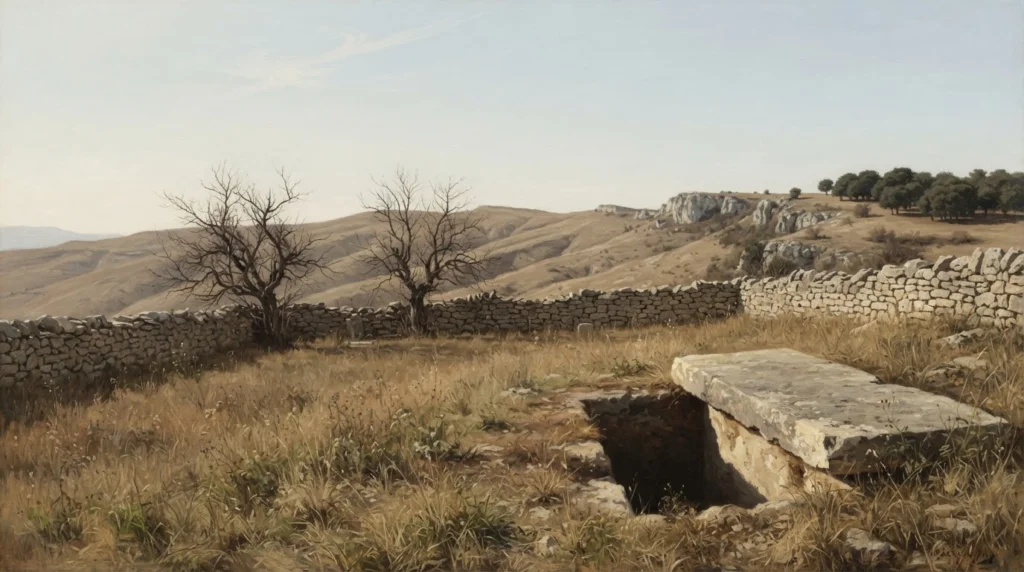
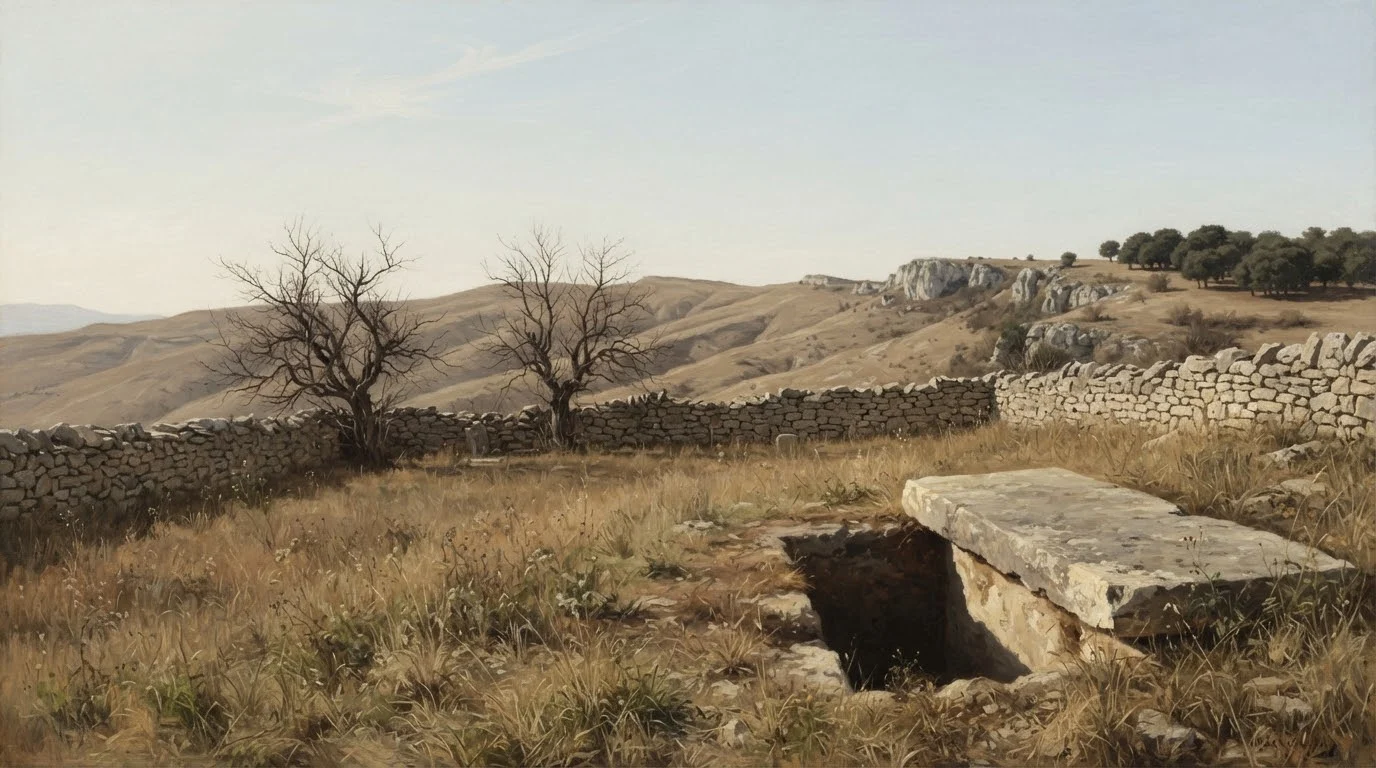
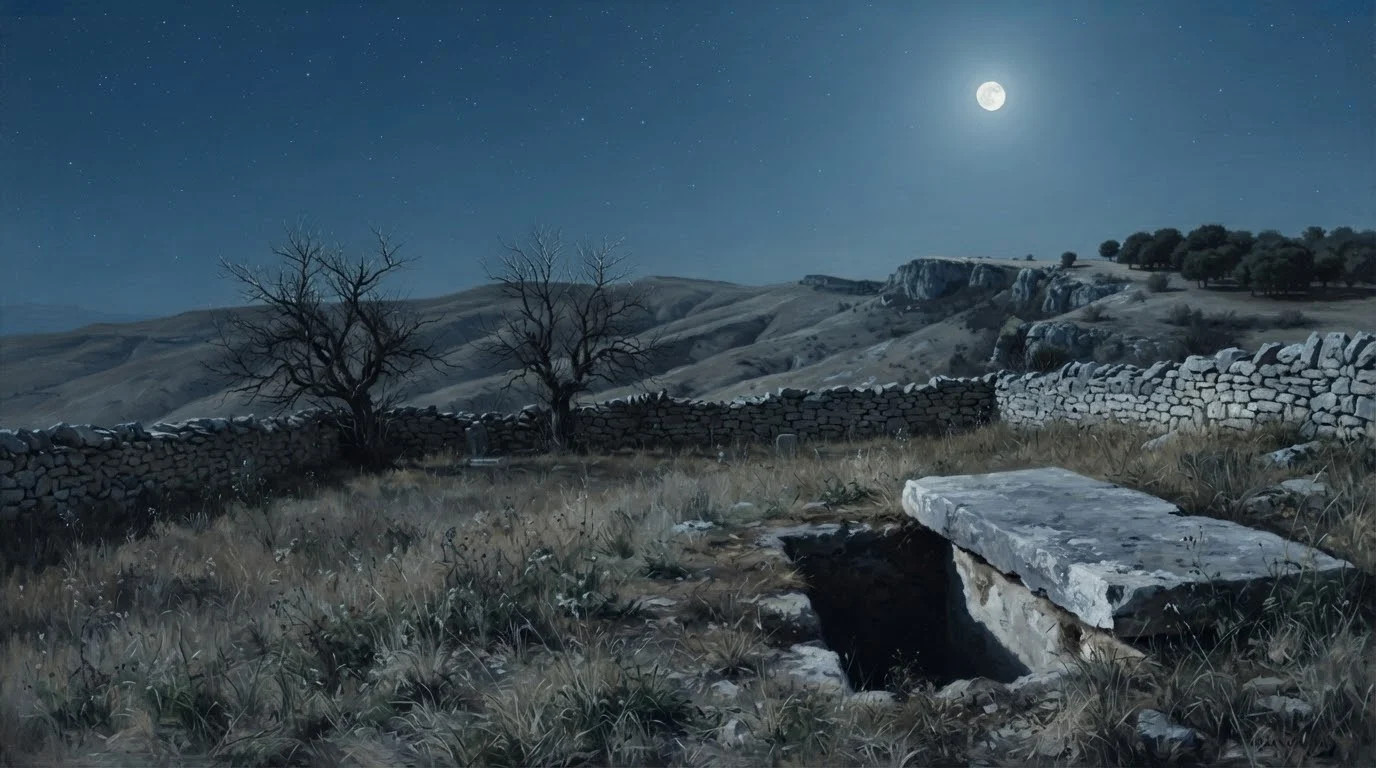
The Collect keeps almost nothing of his life. Not Bologna or Padua, not the law he abandoned, not the father who stopped speaking to him for ten years. It keeps one detail: sǽculi hujus vanitátem in apérto túmulo pie meditántem, devoutly meditating upon the vanity of this world beside an open grave. That is where the Church starts a man whose memory is in benediction.
And in the first half of that prayer Sylvester has no verb of his own. Meditántem is an accusative participle agreeing with sanctum Silvéstrum Abbátem, itself the object; the one finite verb is dignátus es, thou hast deigned, and God is its subject. Nobody here is building anything. One party is being handed something.
Who does the adorning in this prayer?
God does, and the prayer says so twice in one breath. Ad erémum vocáre et præcláris vitæ méritis decoráre dignátus es: thou didst deign to call him into the desert, and to adorn him with the illustrious merits of his life. Two infinitives, one deigning, one subject, and the man being called and adorned does neither.
Decoráre is a word for decking something out, what you do to a house for a feast or to a victor at the end of a race. It is not a word for settling an account, and it is said over a man whose memory is in benediction.
Our served English had the clause as enrich him with unusual merits, which loses decoráre, mistakes præclárus, and drops vitæ altogether. It is printed here as the Latin has it, on the same ground as the restoration made two days ago.
The Secret repeats the move in a different grammar. Beáti Silvéstri Abbátis imitatóres effécti: having been made imitators of blessed Sylvester the Abbot, a perfect passive. We are told we have been made them, and only then asked to be worthy to receive.
Two prayers, and in both a man’s merit arrives in the passive voice. Which tells you what sort of claim the Church makes when she calls somebody one whose memory is in benediction. It is not a verdict she reached by adding.
Can a man merit anything from God?
Yes, and the Church has been unusually careful about how. Merit is not a fiction and merit is not a wage, and losing either half is how the thing goes wrong.
St. Thomas sets it out in the Summa, conceding everything to the hard-headed reading first. “Merit and reward refer to the same, for a reward means something given anyone in return for work or toil, as a price for it.” Then the obstacle: “between God and man there is the greatest inequality.”
A wage needs two parties who each own what they bring. One of these two does not, which is why no ledger ever produced a person whose memory is in benediction. So there is no justice of absolute equality here, “but only of a certain proportion,” and then the sentence that settles it: “the manner and measure of human virtue is in man from God.”
Which cuts through the teaching most people were handed: that your standing before God is a running total, made of what you managed to do, so whoever managed most stands best. It is never put that baldly. It is carried in who gets called holy, and those are reliably the ones who had the health, the hours and the money.
It is also, if you have watched it happen, how a family quietly settles whose memory is in benediction and whose is not.
The Collect refuses all of it. It does not say Sylvester acquired illustrious merits; it says God deigned to adorn him with them, about a man standing at a graveside doing nothing whatever. Thomas refuses it at the root, because the capacity itself was issued: God is made our debtor not simply, “but His own, inasmuch as it is right that His will should be carried out.”
Does grace make our own effort pointless?
No, and the prayers that take the earning out keep the acting in. This is the inversion to watch for, because it is the pious one and arrives wearing humility: if God does all the adorning, nothing I do counts, so I may as well sit still and wait to be decorated.
The Secret will not have it. It asks that we come to the altar pia mentis præparatióne et cordis puritáte, by a devout preparation of mind and purity of heart, and a preparation is a thing a person does, in time, on purpose. Thomas holds both ends in one article: a work springing from free will alone has no condignity but has congruity, “on account of an equality of proportion,” while the same work proceeding from grace moving us is meritorious condignly. Free will is put second, not struck out. Somebody has to speak the words over a man whose memory is in benediction, and the speaking is a thing done.
There is a story told of a striker at a forge in a market town, nineteen years at the same anvil. A striker swings the sledge. He does not choose the heat, pick the moment or decide the shape; the smith taps the iron where he wants it hit, and the striker hits it.
One February a carter brought in a cracked axle-tree and stood in the open doorway while the two of them closed it. When it was done he put the money into the striker’s hand rather than the smith’s, because the striker was nearest the door. The striker handed it back and walked it the four steps across the floor.
He was not being modest. He said afterwards that he was worth a good wage, knew to a hair what he was worth, and had never been shy of asking. What he would not take was the price of the job, because the job was one somebody else had ordered and put his name to.
Those four steps are about as near as a trade comes to what this Mass does with a man whose memory is in benediction.
What has Thanksgiving to do with this?
Everything, and the join is one Latin word at the end of the Collect. The prayer closes tui consórtio perfruámur ætérno, which came to us as “Your everlasting presence.” That is not what the noun says. Consórtium is built from con and sors, a lot or a share: two parties in consortium hold the same portion between them. Presence is a thing you can stand in a room for and hold none of.
Nor is the word decorative. When Scripture names what the whole business is finally for it reaches for this one: ut per hæc efficiámini divínæ consórtes natúræ, that by these you may be made partakers of the divine nature, at 2 Peter 1:4. Thomas rests the worth of a meritorious act on exactly that: it “depends on the dignity of grace, whereby a man, being made a partaker of the Divine Nature, is adopted as a son of God.”
A shared lot. Today a great many people in this country will sit down at a table and share one, and the Church’s word for the end of everything turns out to name the same arrangement.
So keep the dead at it. That is not sentiment and not a figure of speech; it is a doctrine with a name, the communion of saints, and it holds that the Church is one body and that death took nobody out of it. The people who made the country you are eating in, those with names on stones and the far greater number without, are not spectators at it. They are in the consortium, and the Church hands you their language this morning in a clause with the name cut out, so that it fits whoever you need it to fit: beloved of God and men, whose memory is in benediction.
Say it out loud, because out loud is the part people skip. If a thing has gone stale with a brother or a friend it is not too late, and the way is not to announce that you are grateful. Name the particular thing they did and say the year it happened. That is how you tell somebody to their face that theirs is a memory in benediction, while they can still hear you say it.
And not every chair will be full. Some are empty because somebody died, and some for reasons that are nobody’s business at a table. The Gospel appointed for this morning runs the list without flinching, house, brethren, sisters, father, mother, wife, children, lands, and declines to stop there: céntuplum accípiet, et vitam ætérnam possidébit, a hundredfold, and life everlasting possessed.
Which is a claim about time, not a consolation about feelings. Life everlasting possessed means the table is not finally set yet, and that the people whose memory is in benediction are not finished people.
So if the only entry on your list this year is that you are still here, put it down and do not apologise for its size. Surviving the year is a thing done, and the people on the far side of it are not waiting on nothing. They are people whose memory is in benediction, and it is being kept.
The Church is careful about merit and will not let you buy a thing. She still has no difficulty calling the one who lasted a person whose memory is in benediction.
↑ The order resumes below.
X
Secret
English
We beseech Thee, O Lord: that, while we reverently offer these gifts unto Thy divine majesty, being made imitators of blessed Sylvester the Abbot by a devout preparation of mind and purity of heart, we may be worthy to receive in holiness the Body and Blood of Thy Son. Who liveth and reigneth with Thee in the unity of the Holy Ghost, God, world without end. Amen.
℟. Amen.
Latin
Quǽsumus, Dómine: ut, dum hæc múnera divínæ majestáti tuæ reverénter offérimus; pia mentis præparatióne et cordis puritáte, beáti Silvéstri Abbátis imitatóres effécti, Corpus et Sánguinem Fílii tui sancte percípere mereámur.
Qui tecum…
English
Graciously receive, O Lord, the offerings dedicated to Thee by the merits of blessed Peter, Thy Martyr and Bishop: and grant that they may come to us as a lasting help. Through our Lord Jesus Christ, Thy Son, Who liveth and reigneth with Thee in the unity of the Holy Ghost, God, world without end. Amen.
℟. Amen.
Latin
Hóstias tibi, Dómine, beáti Petri Mártyris tui atque Pontíficis dicátas méritis, benígnus assúme: et ad perpétuum nobis tríbue proveníre subsídium.
Per Dóminum…
XI
The Holding
If you believe, hold this. You were not asked to assemble a record and present it, and neither was anybody at your table. What the Church does this morning is print a line with the name struck out and let it fall on whoever is kept, and she is willing to do that for you. Say the particular thing to the particular person before the day is out.
English
May Almighty God bless you: the Father, ☩ the Son, and the Holy Ghost.
℟. Amen.
Latin
Benedícat vos omnípotens Deus, Pater, et Fílius, ☩ et Spíritus Sanctus.
℟. Amen.
If that language is not yours, take the plain half. Somebody carried you this year and may not know it, so tell them the thing itself and not the sentiment: what they did, and when. And if there is a person you cannot reach today, it is still worth saying, and the saying is not wasted.
It is the opening line of today’s Lesson, Ecclesiasticus 45:1, and it means a memory held with blessing rather than merely held. The Douay reads “Moses was beloved of God, and men: whose memory is in benediction,” and the Missal cuts the name, beginning at Diléctus Deo et homínibus, so the clause has no subject and falls each year on whichever saint is kept. Benediction here is not a mood. It is a thing said: bene-dicere, to speak well of, which is why the phrase has an obligation inside it. A memory in benediction is one somebody keeps saying out loud.
No. Thanksgiving is an American civil holiday and the 1962 calendar takes no notice of it; this morning’s Mass is St. Sylvester’s, third class in white, with a commemoration of St. Peter of Alexandria, exactly as it would be in any other year. The Missal does carry a prayer for thanksgiving, pro gratiarum actione, among the occasional prayers rather than attached to any date in November. So the gratitude has to be found where the Church always puts it, in the texts appointed for the day, and today those texts open on a man whose memory is in benediction, which is a reasonable place for an American Thursday to start.
The founder of the Sylvestrines, born at Osimo in 1177 of the noble Gozzolini family and dead on 26 November 1267. He was sent to study jurisprudence at Bologna and Padua, abandoned law for theology, and found his father so angered by the change that he refused to speak to him for ten years. He took a canonry at Osimo, rebuked his bishop for the scandals of an irregular life, and was threatened with the loss of it. In 1227 he withdrew to a desert place about thirty miles off, later settling at Grotta Fucile and then Monte Fano, where he adopted the Rule of St. Benedict.
The bishop commemorated at today’s Mass. He became bishop of Alexandria in the year 300 and was martyred there in November of 311, and the Catholic Encyclopedia reports, on Eusebius, that his martyrdom was unexpected and so was not preceded by a term of imprisonment. What survives of his writing is a set of fourteen canons issued in the third year of the persecution, dealing chiefly with the lapsi, the Christians who had given way under pressure and wanted to be received back. His commemorated Collect asks nothing on the strength of his record. It asks God to look at our weakness, and then at his intercession.
No, and also not quite no. The Church teaches that merit is real and that merit is given. St. Thomas concedes that a reward is a price paid for work, then points out that between God and man “there is the greatest inequality: for they are infinitely apart, and all man’s good is from God.” So there is no equality of justice between them, only a proportion, and “the manner and measure of human virtue is in man from God.” A person really does merit, and what he merits with was issued to him, which is why the Collect can say God adorned Sylvester with Sylvester’s own merits without contradicting itself.
The doctrine that the Church is one body and that death does not remove anybody from it, so that the living and the dead remain in real contact rather than in fond memory. It is why a Catholic asks a saint to pray for him and why the dead are named at the altar. On a national day given over to remembering those who came before us, it is worth saying that the Church’s version of that remembering is not an exercise in feeling. She holds that the people you are thinking of this morning are alive and that the sharing runs both ways, which is a stronger claim than the holiday makes and a more comforting one.
Because the served translation departed from the Missal’s Latin at two points and both affect the sense. Præcláris vitæ méritis decoráre came to us as “enrich him with unusual merits,” where decoráre is to adorn rather than to enrich, præclárus is bright or illustrious rather than unusual, and vitæ had gone missing. And tui consórtio perfruámur ætérno came as “Your everlasting presence,” where consórtium is a sharing of one lot between parties, the word the Vulgate uses at 2 Peter 1:4 for being made partakers of the divine nature. Both are printed here set to the Latin.
No to both. The vigils that survived the reform of 1955 are those of Christmas, Pentecost, the Ascension, the Assumption, St. John the Baptist, Ss. Peter and Paul and St. Lawrence, and the surviving octaves are Christmas, Easter and Pentecost only. Today’s feast is none of those and stands on its own, a third-class feast in white on the Thursday after the Twenty-Fourth and last Sunday after Pentecost, with a commemoration of St. Peter of Alexandria. Tomorrow is a fourth-class feria in green.
No. Strip out the theology and the day still turns on one honest observation: what survives a person is mostly what other people keep saying about them, and that is distributed very unfairly. The ones remembered best are usually the ones who had the health, the hours and the money to leave a mark, and the result then gets reported back as desert. You do not have to believe anything to notice that this is a defect in the measure rather than in the people it measures badly, or to decide to say something true about somebody today while they can hear it. Take that much and leave the rest; you are welcome here either way.
Faith in Bloom is the daily liturgical work of Bloom Ministries, a 501(c)(3) nonprofit, and it is free to read and always will be. If it has been worth something to you and you are able, you can give once or give monthly below. Sending a post to one person who needs it does real work too.
Propers for the feast of St. Sylvester, Abbot, are taken from the 1962 Roman Missal, in the Missal’s Latin and in English. Scripture is quoted from the Douay-Rheims Bible. The historical notes are drawn from the Catholic Encyclopedia’s articles on St. Sylvester Gozzolini and St. Peter of Alexandria, and the account of merit from St. Thomas Aquinas, Summa Theologiae I-II, Q. 114, articles 1 and 3. The English of the Collect has been set to the Missal’s Latin where the served translation departed from it, at praeclaris vitae meritis decorare and at tui consortio perfruamur aeterno, and the Gradual’s crown is printed as the Latin and the Douay have it; each change is stated in the questions above.
The liturgical spine of Faith in Bloom is The New Marian Missal for Daily Mass by Sylvester P. Juergens, S.M., S.T.D., Regina Press, Imprimatur 1961. Faith in Bloom is offered by Bloom Ministries in the Independent Catholic tradition and is not affiliated with or recognized by the Roman Catholic Church.
