
Daily Offering · 11 November 2025 · St. Martin of Tours
Daily Offering: November 11, 2025 | No Power of Our Own
Most of the Church’s prayers open by naming something true about God and then ask for something on the strength of it. Today’s opens by naming something true about us. O God, Who see that we cannot survive by any power of our own.…
The order of this offering
Before the readings
Offering and Canon
I
Opening Address
Most of the Church’s prayers open by naming something true about God and then ask for something on the strength of it. Today’s opens by naming something true about us. O God, Who see that we cannot survive by any power of our own. That is the ground of the whole prayer, and it is not a confession, not an apology, and not a request to be made stronger. It is a fact set down in front of a God who is described as already seeing it.
Hold on to the verb. The prayer does not say forgive us that we have no power of our own. It does not say pardon us, or excuse us, or overlook it. It says Who see. The inability is already in the room, already known, and nothing has to be disclosed before the asking can start.
We cannot survive by any power of our own. Say it once without the theology attached and it is simply a true sentence about human beings.
Today is the feast of Martin of Tours, Bishop and Confessor, kept in white, with a commemoration of a soldier-martyr of Egypt, St. Menas. It is the Tuesday after the Twenty-Second Sunday after Pentecost. Martin’s Mass is the one the Church keeps for a great priest, and it comes with a Gospel of its own that is not that Common’s usual reading.
That Gospel is four verses about a candle, an eye, and a lamp. And what it has in common with the Collect is this: across all four verses, nothing produces light by any power of our own or its own. Somebody lights the candle. Somebody sets it down. At the end, a bright lamp shines on you.
I want to say plainly what this offering will not do, because the passage has been put to a use it cannot bear. Luke’s line about the light within has been read for a very long time as an inspection, a way of asking what you are like on the inside when the room is empty. Read that way, it becomes a test, and a test is exactly what today’s Collect refuses to set. The Collect has already answered the question of our capacity, in the first clause, before anything is asked for.
II
A Word on Today’s Propers
Three of today’s propers are the ones the Church used a week ago, on the feast of St. Charles Borromeo. Both days take the Common of a Confessor Bishop, “Statuit,” and both open with the same Introit from Ecclesiasticus and read the same long Epistle about a great priest, and the Gradual antiphon is word for word the one printed then. That day’s offering was called faithful over a few things, and the Epistle is printed there in full.
So it is not printed again here. The citation stands below with its link, and the Church’s repetition is left as repetition, which is what it is.
The refrain of this offering is therefore the Collect’s own opening clause, and it is only three days younger in the archive than the Epistle it sits beside: no power of our own.
What is genuinely new today is everything else. The Collect is Martin’s own. The Alleluia verse is his own, and it is not a verse of scripture at all. The Gospel is Luke’s candle and lamp rather than the parable of the talents, the Offertory changes verse, and the Communion changes book. This offering is built on the new material, and the refrain it returns to comes from the Collect the Church wrote for this man and no other.
III
Introit
The Lord made to him a covenant of peace, and made him a prince: that the dignity of priesthood should be to him for ever. (Ecclus. 45:30)
O Lord, remember David, and all his meekness. (Ps. 131:1)
Glory be to the Father, and to the Son, and to the Holy Ghost. As it was in the beginning, is now, and ever shall be, world without end. Amen.
IV
Collect
O God, Who see that we cannot survive by any power of our own: mercifully grant that, by the intercession of blessed Martin, Thy Confessor and Bishop, we may be made safe from all harm. Through our Lord Jesus Christ, Thy Son, who liveth and reigneth with Thee in the unity of the Holy Ghost, God, world without end. Amen.
Read the petition slowly. Not made strong. Made safe.
V
The Commemoration
St. Menas, Martyr.
Grant, we beseech Thee, almighty God, that we who celebrate the martyrdom of blessed Menas may, through his intercession, be strengthened in Thy love. Through our Lord Jesus Christ, Thy Son, who liveth and reigneth with Thee in the unity of the Holy Ghost, God, world without end. Amen.
The Catholic Encyclopedia records that Menas was an Egyptian Christian serving in the Roman army under a tribune named Firmilian, and that he died about the year 295, under Diocletian, scourged and then beheaded at Cotyaeus in Phrygia. His body was carried back to Egypt. His grave lay in the desert of Mareotis, between Alexandria and the valley of Natron, and the Emperor Arcadius raised a basilica over it.
The place became one of the great pilgrimages of the ancient world and was abandoned after the conquest of 641. When it was excavated in 1905, what came out of the sand was thousands of small water pitchers and oil lamps. That is what pilgrims carried away from him: water, and lamps, and not one of those lamps had lit itself.
The encyclopedia is careful to say that local legends gathered around more than one saint of this name. So nothing more is claimed for him here than what it sets down as fact: a soldier, a scourging, a grave in the sand, and a shrine that handed out light.
VI
Epistle
Ecclesiasticus 44:16-27; 45:3-20
The Epistle read today is the one printed in full on the feast of St. Charles Borromeo, a week ago. The Church repeats it here without change, and it is not reprinted a second time.
VII
Gradual
Behold a great priest, who in his days pleased God. There was not found the like to him, who kept the law of the most High. (Ecclus. 44:16, 20)
VIII
Alleluia
Alleluia, alleluia.
The blessed man Martin, Bishop of the city of Tours, has gone to his rest: and the Angels, Archangels, Thrones, Dominations and Powers have received him.
Alleluia.
(This Alleluia verse is a liturgical composition proper to today’s feast rather than a passage of scripture, and it names no book because it belongs to none.)
IX
Gospel
At that time, Jesus said to His disciples: No man lighteth a candle, and putteth it in a hidden place, nor under a bushel; but upon a candlestick, that they that come in, may see the light.
The light of thy body is thy eye. If thy eye be single, thy whole body will be lightsome: but if it be evil, thy body also will be darksome.
Take heed therefore, that the light which is in thee, be not darkness.
If then thy whole body be lightsome, having no part of darkness; the whole shall be lightsome; and as a bright lamp, shall enlighten thee.
The Offering
Daily Homily | No Power of Our Own
Start with the Collect, because the Collect settles the argument before the Gospel is read. O God, Who see that we cannot survive by any power of our own. The Church puts that sentence…
Start with the Collect, because the Collect settles the argument before the Gospel is read. O God, Who see that we cannot survive by any power of our own. The Church puts that sentence in the mouth of everyone standing in the room, without exception, without a category for the strong and another for the weak. We cannot. Not some of us, not on our bad days.
And it is said to a God who sees it. That single verb does more work than anything else in the prayer. If the inability were a fault, the verb would be forgive. If it were a secret, the verb would be tell. It is neither, so the verb is see, and the prayer moves straight past it to what it actually wants.
What it wants is safety. Not capacity, not increase, not strength. That we may be made safe from all harm. A prayer that opens by saying we have no power of our own does not then ask for power of our own. It asks to be kept.
We cannot survive by any power of our own. The prayer says it and moves on, and the moving on is the point.
Now read the Gospel with that in your ears, and walk the verbs.
No man lighteth a candle, and putteth it in a hidden place, nor under a bushel; but upon a candlestick. Two verbs, and the candle is the object of both of them. Somebody lights it. Somebody puts it down. The candle does not appear as the subject of a single verb in the sentence, because a candle cannot light itself, and Luke does not pretend otherwise. The Collect’s clause holds in the small case as well as the large one, and there is no power of our own in a wick.
No power of our own in the lighting, and none in the placing.
Then the eye. The light of thy body is thy eye. This is the line that gets read as an examination, and it will not carry one. The Douay’s word for a good eye is single, not bright. Undivided. An eye is an opening, not a source, and calling it the light of the body is a statement about where light gets in.
Then the last verse, which is the one that decides the whole passage. And as a bright lamp, shall enlighten thee. The lamp enlightens thee. You are the object again. The light arrives, and it arrives from somewhere that is not you.
Which is the Collect again, in a different register. No power of our own.
Four verses, and there is no verb of self-illumination anywhere in them. Nothing in the passage shines by any power of our own. The Collect said it in the language of prayer, and the Gospel says it in the language of a room with a lamp in it.
Look also at what the passage never says, because the absences are as deliberate as the words. It never says how bright the candle has to be. It never grades lamps, never compares one to another, never asks whose hand trimmed the wick or whether it was trimmed by any power of our own. It draws exactly one distinction, and it is not about the lamp at all: the difference between a hidden place and a candlestick is a difference of where the thing was put.
A hidden place and a candlestick are both somebody else’s decision, and neither is reached by any power of our own.
Which is worth holding next to the life of the man whose feast this is. The Catholic Encyclopedia records that Martin was born at Sabaria, in what is now Hungary, around the year 316, and that he was enrolled in the Roman army as an adolescent and served with his regiment at Amiens in Gaul.
Then the part that matters for today. Around 371 he did not walk into Tours to be made its bishop. He was got there by a trick, and by no power of our own or his. A citizen named Rusticius told him that his wife needed the last rites, and Martin went, and inside the walls the crowd was waiting.
The encyclopedia is plain that he resisted the office, and equally plain about what settled it: popular acclamation constrained him to become bishop. He founded a monastery at Ligugé and later Marmoutier outside Tours. He died at Candes, most probably in 397, at about eighty-one, and was carried back to Tours and laid in a stone sarcophagus.
We cannot survive by any power of our own. He is the proof read backwards.
So the Church’s picture of him is a man lit and placed by hands that were not his. He was put on the candlestick by a lie about a dying woman and a shouting crowd, and the position had nothing to do with any power of our own. The Collect it wrote for him says exactly what his own entry into office says.
Here is the teaching this Gospel is used against, and it is the reason the naming below is earned rather than added. There is a very old idea that needing help is a stage, that dependence is what faith is supposed to cure, and that the mature believer arrives eventually at a self-standing life. Under that idea, needing somebody every single day is not a condition but a failure to progress, and it gets described in the vocabulary of the spiritual life: not yet surrendered, not yet trusting, not yet free.
It is a tidy idea, and today’s prayer will not have it. No power of our own, says the Church, in the plural, on an ordinary Tuesday.
Today’s Collect makes that idea unsayable. It does not concede that some people cannot survive by any power of our own while the rest manage. It puts the sentence in the plural and hands it to the whole congregation as the ordinary opening of an ordinary Tuesday.
So I want to name who has been on the receiving end of the other reading. Disabled people, and people who need somebody else’s hands every day in order to stay alive, get told in a hundred gentle ways that their need is a spiritual problem. The help does not taper off. The medication does not become optional. The carer does not stop coming, and there is no version of the future in which the need is outgrown by any power of our own.
And the Collect does not flinch at any of that. It opens the day by saying we cannot survive by any power of our own, and it does not go back and add a clause for the people it was really talking about.
The Collect makes that the baseline rather than the exception. Two days ago, on the feast of a church building, the question was whether the man who could not for the crowd see was the thing that needed correcting, or whether the room was. Three days ago the question was whether a sorrow that will not lift is evidence you have failed at prayer. Today’s question is a third one and a plainer one: whether needing help at all is a defect. The prayer answers no, in its first clause, about everybody.
And if the theology is not yours, the ethical form of this is very simple and it stands without any of it. Nobody supplied their own beginning. Nobody grew their own food from nothing, taught themselves their first language, or fed themselves before they could ask. A standard that treats needing as failure is a standard no human being has ever met, which makes it not a standard but a way of producing shame.
That is the whole of it. No power of our own, and no shame in the sentence.
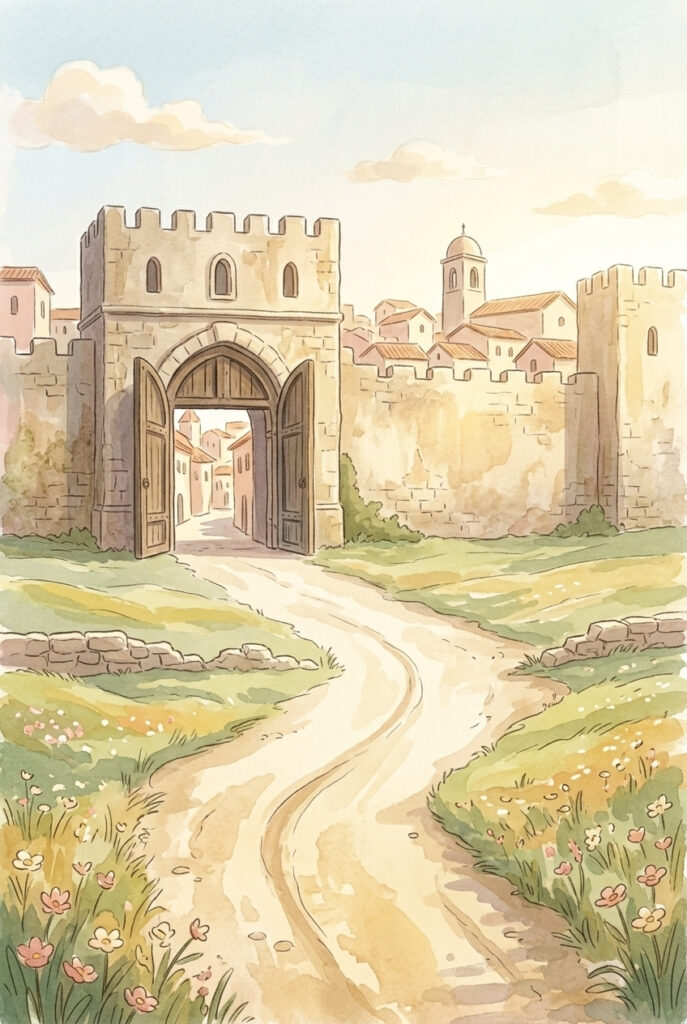
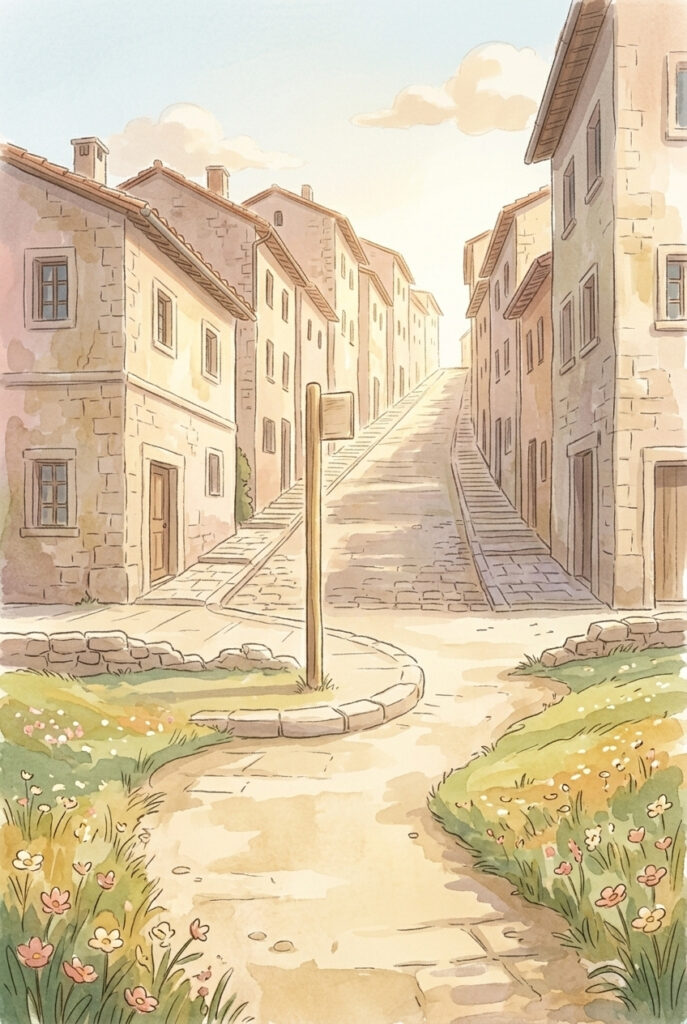
There is a story sometimes told of a man in a hillside town who used a wheelchair, and who could not get up his own street. The street was one of those gradients that defeats everything, and the only flat ground on it was the bottom corner, by a bare post where the bus stopped. He was not there by choice. He was there because it was the one place a man in a chair could stop and stay stopped.
Over about fifteen years, that corner became the place the whole street stopped. People waiting for the bus waited with him. Messages got left with him because he was reliably there. Parcels, keys, the news of who had died and who had come home.
He had chosen none of it. The gradient chose the corner, and the corner turned out to be the one spot everybody on that hill had to pass through. A man who could not climb his own road ended up sitting on the only candlestick the street had, and he got there by no power of our own and none of his.
We cannot survive by any power of our own. The corner is what that looks like when it is drawn on a map.
That is not a story about a limitation being secretly a gift, which is a lie people tell disabled people to make them quiet. It is a story about placement. The lamp does not pick the shelf, and the shelf it gets put on is not a demotion just because somebody else chose it.
Yesterday’s Gospel had a master come home and, instead of taking an accounting, gird himself, and the promise was that he will minister unto them. Today’s Collect asks the same thing from the other end. It does not offer to make us self-sufficient. It offers to keep us safe, which is what you ask for once you have stopped pretending to any power of our own.
And on Saturday the Church asked, in Our Lady’s Mass, to be delivered from present sorrow, with no date attached to the deliverance. Three prayers in four days, and not one of them asks for strength. They ask to be served, to be kept, and to be delivered.
Not one of them asks for a power of our own, either, which in three prayers running stops being an accident.
So take the Collect out of today and carry it. You cannot survive by any power of our own, and the prayer says so to a God who was never waiting to be told. The candle in the Gospel does not light itself and does not choose its shelf, and the passage praises it anyway, because being lit and being placed is the whole of what a candle is for.
No power of our own. That is the ground the prayer stands on, and it was never the thing standing in its way.
The last line of the Gospel gives the direction away. And as a bright lamp, shall enlighten thee. Not you shall shine. You shall be lit.
↑ The order resumes below.
XI
Secret
Sanctify, we beseech Thee, O Lord God, the gifts we offer on the feast of Thy holy Bishop Martin: that through them our life, in fortune and in misfortune, may always be directed aright. Through our Lord Jesus Christ, Thy Son, who liveth and reigneth with Thee in the unity of the Holy Ghost, God, world without end. Amen.
XII
The Holding
Go out today without the burden of being your own source, and without any power of our own to defend. May God, who sees that you cannot survive by any power of our own and has never once required you to explain it, keep you safe from all harm, put you where your light is of use, and light you Himself. In the name of the Father, and of the Son, and of the Holy Ghost. Amen.
And if that language is not yours, take it plainly and keep it. You are not required to be self-sufficient, because nobody is and nobody ever has been. Ask for what you need, take the help that comes, and let the fact that you have no power of our own be a description of being alive rather than a verdict on you. You were lit by other people. That is not a debt, and it is not a defect.
XIII
Frequently Asked Questions
The propers for this Mass are those of the Common of a Confessor Bishop, “Statuit,” as assigned to the feast of St. Martin of Tours in the 1962 Roman Missal, with the proper Collect, Alleluia verse, Gospel, Offertory, Communion, Secret and Postcommunion of the saint, and the commemoration of St. Menas, Martyr. Scripture is given in the Douay-Rheims.
The liturgical spine of Faith in Bloom is The New Marian Missal for Daily Mass, Sylvester P. Juergens, S.M., S.T.D., Regina Press. Bloom Ministries is an Independent Catholic ministry, not affiliated with or recognized by the Roman Catholic Church.
