
Sunday Mass · 6 September 2026 · XV Sunday after Pentecost
Sunday Mass: September 6, 2026 | The Household of the Faith
Welcome to Bloom’s Sunday Mass for the fifteenth Sunday after Pentecost. Today’s Epistle ends on five words that have been used as a wall for nineteen centuries, and the whole morning turns on reading them in the order Paul wrote them: the household of…
The order of this offering
Before the readings
Offering and Canon
I
Opening Address
Welcome to Bloom’s Sunday Mass for the fifteenth Sunday after Pentecost. Today’s Epistle ends on five words that have been used as a wall for nineteen centuries, and the whole morning turns on reading them in the order Paul wrote them: the household of the faith. This is offered in the Independent Catholic tradition, from the 1962 Roman Rite, and Bloom is not affiliated with or recognized by the Roman Catholic Church. We name that plainly, the way Old Catholic and Anglo-Catholic communities have named it for more than a century, because you deserve to know exactly whose table you are sitting at.
Wherever you are, you are welcome here. If you spent this week being counted as somebody’s outside case, sit down. Nobody at this altar is running the list.
The vestments today are green. No feast is layered over this Sunday, no saint is commemorated in the prayers, and nothing is set aside to make room for it, so the Church hands us the plain temporal cycle and asks us to sit with it as it is.
II
Prayers at the Foot of the Altar
In the Name of the Father, ✠ and of the Son, and of the Holy Ghost. Amen.
(The Judica Me, from Psalm 42, said in alternation.)
Ant. I will go in unto the Altar of God. To God, Who giveth joy to my youth.
Judge me, O God, and distinguish my cause from the nation that is not holy: deliver me from the unjust and deceitful man. For Thou, O God, art my strength: why hast Thou cast me off? and why do I go sorrowful whilst the enemy afflicteth me?
Send forth Thy light and Thy truth: they have led me and brought me unto Thy holy hill, and into Thy tabernacles. And I will go in unto the Altar of God: unto God, Who giveth joy to my youth.
I will praise Thee upon the harp, O God, my God: why art thou sad, O my soul? and why dost thou disquiet me? Hope thou in God, for I will yet praise Him: Who is the salvation of my countenance, and my God.
Glory be to the Father, and to the Son, and to the Holy Ghost. As it was in the beginning, is now, and ever shall be, world without end. Amen.
Ant. I will go in unto the Altar of God. Unto God, Who giveth joy to my youth.
℣. Our help ✠ is in the Name of the Lord. ℟. Who hath made heaven and earth.
(The Confiteor.)
I confess to Almighty God, to blessed Mary ever Virgin, to blessed Michael the Archangel, to blessed John the Baptist, to the holy Apostles Peter and Paul, to all the Saints, and to you Father, that I have sinned exceedingly, in thought, word and deed: through my fault, through my fault, through my most grievous fault.
Therefore I beseech blessed Mary ever Virgin, blessed Michael the Archangel, blessed John the Baptist, the holy Apostles Peter and Paul, all the Saints, and Thee Father, to pray to the Lord our God for me.
May Almighty God have mercy upon you, forgive you your sins and bring you to life everlasting. ℟. Amen.
May the Almighty and merciful God grant us pardon, ✠ absolution, and remission of our sins. ℟. Amen.
℣. Thou wilt turn, O God, and bring us to life. ℟. And Thy people shall rejoice in Thee.
℣. Show us, O Lord, Thy mercy. ℟. And grant us Thy salvation. ℣. O Lord, hear my prayer. ℟. And let my cry come unto Thee.
℣. The Lord be with you. ℟. And with thy spirit. Let us pray.
(Ascending to the altar, said quietly.)
Take away from us our iniquities, we entreat Thee, O Lord, that with pure minds we may worthily enter into the Holy of Holies. Through Christ our Lord. Amen.
We beseech Thee, O Lord, by the merits of Thy Saints, whose relics are here and of all the Saints, that Thou wilt deign to pardon me all my sins. Amen.
We begin the way the Church has always begun, not with achievement but with an honest accounting. There is something clarifying about a liturgy that opens by admitting failure out loud, in company, before a word has been said about grace. It also settles the question of rank before anybody can raise it. Everyone in the room says the same sentence.
III
Introit
Incline thy ear, O Lord, and hear me: save thy servant, O my God, that trusteth in thee: have mercy on me, O Lord, for I have cried to thee all the day.
Give joy to the soul of thy servant, for to thee, O Lord, I have lifted up my soul.
Glory be to the Father, and to the Son, and to the Holy Ghost. As it was in the beginning, is now, and ever shall be, world without end. Amen.
(The antiphon is repeated.)
Notice who is speaking. Not a delegation, not an office, not a body with a seal on it. One person, needy, asking to be heard, and the Church puts that voice in the doorway of a Sunday about who belongs.
IV
Kyrie
Lord, have mercy. Lord, have mercy. Lord, have mercy.
Christ, have mercy. Christ, have mercy. Christ, have mercy.
Lord, have mercy. Lord, have mercy. Lord, have mercy.
Nine times, three each to the Father, the Son and the Holy Ghost, and the only Greek left standing in the whole rite. Nobody has to be told what it means to ask for mercy three times over.
V
The Gloria
Glory be to God on high. And on earth peace to men of good will. We praise Thee. We bless Thee. We adore Thee. We glorify Thee. We give Thee thanks for Thy great glory.
Lord God, heavenly King, God the Father Almighty. Lord Jesus Christ, Only-begotten Son, Lord God, Lamb of God, Son of the Father.
Thou Who takest away the sins of the world, have mercy on us. Thou Who takest away the sins of the world, receive our prayer. Thou Who sittest at the right hand of the Father, have mercy on us.
For Thou alone art holy. Thou alone, O Jesus Christ, art most high. With the Holy Ghost, ✠ in the glory of God the Father. Amen.
℣. The Lord be with you. ℟. And with thy spirit. Let us pray.
The order is deliberate. We tell the truth about ourselves and then we sing anyway, because the singing was never conditional on the accounting coming out clean.
VI
Collect
May Thy abiding mercy, O Lord, cleanse and strengthen Thy Church: and, since without Thee she cannot exist in safety, let her be ever guided by Thy grace. Through our Lord Jesus Christ, Thy Son, Who liveth and reigneth with Thee in the unity of the Holy Ghost, God, world without end. Amen.
The prayer asks two things for the Church and neither of them is influence. Cleanse her, strengthen her, and keep her upright by a mercy that is not hers. A body praying that in public has already conceded that it is not the source of its own standing.
VII
Epistle
Brethren: If we live in the Spirit, let us also walk in the Spirit. Let us not be made desirous of vain glory, provoking one another, envying one another.
Brethren, and if a man be overtaken in any fault, you, who are spiritual, instruct such a one in the spirit of meekness, considering thyself, lest thou also be tempted.
Bear ye one another’s burdens; and so you shall fulfill the law of Christ. For if any man think himself to be some thing, whereas he is nothing, he deceiveth himself. But let every one prove his own work, and so he shall have glory in himself only, and not in another.
For every one shall bear his own burden. And let him that is instructed in the word, communicate to him that instructeth him, in all good things. Be not deceived, God is not mocked.
For what things a man shall sow, those also shall he reap. For he that soweth in his flesh, of the flesh also shall reap corruption. But he that soweth in the spirit, of the spirit shall reap life everlasting.
And in doing good, let us not fail. For in due time we shall reap, not failing. Therefore, whilst we have time, let us work good to all men, but especially to those who are of the household of the faith.
VIII
Gradual and Alleluia
It is good to give praise to the Lord: and to sing to thy name, O most High. To shew forth thy mercy in the morning, and thy truth in the night.
Alleluia, alleluia. For the Lord is a great God, and a great King above all gods. Alleluia.
IX
Gospel
℣. The Lord be with you. ℟. And with thy spirit. ℣. Continuation of the holy Gospel according to Saint Luke. ℟. Glory be to Thee, O Lord.
At that time: Jesus went into a city that is called Naim; and there went with him his disciples, and a great multitude. And when he came nigh to the gate of the city, behold a dead man was carried out, the only son of his mother; and she was a widow: and a great multitude of the city was with her.
Whom when the Lord had seen, being moved with mercy towards her, he said to her: Weep not. And he came near and touched the bier. And they that carried it, stood still. And he said: Young man, I say to thee, arise.
And he that was dead, sat up, and began to speak. And he gave him to his mother. And there came a fear on them all: and they glorified God, saying: A great prophet is risen up among us: and, God hath visited his people.
℟. Praise be to Thee, O Christ.
X
The Creed
I believe in one God, the Father Almighty, Maker of heaven and earth, and of all things visible and invisible. And in one Lord Jesus Christ, the Only-begotten Son of God. Born of the Father before all ages. God of God, Light of Light, true God of true God. Begotten, not made: consubstantial with the Father; by Whom all things were made.
Who for us men, and for our salvation, came down from heaven. (Kneel.) And was incarnate by the Holy Ghost of the Virgin Mary: and was made man. (Stand.) He was crucified also for us, suffered under Pontius Pilate, and was buried. And on the third day He rose again according to the Scriptures.
And He ascended into heaven, and sitteth at the right hand of the Father. And He shall come again with glory to judge the living and the dead: of Whose kingdom there shall be no end. And in the Holy Ghost, the Lord and Giver of Life: Who proceedeth from the Father and the Son.
Who together with the Father and the Son is adored and glorified: Who spoke through the Prophets. And in One, Holy, Catholic and Apostolic Church. I confess one Baptism for the remission of sins. And I look for the resurrection of the dead, and the life ✠ of the world to come. Amen.
We say it together, in the plural, because it was never meant to be a personal inventory of certainties. It is the faith of the whole body, held out loud, and on the mornings when you cannot manage a line of it the rest of us are still saying it around you.
The Offering
Sunday Homily | The Household of the Faith
Paul closes the practical half of this letter with a sentence whose last phrase has done more damage than the rest of the letter put together: the household of the faith. Therefore, whilst we…
Paul ends on a boundary word
Paul closes the practical half of this letter with a sentence whose last phrase has done more damage than the rest of the letter put together: the household of the faith. Therefore, whilst we have time, let us work good to all men, but especially to those who are of the household of the faith.
Read it in the order he wrote it. The instruction is to work good to all men. The household of the faith arrives afterwards, as an intensifier laid on top of an obligation already stated with no limit in it at all.
Now read it the way it usually gets quoted, which is backwards. Take the second half first and the sentence becomes: these people, and the rest if anything is left over. The household of the faith stops being a warmth and starts being a wall, and Paul is made to authorize a boundary he did not write.
Nothing subtle is happening here. The order of the clauses settles it, and anybody can see the order. All men first, unqualified, and then the household of the faith as a matter of degree rather than a matter of admission.
That distinction is the whole morning. A congregation that reads the sentence forwards asks how far its care reaches. A congregation that reads it backwards asks where its care may stop, and it will always find the household of the faith conveniently smaller than it was last year.
Paul sets a warning three verses before that sentence, and it is usually read as a threat about private conduct: Be not deceived, God is not mocked. For what things a man shall sow, those also shall he reap. Set it where he set it, in the middle of advice to a quarrelling congregation, and it reads differently. A house that sows sorting will reap a sorted house, and a house that sows company will reap the household of the faith. That is not a promise about individuals at all; it is a description of what a congregation is growing while it thinks it is only making arrangements.
Who counts as the household of the faith
Hold the word household for a moment, because Paul chose it and he could have chosen others. He does not say the register of the faith. He does not say the membership of the faith, or the qualified of the faith, or the approved. He says the household of the faith.
A household is not a list. It is a set of people who eat together and depend on one another, and the way you tell who is in one is not by reading a document. You look at who is relied upon. We sat with this in the summer, on the feast of a man who kept founding new religious families because the existing arrangements were not catching everybody, and the finding there was the same one: a household is a structure, not a certificate.
So the honest question this Epistle puts to any congregation is not who has been admitted to the household of the faith. It is who this house would notice was missing on a Tuesday. Those two questions produce different lists, and the second one is nearly always shorter than the first.
Put the fruit test to the backwards reading, which is the only test this ministry uses and the one we have named before: by their fruits you shall know them. Ask what a church grows when it treats the household of the faith as a gate.
It grows a congregation fluent in charity and incapable of company. It grows a food cupboard for people it will never invite to a meeting. It grows a class of permanent recipients, warmly served and never once relied upon, and it calls that ministry. And it grows people who work out, without being told, that they are the object of a congregation’s good works rather than part of the household of the faith.
There is a second fruit and nobody counts it. A congregation reading the household of the faith as a gate spends most of its energy on the gate. Meetings about criteria, quiet conversations about whether somebody is ready yet, a vocabulary of readiness that nobody in the room could define out loud. All of that is labour, and none of it is the work good to all men that the sentence actually commands.
Run the same test forwards and see what changes. A church reading work good to all men as the load-bearing clause has nothing left to police, because the obligation is already at its maximum before the household of the faith is mentioned. What the phrase then adds is intensity among people who already owe each other everything, which is what any house is for.
A town he had no business in
Now the Gospel, because the Church sets it beside this Epistle and the pairing is not decorative.
Christ walks up to Naim. He has no standing there. He is not from the town, he has not been sent for, nobody in that crowd has asked him a question, and the funeral coming out of the gate has nothing to do with him. By every test a congregation runs, the people at that gate are outside the household of the faith.
He acts anyway, and the detail worth holding is that nobody solicits it. In the Gospel two weeks ago, on that road where ten men were cleansed and one turned back because faith hath made thee whole, somebody at least shouted first. Here nobody does. Whom when the Lord had seen, being moved with mercy towards her, he said to her: Weep not. The whole transaction begins on his side of it.
Then the physical detail, which is the one the Church wants us to notice. And he came near and touched the bier. He crosses the line before he says the sentence. The touching is not incidental to the miracle, it is the shape of the miracle, and it is exactly what a congregation reading the household of the faith backwards will never do.
And the bearers stop. And they that carried it, stood still. That half-line is doing quiet work, because the people holding the weight are the ones who have to halt before anything can happen, and nobody instructs them to. A procession going one way pauses because somebody outside it came near, which is as close as a Gospel gets to a diagram of what the household of the faith costs the people already inside it.
Because the backwards reading always ends in distance. You can help at a distance, fund at a distance, pray at a distance. What you cannot do at a distance is come near and touch the bier, and Christ does the near thing first, in a town where he has no claim and nobody has claimed him.
Read the crowd’s verdict too, because it is the day’s own summary. God hath visited his people. Not the town’s people, not the qualified, not the enrolled. The verdict is about visiting, which is what somebody does when they come to a house they do not live in, and it is the plainest gloss on the household of the faith that this Sunday offers.
The correcting job has a limit
Go back to how the Epistle opens, because Paul gives a congregation two jobs and puts a hard limit on one of them.
The first job is correction, and he fences it about in the same breath he gives it. If a man be overtaken in any fault, you, who are spiritual, instruct such a one in the spirit of meekness, considering thyself, lest thou also be tempted. Meekness, self-suspicion, and a warning aimed squarely at the corrector. Two verses later he adds the rest: if any man think himself to be some thing, whereas he is nothing, he deceiveth himself.
The second job has no hedge on it at all. Bear ye one another’s burdens; and so you shall fulfill the law of Christ. Correction is fenced; burden-bearing is not. And Paul says which of the two fulfils the law, which is not the one most congregations are known for.
We sat with the word burden on Thursday, on the question of whom that word gets assigned to, and I am not re-running that argument this morning. Today’s use is the other direction entirely: the weight is the thing carried, never the person, and a congregation that mixes those two up will produce the exact harm Paul is writing to stop.
Paul then says something that looks like a contradiction and is not. Bear ye one another’s burdens, and three verses later, for every one shall bear his own burden. One is plural and shared, the other singular and personal, and he sets them down side by side without reconciling them.
The first is an instruction to a house. The second is a fact about a life, and it is the reason the first is needed at all, since nobody can hand their whole share to somebody else. A congregation that says only the second has abandoned people to their own arithmetic. One that says only the first has promised something no house can deliver, and the household of the faith lives in the space between them.
So here is where the naming has to happen, because the text asks for it. Gay, lesbian and bisexual people have been the standing subject of the correcting job for a very long time. Their lives are treated as the fault in verse one, which makes them a permanent object of instruction and never a part of the household of the faith, and the meekness clause is dropped in the same breath as the correcting clause is picked up.
We named this group eight days ago, and today’s claim is a different one, so let me say what changed. That day was about the direction a hard sentence travels: John spoke upward at a king, and the modern quotation runs downward at people with no power. This morning is about scope rather than direction. It is about whether a person who has been assigned to the correcting job can ever be counted inside the household of the faith at all, and Paul’s own order of clauses says the question was never theirs to be asked.
Notice what the answer is not. It is not that a congregation should stop caring particularly for its own, and I am not saying that. Paul’s especially is real, and this Mass is full of particular obligations. The claim is only that the especially attaches to a house already committed to all men, so the household of the faith can widen without anything being taken away from anybody inside it.
And yesterday’s Collect was about an amount, whether a person has arrived with as much as the next one, and that is a different question from this one. Nothing this morning is about how much anybody brings, or who sets the figure. The household of the faith is a question of whom, and it has no number in it anywhere.
On the board, not on the list
There is a story sometimes told of a small bicycle workshop on a high street, four people, a glass door wedged open with a brick most of the year.
One of them came out of prison three years ago into a town where he knew two people. For his first winter he was a case. A church there was good to him, plainly and consistently: a bus pass, a coat, a bag of shopping every second Friday, and a woman who remembered his name every single time. He has never once said a word against any of it.
But he was never asked to do anything. Not once in fourteen months. He said afterwards that he had worked out roughly where he stood by the third month, because the people who were helping him had a rota for the Friday bag and he was on the other side of it.
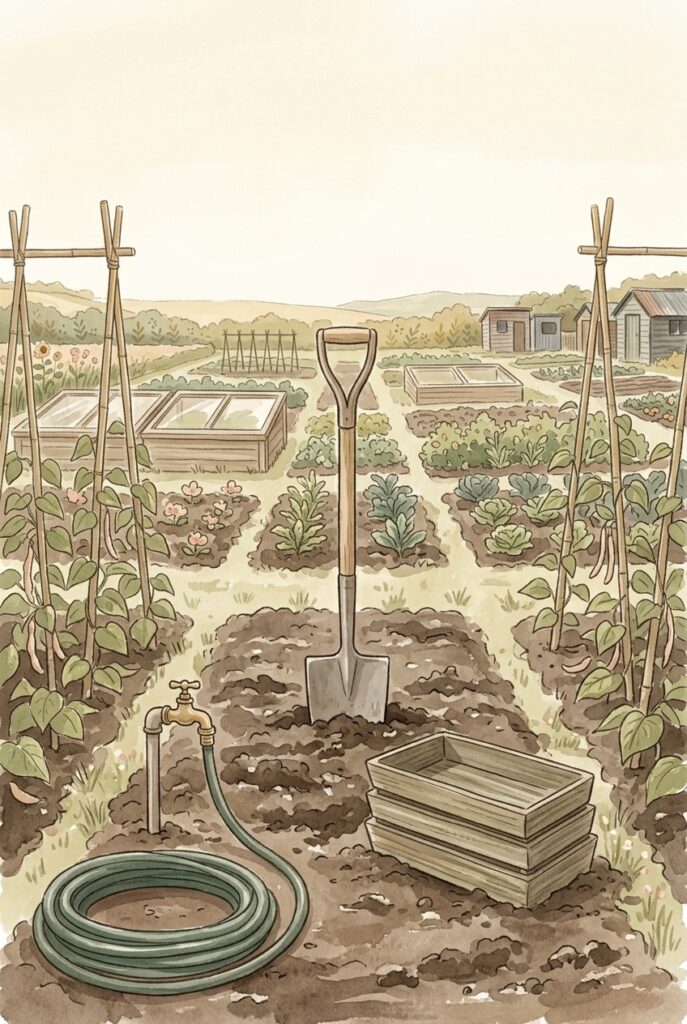
The workshop was different in one specific way, and it is a small way. The owner needed somebody who could strip a hub. Six weeks in, his name went on the paper board beside the counter, in the column for who is opening on Saturday. He said that was the morning it changed, and he was not talking about the wages.
Then the week the owner’s flat flooded and he covered two shifts on his own, unlocking a business that was not his at seven in the morning, holding the whole of somebody else’s week. That is the sentence in Galatians happening in a shop. He bore another’s burden, which he could only do because somebody had first counted him inside the household of the faith rather than in front of it.
I am not going to tell you this fixed his life. He still ticks a box on every application form, still gets the pause on the phone, and the church that gave him the coat has never once asked him to carry anything. Nothing in this story is resolved.
What it does show is which of the two arrangements was the reversible one. That church could have put his name on the Friday rota at any point in fourteen months and nobody would have had to change a policy to allow it. Nothing was stopping it except the shape of the thing, which had a helped side and a helping side and no traffic between them. The household of the faith is what you get when somebody notices that shape and crosses it on purpose.
We heard a version of the same distinction on the feast of a king told he had been faithful in a little. There the question was what somebody does with what they have been handed. Here it is who gets handed anything at all, and whether being given to is the same as being counted, which the household of the faith says plainly it is not.
If you do not believe in God, this holds without any of the theology, and you can test it against your own week. There is a difference between the people you are kind to and the people whose absence would break your arrangements. Everybody can name both groups. The whole of Paul’s argument is that a good community keeps moving names from the first group into the second, and that is the plain version of the household of the faith.
Which is why last Sunday and this one belong together. Then Paul ended a list of virtues by saying against such there is no law, taking the measuring instrument out of the room. Today he takes the door off the room. Nothing left to measure people with and nothing left to sort them at, and what remains is a house and a road out of it, which is the household of the faith as Paul actually wrote it.
So here is what I would ask you to carry out of this Mass. Think of one person your community is good to and has never asked for anything. Then ask them for something small this week, something real that you actually need done, and let them do it badly if that is how it goes.
That is the whole move. Not more charity, and not less. One name off the list of people we work good to, and onto the board of people this house is counting on, which is how anybody has ever joined the household of the faith.
↑ The order resumes below.
XII
Offertory
With expectation I have waited for the Lord, and he was attentive to me: and he heard my prayer: and he put a new canticle into my mouth, a song to our God.
He was attentive to me. That is the whole of what anyone is asking at this altar, and it is what the household of the faith is supposed to look like from the inside.
XIII
The Offertory Prayers
(The chalice is uncovered and the host offered.)
Accept, O Holy Father, Almighty and Eternal God, this spotless host, which I, Thy unworthy servant, offer to Thee, my living and true God, to atone for my numberless sins, offences, and negligences; on behalf of all here present and likewise for all faithful Christians living and dead, that it may profit me and them as a means of salvation to life everlasting. Amen.
(Wine is poured into the chalice, and a little water blessed and mingled with it.)
O God, ✠ Who in creating man didst exalt his nature very wonderfully and yet more wonderfully didst establish it anew; by the Mystery signified in the mingling of this water and wine, grant us to have part in the Godhead of Him Who hath deigned to become a partaker of our humanity, Jesus Christ, Thy Son our Lord; Who liveth and reigneth with Thee, in the unity of the Holy Ghost, God. World without end. Amen.
(The chalice is offered.)
We offer unto Thee, O Lord, the chalice of salvation, entreating Thy mercy that our offering may ascend with a sweet fragrance in the sight of Thy divine Majesty, for our own salvation, and for that of the whole world. Amen.
Humbled in spirit and contrite of heart, may we find favor with Thee, O Lord: and may our sacrifice be so offered this day in Thy sight as to be pleasing to Thee, O Lord God.
(The Holy Ghost is called down upon the offering.)
Come Thou, the Sanctifier, Almighty and Everlasting God, and bless ✠ this sacrifice which is prepared for the glory of Thy holy Name.
XIV
Secret
May Thy sacrament, O Lord, always keep us and guard us from the assaults of the devil. Through our Lord Jesus Christ, Thy Son, Who liveth and reigneth with Thee in the unity of the Holy Ghost, God, world without end. Amen.
XV
Preface
℣. The Lord be with you. ℟. And with thy spirit. ℣. Lift up your hearts. ℟. We have lifted them up to the Lord. ℣. Let us give thanks to the Lord our God. ℟. It is right and just.
(The Preface of the Most Holy Trinity.)
It is truly meet and just, right and for our salvation, that we should at all times, and in all places, give thanks unto Thee, O holy Lord, Father almighty, everlasting God; Who, together with Thine only-begotten Son, and the Holy Ghost, art one God, one Lord: not in the oneness of a single Person, but in the Trinity of one substance.
For what we believe by Thy revelation of Thy glory, the same do we believe of Thy Son, the same of the Holy Ghost, without difference or separation. So that in confessing the true and everlasting Godhead, distinction in persons, unity in essence, and equality in majesty may be adored. Which the Angels and Archangels, the Cherubim also and Seraphim do praise: who cease not daily to cry out, with one voice saying:
Holy, holy, holy, Lord God of Hosts. Heaven and earth are full of Thy Glory. Hosanna in the highest. ✠ Blessed is He Who cometh in the Name of the Lord. Hosanna in the highest.
XVI
The Canon
(From here to the Pater Noster the prayers are said inaudibly, save the opening words of “To us also Thy sinful servants.”)
Most merciful Father, we humbly pray and beseech Thee, through Jesus Christ Thy Son, Our Lord, to accept and to bless these ✠ gifts, these ✠ presents, these ✠ holy unspotted Sacrifices.
We offer them up to Thee, in the first place, for Thy Holy Catholic Church, that it may please Thee to grant her peace, to preserve, unite, and govern her throughout the world; as also for Thy servant N. our Pope, and N. our Bishop, and for all orthodox believers and all who profess the Catholic and Apostolic faith.
Be mindful, O Lord, of Thy servants and handmaids N. and N. and of all here present, whose faith and devotion are known to Thee, for whom we offer, or who offer up to Thee this Sacrifice of praise for themselves and all those dear to them, for the redemption of their souls and the hope of their safety and salvation: who now pay their vows to Thee, the everlasting, living and true God.
In communion with, and honoring the memory in the first place of the glorious ever Virgin Mary Mother of our God and Lord Jesus Christ; also of blessed Joseph, her Spouse; and likewise of Thy blessed Apostles and Martyrs, Peter and Paul, Andrew, James, John, Thomas, James, Philip, Bartholomew, Matthew, Simon and Thaddeus, Linus, Cletus, Clement, Sixtus, Cornelius, Cyprian, Lawrence, Chrysogonus, John and Paul, Cosmas and Damian, and of all Thy Saints.
Grant for the sake of their merits and prayers that in all things we may be guarded and helped by Thy protection. Through the same Christ our Lord. Amen.
(The hands are spread over the oblation.)
O Lord, we beseech Thee, graciously to accept this oblation of our service and that of Thy whole household. Order our days in Thy peace, and command that we be rescued from eternal damnation and numbered in the flock of Thine elect. Through Christ our Lord. Amen.
Humbly we pray Thee, O God, be pleased to make this same offering wholly blessed ✠, to consecrate ✠ it and approve ✠ it, making it reasonable and acceptable, so that it may become for us the Body ✠ and Blood ✠ of Thy dearly beloved Son, our Lord Jesus Christ.
(The host is taken into the hands.)
Who, the day before He suffered, took bread into His Holy and venerable hands, and having lifted up His eyes to heaven, to Thee, God, His Almighty Father, giving thanks to Thee, blessed it ✠, broke it, and gave it to His disciples, saying: Take and eat ye all of this.
FOR THIS IS MY BODY.
(Genuflect. The Sacred Host is elevated and adored.)
Taking also into His holy and venerable hands this goodly chalice, again giving thanks to Thee, He blessed it ✠, and gave it to His disciples, saying: Take and drink ye all of this.
FOR THIS IS THE CHALICE OF MY BLOOD, OF THE NEW AND ETERNAL TESTAMENT: THE MYSTERY OF FAITH: WHICH SHALL BE SHED FOR YOU AND FOR MANY UNTO THE REMISSION OF SINS.
As often as ye shall do these things, ye shall do them in remembrance of Me.
(Genuflect. The Chalice is elevated and adored.)
And now, O Lord, we, Thy servants, and with us all Thy holy people, calling to mind the blessed Passion of this same Christ, Thy Son, our Lord, likewise His Resurrection from the grave, and also His glorious Ascension into heaven, do offer unto Thy most sovereign Majesty out of the gifts Thou hast bestowed upon us a Victim ✠ which is pure, a Victim ✠ which is holy, a Victim ✠ which is spotless, the holy Bread ✠ of life eternal, and the Chalice ✠ of everlasting Salvation.
Deign to look upon them with a favorable and gracious countenance, and to accept them as Thou didst accept the offerings of Thy just servant Abel, and the sacrifice of our Patriarch Abraham, and that which Thy high priest Melchisedech offered up to Thee, a holy Sacrifice, an immaculate Victim.
Humbly we beseech Thee, almighty God, to command that these our offerings be carried by the hands of Thy holy Angel to Thine Altar on high, in the sight of Thy divine Majesty, so that those of us who shall receive the most sacred Body ✠ and Blood ✠ of Thy Son by partaking thereof from this Altar may be filled with every grace and heavenly blessing: Through the same Christ our Lord. Amen.
Be mindful, also, O Lord, of Thy servants and handmaids N. and N. who are gone before us with the sign of faith and who sleep the sleep of peace. To these, O Lord, and to all who rest in Christ, grant, we beseech Thee, a place of refreshment, light and peace. Through the same Christ our Lord. Amen.
(The breast is struck, the first words said aloud.)
To us also Thy sinful servants, who put our trust in the multitude of Thy mercies, vouchsafe to grant some part and fellowship with Thy holy Apostles and Martyrs: with John, Stephen, Matthias, Barnabas, Ignatius, Alexander, Marcellinus, Peter, Felicitas, Perpetua, Agatha, Lucy, Agnes, Cecilia, Anastasia, and all Thy Saints.
Into their company we beseech Thee admit us, not considering our merits, but freely pardoning our offenses. Through Christ our Lord. By whom, O Lord, Thou dost always create, sanctify ✠, quicken ✠, bless ✠, and bestow upon us all these good things.
Through Him ✠, and with Him ✠, and in Him ✠, is unto Thee, God the Father ✠ Almighty, in the unity of the Holy ✠ Ghost, all honor and glory. World without end. ℟. Amen.
This is the oldest and quietest part of the rite, and it is not a performance. What the Church has always claimed happens here does not depend on how anyone in the room is feeling about it this morning. That is a mercy on the mornings when you feel nothing at all.
XVII
Pater Noster
Let us pray. Admonished by Thy saving precepts and following Thy divine instruction, we make bold to say:
Our Father, Who art in heaven, hallowed be Thy Name; Thy kingdom come; Thy will be done on earth as it is in heaven. Give us this day our daily bread; and forgive us our trespasses, as we forgive those who trespass against us. And lead us not into temptation. ℟. But deliver us from evil. Amen.
Deliver us, we beseech Thee, O Lord, from all evils, past, present and to come, and by the intercession of the Blessed and glorious ever Virgin Mary, Mother of God, together with Thy blessed apostles Peter and Paul, and Andrew, and all the Saints, ✠ mercifully grant peace in our days.
Through the bounteous help of Thy mercy may we be always free from sin, and safe from all disquiet. Through the same Jesus Christ, Thy Son our Lord, Who is God living and reigning with Thee in the unity of the Holy Ghost. ℣. World without end. ℟. Amen.
XVIII
The Fraction
(The Host is broken over the chalice.)
℣. May the peace ✠ of the Lord be ✠ always ✠ with you. ℟. And with thy spirit.
(A Particle is placed in the chalice, said quietly.)
May this mingling and hallowing of the Body and Blood of our Lord Jesus Christ be for us who receive it a source of eternal life. Amen.
XIX
Agnus Dei
(The breast is struck three times.)
Lamb of God, Who takest away the sins of the world, have mercy on us. Lamb of God, Who takest away the sins of the world, have mercy on us. Lamb of God, Who takest away the sins of the world, grant us peace.
O Lord, Jesus Christ, Who didst say to Thine Apostles: Peace I leave you, My peace I give to you: look not upon my sins, but upon the faith of Thy Church; and deign to give her that peace and unity which is agreeable to Thy will: God Who livest and reignest world without end. Amen.
XX
Prayers for Holy Communion
O Lord Jesus Christ, Son of the living God, Who, by the will of the Father and the co-operation of the Holy Ghost, hast by Thy death given life to the world: deliver me by this, Thy most sacred Body and Blood, from all my iniquities and from every evil; make me cling always to Thy commandments, and permit me never to be separated from Thee.
Who with the same God, the Father and the Holy Ghost, livest and reignest God, world without end. Amen.
Let not the partaking of Thy Body, O Lord Jesus Christ, which I, though unworthy, presume to receive, turn to my judgment and condemnation; but through Thy mercy may it be unto me a safeguard and a healing remedy both of soul and body. Who livest and reignest with God the Father, in the unity of the Holy Ghost, God, world without end. Amen.
I will take the Bread of Heaven, and will call upon the name of the Lord.
(The breast is struck three times.)
Lord, I am not worthy that Thou shouldst enter under my roof; but only say the word, and my soul shall be healed. (Three times.)
XXI
Act of Spiritual Communion
(Said by all who are not receiving sacramentally.)
My Jesus, I believe that Thou art present in the Most Holy Sacrament. I love Thee above all things and I desire to receive Thee into my soul. Since I cannot now receive Thee sacramentally, come at least spiritually into my heart. I embrace Thee as if Thou wert already there, and I unite myself wholly to Thee. Never permit me to be separated from Thee.
If you are homebound, or in a hospital bed, or in a body that could not get to a church building today, that prayer is not a lesser version of anything. It is the door the Church left open on purpose.
XXII
Communion
The bread that I will give, is my flesh, for the life of the world.
XXIII
Postcommunion
℣. The Lord be with you. ℟. And with thy spirit. Let us pray.
May the working of the heavenly gift, O Lord, so possess us, mind and body, that the action of the sacrament, rather than our senses, may continually prevail in us. Through our Lord Jesus Christ, Thy Son, Who liveth and reigneth with Thee in the unity of the Holy Ghost, God, world without end. Amen.
XXIV
The Dismissal and Blessing
℣. The Lord be with you. ℟. And with thy spirit. ℣. Go, the Mass is ended. ℟. Thanks be to God.
(Bowing before the altar, said quietly.)
May the tribute of my homage be pleasing to Thee, O most holy Trinity. Grant that the Sacrifice which I, unworthy as I am, have offered in the presence of Thy Majesty, may be acceptable to Thee. Through Thy mercy may it bring forgiveness to me and to all for whom I have offered it. Through Christ our Lord. Amen.
May Almighty God bless you: the Father, ✠ the Son, and the Holy Ghost. ℟. Amen.
XXV
The Last Gospel
℣. The Lord be with you. ℟. And with thy spirit. ℣. The beginning ✠ of the holy Gospel according to Saint John. ℟. Glory be to Thee, O Lord.
In the beginning was the Word, and the Word was with God, and the Word was God. The same was in the beginning with God. All things were made by him: and without him was made nothing that was made.
In him was life, and the life was the light of men. And the light shineth in darkness, and the darkness did not comprehend it. There was a man sent from God, whose name was John.
This man came for a witness, to give testimony of the light, that all men might believe through him. He was not the light, but was to give testimony of the light. That was the true light, which enlighteneth every man that cometh into this world.
He was in the world, and the world was made by him, and the world knew him not. He came unto his own, and his own received him not. But as many as received him, he gave them power to be made the sons of God, to them that believe in his name.
Who are born, not of blood, nor of the will of the flesh, nor of the will of man, but of God.
(Kneel.)
And the Word was made flesh, and dwelt among us, (and we saw his glory, the glory as it were of the only begotten of the Father,) full of grace and truth. ℟. Thanks be to God.
XXVI
The Leonine Prayers
(Said kneeling, after Low Mass.)
Hail Mary, full of grace; the Lord is with thee; blessed art thou amongst women, and blessed is the fruit of thy womb, Jesus. Holy Mary, Mother of God, pray for us sinners, now and at the hour of our death. Amen. (Three times.)
Hail, holy Queen, Mother of mercy, our life, our sweetness, and our hope. To thee do we cry, poor banished children of Eve. To thee do we send up our sighs, mourning and weeping in this valley of tears.
Turn then, most gracious Advocate, thine eyes of mercy towards us. And after this our exile, show unto us the blessed Fruit of thy womb, Jesus. O clement, O loving, O sweet Virgin Mary. ℣. Pray for us, O Holy Mother of God. ℟. That we may be made worthy of the promises of Christ.
Let us pray. O God, our refuge and our strength, look down in mercy on Thy people who cry to Thee; and by the intercession of the glorious and immaculate Virgin Mary, Mother of God, of St. Joseph her Spouse, of Thy blessed Apostles Peter and Paul, and of all the Saints, in mercy and goodness hear our prayers for the conversion of sinners, and for the liberty and exaltation of our holy Mother and Church. Through the same Christ our Lord. Amen.
Holy Michael Archangel, defend us in the day of battle; be our safeguard against the wickedness and snares of the devil. May God rebuke him, we humbly pray: and do thou, Prince of the heavenly host, by the power of God thrust down to hell Satan and all wicked spirits, who wander through the world for the ruin of souls. Amen.
℣. Most Sacred Heart of Jesus. ℟. Have mercy upon us. ℣. Most Sacred Heart of Jesus. ℟. Have mercy upon us. ℣. Most Sacred Heart of Jesus. ℟. Have mercy upon us.
XXVII
The Closing Blessing
Go out and do the near thing. Cross whatever small distance you have been keeping this week, and if the only crossing available to you is asking somebody for help you could technically manage alone, that counts, and it counts more than most of what we call outreach.
And to anyone who has spent a long time being somebody’s good work: you were never meant to stay on that side of the arrangement, the sentence in today’s Epistle puts all men before any wall anybody built out of it, and there is a place for you in the household of the faith. May the Almighty God bless you, the Father, and the Son, and the Holy Ghost. Amen.
XXVIII
Frequently Asked Questions
It is the fifteenth Sunday of the long green season that follows Pentecost in the 1962 Roman Rite. It is a second-class Sunday, which is why the vestments are green and why no saint’s feast is layered over it. This year nothing at all is commemorated or set aside, so the Mass is the plain temporal cycle from the Introit to the Postcommunion.
Because the two are different things and Bloom says so plainly. Monday through Saturday you get a Daily Offering, which is a low-Mass-shaped morning reflection and is not a Mass. Sunday is offered as a Mass in the Independent Catholic tradition, with the ordinary indicated by rubric and the propers, homily and blessing written in full.
Because it is true and you are entitled to know it before you sit down. Bloom Ministries offers this liturgy in the Independent Catholic tradition, using the 1962 Roman Rite, and it is neither part of nor recognized by the Roman Catholic Church. Old Catholic and Anglo-Catholic communities have named themselves this way for more than a century, and the naming is honest rather than defensive.
It is a prayer said by anyone who cannot receive the sacrament in person, asking Christ to come spiritually into the soul instead. The Church has carried it for centuries precisely for people who are sick, homebound, travelling or otherwise kept away. It is not a lesser substitute or a consolation prize. It is the door the Church deliberately left open.
No, and the near miss is worth naming. September 8 is the Nativity of the Blessed Virgin Mary, and it once had both a vigil and an octave, but Pope Pius XII’s reform of 1955 suppressed almost every vigil and all but three octaves. Only Christmas, Pentecost, Ascension, the Assumption, St. John the Baptist, Ss. Peter and Paul and St. Lawrence keep vigils in the 1962 books, and only Christmas, Easter and Pentecost keep octaves.
It is the last phrase of the Epistle, and Paul’s own word order is the answer. He tells the Galatians to work good to all men, and then says especially to those who are of the household of the faith, so the phrase intensifies an obligation that was already unlimited. The word he ends on is household rather than roll or register, and a household is told by who is depended on rather than by who has been entered somewhere.
No, and the sentence itself refuses that reading. The burden is the thing somebody is carrying, and Paul’s instruction is about who takes hold of the other end of it. Nothing here says that a body is a weight, that needing help is a debt being run up, or that a person becomes a cost by being in a room. The weight is the object in the sentence and the person is the subject.
No. Paul writes especially and he means it, and this Mass is full of particular obligations to particular people. The argument is about which clause carries the load: a house that has already committed itself to all men can then care intensely for its own without that care becoming a boundary. The trouble only starts when especially is read as a limit rather than as a degree.
No. The ethical logic stands on its own with no theology attached. Every community has two groups in it, the people it is kind to and the people whose absence would break its arrangements, and everyone can name both groups honestly if they try. In one plain sentence: a good community keeps moving names from the first group into the second, and it never uses the second group as a wall.
Faith in Bloom is the daily liturgical work of Bloom Ministries, a 501(c)(3) nonprofit, and it is free to read and always will be. If it has been worth something to you and you are able, you can give once or give monthly below. Sending a post to one person who needs it does real work too.
Propers for the XV Sunday after Pentecost are taken from the 1962 Roman Missal. Scripture is quoted from the Douay-Rheims Bible. The liturgical spine of Faith in Bloom is The New Marian Missal for Daily Mass by Sylvester P. Juergens, S.M., S.T.D., Regina Press, Imprimatur 1961.
Faith in Bloom is offered by Bloom Ministries in the Independent Catholic tradition and is not affiliated with or recognized by the Roman Catholic Church.
