
Daily Offering · 20 November 2025 · St. Felix of Valois
Daily Offering: November 20, 2025 | Fear Not, Little Flock
Fear not, little flock, for it hath pleased your Father to give you a kingdom. That is the first thing said this morning, and everything else in the passage comes after it. Beloved, grace and peace to you, however you arrive at this hour:…
The order of this offering
Before the readings
The Word
Offering and Canon
I
Opening Address
Fear not, little flock, for it hath pleased your Father to give you a kingdom. That is the first thing said this morning, and everything else in the passage comes after it. Beloved, grace and peace to you, however you arrive at this hour: rested or worn through, praying easily or not praying at all, sure of God or sure of nothing much.
Bloom keeps no threshold you have to clear before you are welcome here. Sit with us a while, in the manner of a low Mass—Word, prayer, and offering, and nothing pretending to be more.
Fear not, little flock is where the whole morning starts, and the order is the thing to hold on to.
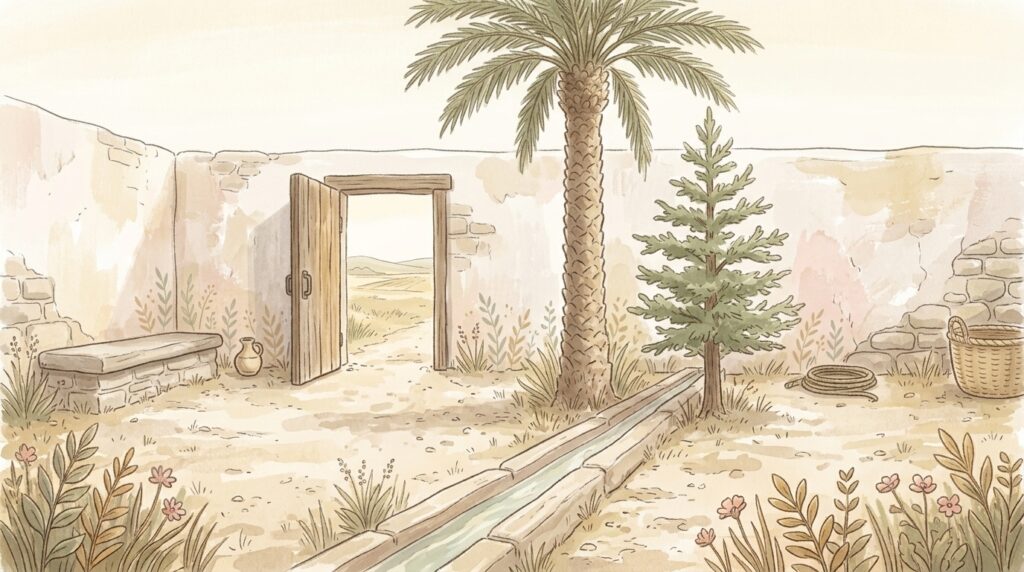
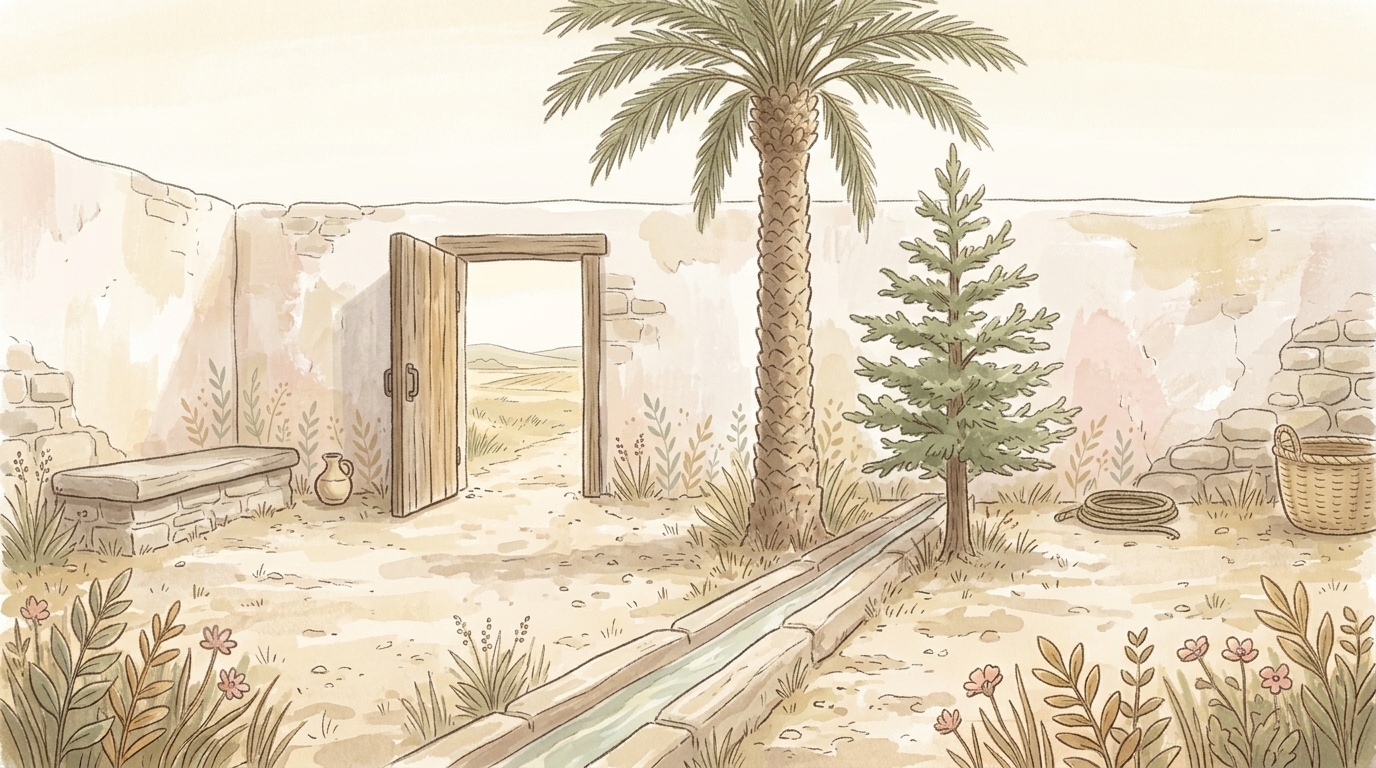
Today the Church keeps Saint Felix of Valois, a confessor, third class, white vestments, with no commemoration attached. His Mass opens with a palm tree and a cedar, and hands him three verses of Luke that usually reach us as a warning.
Because the famous line here is the last one, about a treasure and where a person ends up. It gets quoted on its own, usually to make somebody examine themselves, and what stands in front of it gets left out.
What stands in front of it is a kingdom, already given, and four words of reassurance addressed to a group Christ calls small. Fear not, little flock.
Hold the order with me all morning. The comfort is not the reward at the end of the passage. It is the first sentence, and the instructions arrive afterwards.
II
Introit
Psalm 91:13-14.
The just shall flourish like the palm tree: he shall grow up like the cedar of Libanus: planted in the house of the Lord, in the courts of the house of our God.
Ps. It is good to give praise to the Lord: and to sing to thy name, O most High. Glory be to the Father, and to the Son, and to the Holy Ghost. As it was in the beginning, is now, and ever shall be, world without end. Amen.
(The Missal draws the second half of this antiphon from verse 14, which in the Douay stands as a sentence of its own about those that are planted in the house of the Lord.)
III
Collect
O God, Who by heavenly inspiration didst call forth blessed Felix, Thy Confessor, out of the desert to the work of ransoming captives: grant, we beseech Thee, that by his intercession we may be set free by Thy grace from the captivity of our sins, and brought home to our heavenly fatherland. Through our Lord Jesus Christ, Thy Son, Who liveth and reigneth with Thee in the unity of the Holy Ghost, God, world without end. Amen.
IV
Epistle
Brethren: We are made a spectacle to the world, and to angels, and to men. We are fools for Christ’s sake, but you are wise in Christ; we are weak, but you are strong; you are honourable, but we without honour. Even unto this hour we both hunger and thirst, and are naked, and are buffeted, and have no fixed abode.
And we labour, working with our own hands: we are reviled, and we bless; we are persecuted, and we suffer it. We are blasphemed, and we entreat; we are made as the refuse of this world, the offscouring of all even until now. I write not these things to confound you; but I admonish you as my dearest children, in Christ Jesus our Lord.
(The Missal begins this Lesson partway through verse 9 and closes it with words the Douay prints at the opening of verse 15.)
V
Gradual
Psalm 36:30-31.
The mouth of the just shall meditate wisdom: and his tongue shall speak judgment.
V. The law of his God is in his heart, and his steps shall not be supplanted.
Alleluia, alleluia. V. Blessed is the man that feareth the Lord: he shall delight exceedingly in his commandments. Alleluia.
VI
Gospel
At that time, Jesus said to His disciples: Fear not, little flock, for it hath pleased your Father to give you a kingdom. Sell what you possess and give alms. Make to yourselves bags which grow not old, a treasure in heaven which faileth not: where no thief approacheth, nor moth corrupteth. For where your treasure is, there will your heart be also.
The Offering
Daily Homily | Fear Not, Little Flock
Fear not, little flock. Three verses this morning, and I want to take them in the order Christ actually said them, because the order is the teaching.
Fear not, little flock. Three verses this morning, and I want to take them in the order Christ actually said them, because the order is the teaching.
Verse thirty-two is an address and a gift. Fear not, little flock, for it hath pleased your Father to give you a kingdom. No condition is attached to it, no reason is offered for it, and nothing is asked in return for it. The verb is in the past: it hath pleased. Whatever decision produced this kingdom was taken before the sentence began.
Fear not, little flock: the kingdom is handed over before a single instruction arrives.
Verse thirty-three is the instruction, and there are three of them. Sell. Give. Make. Every one of those verbs takes an object you could carry out of a house in your arms.
Sell what you possess, which is a transaction. Give alms, which is a transaction. Make to yourselves bags which grow not old, which is a decision about where to keep something. Fear not, little flock, and then go and move some property.
Now verse thirty-four, the famous one. For where your treasure is, there will your heart be also.
Read the grammar rather than the reputation. The subject of the first half is the treasure. The second half arrives afterwards, and it arrives in the future tense: there will it be. The sentence is a statement about a location, and there is no instruction anywhere in it.
Fear not, little flock, because nothing in these three verses asks you to look inside yourself and grade what you find.
That is worth saying twice, because the whole passage is usually preached the other way round. Christ does not say check what you love. He does not say make sure your motives are pure before you give anything away. He says sell, give, make, and then tells you, as a matter of fact, what will follow the property once it has been moved.
Fear not, little flock. The examination you were bracing for is not in the text.
And the guarantees in verse thirty-three are worth reading closely. Bags which grow not old. A treasure which faileth not. A place where no thief approacheth, nor moth corrupteth. Every one of those clauses describes the durability of the destination, and not one of them describes the quality of the person making the deposit.
Fear not, little flock, because the strongbox is being vouched for, not you.
Now the teaching this order dismantles, because the damage it does is not theoretical.
A teaching runs under all of this, rarely stated outright and enforced all the time: that an act performed without the matching feeling is worth nothing. That charity given while you feel flat is going through the motions. That prayer said without warmth is an empty performance. That if your interior does not light up, the outward thing you did was hollow, and possibly dishonest.
Fear not, little flock, because Christ builds this passage in exactly the opposite direction.
I will name who that teaching costs most. People living with depression, whose defining symptom is that the feeling has gone out of things that used to carry it. People flattened by grief, by exhaustion, by medication that steadied one thing and dulled another. People who do the whole round of their obligations every week and can no longer tell you what, if anything, they feel while doing it.
To all of them, this Gospel says the same four words. Fear not, little flock.
Because the assignment here is entirely to the hands. Sell, give, make. A person whose feelings have gone flat can do every one of those things this afternoon, and the passage will have been obeyed completely.
Fear not, little flock, and let the last verse take care of itself, because Christ has put it in the future tense on purpose.
We stood near this ground on the eighth of this month, and prayed to be delivered from present sorrow, and today’s claim is next to that one and not the same. That day was about how long a sorrow lasts, and whether persistence in it proves you did not try hard enough. Today is about whether what you do while it lasts counts for anything. Duration asks why it has not lifted. Sincerity asks whether you meant it, and it asks in a voice that sounds like conscience.
And the answer to the second question is the same as the answer to the first: fear not, little flock.
Every teaching gets judged by what it grows, and this one has a harvest inside Christianity’s own house. People who stop coming because they cannot manufacture what the room seems to expect. People confessing coldness as though it were cruelty. People who were told that going through the motions is hypocrisy, and who therefore gave up the motions along with the feeling, and then had nothing left at all.
Fear not, little flock, and keep the motions. They are the part Christ actually asked for.
Nor is this the same as being faithful over a few things, which we heard on the fourth of this month. That day turned on calibration, on a master who measures out what he gives according to what each servant can carry. Today turns on order. Here nothing is measured out to anybody: the kingdom is handed over whole, to a flock Christ has just called small, before anyone is asked for so much as a coin.
Which is why the order is the mercy here: fear not, little flock, and then sell something.
Now the man the Church puts in front of us, because his Collect is this Gospel in one sentence.
Felix was born in 1127. The record of his life says that at an early age he renounced his possessions and retired to a dense forest in the Diocese of Meaux, where he gave himself to prayer and contemplation. He was joined there by John of Matha, who proposed to him the project of founding an order for the redemption of captives. The two of them went to Rome, carrying letters from the Bishop of Paris, and Innocent III lodged them in his own palace while cardinals and prelates deliberated on the plan.
Fear not, little flock, said to two men with a project and no institution behind them.
The rule was drawn up by the Bishop of Paris and the Abbot of Saint Victor and confirmed on 17 December 1198. Felix went back to France, Margaret of Blois gave the order twenty acres of the wood where he had built his first hermitage, and on almost the same ground he raised the monastery of Cerfroi. The account of the order he founded records what the rule actually required. Each house was to divide its revenues into three equal parts: one for the monks, one for the support of the poor, and one for the ransom of captives.
A third of everything, every year, spent on buying people out. Fear not, little flock.
The Collect says something exact about him. God called him out of the desert to the work of ransoming captives. Out of the hermitage, which is the place of the interior life, and into a business of money changing hands for the release of prisoners.
Fear not, little flock: the Church’s own prayer for this man moves him from contemplation to a transaction, and calls that a promotion.
The same source puts the number ransomed over three centuries at ninety thousand, and calls that an estimate. The arithmetic of the rule is not an estimate, and the arithmetic is the point. One third, set aside in advance, before anybody asked how the brothers felt about it that quarter.
Fear not, little flock, and put the money in the third pile.
One small thing in today’s own propers is worth a pause, because it is the same lesson in another register. The psalm that opens this Mass, the palm and the cedar, is the psalm that stood between the readings on the tenth of this month. The psalm that stands between the readings today, the mouth of the just, is the one that opened the door of the Mass that morning. Ten days, and the two have changed places.
Not a syllable of either was altered by the move. That same Gradual antiphon came round again on Saturday, carried under a different verse and pointing somewhere else again.
Fear not, little flock: a thing that has been put somewhere else is still the thing it was.
One more detail, because it settles something yesterday could not. Felix died at Cerfroi on 4 November 1212, and the record says plainly that his feast was transferred to 20 November by Innocent XI in 1679. Yesterday we kept a saint two days after the day she died, with nothing anywhere in the record to say how the two dates came apart. Today the record names the pope and the year.
Sometimes the answer is simply written down. Fear not, little flock.
There is a story sometimes told of a man in his late thirties whose younger brother has a learning disability and had lived for eleven years in a supported house forty minutes up the road. When the placement closed, his brother was moved ninety miles away. The man had been putting money aside for a flat deposit since he was thirty-one.
He spent it. A second-hand estate car, because the old one would not have held the mileage, and enough of the rest set by to cover one unpaid Saturday a month for two years. He worked out the fuel on the back of a delivery note. Then he drove ninety miles on the second Saturday, and again the month after that.
Fear not, little flock: that is verse thirty-three performed on a forecourt.
He has never once said why, and when a woman at work called him selfless he told her he wanted to go on seeing his brother, which is true and is not an explanation. He does not report feeling anything much about the drive. He leaves at six, stops at the same services at eight for a coffee he does not want, and arrives with two carrier bags of the things his brother collects.
I am not going to tell you the new place turned out better, because it did not, and the review that was promised has been put back twice. Nothing in this story gets fixed. He is still doing the drive, and the flat is not going to happen now.
He moved the treasure, and the rest of the verse is not his job. Fear not, little flock.
Which brings us to Paul, and to a Lesson that has been sitting under all of this. Look at what he lists. Hunger, thirst, nakedness, blows, no fixed abode, hands that work, reviling, persecution, blasphemy, refuse, offscouring.
Every item on it is a fact about his conditions. He does not once tell us how he feels about any of it.
Fear not, little flock, and consider what Paul thinks is worth reporting.
That is a strange way to write if the inside of a person is the real measure of them. Paul had every opportunity here to describe his own state and he simply does not do it. He gives the outward account, adds the one line about what he does with the reviling, and then says outright that he is not writing to confound anybody.
Fear not, little flock. Not even the Apostle is being asked to produce a feeling.
For anyone here holding none of the theology, the claim translates with nothing lost. What you actually do is real, and it does not become unreal because you were numb while doing it. A person who keeps their commitments through a flat stretch has not failed a test of sincerity; they have kept their commitments, which is harder.
Fear not, little flock works in either language, and nothing at all is lost in the second.
So here is the day, and it is smaller than three verses about kingdoms and treasure would suggest. Something you are going to do today, you will do without any accompanying warmth whatsoever, and it will count in full.
Fear not, little flock. The kingdom was handed over before you got out of bed.
And that is the whole of it: fear not, little flock.
Go and sell something, give it away, and let your own interior follow along at its own speed.
↑ The order resumes below.
VIII
Secret
Grant us, we beseech Thee, almighty God, that the offering of our lowliness may be pleasing to Thee in honour of Thy Saints, and may cleanse us in both body and mind. Through our Lord Jesus Christ, Thy Son, Who liveth and reigneth with Thee in the unity of the Holy Ghost, God, world without end. Amen.
IX
The Holding
(Benediction—two readings, one truth)
For those who hold this in faith:
Lord, You gave the kingdom before You asked for the coin, and You have never once required us to feel it first. Bless the giving that was done flat, the prayers said in a dead voice, the visits made out of nothing but the habit of turning up.
Where we have learned to audit ourselves before we will act, teach us to act and leave the audit alone. Fear not, little flock, You said, and then You told us what to do with our hands. Let that be enough for today. Through Christ our Lord. Amen.
For those still finding their footing:
If you did the thing and felt nothing while you did it, the thing still happened. Numbness is a condition, not a verdict, and it does not reach backwards to cancel what your hands were doing while it lasted.
Ninety miles is ninety miles. A third of the revenue is a third of the revenue. Fear not, little flock was said to a group Christ Himself described as small, and it was said before anybody had done anything at all.
X
Frequently Asked Questions
Today is the feast of Saint Felix of Valois, a confessor, third class, white vestments, with no commemoration. His Mass opens Justus ut palma—”The just shall flourish like the palm tree”—and carries 1 Corinthians 4:9-14 and Luke 12:32-34, with a Collect proper to him. Born in 1127, he withdrew young to a forest in the Diocese of Meaux, was joined there by John of Matha, and the two founded the Order of the Holy Trinity for the Redemption of Captives, whose rule Innocent III confirmed on 17 December 1198. He died at Cerfroi on 4 November 1212.
Because it was moved, and unusually the record says so outright: his feast was transferred to 20 November by Innocent XI in 1679. The same source notes that the Bull of his canonization is no longer extant, and that it is the constant tradition of his institute that he was canonized by Urban IV in 1262; Alexander VII declared him a saint in 1666 on the ground of immemorial cult. Today’s offering states the transfer as the record states it and claims no reason for it, because none is given.
It does. The citation reads 1 Corinthians 4:9-14, and the Lesson as the Missal prints it begins partway through verse 9, at “We are made a spectacle to the world,” leaving out the opening clause about apostles set forth last of all. The Lesson then closes with “in Christ Jesus our Lord,” words the Douay prints at the start of verse 15. Both are noted in the rubrics above, and the Douay wording is followed throughout.
Not in the sentence itself. The three imperatives in this passage are sell, give and make, and all three are addressed to a person’s hands. The line about where a treasure is and where a person ends up is a statement in the future tense with no instruction in it, and it follows the giving rather than preceding it. Fear not, little flock comes first, and the passage never asks anybody to grade what they feel.
No. Fear not, little flock means that what you actually do is real, and that it does not stop being real because you were numb while doing it. Keeping a commitment through a flat stretch is not a failed test of sincerity; it is keeping a commitment, which is the harder version. Bloom’s whole thesis fits in three words: truth, love, acceptance. Belief is welcome here, and it was never the entry fee.
Faith in Bloom is the daily liturgical work of Bloom Ministries, a 501(c)(3) nonprofit, and it is free to read and always will be. If it has been worth something to you and you are able, you can give once or give monthly below. Sending a post to one person who needs it does real work too.
Scripture citations follow the Douay-Rheims Bible, Bishop Challoner revision—the standard English scripture translation used across traditional hand missals. Introit, Collect, Gradual and Secret: the Missale Romanum (1962), feast of St. Felix of Valois, Confessor, following The New Marian Missal for Daily Mass by Sylvester P. Juergens, S.M., S.T.D. (Regina Press, Imprimatur 1961).
Historical detail on St. Felix of Valois and on the Order of the Holy Trinity follows the Catholic Encyclopedia.
Faith in Bloom, under the Church of Bloom, is a ministry of Bloom Ministries, a nonprofit organization tax-exempt under section 501(c)(3) of the Internal Revenue Code. It is offered in the Independent Catholic tradition and is not affiliated with or recognized by the Roman Catholic Church.
