
Daily Offering · 20 December 2025 · Ember Saturday of Advent
Daily Offering: December 20, 2025 | Every Valley Shall Be Filled
Every valley shall be filled. That line arrives late this morning, at the very end of a long stretch of reading, and by the time it comes you have already sat through five prophecies and an Epistle. This is the Ember Saturday of Advent,…
The order of this offering
Before the readings
The Word
Offering and Canon
I
Opening Address
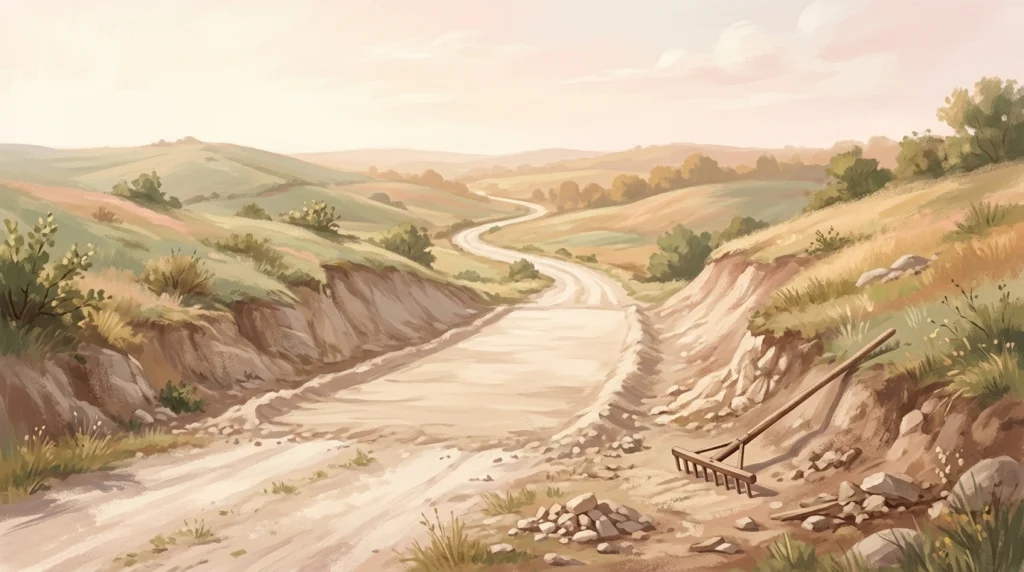
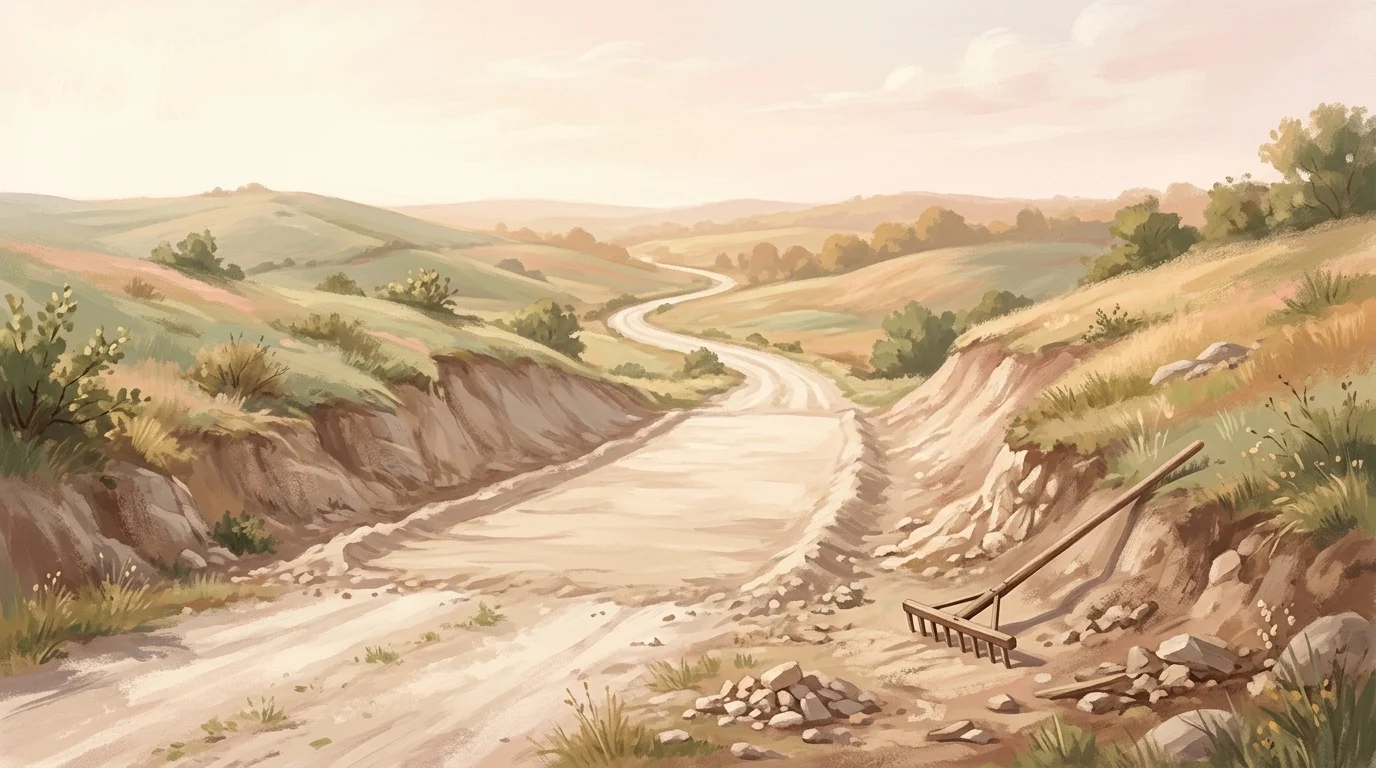
Every valley shall be filled. That line arrives late this morning, at the very end of a long stretch of reading, and by the time it comes you have already sat through five prophecies and an Epistle. This is the Ember Saturday of Advent, the last of the three Ember Days that fall in this week, and it is the longest morning the Church gives us before Christmas. The Mass does not hurry. It reads Isaias four times over, then Daniel, then Paul, and only after all of that does it open Luke and say that every valley shall be filled.
I want to be honest about what that length is for. It is not an endurance test and it is not thoroughness for its own sake. The readings are laid end to end because they are all saying one thing from different angles, and the Church seems to think you need to hear it several ways before it lands. Every valley shall be filled is where the morning finally puts it plainly, and everything before it has been clearing the ground.
If you are reading this without any faith of your own, the claim underneath is still testable. It is a claim about direction: that when something genuinely arrives in the world, the first evidence is not that the powerful get more powerful, but that the low ground comes up. Every valley shall be filled is the religious form of it. Look at what a movement does to the people at the bottom of it, and you will know what has actually turned up.
II
Introit
Ps. 79:4, 2.
Come, O Lord, thou that sittest upon the cherubims: shew us thy face, and we shall be saved. ℣. Give ear, O thou that rulest Israel: thou that leadest Joseph like a sheep. Glory be to the Father, and to the Son, and to the Holy Ghost. As it was in the beginning, is now, and ever shall be, world without end. Amen. Come, O Lord, thou that sittest upon the cherubims: shew us thy face, and we shall be saved.
III
Collect
O God, You Who see how we are troubled by our evil tendencies, mercifully grant that we may find consolation in Your coming. Who livest and reignest with God the Father in the unity of the Holy Spirit, God, world without end. Amen.
IV
The First Lesson
Isa. 19:20-22.
In those days: They shall cry to the Lord because of the oppressor, and he shall send them a Saviour and a defender to deliver them. And the Lord shall be known by Egypt, and the Egyptians shall know the Lord in that day, and shall worship him with sacrifices and offerings: and they shall make vows to the Lord, and perform them. And the Lord shall strike Egypt with a scourge, and shall heal it, and they shall return to the Lord, and he shall be pacified towards them, and heal them.
V
The First Gradual
Ps. 18:7, 2.
His going out is from the end of heaven, and his circuit even to the end thereof. ℣. The heavens shew forth the glory of God, and the firmament declareth the work of his hands.
VI
The Second Collect
Grant, we beseech You, almighty God, that we who are heavy-laden under the yoke of sin may be delivered from the bondage of old by the long-awaited new birth of Your only-begotten Son. Who livest and reignest with God the Father in the unity of the Holy Spirit, God, world without end. Amen.
VII
The Second Lesson
Isa. 35:1-7.
Thus saith the Lord: The land that was desolate and impassable shall be glad, and the wilderness shall rejoice, and shall flourish like the lily. It shall bud forth and blossom, and shall rejoice with joy and praise: the glory of Libanus is given to it: the beauty of Carmel, and Saron, they shall see the glory of the Lord, and the beauty of our God. Strengthen ye the feeble hands, and confirm the weak knees. Say to the fainthearted: Take courage, and fear not: behold your God will bring the revenge of recompense: God himself will come and will save you. Then shall the eyes of the blind be opened, and the ears of the deaf shall be unstopped. Then shall the lame man leap as a hart, and the tongue of the dumb shall be free: for waters are broken out in the desert, and streams in the wilderness. And that which was dry land, shall become a pool, and the thirsty land springs of water. In the dens where dragons dwell before, shall rise up the verdure of the reed and the bulrush.
VIII
The Second Gradual
Ps. 18:6-7.
He hath set his tabernacle in the sun: and he, as a bridegroom coming out of his bride chamber. ℣. His going out is from the end of heaven, and his circuit even to the end thereof.
IX
The Third Collect
Saddened by the guilt of our deeds, we, Your unworthy servants, beseech You, O Lord, to gladden us by the coming of Your only-begotten Son. Who livest and reignest with God the Father in the unity of the Holy Spirit, God, world without end. Amen.
X
The Third Lesson
Isa. 40:9-11.
Thus saith the Lord: Get thee up upon a high mountain, thou that bringest good tidings to Sion: lift up thy voice with strength, thou that bringest good tidings to Jerusalem: lift it up, fear not. Say to the cities of Juda: Behold your God: Behold the Lord God shall come with strength, and his arm shall rule: Behold his reward is with him and his work is before him. He shall feed his flock like a shepherd: he shall gather together the lambs with his arm, and shall take them up in his bosom, and he himself shall carry them that are with young.
XI
The Third Gradual
Ps. 79:20; 79:3.
O Lord God of hosts, convert us: and shew thy face, and we shall be saved. ℣. Stir up thy might, and come to save us.
XII
The Fourth Collect
Grant, we beseech You, almighty God, that the coming festival of Your Son may bring us healing today and rewards eternal. Through the same Christ our Lord. Amen.
XIII
The Fourth Lesson
Isa. 45:1-8.
Thus saith the Lord to my anointed Cyrus, whose right hand I have taken hold of, to subdue nations before his face, and to turn the backs of kings, and to open the doors before him, and the gates shall not be shut. I will go before thee, and will humble the great ones of the earth: I will break in pieces the gates of brass, and will burst the bars of iron. And I will give thee hidden treasures, and the concealed riches of secret places: that thou mayest know that I am the Lord who call thee by thy name, the God of Israel. For the sake of my servant Jacob, and Israel my elect, I have even called thee by thy name: I have made a likeness of thee, and thou hast not known me. I am the Lord, and there is none else: there is no God, besides me: I girded thee, and thou hast not known me: That they may know who are from the rising of the sun, and they who are from the west, that there is none besides me. I am the Lord, and there is none else: I form the light, and create darkness, I make peace, and create evil: I the Lord that do all these things. Drop down dew, ye heavens, from above, and let the clouds rain the just: let the earth be opened, and bud forth a saviour: and let justice spring up together: I the Lord have created him.
XIV
The Fourth Gradual
Ps. 79:3, 2, 3.
Stir up thy might, and come to save us. ℣. Give ear, O thou that rulest Israel: thou that leadest Joseph like a sheep. ℣. Thou that sittest upon the cherubims, shine forth before Ephraim, Benjamin, and Manasses.
XV
The Fifth Collect
Heed in Your mercy, we beseech You, O Lord, the prayers of Your people, that we, who are justly chastised for our sins, may be consoled by the coming of Your goodness. Who livest and reignest with God the Father in the unity of the Holy Spirit, God, world without end. Amen.
XVI
The Fifth Lesson
Dan. 3:49-51.
In those days: The angel of the Lord went down with Azarias and his companions into the furnace: and he drove the flame of the fire out of the furnace, and made the midst of the furnace like the blowing of a wind bringing dew, and the fire touched them not at all, nor troubled them, nor did them any harm. Then these three as with one mouth praised, and glorified, and blessed God in the furnace, saying:
(Here the canticle Benedictus es is sung, in place of a Gradual.)
XVII
The Sixth Collect
O God, You Who tempered the flames of fire for the three young men, mercifully grant that the flames of sin may not burn us, Your servants. Through our Lord Jesus Christ, Your Son, who liveth and reigneth with You in the unity of the Holy Spirit, God, world without end. Amen.
XVIII
The Epistle
2 Thess. 2:1-8. Brethren: We beseech you by the coming of our Lord Jesus Christ, and of our gathering together unto him: That you be not easily moved from your sense, nor be terrified, neither by spirit, nor by word, nor by epistle, as sent from us, as if the day of the Lord were at hand. Let no man deceive you by any means, for unless there come a revolt first, and the man of sin be revealed, the son of perdition, who opposeth, and is lifted up above all that is called God, or that is worshipped, so that he sitteth in the temple of God, shewing himself as if he were God. Remember you not, that when I was yet with you, I told you these things? And now you know what withholdeth, that he may be revealed in his time. For the mystery of iniquity already worketh; only that he who now holdeth, do hold, until he be taken out of the way. And then that wicked one shall be revealed whom the Lord Jesus shall kill with the spirit of his mouth; and shall destroy with the brightness of his coming.
XIX
The Gradual
Ps. 79:2-3.
Give ear, O thou that rulest Israel: thou that leadest Joseph like a sheep. ℣. Thou that sittest upon the cherubims, shine forth before Ephraim, Benjamin, and Manasses. ℣. Stir up thy might, and come to save us.
XX
The Gospel
Luke 3:1-6. Now in the fifteenth year of the reign of Tiberius Caesar, Pontius Pilate being governor of Judea, and Herod being tetrarch of Galilee, and Philip his brother tetrarch of Iturea, and the country of Trachonitis, and Lysanias tetrarch of Abilina; Under the high priests Annas and Caiphas; the word of the Lord was made unto John, the son of Zachary, in the desert. And he came into all the country about the Jordan, preaching the baptism of penance for the remission of sins; As it was written in the book of the sayings of Isaias the prophet: A voice of one crying in the wilderness: Prepare ye the way of the Lord, make straight his paths. Every valley shall be filled; and every mountain and hill shall be brought low; and the crooked shall be made straight; and the rough ways plain; And all flesh shall see the salvation of God.
The Offering
Daily Homily | Every Valley Shall Be Filled
The Gospel opens with a roll-call, and it repays a slow reading, because it is doing something. Luke dates the arrival of the word of God by naming the men who ran the world…
The Gospel opens with a roll-call, and it repays a slow reading, because it is doing something. Luke dates the arrival of the word of God by naming the men who ran the world at the time. An emperor in Rome, a governor in Judea, two brothers holding tetrarchies, a third man holding another, and over the religious side of the house two high priests by name. Then the sentence turns, and the word of the Lord goes to none of them. It goes to a man in the desert, and what he brings is the announcement that every valley shall be filled.
Luke could have dated it any number of ways. He picked the way that puts seven office-holders into two verses and then walks past every one of them. That is not an accident of style. The list is there so that we know exactly how much authority was standing in the room when the word arrived somewhere else entirely.
And here is the thing that makes this morning hold together, and it is in the Latin rather than the English. In the fourth Lesson, God says of the great ones of the earth that he will bring them low: gloriosos terrae humiliabo. In the Gospel, the prophecy says that every mountain and hill shall be brought low: omnis mons, et collis humiliabitur. It is the same verb.
The mountains in Luke are not scenery. They are the same objects Isaias named four readings earlier. That is why we are told that every valley shall be filled in the same breath: the two halves are one action, described with one word, and every valley shall be filled is the half that happens at ground level.
That is the shape of this whole long morning. The high ground comes down and the low ground comes up, and it is described as a single piece of work rather than two separate policies. Every valley shall be filled is the half we tend to skip, because the half about mountains is more dramatic and easier to enjoy. The Church puts them in one sentence on purpose.
Five prophecies pointed at the same place
Look at what the five Lessons actually contain, because taken together they are startling. Egypt cries out and is sent a Saviour, and the text says the Lord will strike Egypt and then heal it. Egypt is the oppressor in the founding story of the whole nation. The first thing this morning does is promise mercy to the people the story is usually told against. If that does not sound like every valley shall be filled, nothing does, and every valley shall be filled is exactly what it is.
The second Lesson is the desert blooming, and it is very specific about who benefits. Feeble hands strengthened, weak knees confirmed, water where there was none. Every valley shall be filled is the same promise with the poetry taken out. The third Lesson sends someone up a mountain to shout good tidings, and then describes God as a shepherd carrying lambs, which is what you do for the animals that cannot keep up. Then the fourth Lesson, which is the strangest of them, and where every valley shall be filled gets its hardest test.
Some of this has been here before
Before the fourth Lesson is preached it is honest to say plainly that parts of this morning are not new to us. The Gradual that stands just before the Gospel, Give ear, O thou that rulest Israel, is the same Gradual the Church sang last Sunday and again on Thursday. It has come round three times in seven days. Every valley shall be filled is the new thing on this page; that Gradual is the settled ground under it.
The fourth Lesson closes on let the earth be opened, and bud forth a saviour, which was the Introit of the Ember Wednesday three days ago. On Wednesday it opened the Mass in a single verse. This morning it arrives at the end of eight verses, with a Persian king standing in front of it, and it reads as the conclusion of an argument rather than as a summons. Same words, different work, and every valley shall be filled is what Luke does with the same idea a few minutes later.
And Isaias’s take courage, and fear not has been sung twice this week already, in the antiphons rather than in the readings. Today is the first morning it is read aloud in its place in Isaias, with the flowering desert on one side of it and the opened eyes on the other. That is what the Ember Saturday is for, and it is why every valley shall be filled lands harder here than it would on an ordinary Tuesday.
The Persian king who did not know
God addresses Cyrus, king of Persia, and calls him my anointed. The Latin is christo meo Cyro, and that word is the one that becomes Christ. It is applied here to a foreign monarch who worshipped other gods, and the text does not soften it or hedge it. Then it says, twice, in two consecutive verses, thou hast not known me.
Read that again, because it is doing something the rest of the Bible rarely does. God says: I took your right hand. I will go before you. I will break the gates of brass. And you have never known who I am.
The claim is not that Cyrus believed after all. The claim is that his not knowing changed nothing whatever about what was done through him. That is another way of saying that every valley shall be filled by whichever hands are nearest to the shovel. Every valley shall be filled does not come with a questionnaire attached.
There is one line in that Lesson that stops people, and it is honest to say what it is doing. I form the light, and create darkness, I make peace, and create evil. Isaias is not building a theory about where wickedness comes from. He is standing in front of a culture with two gods, one for the bright half of the world and one for the dark half, and he is refusing the second one.
There is no rival power. That is the argument, and it belongs to the same sentence as I am the Lord, and there is none else. It is one hand at work in the whole of it, which is why every valley shall be filled can be promised at all.
Naming the people this teaching has cost
Here is where the day’s own text asks for a name. There is a teaching that has run through Christianity for a very long time, and it is this: that whatever good is done by someone who does not believe is not really good. Borrowed capital. Accidental. A decent-looking act with nothing behind it.
In its politer form that teaching says such a person is doing well considering. In its blunter form it says the whole account is void. Every valley shall be filled is said this morning over the top of both versions.
So I want to name people who do not believe any of this, and people who once did and do not now. The fourth Lesson is about you, and it is not backhanded about it. God takes hold of a man’s right hand, arms him, opens gates ahead of him, hands him a job that changes the history of an exiled people, and states plainly that the man has no idea who is doing it.
The text never treats that as a defect to be corrected before the work counts. Every valley shall be filled, and the filling is not audited for the beliefs of the person holding the spade. Every valley shall be filled is said over Cyrus’s head and it does not ask him to agree first. Every valley shall be filled is a description of what happens, not a reward for having got something right.
This is Christianity’s own teaching to answer for, not anyone else’s, and the fruit test lands on our own record. Ask what that doctrine has grown. It has grown congregations that cannot receive help from a neighbour without first working out whether it counts. It has grown families who tell a son that the years he spent caring for his father were kind but empty.
It has grown a habit of scanning people for the correct interior conditions before crediting them with anything, and that habit has never once made anybody kinder. Every valley shall be filled is the flat contradiction of it. Every valley shall be filled says the work was real, the hands were theirs, and the ground came up.
I want to be careful here, because there is a wrong way to hear this. Isaias is not saying that what you believe is unimportant, and neither am I. He is saying something narrower and stronger: that God’s freedom to act does not wait on your recognition, and that the good done by a person outside the faith is real good, done by them, with their hands.
Those are different claims and only the second one is being made this morning. Every valley shall be filled is a promise about the ground, not a shrug about the sky. Every valley shall be filled leaves the question of what is true exactly where it was.
And I would say the plain version too, for anyone who wants the ethics without the theology. A good act is good because of what it does to the person it lands on. That is testable, it is the only test the person on the receiving end can run, and it is the same test the prophets keep applying. Every valley shall be filled is the poetic version of a very ordinary standard.
Yesterday asked a different question
Yesterday’s offering turned on who a measurement belongs to, and it argued that Isaias hands the test of a faith to the people at the bottom rather than keeping it inside. Today is not that argument again, and the difference matters. Yesterday asked whose verdict settles whether it worked. Today asks whether the worker has to know whose work it is. Every valley shall be filled answers the second question and leaves the first one where it stood.
The two fit together, but they are not the same claim, and running them together would flatten both. A person can be the measurement of somebody else’s faith without being a believer. A person can be the instrument of God’s own purpose without holding a single belief about it. Every valley shall be filled covers both, which is probably why the Church reads them on consecutive days.
Paul, and not panicking
The Epistle sits oddly beside all this until you see what it is for. Paul writes to people who have got themselves into a state about the day of the Lord, and his whole counsel is: do not be easily moved, and do not be terrified. Somebody has told them the end has already started. He tells them to hold still.
That is the pastoral half of every valley shall be filled. The levelling is God’s work and it is on God’s timetable, and the appropriate response to a promise like that is not agitation. Every valley shall be filled is a promise, and a promise is a thing you can rest on rather than a thing you have to bring about by Friday.
Thursday said the same thing in a different key, with Paul telling the Philippians to be anxious about nothing. Two letters, two churches, the same instruction. Every valley shall be filled is not a summons to hurry, and every valley shall be filled is not a job you are behind on.
The story
There is a story sometimes told of a woman in a small block of flats whose father came to live with her on the third floor. He could manage the stairs at first, and then over about eight months he could not, and the flat that had been fine became a flat with a mountain in front of it.
What happened next is the part that matters. The pharmacy on the corner started delivering and never once put it on a bill. The shop below kept bread back on the days she could not get down before four.
And the man who lived on the ground floor, who had lived there nineteen years and liked it, offered to swap. Not for a month. For good. Every valley shall be filled, in a stairwell, is a man with a removal van.
He complained about the stairs in the first week and complains about them still, to anyone who will stand still long enough. He tells people how his knees are, at length, most days. He has also never once suggested swapping back, and the two facts sit side by side in him without any difficulty at all.
There is a list on that fridge now in three different handwritings. The daughter has not had a full night’s sleep in a year and says so to anybody who asks. What her father has is not named here and does not need to be. What can be seen plainly is the shape of the thing: a whole staircase of people brought the street down to one flat, and not one of them did it because of a doctrine. Every valley shall be filled looks, close up, like a man moving nineteen years of belongings down two flights and grumbling about it forever.
What this asks of you today
The Ember Days are fast days, and this Saturday has been the Church’s ordination day since at least the fifth century. It is the morning the Church has long used to hand real work to particular people. Hold that beside the fourth Lesson, because the pattern in Isaias is that the job goes where it is needed rather than where it is expected, and the Church put its own ordinations on the day it reads that.
So the question this morning puts is not whether you believe correctly enough to be useful. Every valley shall be filled has already answered that, and it answered it by naming a Persian who did not know God as God’s own anointed. The question is nearer than that, and it is about ground level.
What is the low place within your reach, and what would filling it actually cost you? John, asked point-blank on Monday who he was, answered with a job rather than a title. Every valley shall be filled is a job description before it is anything else.
I do not mean a feeling about it. Isaias does not describe a change of mood in Egypt; he describes sacrifices, offerings, vows made and kept. Luke does not describe John having an experience; he describes roads. Every valley shall be filled is measured in cubic yards. Every valley shall be filled is a claim about earth being moved, and the smallest honest version of it in an ordinary week is usually a practical thing done for one person who cannot get up the stairs.
And if this is a season when you are the valley rather than the one doing the filling, the promise is pointed at you first and there is no shame anywhere in it. Every valley shall be filled is addressed to the low ground. This Gospel asks the climbing of the hills, not of you.
The last line of the reading
The Gospel ends where the whole morning has been going: and all flesh shall see the salvation of God. All flesh. Not the men named at the top of the page, not the people with the correct beliefs, not the ones who got there first. The good tidings that Isaias sends up the mountain are for the cities of Juda, and the road being described is one that everybody can walk.
Every valley shall be filled, and every mountain and hill shall be brought low, and both of those happen so that the last sentence can be true. That is the logic of it, and it runs in one direction only. Every valley shall be filled first, because the view is what is at stake. You cannot have all flesh seeing anything while the terrain is arranged so that only some people can get a view.
↑ The order resumes below.
XXII
Secret
Look with favor, we beseech You, O Lord, upon the offerings here before You, that they may be beneficial for our devotion and for our salvation. Through our Lord Jesus Christ, Your Son, who liveth and reigneth with You in the unity of the Holy Spirit, God, world without end. Amen.
XXIII
The Holding
May God, who called a king by name before that king knew whose voice it was, take hold of your right hand this week and go before you. May the gates you have been standing at open. May the low ground in your own life be filled, and may you be given real work in somebody else’s. Every valley shall be filled, and the God who promised it does not wait to be recognised before beginning.
And if none of that is yours to say, hold this instead. The low ground gets filled by whoever is standing nearest with something to fill it with, and being unsure of what you believe has never disqualified anybody from being that person. You do not need a settled position to move earth. Every valley shall be filled is, at ground level, a description of what people do for each other when the need in front of them is plain.
Go gently into this last week of Advent. It is a short one, and it is crowded, and the Church has just spent an entire morning telling you that the arrival it is waiting for begins at the bottom. Every valley shall be filled. Amen.
XXIV
Frequently Asked Questions
Because Ember Saturday keeps an older and much longer shape than an ordinary weekday Mass does. Today’s Mass prints an Introit, a Collect, then five separate Lessons from Isaias and Daniel, each with its own Collect standing before it, four of the five followed by a Gradual of their own and the fifth by a canticle, and only then the Epistle, a sixth Gradual, and the Gospel. Four of the five Lessons are Isaias, read at four different points in his book, and the fifth is the three young men in the furnace. Wednesday of this same Ember week carried two Lessons where today carries five, so the three Ember Days of one week do not share a single structure.
Because the Ember Saturdays became the Church’s ordination days very early. The Catholic Encyclopedia’s article on the Ember Days records that Pope Gelasius, who reigned in the last decade of the fifth century, permitted the conferring of the priesthood and the diaconate on the Saturdays of Ember week. That is why this particular morning carries so many readings and so many prayers: it was built to hold an ordination inside it. The Latin name for the Ember Days is Quatuor Tempora, four times, and the English word is a corruption of the Latin.
Because Luke is dating the arrival of the word of God, and the way he dates it makes an argument. He names an emperor, a governor, three tetrarchs and two high priests, which is a fair summary of who held power in that place at that moment. Then he says the word came to none of them, but to John in the desert. The list exists so that you can see precisely how much authority was standing by when the word turned up somewhere else, and the first thing John announces is that every valley shall be filled.
It is a road-building image, and John is quoting Isaias when he uses it. Ancient road crews preparing for the arrival of a ruler filled the dips and cut down the rises so the way was level. Luke keeps both halves in one sentence, so every valley shall be filled and every mountain and hill shall be brought low describe one operation rather than two, and the Latin uses the same verb for the mountains as Isaias uses for the great ones of the earth in this morning’s fourth Lesson. Read plainly, it is a promise that when God arrives the terrain gets rearranged, and the rearranging favours the low ground.
Yes, and the text is not being loose about it. Isaias 45 opens Thus saith the Lord to my anointed Cyrus, and the Latin reads christo meo Cyro, using the word that gives us the title Christ. Cyrus was the Persian king who let the exiles go home, and the same passage says twice that he did not know the God who was arming him. The Church reads it on this Saturday of all Saturdays, four days before Christmas, which is a considerable thing to do with a foreign king who worshipped elsewhere.
No. Take the theology out of this morning and a plain claim remains: when something real arrives in a community, the first place you can measure it is at the bottom, not at the top. Luke makes that point by listing seven powerful men and then walking straight past all of them. The ethical version needs no belief at all, which is to look at what a movement, a household or an institution actually does for the people with the least room in it. Every valley shall be filled is that same test written as a promise rather than as a question, and anybody can run it.
Faith in Bloom is the daily liturgical work of Bloom Ministries, a 501(c)(3) nonprofit, and it is free to read and always will be. If it has been worth something to you and you are able, you can give once or give monthly below. Sending a post to one person who needs it does real work too.
The propers of this Mass are those of the Ember Saturday of Advent in the 1962 Roman Rite, second class, violet. Scripture is given in the Douay-Rheims translation. The liturgical spine of this offering is The New Marian Missal for Daily Mass by Sylvester P. Juergens, S.M., S.T.D.
Faith in Bloom, under the Church of Bloom, is a ministry of Bloom Ministries, a nonprofit organization tax-exempt under section 501(c)(3) of the Internal Revenue Code. It is offered in the Independent Catholic tradition and is not affiliated with or recognized by the Roman Catholic Church.
