

Daily Offering · 26 December 2025 · St. Stephen
Daily Offering: December 26, 2025 | I See the Heavens Opened
I see the heavens opened. That is a sentence said by a man with stones already in the air around him, and it is the sentence this whole Mass decides to keep. Welcome to Bloom’s Daily Offering for Friday, December 26, 2025. Today is…
The order of this offering
Before the readings
The Word
Offering and Canon
I
Opening Address
I see the heavens opened. That is a sentence said by a man with stones already in the air around him, and it is the sentence this whole Mass decides to keep. Welcome to Bloom’s Daily Offering for Friday, December 26, 2025. Today is the feast of St. Stephen, Protomartyr, second class, and the vestments are red.
Wherever you are this morning, you are welcome here. There are two accounts of the minute Stephen died and both of them got written down. The crowd’s account is stones and stopped ears. His account is one sentence, and it opens: I see the heavens opened.
Hold on to which of those the Church chose. The Mass could have made this day about the violence, and it does not. It takes the dying man’s own sentence and prints it twice more, in the Gradual and again in the Communion, so that I see the heavens opened is what the congregation is left saying rather than anything the crowd said. Today also sits inside the Octave of the Nativity, and the Octave’s own prayer is commemorated after Stephen’s.
II
Introit
Ps. 118:23, 86; 118:1.
For princes sat, and spoke against me: but thy servant was employed in thy justifications. All thy statutes are truth: they have persecuted me unjustly, do thou help me.
Blessed are the undefiled in the way, who walk in the law of the Lord.
The psalm verse under that antiphon is Psalm 118:1, which this archive last printed on the Ember Friday of Advent a week ago. The antiphon above it is new to this archive, and it is the complaint of the man they sat against.
III
Collect
Let us pray.
Grant us, we beseech Thee, O Lord, to imitate what we celebrate, so that we may learn to love even our enemies; because we keep the anniversary of the invention of Him Who knew how to plead even for His persecutors with our Lord, Jesus Christ, Thy Son. Who livest and reignest with God the Father in the unity of the Holy Ghost, one God, world without end. Amen.
IV
The Commemoration of the Octave of the Nativity
Grant, we beseech Thee, almighty God, that the new birth, in the flesh, of Thine only-begotten Son may deliver us whom the bondage of old keeps under the yoke of sin. Through the same Christ our Lord, Who liveth and reigneth with Thee in the unity of the Holy Ghost, one God, world without end. Amen.
V
Epistle
Acts of the Apostles 6:8-10; 7:54-59
Lesson from the Acts of Apostles. In those days: Stephen, full of grace and fortitude, did great wonders and signs among the people. Now there arose some of that which is called the synagogue of the Libertines, and of the Cyrenians, and of the Alexandrians, and of them that were of Cilicia and Asia, disputing with Stephen. And they were not able to resist the wisdom and the spirit that spoke.
Now hearing these things, they were cut to the heart, and they gnashed with their teeth at him. But he, being full of the Holy Ghost, looking up steadfastly to heaven, saw the glory of God, and Jesus standing on the right hand of God. And he said: Behold, I see the heavens opened, and the Son of man standing on the right hand of God.
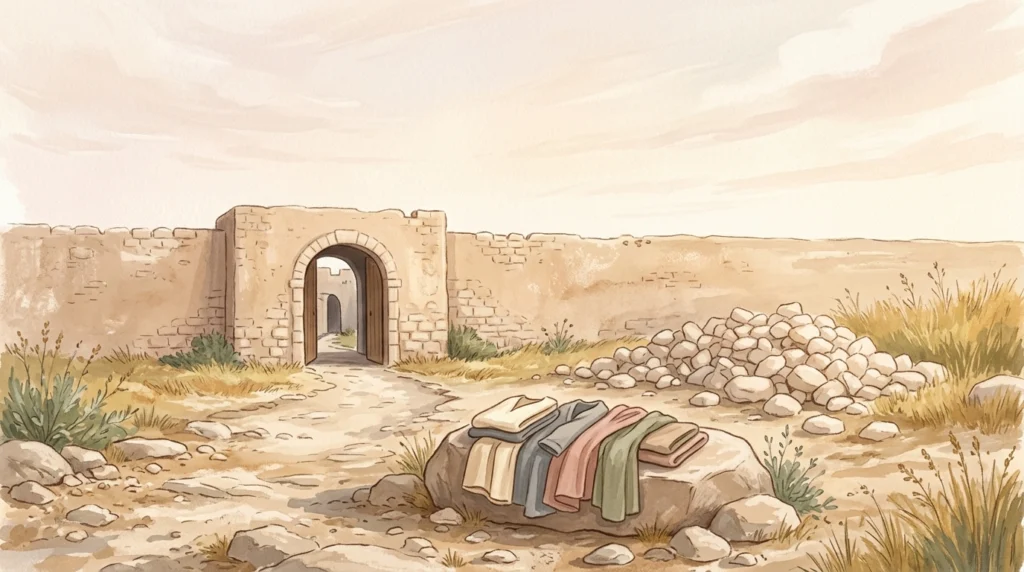
And they crying out with a loud voice, stopped their ears, and with one accord ran violently upon him. And casting him forth without the city, they stoned him; and the witnesses laid down their garments at the feet of a young man, whose name was Saul.
And they stoned Stephen, invoking, and saying: Lord Jesus, receive my spirit. And falling on his knees, he cried with a loud voice, saying: Lord, lay not this sin to their charge. And when he had said this, he fell asleep in the Lord. And Saul was consenting to his death.
VI
Gradual
Ps. 118:23, 86; Acts 7:56.
Princes met and talked against me, and the wicked persecuted me wrongfully. Help me, O Lord my God: rescue me because of Thy kindness.
Alleluia, alleluia. I see the heavens opened, and Jesus standing on the right hand of the power of God. Alleluia.
VII
Gospel
Continuation of the Holy Gospel according to Matthew. In that time: Jesus said to the scribes and Pharisees: Behold I send to you prophets, and wise men, and scribes: and some of them you will put to death and crucify, and some you will scourge in your synagogues, and persecute from city to city: That upon you may come all the just blood that hath been shed upon the earth, from the blood of Abel the just, even unto the blood of Zacharias the son of Barachias, whom you killed between the temple and the altar.
Amen I say to you, all these things shall come upon this generation. Jerusalem, Jerusalem, thou that killest the prophets, and stonest them that are sent unto thee, how often would I have gathered together thy children, as the hen doth gather her chickens under her wings, and thou wouldest not?
Behold, your house shall be left to you, desolate. For I say to you, you shall not see me henceforth till you say: Blessed is he that cometh in the name of the Lord.

The Offering
Daily Homily | I See the Heavens Opened
Two people describe the same minute and both descriptions survive.
What a man said he could see
Two people describe the same minute and both descriptions survive.
The crowd’s description is in the Lesson and it is all body: teeth, ears, one accord, a loud voice, a run, stones, and coats laid down at a young man’s feet so the throwers would be readier for the task. It is precise, and it is the version any bystander would have given. Nothing in it is untrue.
Stephen’s description is one sentence and it has no stones in it at all. I see the heavens opened, and the Son of man standing on the right hand of God. He is not arguing. He is reporting what is in front of him, in the present tense, while the other version of the minute is happening to his body.
Now count what the Mass does with those two accounts, because that is the whole of this morning. The Introit gives us the grievance: princes sat and spoke against me. Then the Gradual and the Communion both take Stephen’s side, and both of them say I see the heavens opened.
So the rite hears both witnesses and repeats one. The crowd is quoted once, as grievance. The dying man is quoted three times, as the truth of the day. I see the heavens opened is not the losing account here; it is the one the Church decided to keep saying out loud.
The two are not even the same kind of statement. A grievance invites a reply; a description of what is in front of somebody cannot be met on those terms at all. I see the heavens opened makes no claim about who was in the right that morning, and the rite can repeat I see the heavens opened without ever reopening the case.
I want to be careful to distinguish this from something we said on the Fourth Sunday of Advent. That day the question was the timing of a verdict, whether a finding may be handed down before the hearing. Today’s question is not about timing at all. It is about which of two present, simultaneous, equally honest reports gets treated as the account of record, and I see the heavens opened is the answer.
I see the heavens opened, out loud
Where he says it carries as much as what he says. Not afterwards, not in a letter, not to a friend later. He says it in the middle of a council chamber and then in the open ground beyond the city gate, in front of a crowd and the witnesses who had laid their garments down.
That matters more than it seems to. Everything in this Lesson happens in daylight, in front of a full room and a council that convened for the purpose. I see the heavens opened is a public statement, given in public, at the worst possible moment to give it.
He is also a deacon, and that is public work too. The record of his life has him as one of the first deacons, chosen and ordained by the Apostles to distribute alms and to see to the temporal relief of the poorer members of the community. Before he was a martyr he was the man who handed things out. I see the heavens opened comes out of the mouth of somebody whose ordinary work was the relief of the poor.
And the sentence itself is an odd shape for a last word. It contains no defence, no accusation, no summary of his own life. I see the heavens opened is a description of what is ahead of him, offered to a room that is not going to be able to check it.
That is the part I would sit with. He does not tell them he is right. He tells them what he can see from where he is standing, and then he leaves it with them. I see the heavens opened is all he offers by way of an argument, and I see the heavens opened is all he needs to have said.
The verse we turned into a licence
Now the Gospel, and I am not going to walk past what is in it.
Two lines in today’s Gospel are the obvious place for a reading the Church has since had to disown. That upon you may come all the just blood that hath been shed upon the earth. And: behold, your house shall be left to you, desolate. Read as a sentence passed on a people rather than as grief spoken to a city, those two verses become a permission slip.
I want to name who that reading fell on, because the text requires it named. Jewish people did. The reading that Scripture itself convicts and curses a whole people is exactly the one repudiated by the Declaration Nostra Aetate of 28 October 1965, which states that “the Jews should not be presented as rejected or accursed by God, as if this followed from the Holy Scriptures,” and which “decries hatred, persecutions, displays of anti-Semitism, directed against Jews at any time and by anyone.”
Apply the fruit test to that reading the way we test everything here, and point it where it belongs, which is at our own record. A reading that had to be formally disowned is a reading that grew something. It grew the habit of hearing a Gospel as a charge sheet against somebody else, and that is the opposite of what Christ is doing in verse 37, where he grieves over a city he calls by name twice.
That is the test the text sets, and the text passes it while the reading fails it. Set that beside what the Gospel does with the same city an earlier post here called the glory of Jerusalem. Christ addresses her in the second person, as thee. The sentence names what the city has done and then, instead of passing sentence on it, reaches for a hen and her chickens, and for an invitation offered again and again and refused.
And the day itself argues the same way. The Church could have made this feast an occasion for naming an enemy, and she built it on I see the heavens opened instead. I see the heavens opened lays a charge against no group and no person.
So we print the Gospel whole and refuse the reading, and I would rather say that plainly than quietly leave two verses out. The pericope is Christ’s grief, in his own mouth, about a house he wanted full. Nothing in it licenses a single thing that was done in its name, and I see the heavens opened is a better description of what today is for.
His prayer was his own to make
Here is the guardrail, and on this day it is the most important paragraph in the file.
Stephen, on his knees, says: Lord, lay not this sin to their charge. That is one of the most extraordinary sentences in Scripture and it has been used very badly. It has been read to people who were hurt as an instruction, as though a Christian who has been harmed owes their harmer a prayer like that, on a timetable, as proof of something.
It is not an instruction. It is his. Stephen prays it for his own killers, in his own last minute, out of his own mouth, and Scripture never turns it into a rule for anybody else. I see the heavens opened and lay not this sin to their charge are both a man’s own words about his own death.
If you have been assaulted, if somebody you trusted did something to you that is still doing damage, this text asks nothing of you this morning. It is not a bill and it is not a test. Neither sentence is a duty laid on the injured, and I see the heavens opened is not a standard of composure you are failing at.
The same holds for the Commemoration’s language, which asks that we be delivered from the bondage of old and the yoke of sin. That is a prayer about a condition everyone in the room shares, made in the plural, on behalf of all of us together. It is not a description of anybody’s particular life, and it is not a hint that something wrong with you is holding you where you are.
We said something adjacent to this on the feast of a martyred bishop ten days ago, and I want to be exact about the difference. That day the point was that comfort is not a debt to be repaid. Today’s point is narrower and harder: a martyr’s death is not a template. His courage is not an example anybody is being graded against, and I see the heavens opened is not a standard of vision you are failing to meet.
And a martyr’s Mass is not a recruitment poster, which is what we said in a different key on the feast of St. Lucy. What the Church keeps on a day like this is not the dying. It is the sentence the dying man got out, and the fact that somebody wrote it down.
Let me close one more door before it opens. None of this says that what you do makes no difference, and none of it says the outcome was already arranged. Stephen disputed, and answered, and said what he could see, and every one of those was a thing he did.
A sightline is not an escape
There is a story sometimes told of a man eleven days out of a detox ward who went to a Friday meeting in a hired village hall, strip lights on, about thirty stacking chairs pulled into a rough circle, an urn on a folding table by a shuttered serving hatch.
When it came round to him he said he could not tell the room he felt better, because he did not, and he was not going to stand there and say a thing that was not so. What he could tell them was what was in front of him. He said he could see a Saturday in April when he would be able to sit through his brother’s wedding, all the way through, and not have to leave the room.
That was the whole of his contribution and it was received exactly as offered. Not a single voice in the hall argued with him about whether April was realistic. Somebody went over to the paper rota taped up beside the hatch and put that weekend on it, so there would be a meeting on the Friday before it and the urn would be on, and that was the end of the discussion.
He has said since that he had nothing else to give the room that night. He could not report a feeling and he would not invent one. He could describe a sightline, and describing it out loud in front of thirty people is I see the heavens opened as it happens in a village hall in an ordinary year.
Now here is the part I do not want to overstate, because it is where this sort of story usually gets ruined. The sightline is not an escape. It did not shorten anything, it did not make the following February easier, and it was not a promise that April would go the way he described. I see the heavens opened does not remove a single stone from the ground around Stephen either, and the Lesson is careful about that: he says it, and then he is stoned, in that order.
So the claim is smaller than it sounds and more useful. A person in the worst stretch of their life can sometimes still describe what is ahead of them while having no account at all of how they feel, and that description is admissible. It is real information about a real direction. I see the heavens opened is that same act at its furthest edge, said by somebody with nothing left to gain by saying it.
And if none of the theology here belongs to you, the sentence still works with the God taken out of it. When you cannot honestly report that you are all right, you can sometimes still name one specific ordinary thing you can see ahead of you, and naming it in front of other people is not self-deception. It is the only part of the future you have any actual evidence about, and I see the heavens opened is what it sounds like when somebody says it without hedging.
Which changes what the rest of us should do with it. When a person tells you what they can see, the useful response is not to test the forecast. It is to write the date down somewhere and keep the room open, because I see the heavens opened was met by a crowd with stones and by a hall with a rota, and only one of those is available to us.
Ask somebody what they can see rather than how they are doing, and keep whatever they name in the diary. I see the heavens opened started as one sentence in an open field, and I see the heavens opened is what a booked hall makes of it.
↑ The order resumes below.
IX
Secret
Receive our offerings, O Lord, in memory of Thy saints, that, as their passion hath given them eternal glory, so may this sacrificial act free us from guilt. Through our Lord Jesus Christ, Thy Son, Who liveth and reigneth with Thee in the unity of the Holy Ghost, one God, world without end. Amen.
That phrase, in memory of Thy saints, is doing the same work as the multitude which no man could number at the start of November. The prayer does not ask us to be as brave as Stephen. It asks that a memory be received.
X
The Holding
May God open the heavens over you this Friday, and may you be given, in the worst hour you have, one true thing you can see and the nerve to say it out loud. You are not being measured against a martyr. Nothing that was done to you is yours to pay for, and I see the heavens opened was never a bill. May Almighty God bless you, the Father, and the Son, and the Holy Ghost. Amen.
And if that language is not yours, take it plainly. When you cannot say how you are, you can sometimes still say what you can see, and naming one ordinary thing ahead of you in front of other people is worth more than any account of your feelings. I see the heavens opened is a report, not a boast, and the people around you should write the date down rather than argue with it. That is the whole instruction, and I see the heavens opened asks nothing else of you today.
XI
Frequently Asked Questions
There is an octave. Only three octaves survived Pope Pius XII’s reforms of 1955 into the Missal we use, and the Octave of the Nativity is one of them, so today’s Mass carries the Commemoration of the Octave printed above alongside St. Stephen’s own prayers. There is no vigil: only seven vigils survived those reforms, and today is not one of them, so no vigil Mass is said.
It is what Stephen says aloud in the Lesson while he is being killed, and the Missal repeats it in the Gradual and again in the Communion. He is not making an argument or a defence; he is describing, in the present tense, what is in front of him. The point of it is that a description of what a person can see is a different kind of statement from a claim about how they feel, and the rite treats his as the account of record.
This is Stephen the Protomartyr, the deacon stoned in the Acts of the Apostles and the first Christian martyr, whose feast is December 26. Several other saints share the name and are kept on other days, including a king of Hungary in September and a pope in August, which is a common source of confusion. Today’s red vestments belong to a martyr, and the Lesson is his death as the Acts of the Apostles records it.
No. Stephen’s prayer that the sin not be laid to his killers’ charge is his own, made in his own last minute, and Scripture does not turn it into an instruction for anybody else. Nothing in today’s Mass asks a person who has been harmed to produce a prayer like that, on any timetable, as evidence of anything. If that sentence has ever been read to you as a demand, it was being misused.
Because leaving two verses out would hide a real part of our own record rather than deal with it. The lines about the just blood and the desolate house were read as though Scripture itself convicted and cursed a whole people, and that reading was formally repudiated by the Declaration Nostra Aetate of 28 October 1965. This ministry prints the pericope whole and refuses that reading, and reads verse 37 as what it says it is: Christ grieving over a city he names twice and wanted full.
Both draw on Psalm 118:23 and 118:86, so today’s opening antiphon comes back a few minutes later as the Gradual, in slightly different English. That is unusual enough to be worth pointing out and it is not an error in the text. The effect is that the grievance is stated twice before the Alleluia verse hands the day over to Stephen’s own sentence.
No. The logic holds with no theology in it at all. A person in a very bad stretch often cannot honestly report a feeling and can still describe one specific thing ahead of them, and that description is real information rather than wishful thinking. In one plain sentence: when somebody tells you what they can see, write the date down instead of testing the forecast.
Faith in Bloom is the daily liturgical work of Bloom Ministries, a 501(c)(3) nonprofit, and it is free to read and always will be. If it has been worth something to you and you are able, you can give once or give monthly below. Sending a post to one person who needs it does real work too.
Propers for the feast of St. Stephen, Protomartyr, and for the Commemoration of the Octave of the Nativity are taken from the 1962 Roman Missal. Scripture is quoted from the Douay-Rheims Bible. Biographical detail on St. Stephen follows the Catholic Encyclopedia. The liturgical spine of Faith in Bloom is The New Marian Missal for Daily Mass by Sylvester P. Juergens, S.M., S.T.D., Regina Press, Imprimatur 1961.
Faith in Bloom, under the Church of Bloom, is a ministry of Bloom Ministries, a nonprofit organization tax-exempt under section 501(c)(3) of the Internal Revenue Code. It is offered in the Independent Catholic tradition and is not affiliated with or recognized by the Roman Catholic Church.
