
Daily Offering · 25 September 2026 · Ember Friday of September
Daily Offering: September 25, 2026 | Love Them Freely
Welcome to Bloom’s Daily Offering for Friday, September 25, 2026. Today is Ember Friday of September, second class, a fast day with its own complete Mass, and at the centre of its Lesson God says a sentence this ministry has never printed before: I…
The order of this offering
Before the readings
The Word
Offering and Canon
I
Opening Address
Welcome to Bloom’s Daily Offering for Friday, September 25, 2026. Today is Ember Friday of September, second class, a fast day with its own complete Mass, and at the centre of its Lesson God says a sentence this ministry has never printed before: I will heal their breaches, I will love them freely. That is the line this whole morning turns on, and the Gospel is going to put a face on it.
The Ember days come four times a year at the turn of the seasons, and the September set falls at the vintage. Wednesday opened this week’s fast with a harvest promise and a feast. Today continues it with vines, wheat, lilies and olive trees, and with a dinner in a house where one guest was not supposed to be there.
Wherever you are this morning, you are welcome here. If you came in with a list of reasons you should have been turned away somewhere, bring the list. Today the Church reads it out loud and then sets it down, because God has already said I will love them freely.
II
Introit
Ps. 104:3-4; Ps. 104:1.
Let the heart of them rejoice that seek the Lord: seek ye the Lord, and be strengthened: seek his face evermore. Give glory to the Lord, and call upon his name: declare his deeds among the Gentiles. Glory be to the Father, and to the Son, and to the Holy Ghost. As it was in the beginning, is now, and ever shall be, world without end. Amen. The antiphon is repeated.
III
Collect
Let us pray.
Grant, we beseech Thee, almighty God, that we who devoutly keep the sacred observances year by year, may be pleasing to Thee both in body and soul. Through our Lord Jesus Christ, Thy Son, Who liveth and reigneth with Thee in the unity of the Holy Ghost, God, world without end. Amen.
IV
Lesson
Thus saith the Lord God: Return, O Israel, to the Lord thy God: for thou hast fallen down by thy iniquity. Take with you words, and return to the Lord, and say to him: Take away all iniquity, and receive the good: and we will render the calves of our lips.
Assyria shall not save us, we will not ride upon horses, neither will we say any more: The works of our hands are our gods, for thou wilt have mercy on the fatherless that is in thee. I will heal their breaches, I will love them freely: for my wrath is turned away from them.
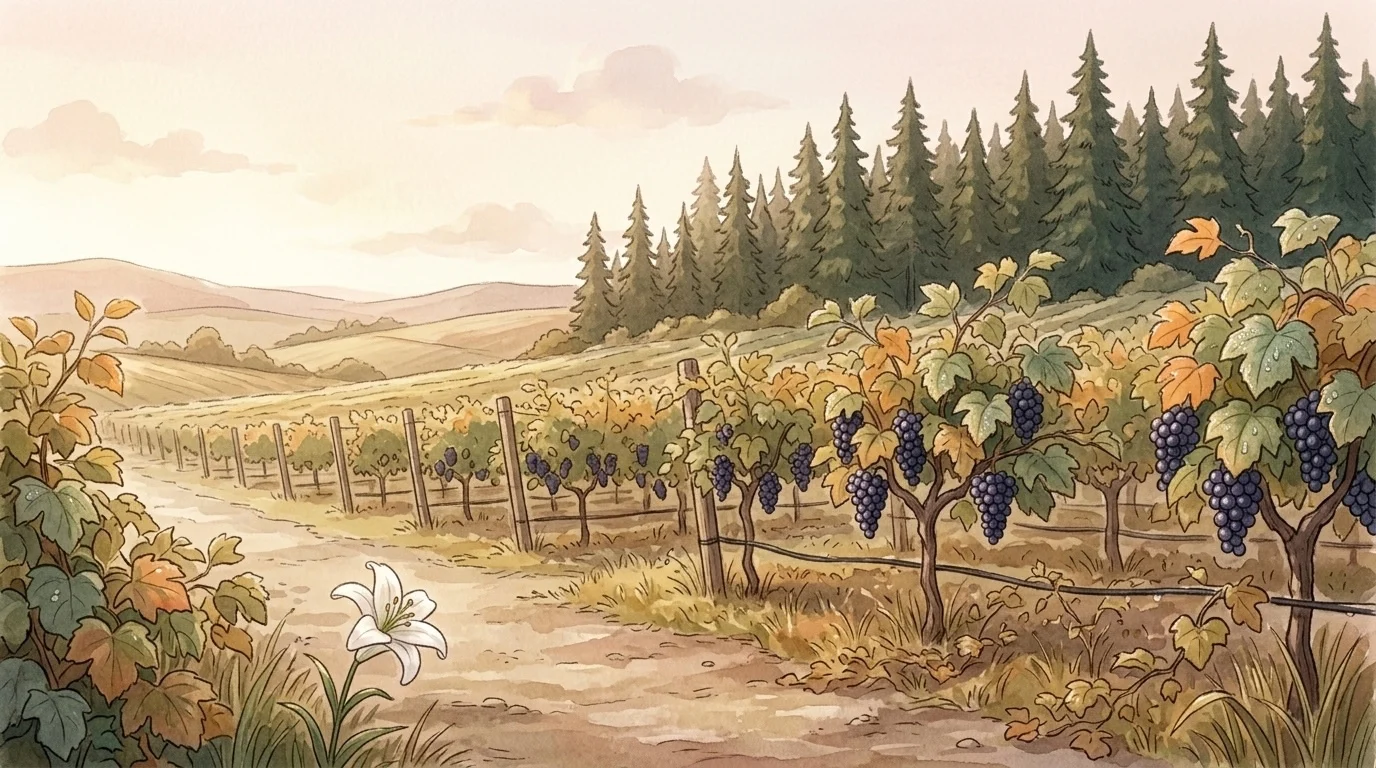
I will be as the dew, Israel shall spring as the lily, and his root shall shoot forth as that of Libanus. His branches shall spread, and his glory shall be as the olive tree: and his smell as that of Libanus. They shall be converted that sit under his shadow: they shall live upon wheat, and they shall blossom as a vine: his memorial shall be as the wine of Libanus.
Ephraim shall say, What have I to do any more with idols? I will hear him, and I will make him flourish like a green fir tree: from me is thy fruit found. Who is wise, and he shall understand these things? prudent, and he shall know these things? for the ways of the Lord are right, and the just shall walk in them: but the transgressors shall fall in them.
The lily of verse 6 has been heard here once before, as the Alleluia of the Beheading of St. John the Baptist. Today the whole chapter is read around it, and the fruit of verse 9 answers the test Christ gave in July: good fruit, and here God says plainly where it comes from. The fruit grows because God chose to love them freely.
V
Gradual
Ps. 89:13; Ps. 89:1.
Return, O Lord, how long? and be entreated in favour of thy servants. ℣. Lord, thou hast been our refuge from generation to generation.
VI
Gospel
At that time, one of the Pharisees desired him to eat with him. And he went into the house of the Pharisee, and sat down to meat. And behold a woman that was in the city, a sinner, when she knew that he sat at meat in the Pharisee’s house, brought an alabaster box of ointment; and standing behind at his feet, she began to wash his feet, with tears, and wiped them with the hairs of her head, and kissed his feet, and anointed them with the ointment.
And the Pharisee, who had invited him, seeing it, spoke within himself, saying: This man, if he were a prophet, would know surely who and what manner of woman this is that toucheth him, that she is a sinner. And Jesus answering, said to him: Simon, I have somewhat to say to thee. But he said: Master, say it.
A certain creditor had two debtors, the one who owed five hundred pence, and the other fifty. And whereas they had not wherewith to pay, he forgave them both. Which therefore of the two loveth him most? Simon answering, said: I suppose that he to whom he forgave most. And he said to him: Thou hast judged rightly.
And turning to the woman, he said unto Simon: Dost thou see this woman? I entered into thy house, thou gavest me no water for my feet; but she with tears hath washed my feet, and with her hairs hath wiped them. Thou gavest me no kiss; but she, since she came in, hath not ceased to kiss my feet. My head with oil thou didst not anoint; but she with ointment hath anointed my feet.
Wherefore I say to thee: Many sins are forgiven her, because she hath loved much. But to whom less is forgiven, he loveth less. And he said to her: Thy sins are forgiven thee. And they that sat at meat with him began to say within themselves: Who is this that forgiveth sins also? And he said to the woman: Thy faith hath made thee safe, go in peace.
The Offering
Daily Homily | Love Them Freely
You would expect a fast day to begin with a demand. Today begins with God speaking first, and what God says is not a condition. I will heal their breaches, I will love them…
A fast day that opens with a promise
You would expect a fast day to begin with a demand. Today begins with God speaking first, and what God says is not a condition. I will heal their breaches, I will love them freely. The Latin is diligam eos spontanee: I will love them of my own accord, unprompted, because I want to.
Look at where the sentence sits. Israel has just been told to come back carrying nothing but words: no offering, no livestock, no proof of improvement, only a sentence of return.
Before those words reach the end of the verse, God has already answered them. Love them freely is not the reward for the return. It is what the return walks into.
The old purpose of these Ember days, as the Catholic Encyclopedia records it, was to thank God for the gifts of nature, to learn to use them in moderation, and to help the needy. Not one of those three is a fee. The Secret today calls our fasting a gift, and a gift is only a gift because no one is buying anything with it. No fast has ever purchased what God decided in Osee simply to give: I will love them freely.
So hear the whole chapter as a September chapter. Dew, lilies, olive branches, wheat, a vine, the wine of Libanus, and a fir tree that stays green when everything else turns. It is a harvest picture of people who have been let back in. To love them freely is how a God with nothing to gain from us talks about a people who had fallen down by their iniquity.
What manner of woman this is
Now go to the dinner. A Pharisee named Simon has invited Christ to eat. A woman of the city comes in, known to everyone there as a sinner, and without a word she kneels at his feet and weeps on them, and dries them with her hair, and kisses them, and pours out her ointment.
Simon says nothing aloud. Luke lets us hear what he says within himself: this man, if he were a prophet, would know surely who and what manner of woman this is that toucheth him. That sentence is a whole theology in one breath, and it is a harmful one. It teaches that holiness means knowing exactly what kind of person is near you, and flinching.
Be precise about where the harm lies. It is not in her tears. It is in the idea that a holy man is proved by what he refuses to let touch him, and that the first question to ask of any woman in the room is what manner of woman she is. God in Osee asked no such question before promising to love them freely.
Trans women have been handed that question at more doors than anyone could count. At the communion rail, at the washroom, at the sign-up table for the choir, at the exchange of the peace when a hand is offered and not taken. What manner of woman is this. Someone is always sure they know, and sure that knowing settles whether she may come near. The Lesson says I will love them freely; the door says, first tell us what you are.
We named trans people on Monday, where the question was a short fixed list of verses produced at them as though the file were closed. Today’s claim is a different one. It is not about which texts are quoted at them. It is about whether they are allowed to touch the Lord at all, and whether the welcome depends on passing an inspection first.
And it differs from yesterday, too. Yesterday asked who the rescue party goes out looking for. Today the woman has already come in on her own, uninvited, and the question is whether the man at the head of the table will let her stay. The God of Osee asks for no credentials before he says I will love them freely.
Let no one mishear this. Being trans is not the sin in this story. Luke never tells us what her sins were, and this ministry will not supply them. The parallel is with Simon’s inspection, not with her past. To love them freely means there is no inspection at the door.
Dost thou see this woman
Here is the part that should undo anyone who has ever been sorted. Christ does not answer Simon’s question. He is asked, in effect, what manner of woman is this, and he never says. He turns around, so that his back is to his host and his face is to her, and asks Simon something else: Dost thou see this woman?
Then he tells her story back, out loud, in front of everyone who had already decided what she was. She washed my feet with tears. She wiped them with her hair. She has not stopped kissing them since she came in. She anointed them.
He lists what she did. He does not list what she is. That is how he chose to love them freely: out loud, by what she did.
Think about what it is to have someone do that for you in public. To be spoken of by name and deed, in the room where you were being discussed as a category. Many people in this congregation know exactly what that sentence would cost to hear, because we have waited a very long time to hear it. Being described by your deeds, in the hearing of the people who sorted you, is what it sounds like when God decides to love them freely.
And then the ending. Thy sins are forgiven thee. The guests start murmuring again, now about him. He does not stop to argue with them. He speaks one more time, to her alone.
That is what it looks like when God does what Osee said God would do. I will heal their breaches. I will love them freely. The promise in the Lesson becomes a man at a dinner table who lets the wrong person touch him and calls it love.
The hands that warm first
There is a story sometimes told of a woman who has used a wheelchair since her twenties and who, for years now, has needed help to wash. More hands than she can remember have handled her body. Most of them were quick and competent and a little impatient, the way people are with a task.
One aide on the night rota is different. Before she touches her, she runs her own hands under the hot tap for twenty seconds, every single time, so they will not be cold. She says her name before she begins. She asks before she lifts an arm. She has never once said anything about how much work this is.
The woman in the chair will tell you she could pick out that aide in the dark by the temperature of her hands. She cannot remember most of the others at all. She remembers the twenty seconds. They tell her something no chart ever says: that her body is not a problem being managed, but a person being honoured. Twenty seconds under a tap is not grand theology, but it is what it looks like to love them freely.
That is the woman at Christ’s feet, turned around. Someone kneels at a body others have decided is improper, and gives it water and ointment and time, and does not hurry. There is no rescue in the story and no cure. None is expected. There is only care that asks first, and warms its hands.
Disabled people know what it is to be handled without being seen. We know that the difference between the two is often twenty seconds long. And we know that when someone takes those twenty seconds, it feels like being let back into the human race. Twenty seconds is how an aide, a friend or a whole congregation learns to love them freely.
Love them freely, and go in peace
So here is what this community, led by trans people and disabled people, takes from Ember Friday. We are the ones who were inspected at the door. Therefore at our door there is no inspection. God says I will love them freely, and we are not going to charge admission to something God gives away.
If you are trans and you have spent years at the edge of a room waiting for someone to settle what manner of woman or man or person you are, hear the Gospel’s order of events.
She came in. She drew near. She touched him. Only then did anyone speak, and the one who spoke took her side. That is the order in which God chooses to love them freely.
If you are disabled and your body has been talked about over your head in every waiting room you have ever sat in, hear Christ’s question addressed to everyone else in the room. Dost thou see this person? Not the chair, not the chart, not the diagnosis. This person. To love them freely begins there.
And hear the last line, because it is the one meant to be carried out of the house. Thy faith hath made thee safe, go in peace. Our Sunday a month ago heard its near twin said to a leper who came back to give thanks. Both times the healing is credited to the one who came near.
A word about limits, because this matters. None of this means you must go back into rooms that hurt you to prove your faith. The woman came in once, and she was sent out in peace.
Peace is permitted. Rest is permitted. You are not required to earn anything from a God who has already said I will love them freely.
If the theology is not yours, the argument stands without it. Some people in your life were checked at the door, and you may have been one of the checkers.
Warm your hands first. Ask before you touch. Name what someone did rather than what you think they are. That is how anyone learns to love them freely.
↑ The order resumes below.
VIII
Secret
May the gift of our fasting, we beseech Thee, O Lord, be acceptable to Thee, and by its purifying power make us worthy of Thy grace and bring us to the eternal bliss Thou hast promised us. Through our Lord Jesus Christ, Thy Son, Who liveth and reigneth with Thee in the unity of the Holy Ghost, God, world without end. Amen.
IX
The Holding
May God, who speaks first and has promised to love them freely, heal every breach in you today, and may you be let into rooms this week without having to pass anyone’s inspection. May the hands that reach for you be warm. May Almighty God bless you, the Father, and the Son, and the Holy Ghost. Amen.
And if that language is not yours, keep the plain version. There is one person you have been sorting instead of seeing. Today, turn around and look at them, and say out loud one good thing they did. Seeing before sorting is the plainest way there is to love them freely. You do not have to feel anything about it first.
X
Frequently Asked Questions
It is the second of the three September Ember days, Wednesday, Friday and Saturday, kept as days of fast at the turn of the season. In the 1962 Roman Rite it is a second-class day with its own complete proper Mass, violet vestments and no commemoration. It is not a ferial continuation of the preceding Sunday.
Because the Lesson chosen for it is Osee 14, where God answers Israel’s return before any offering is made. The Ember days were kept to give thanks for the harvest, to use its gifts in moderation and to help the needy. None of those is a price. The fast is offered as a gift, and the Secret calls it one. God’s first word of the day is I will love them freely.
The Latin is diligam eos spontanee, love that comes of God’s own accord, unprompted and unpurchased. It stands beside “I will heal their breaches,” so the love and the healing arrive together. It is followed by pictures of dew, lilies, olives, wheat and an evergreen fir, a people growing again after being let back in.
Luke does not name her. He calls her a woman of the city, a sinner, and never says what her sins were. This offering follows Luke and gives her no name he did not give her, and supplies no sins he did not record. What Luke does record in detail is what she did, and that is what Christ repeats.
To answer the thought Simon never said aloud. A creditor forgives two debtors who could not settle, one large and one small, and Simon admits the larger debtor will love more. Christ uses Simon’s own answer to show him the woman’s love. The parable is about the forgiver’s generosity, not about ranking sinners.
No. Being trans is not the sin in this story or in any other. The comparison is with Simon’s habit of deciding what manner of woman someone is before allowing her near, which is a harm done to trans women constantly. The Gospel does not endorse that inspection. Christ refuses to answer it, and God in Osee has already promised to love them freely.
The fast is never meant to harm anyone’s body, and the Church has long excused the sick and those whose health it would endanger. If fasting is not possible for you, the day can be kept in prayer, in gratitude and in helping someone in need. Those were the Ember days’ purposes from the start. God did not promise to love them freely only if they could fast.
No. The argument holds without the theology. People are constantly sorted into kinds before they are allowed near, and being named by what you did rather than by what someone decided you are can change a life. In one plain sentence: stop checking people at the door, warm your hands first, and love them freely.
Faith in Bloom is the daily liturgical work of Bloom Ministries, a 501(c)(3) nonprofit, and it is free to read and always will be. If it has been worth something to you and you are able, you can give once or give monthly below. Sending a post to one person who needs it does real work too.
Propers for Ember Friday of September are taken from the 1962 Roman Missal. Scripture is quoted from the Douay-Rheims Bible. The purposes of the Ember days are taken from the Catholic Encyclopedia. The liturgical spine of Faith in Bloom is The New Marian Missal for Daily Mass by Sylvester P. Juergens, S.M., S.T.D., Regina Press, Imprimatur 1961.
Faith in Bloom is offered by Bloom Ministries in the Independent Catholic tradition and is not affiliated with or recognized by the Roman Catholic Church.
