
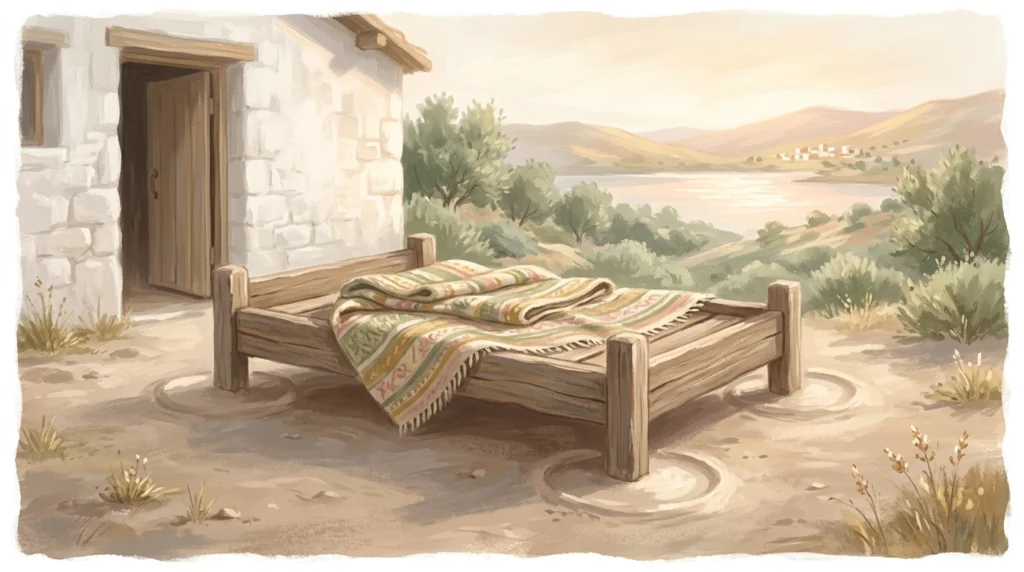
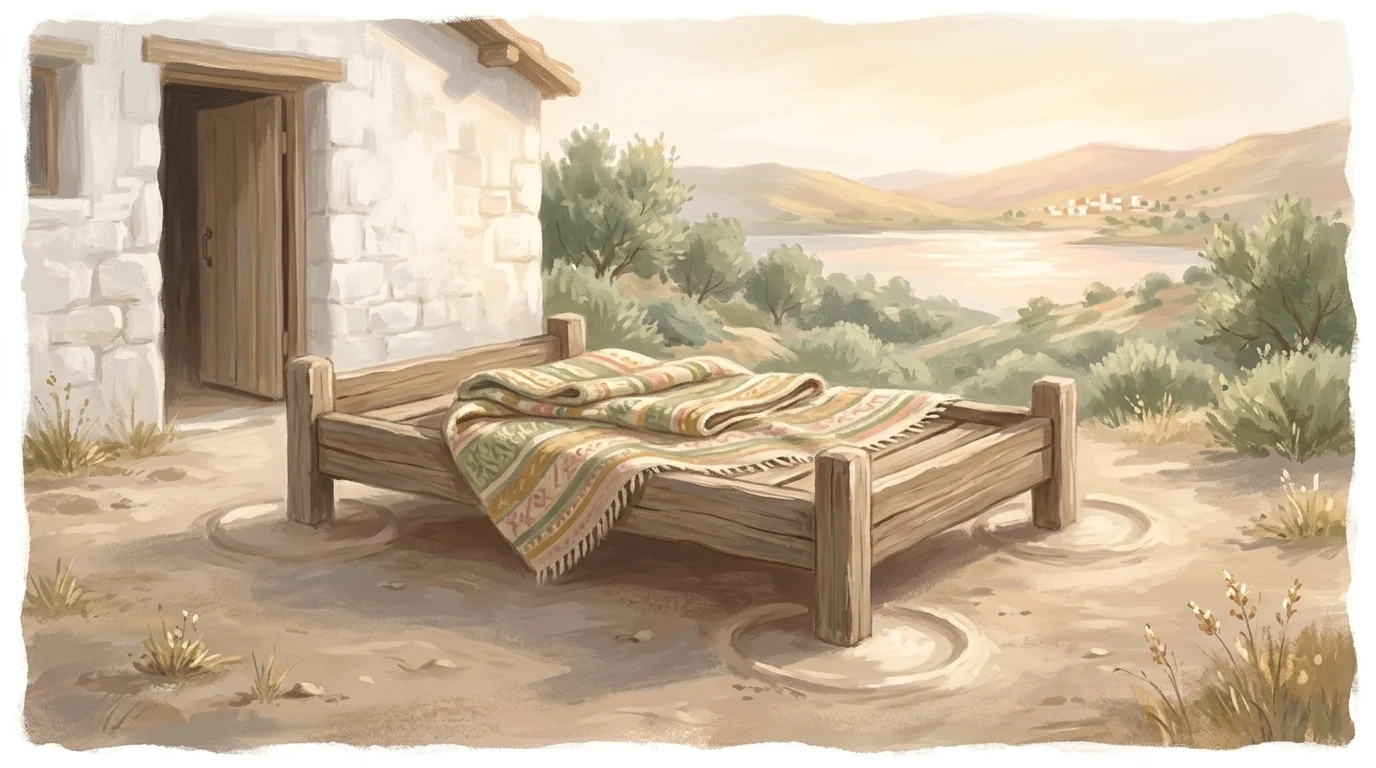
Sunday Mass · 27 September 2026 · XVIII Sunday after Pentecost
Sunday Mass: September 27, 2026 | Seeing Their Faith
Welcome to Bloom’s Sunday Mass for the Eighteenth Sunday after Pentecost. Today the Church hands us a Gospel in which a man is carried to Jesus on a bed, and Jesus, seeing their faith, speaks to him. Not his faith. Theirs. Those two words…
The order of this offering
Before the readings
Communion and close
Offering and Canon
I
Opening Address
Welcome to Bloom’s Sunday Mass for the Eighteenth Sunday after Pentecost. Today the Church hands us a Gospel in which a man is carried to Jesus on a bed, and Jesus, seeing their faith, speaks to him. Not his faith. Theirs. Those two words are going to carry this whole morning.
This is offered in the Independent Catholic tradition, from the 1962 Roman Rite, and Bloom is not affiliated with or recognized by the Roman Catholic Church. We name that plainly, the way Old Catholic and Anglo-Catholic communities have named it for more than a century, because you deserve to know exactly whose table you are sitting at.
Wherever you are, you are welcome here. If you came this morning in a chair, on a bed, through a screen, or so tired that someone else had to open the stream for you, you are exactly the person this Gospel was written around. You did not have to bring anything with you. Someone brought you, and that counts.
The vestments are green. This is the eighteenth Sunday of the long stretch after Pentecost, second class. Sts. Cosmas and Damian fall today as a third-class feast and are displaced entirely, so there is no commemoration and the propers are the Sunday’s own from beginning to end.
Last Sunday was about what holds a people together. This Sunday shows us that people at work. The Lesson is the opening thanksgiving of Paul’s first letter to the Corinthians, and the Gospel is the ninth chapter of Matthew, where seeing their faith is the first thing Jesus does when he comes home.
II
The Penitential Rite
(The Confiteor and Kyrie are said here, from the Missal.)
We begin by saying out loud, together, that we have got things wrong. No one says it on behalf of their own worthiness, and no one is left out for saying it haltingly. The whole room confesses, and the whole room is answered, which is already a picture of today’s Gospel. Some of us can barely get the words out this morning, and that is fine. The room carries them.
III
The Gloria
(The Gloria is said here, from the Missal.)
Then praise, before a single reading. The Gospel will end with a crowd glorifying God, and the Mass lets us start where they finished, in the plural, before we have seen anything at all.
IV
Introit
Ecclus. 36:18; Ps. 121:1.
I rejoiced at the things that were said to me: We shall go into the house of the Lord.
(The antiphon follows the Missal’s older Latin text, which asks for peace where the Douay at this verse reads “Reward them that patiently wait for thee.” The Douay also has “thy servants” in the plural, where the antiphon adds “and of thy people Israel.” The psalm verse under it is the first verse of Psalm 121.)
(Glory be to the Father, and to the Son, and to the Holy Ghost. As it was in the beginning, is now, and ever shall be, world without end. Amen. The antiphon is repeated.)
The chant opens on the people who wait. Not the people who arrive first, or strongest, but the ones who have been waiting patiently for a long time. Many of us know that posture from the inside. The Church puts it at the very front door of this Mass, and puts peace in its hand.
V
Collect
Let us pray.
May the working of Thy mercy, we beseech Thee, O Lord, direct our hearts: for without Thee we are not able to please Thee. Through our Lord Jesus Christ, Thy Son, Who liveth and reigneth with Thee in the unity of the Holy Ghost, God, world without end. Amen.
The prayer says the quiet part out loud. Without God, we cannot please God. No one in the room is standing on their own ability, and that is not an insult; it is a relief. It is also exactly the ground the Gospel stands on, where the man on the bed brings nothing but the people who carried him.
VI
Epistle
Brethren: I give thanks to my God always for you, for the grace of God that is given you in Christ Jesus,
That in all things you are made rich in him, in all utterance, and in all knowledge;
As the testimony of Christ was confirmed in you,
So that nothing is wanting to you in any grace, waiting for the manifestation of our Lord Jesus Christ.
Who also will confirm you unto the end without crime, in the day of the coming of our Lord Jesus Christ.
Five verses, and every one of them is thanksgiving. Paul is writing to one of the most troubled congregations he ever had, and before he says a single hard word to them he tells them that nothing is wanting to them. The Corinthians were quarrelling, split into factions, and proud of the wrong things. Paul still opens with thanks. Hold that phrase. The homily will come back to it.
VII
Gradual and Alleluia
Ps. 121:1, 7; Ps. 101:16.
I rejoiced at the things that were said to me: We shall go into the house of the Lord.
℣. Let peace be in thy strength: and abundance in thy towers.
Alleluia, alleluia. ℣. And the Gentiles shall fear thy name, O Lord, and all the kings of the earth thy glory. Alleluia.
(The Gradual repeats the first verse of Psalm 121, already sung under the Introit, and joins it to the seventh. The Alleluia verse is the sixteenth verse of Psalm 101.)
The same Psalm 101 verse was sung two Sundays ago, on September 13, as part of that day’s Gradual. Today it comes back as the Alleluia. And the first verse of Psalm 121 is sung twice in one Mass: going into the house of the Lord is the gladness the Church wants in our mouths before the Gospel shows us a man being carried into a house.
VIII
Gospel
And entering into a boat, he passed over the water and came into his own city.
And behold they brought to him one sick of the palsy lying in a bed. And Jesus, seeing their faith, said to the man sick of the palsy: Be of good heart, son, thy sins are forgiven thee.
And behold some of the scribes said within themselves: He blasphemeth.
And Jesus seeing their thoughts, said: Why do you think evil in your hearts?
Whether is easier, to say, Thy sins are forgiven thee: or to say, Arise, and walk?
But that you may know that the Son of man hath power on earth to forgive sins, (then said he to the man sick of palsy,) Arise, take up thy bed, and go into thy house.
And he arose, and went into his house.
And the multitude seeing it, feared, and glorified God that gave such power to men.
IX
The Creed
(The Nicene Creed is said here, from the Missal.)
We say it together, and some of us say it for others who cannot say it today. That is not a loophole in the Creed. It is how the Creed has always worked, in the first person plural, one room holding up the words for whoever needs them held. If you cannot get through it today, let the rest of us say it over you. Seeing their faith, God has never once asked who in the room said every line.

The Offering
Sunday Homily | Seeing Their Faith
Read the Gospel again and count the man’s lines. There are none. Matthew gives him no speech, no request, no confession, no act of faith.
A man who never says a word
Read the Gospel again and count the man’s lines. There are none. Matthew gives him no speech, no request, no confession, no act of faith.
He is brought. He is lying in a bed. Everything that happens to him in the first half of this story happens because other people picked him up. Seeing their faith is where his story starts, and he has not yet done a thing.
And then the four words. Jesus, seeing their faith.
Matthew could have written his faith. He did not. The Latin of the Missal reads fidem illorum: their faith, in the plural. The faith Jesus looks at first belongs to the people holding the corners of the bed.
Seeing their faith is not a small detail tucked into a miracle story. It is the hinge of the whole passage. The first thing Jesus sees when he gets home is not a diagnosis. It is a group of people who would not leave their friend where he was.
Look at what Matthew leaves out, too. We are not told the carriers’ names. We are not told how far they came, or whether they argued about it, or how heavy he was. Matthew gives us exactly one fact about them, and it is the only one that matters. They had faith, and it could be seen.
That is worth sitting with. Faith, in this story, is not a feeling in the privacy of one person’s chest. It is something you can see from across a street. It looks like four people and a bed. Seeing their faith, Jesus acts.
Seeing their faith, not his
Now the part this congregation has to say out loud, because the text requires it.
Disabled people have been told two things by Christians for as long as there have been Christians. The first is that our bodies are the way they are because of sin, ours or someone’s. The second is that if we only had enough faith, we would be healed, and so the fact that we are still disabled is our own spiritual failure.
We named disabled people yesterday, on being told that our inclusion is a scheduling problem. Today’s claim is a different one. It is not about when we are let in, but about what we are told our bodies mean once we are inside.
Both teachings have done real harm. People have been prayed over without being asked. People have been told at the church door that they were not healed because they did not believe. People have left churches, and some have left faith altogether, because they were made to carry a guilt that the Gospel never put on them.
So look closely at what this Gospel actually does, because it answers both.
This community does not read seeing their faith as a loophole or a softening. It is the plain sense of the words on the page, and it has been sitting in this Sunday’s Mass a very long time, waiting to be preached to the people it was always about.
First: seeing their faith. The faith that moves Jesus in this passage is not the disabled man’s. If there was ever a text that could have said he was healed because he believed hard enough, this was it, and Matthew does not say it. The faith is in the carriers. Whatever the man on the bed believed or did not believe that morning, Matthew does not examine it, and neither does Jesus.
Second: Jesus says thy sins are forgiven thee before he says anything about the man’s body. Some readers have heard that as proof that the palsy was a punishment. Matthew does not say that. The text never links this man’s condition to any sin at all. What it links is Jesus’s authority to forgive with his authority to heal, and the argument that follows is about Jesus, not about the man.
Seeing their faith, not his, means the burden is lifted off the person on the bed and placed where Matthew placed it: on the community. The question this Gospel asks is not whether the disabled person believed enough. It is whether anyone was willing to carry them.
We asked a version of this on Ember Wednesday, when a father could only cry out, with tears, I do believe, Lord: help my unbelief. His faith was half made of doubt, and it was enough. Today goes further still. Today’s man is not asked for any faith at all.
What the scribes said within themselves
Then the scribes. They do not say anything aloud either. Matthew tells us that some of the scribes said within themselves: He blasphemeth. The Pharisee at Friday’s dinner did exactly the same thing. He spoke within himself, deciding what manner of woman was touching Jesus, and Jesus answered the thought he never voiced.
Here too Jesus sees their thoughts. There are two kinds of seeing in this story, and they sit side by side on purpose. Seeing their faith, in the carriers. Seeing their thoughts, in the scribes. Jesus sees both, and he answers both.
There is a lesson in that pairing for every church. It is possible to stand in the same room as a miracle and be busy with your objections. The scribes were not wrong to care about blasphemy. They were wrong to be so occupied with policing words that they missed seeing their faith, four people and a bed, right in front of them.
Look at the question he asks them. Whether is easier, to say, Thy sins are forgiven thee: or to say, Arise, and walk? Then he heals the man, and he says why: that you may know that the Son of man hath power on earth to forgive sins.
Be careful with what that means. The healing in this story is real, and this Mass does not explain it away. But look at who it is for.
It is given so that the scribes may know. The man’s worth was not waiting on it. He had already been spoken to, already called by a word of tenderness, already forgiven, while he was still lying flat on his bed.
That matters to every disabled person listening. The Gospel does not make your dignity pending on a cure. Seeing their faith, Jesus had already spoken to the man as a whole person before one muscle moved.
And the ending belongs to the crowd. The multitude seeing it, feared, and glorified God that gave such power to men. Men, in the plural. The story began with people carrying someone to Jesus, and it ends with people praising God for what has been put into human hands.
Four voices at nine o’clock
Let me bring this down to the size it usually lives at.
There is a story sometimes told of a woman who spent a month in hospital after a long illness took a sudden bad turn. She had prayed Compline every night for years, the short office said before sleep. In hospital she found she could not do it. The words would not stay still. Her hands could not hold the book.
So four of her friends set up a call. Every night at nine o’clock, one phone on speaker on the bedside table, four voices on the other end, and they prayed Compline for her, out loud, the whole thing. She did not have to say a word. Some nights she fell asleep before the end. They finished it anyway.
Her friends did not think of it as anything remarkable. One of them said later that it was the easiest thing she had ever done for anyone: set an alarm, make a call, read from a book she already owned. Seeing their faith from the outside, you would never have guessed it was the one thread holding her to God that month.
She said afterwards that she had no faith at all that month. Not a crisis of faith, she said, just none, the way you have no appetite when you are very ill. And she said that she never once felt that it mattered, because every night at nine o’clock four people turned up and had it for her.
That is seeing their faith in a hospital ward in the twenty-first century. No one healed her by praying. She got better slowly, the ordinary way, with drugs and physiotherapy and time. But she was carried, and she knew it, and she will tell you that the carrying was the thing that kept her in the Church.
If none of the theology is yours, the point survives without it. Some of the most important things any of us ever do are done lying down, by other people, on our behalf. There is no shame in being carried. There is no small honour in carrying.
And if you are the one who has been lying on the bed, hear this clearly. The Gospel does not ask you to produce faith on demand. Seeing their faith, Jesus spoke to the man who had none to show. You are allowed to be the one who is carried. That is a place in the story, not a failure of it.
Nothing is wanting to you
Now go back to the Epistle, because Paul has something to say to exactly this congregation.
He writes to the Corinthians that nothing is wanting to them in any grace. Not that they have earned everything, or achieved everything, or fixed everything. They were a famously difficult church. But while they wait for the manifestation of our Lord Jesus Christ, Paul says, nothing is wanting to them. The one who began it will confirm them unto the end.
Disabled people are told constantly that something is wanting in us. A body that is less, a faith that is less, a life that must be less. Paul’s ledger says otherwise. Nothing is wanting to you in any grace.
That is why Bloom is led the way it is. A church led by disabled and trans people knows what it is to be on the bed, and knows what it is to hold a corner. Seeing their faith is not a nice idea to us. It is how most of us got through the door.
So here is what this Gospel asks of all of us, carried and carrying alike. Look around this week for the person who cannot get themselves to where help is.
Pick up a corner. Turn up at nine o’clock. Say the prayer out loud for someone who cannot. That is seeing their faith turned into a job description.
And a word about limits, because it matters. None of this means you must go on carrying until you break. The four people in Matthew set the bed down. Carriers rest too, and the Church is big enough that no one holds a corner alone forever. Take your turn, then hand it on.
Imagine a church where seeing their faith was the first thing we did for one another. Where the question at the door was never whether you believed enough, but whether you needed carrying and who was free. Where the ramp, the livestream, the captions and the quiet room were not favours but corners of the bed. That church is not a fantasy. It is this Gospel, done.
And when your own turn comes to lie on the bed again, as it comes for all of us, remember that seeing their faith was enough for Jesus then. It is enough now.
↑ The order resumes below.
XI
Offertory
Moses consecrated an altar to the Lord, offering upon it holocausts, and sacrificing victims: he made an evening sacrifice to the Lord God for an odour of sweetness, in the sight of the children of Israel.
(The antiphon follows the Missal’s own wording, which gathers the sense of the two verses rather than quoting them. The Douay reads that Moses “built an altar at the foot of the mount,” and that he “sent young men of the children of Israel, and they offered holocausts, and sacrificed pacific victims of calves to the Lord.”)
The gifts go up under a picture of an offering made in the sight of a whole people. Even in the Douay’s version, Moses does not carry the sacrifice alone: he sends young men to do it. It is a carrying chant for a carrying Sunday.
XII
Secret
O God, Who, through the gifts we have exchanged with Thee in this sacrament, hast made us partakers of the supreme Godhead, grant, we beseech Thee, that, as we have knowledge of Thy truth, so we may fully live up to it. Through our Lord Jesus Christ, Thy Son, Who liveth and reigneth with Thee in the unity of the Holy Ghost, God, world without end. Amen.
An exchange: we bring bread and wine, and God gives us a share in the divine life. It is the most lopsided trade ever made, and it is the whole logic of this Mass. What we bring is small. What we are given back is everything. The man on the bed brought nothing but his friends, and went home forgiven and on his feet. The Secret asks for the same generosity, and then asks that we live up to what we have been shown.
XIII
The Canon and Consecration
(The Preface of the Most Holy Trinity is sung here, followed by the Sanctus, the Canon of the Mass and the words of Consecration, all from the Missal.)
This is the oldest part of the rite and the part that explains itself least. What the Church claims happens here does not depend on the strength of anyone’s feelings this morning. It is carried by the whole Church, and it is offered for everyone in the room, including the ones who could not manage a single word.
XIV
Act of Spiritual Communion
(Said by all who are not receiving sacramentally.)
My Jesus, I believe that Thou art present in the Most Holy Sacrament. I love Thee above all things and I desire to receive Thee into my soul. Since I cannot now receive Thee sacramentally, come at least spiritually into my heart. I embrace Thee as if Thou wert already there, and I unite myself wholly to Thee. Never permit me to be separated from Thee.
If you are at home, or in a hospital bed, or somewhere a church building has never once been built for your body, this prayer is not a lesser version of anything. It is the door the Church left open on purpose. Seeing their faith, Jesus came to a man who could not come to him.
XV
Communion
Bring up sacrifices, and come into his courts: adore ye the Lord in his holy court.
(The antiphon takes the second half of the eighth verse and the first half of the ninth, leaving “Bring to the Lord glory unto his name” and “Let all the earth be moved at his presence” unsung.)
Come into his courts. The Gospel ended with a man walking into his own house. The communion chant ends with all of us invited into God’s. Walk, roll or be carried in: the invitation is the same, and no one is checked for faith at the gate.
XVI
Postcommunion
Strengthened by Thy sacred gift, we thank Thee, O Lord, beseeching Thy mercy to make us receive it worthily. Through our Lord Jesus Christ, Thy Son, Who liveth and reigneth with Thee in the unity of the Holy Ghost, God, world without end. Amen.
The last prayer asks God to make us worthy, which means it does not assume we already are. That is not a threat. It is the Collect again, saying the same honest thing at the end that it said at the start: without God we cannot please God, and God does not ask us to try alone.
XVII
The Closing Blessing
Go out this week and look for the bed no one has picked up. Take a corner, even for an hour, even for one phone call at nine o’clock. And if you are the one lying on it, let yourself be carried without apology. Seeing their faith, Jesus spoke to you too.
Whether or not any of the theology is yours, take the plain version: the faith that gets people through is very often not their own, but borrowed, from friends who turned up. Be one of those friends to someone this week, and when it is your turn, let someone be one to you.
May Almighty God bless you, the Father, and the Son, and the Holy Ghost. Amen.
XVIII
Frequently Asked Questions
It is the eighteenth Sunday of the long green season that runs from Pentecost to Advent, a second-class Sunday in the 1962 calendar. Its Mass is entirely its own: an Introit from Ecclesiasticus 36, a proper Collect, 1 Corinthians 1:4-8, a Gradual from Psalm 121 with an Alleluia verse from Psalm 101, and Matthew 9:1-8. The Preface is that of the Most Holy Trinity.
It means the faith Jesus responded to belonged to the people who carried the man, not to the man himself. The Latin reads fidem illorum, their faith, in the plural. Matthew records no words and no act of faith from the man on the bed at all. The passage places the weight on the community that brought him.
Matthew never says so. Jesus forgives the man’s sins before healing him, but the text makes no link between his condition and any particular sin. The argument that follows is about whether Jesus has authority to forgive, and the healing is given so that the scribes may know it. Reading the palsy as a punishment adds something the Gospel does not contain.
This Gospel is one of the strongest answers the Church has against that teaching. The faith Jesus saw was not the disabled man’s, and no demand is made of him before he is spoken to kindly and forgiven. Disability is not evidence of weak faith. Healing, when it comes in any form, is a gift, and your dignity does not wait on it.
Because in the 1962 rubrics a third-class feast falling on a second-class Sunday is displaced entirely rather than kept as a commemoration. Nothing of their Mass is said today, so this Mass prints nothing of it. It is a rubrical outcome, not a judgment on the saints.
Because the Missal’s chants often preserve an older Latin text than the one the Douay translates. At Ecclesiasticus 36:18 the Douay reads “Reward them that patiently wait for thee,” while the antiphon asks God to give peace to them. The Offertory likewise gathers Exodus 24:4-5 in its own words. Both are printed as the Missal gives them, with the difference stated.
Because the two are different things and Bloom says so plainly. Monday through Saturday you get a Daily Offering, which is a morning reflection on the propers of the day and is not a Mass. Sunday is offered as a Mass in the Independent Catholic tradition, with the fixed ordinary indicated by rubric and the propers, homily and blessing written out in full.
Because it is true and you are entitled to know it before you sit down. Bloom Ministries offers this liturgy in the Independent Catholic tradition, using the 1962 Roman Rite, and it is neither part of nor recognized by the Roman Catholic Church. Old Catholic and Anglo-Catholic communities have named themselves this way for more than a century, and the naming is honest rather than defensive.
It is a prayer said by anyone who cannot receive the sacrament in person, asking Christ to come spiritually instead. The Church has carried it for centuries precisely for people who are sick, homebound, travelling or otherwise kept away. It is not a lesser substitute or a consolation prize. It is a door the Church deliberately left open.
No. The logic stands with the theology removed. People get through their worst seasons on strength borrowed from others, and a community is measured by whether it will carry the person who cannot carry themselves. In one plain sentence: pick up a corner for someone this week, and let someone pick up yours.
Faith in Bloom is the daily liturgical work of Bloom Ministries, a 501(c)(3) nonprofit, and it is free to read and always will be. If it has been worth something to you and you are able, you can give once or give monthly below. Sending a post to one person who needs it does real work too.
Propers for the Eighteenth Sunday after Pentecost are taken from the 1962 Roman Missal. Scripture is quoted from the Douay-Rheims Bible. The liturgical spine of Faith in Bloom is The New Marian Missal for Daily Mass by Sylvester P. Juergens, S.M., S.T.D., Regina Press, Imprimatur 1961.
Faith in Bloom is offered by Bloom Ministries in the Independent Catholic tradition and is not affiliated with or recognized by the Roman Catholic Church.
