
Daily Offering · 29 September 2026 · Dedication of St. Michael the Archangel
Daily Offering: September 29, 2026 | Their Angels in Heaven
Welcome to Bloom’s Daily Offering for Tuesday, September 29, 2026. Today is the Dedication of St. Michael the Archangel, a feast of the first class, and the vestments are white. The Gospel opens with the disciples asking Christ to settle a ranking question, and…
The order of this offering
Before the readings
The Word
Offering and Canon
I
Opening Address
Welcome to Bloom’s Daily Offering for Tuesday, September 29, 2026. Today is the Dedication of St. Michael the Archangel, a feast of the first class, and the vestments are white. The Gospel opens with the disciples asking Christ to settle a ranking question, and it closes at the tenth verse somewhere they were not asking about at all: their angels in heaven, standing before the face of God on behalf of the people those disciples were measuring themselves against.
Wherever you are this morning, you are welcome here. If you have spent years being counted among the small ones in a room, today’s Mass is not going to ask you to climb. It is going to tell you that their angels in heaven already stand for you. The whole argument rests on their angels in heaven, and none of it on anything you can show.
II
A Word on Today’s Propers
Two texts in today’s Mass have been here before, and both are worth naming plainly before we pray them.
The Introit is Psalm 102, verses 20 and 1, and this ministry printed it once already, on the feast of St. Raphael the Archangel in October 2025. That was the only other angel’s feast here. The same antiphon returns in the same slot, printed in full again because a first-class feast prays its own Introit rather than pointing at a link.
The Gospel is the larger overlap. Matthew 18:1-5 was printed and preached here on the feast of St. Joseph Calasanctius a month ago, where the whole homily was built on becoming as little children. Today the Missal gives the same opening and then keeps going, to verse ten. Verses six through ten have never appeared in this archive, and they are where today’s argument lives, because they end on their angels in heaven.
So the Gospel is printed whole rather than trimmed, because a pericope is not a set of parts you can post separately, and because the last verse, on their angels in heaven, is the one the feast is for. We will spend very little time on the opening five verses, which have already had a morning of their own. The Gospel itself does not stop where we stopped, and their angels in heaven are waiting at the end of it.
One more note on the Lesson, and it is a textual one. The Missal does not begin the reading where the book begins. Apocalypse opens with the words The Revelation of Jesus Christ, which God gave unto him, and the Missal contracts that, starting instead with God signifying and sending. What survives the contraction is the sending, which is the part the feast wants.
III
Introit
Ps 102:20; Ps 102:1
Bless the Lord, all ye his angels: you that are mighty in strength, and execute his word, hearkening to the voice of his orders. ℣. Bless the Lord, O my soul: and let all that is within me bless his holy name. Glory be to the Father, and to the Son, and to the Holy Ghost. As it was in the beginning, is now, and ever shall be, world without end. Amen. Bless the Lord, all ye his angels: you that are mighty in strength, and execute his word, hearkening to the voice of his orders.
(The Gloria is said here, from the Missal, this being a feast of the first class.)
IV
Collect
O God, Who hast ordained and constituted the services of angels and men in a wonderful order, mercifully grant that as Thy holy angels alway do Thee service in heaven, so, by Thy appointment, they may succour and defend us on earth. Through our Lord Jesus Christ, Thy Son, Who liveth and reigneth with Thee in the unity of the Holy Ghost, God, world without end. Amen.
V
Epistle
Lesson from the book of the Apocalypse of blessed John the Apostle.
In those days: God signified the things which must shortly come to pass, sending by his angel to his servant John, who hath given testimony to the word of God, and the testimony of Jesus Christ, what things soever he hath seen.
Blessed is he, that readeth and heareth the words of this prophecy; and keepeth those things which are written in it; for the time is at hand.
John to the seven churches which are in Asia. Grace be unto you and peace from him that is, and that was, and that is to come, and from the seven spirits which are before his throne,
And from Jesus Christ, who is the faithful witness, the first begotten of the dead, and the prince of the kings of the earth, who hath loved us, and washed us from our sins in his own blood.
VI
Gradual
Ps 102:20; Ps 102:1
Bless the Lord, all ye his angels: you that are mighty in strength, and execute his word. ℣. Bless the Lord, O my soul: and let all that is within me bless his holy name. Alleluia, alleluia. ℣. St. Michael the Archangel, defend us in battle, that we may not perish in the dreadful judgment. Alleluia.
VII
Gospel
Continuation of the holy Gospel according to St. Matthew.
At that hour the disciples came to Jesus, saying: Who thinkest thou is the greater in the kingdom of heaven? And Jesus calling unto him a little child, set him in the midst of them,
And said: Amen I say to you, unless you be converted, and become as little children, you shall not enter into the kingdom of heaven. Whosoever therefore shall humble himself as this little child, he is the greater in the kingdom of heaven. And he that shall receive one such little child in my name, receiveth me.
But he that shall scandalize one of these little ones that believe in me, it were better for him that a millstone should be hanged about his neck, and that he should be drowned in the depth of the sea. Woe to the world because of scandals. For it must needs be that scandals come: but nevertheless woe to that man by whom the scandal cometh.
And if thy hand, or thy foot scandalize thee, cut it off, and cast it from thee. It is better for thee to go into life maimed or lame, than having two hands or two feet, to be cast into everlasting fire. And if thy eye scandalize thee, pluck it out, and cast it from thee. It is better for thee having one eye to enter into life, than having two eyes to be cast into hell fire.
See that you despise not one of these little ones: for I say to you, that their angels in heaven always see the face of my Father who is in heaven.
(The Creed is said here, from the Missal.)
The Offering
Daily Homily | Their Angels in Heaven
The disciples ask a clean administrative question and they expect a name. Who is the greater in the kingdom of heaven. It is the kind of question a committee asks when it has already…
Who is the greater in the kingdom
The disciples ask a clean administrative question and they expect a name. Who is the greater in the kingdom of heaven. It is the kind of question a committee asks when it has already decided the answer will be flattering.
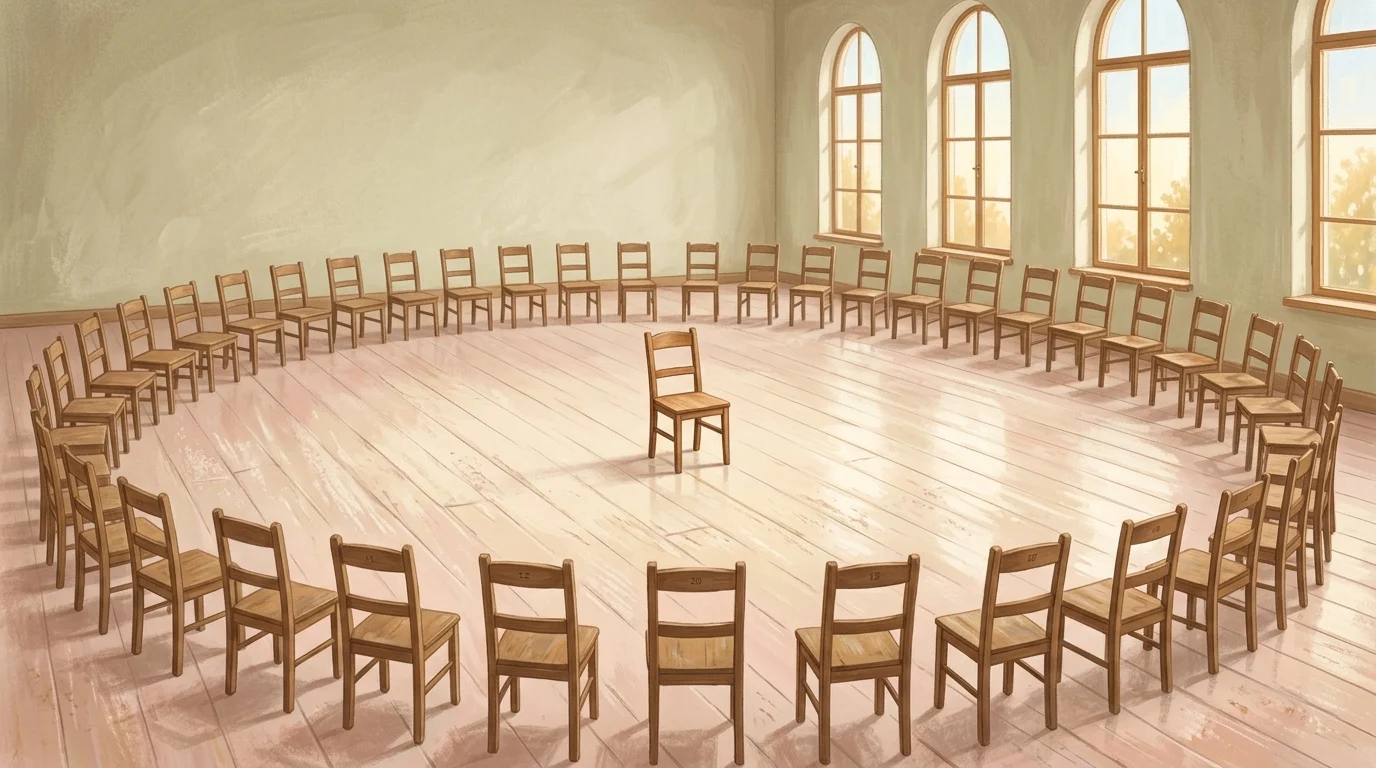
Christ does not give them a name. He fetches a child from wherever the child was standing and puts that child in the middle of the circle, and then he says something about conversion, and then he keeps talking for another six verses no one asked for. By the end he is not discussing greatness at all. He is discussing their angels in heaven.
That drift is the whole sermon. A question about rank gets answered, and then the answer keeps walking, and where it stops is a statement about their angels in heaven and the smallest person present. We read the first half of this a month ago, and that morning ended at verse five, on the word receiveth. Today’s Mass does not end there. The Church has put the rest of it, their angels in heaven and all, in front of us on the highest-ranking day of the week.
Notice what has happened to the little child between verse two and verse ten. In verse two the child is an illustration. By verse six the child is a person who can be harmed, and by verse ten the child is a person with representation. Their angels in heaven are introduced at the exact point where the child stops being a teaching aid and starts being somebody with standing.
They wanted a league table. They were handed a legal fact about the people at the bottom of it, and their angels in heaven are the reason the table was the wrong instrument.
Where the weight of the sentence lands
Now read verse six and see where the weight lands.
But he that shall scandalize one of these little ones that believe in me, it were better for him that a millstone should be hanged about his neck, and that he should be drowned in the depth of the sea. The whole sentence is about the person doing the harm. The little one is the object of the clause and never the subject of the judgment. Nothing is asked of them, and their angels in heaven are not waiting on a response.
I want that stated flatly, because religious communities have a long habit of reversing it. The verse does not say be careful whom you trust. It does not say forgive quickly. It does not say anything at all to the one who was harmed. It says woe to that man by whom the scandal cometh, and it says it in the harshest terms in the passage, on behalf of people whose only named advocates are their angels in heaven.
So I am going to name who this verse is for, because the text has already named them and it would be cowardice to soften it. It is for people who were harmed as children by someone who held religious authority. That is the exact situation the sentence legislates: a little one who believes, and an adult inside the structure of belief who causes them to fall. Their angels in heaven are the last word of the same paragraph.
Apply the fruit test here, and apply it to Christianity’s own record rather than anyone else’s. The teaching that an institution’s reputation is a good worth protecting has one predictable outcome wherever it runs, and the outcome is always in the same direction: the person with the least standing in the room is the one asked to be quiet. Set that beside verse six, and beside their angels in heaven, and the contradiction is not subtle.
And be exact about the difference from yesterday’s Gospel, which used the same phrase, these little ones, and made a different claim. Yesterday the question was what is owed to a small person in the way of welcome, down to a cup of cold water. Today it is what is owed in the way of protection, and who answers when it is not given. Their angels in heaven are the guarantee behind both.
Their angels in heaven
Verse ten is the reason the Church reads this Gospel on the feast of an archangel, and it is built like a legal citation.
See that you despise not one of these little ones: for I say to you, that their angels in heaven always see the face of my Father who is in heaven. There is an order and then a reason. The order is do not despise. The reason is the standing of their angels in heaven.
Read the reason again, because it is not the one you would expect. Christ does not say do not despise them because they are innocent, or because they will grow up, or because they are useful, or because you were small once yourself. He says do not despise them because their angels in heaven have permanent access to the face of God.
That is an argument from representation, and their angels in heaven are the whole of it. The dignity in this verse is not a property of the little one at all. It is a fact about who stands for them, and it does not vary with their behaviour, their capacity, their usefulness or their faith on any particular Tuesday. Their angels in heaven do not have to be earned into the room.
One misreading has to be closed firmly, because the verse invites it. Christ is not saying that someone is keeping an account of your conduct from a high window, and he is not making your worth depend on it. He says their angels see the face of the Father. The direction of the looking is towards God and not towards you. Their angels in heaven are courtiers with access, and no one has handed them a clipboard.
The second misreading runs the other way. If a protector stands for me whatever I do, does anything I do matter. Yes, and the Gospel makes the case in the same breath: verses six to nine are unrelenting about the seriousness of what people do. Their angels in heaven are the reason no person may be written off, not a reason nothing counts.
A word about verses eight and nine, because they are hard and this ministry is not going to walk past them. Cut it off. Pluck it out. Bloom does not read those verses as an instruction to injure your body, and no one here should hear them that way.
The comparison they are making is between two ways of entering life, not between two kinds of body, and maimed or lame is not a verdict on anyone’s limbs. The text values entry over intactness. It is not ranking people by what their bodies can do.
Michael’s name is a question
Now the feast itself, and the first thing to say is that the church this day is named for is gone.
The Catholic Encyclopedia sets out what the old sacramentaries actually record: the Gregorian book gives 29 September as the dedication of the basilica of St. Michael, and a manuscript adds via Salaria—a basilica six miles north of Rome that, in the encyclopedia’s own words, disappeared a thousand years ago. Not the famous mountain apparition, which belongs to another day. A plain Roman church on a road, dedicated, used, and lost.
The feast outlived its building by ten centuries, and their angels in heaven kept their post through all of it. Whatever this day secures was never the masonry, and their angels in heaven were never housed in it.
The name is the second thing. The encyclopedia gives the Hebrew as a question—Who is like God?—and notes that the shield in the paintings carries the Latin of it, Quis ut Deus. The chief of their angels in heaven carries an interrogative for a name. It is not a boast about his own rank; it is a challenge thrown at anybody claiming a rank that is not theirs, which is precisely the question the disciples had just been asking each other when this Gospel opens.
And the day is wider than one archangel. The encyclopedia’s article on the feast of the Guardian Angels says the Church honoured on 29 September the memory of all the angels as well as the memory of St. Michael, and that the five proper collects the Leonine Sacramentary assigns to this feast show the day reaching to the angels in general and to their protective and intercessory office. That later feast was hung off the back of this one as a kind of supplement. So today is Michael’s by title and everyone’s by content, and their angels in heaven is the theme of the whole formulary.
You can hear the same thing in the Alleluia verse we sang a moment ago. St. Michael the Archangel, defend us in battle, that we may not perish in the dreadful judgment. The prayer Pope Leo XIII put into the hands of the whole Church at the end of the nineteenth century opens with those same words.
Nothing withdraws the assignment
There is a story sometimes told of a man who arrived at a public library every weekday at nine, when the doors opened, and left at four, when they closed.
He sat at the same long table, in the same chair at the end of it, with a canvas bag on the floor beside him. He had nowhere else to be indoors. The staff knew this and did not say so to him, and they did not move him on, and one of the librarians learned his name in the second week and used it every morning after that. That is the entire account. There is no turning point in it, no programme he entered, no improvement to report.
What the librarian said about it afterwards is the part worth keeping. She said the decision she made was not to help him. It was to stop treating the question of whether he belonged in the room as an open one. Their angels in heaven make that decision and never revisit it. Once that question was closed, nothing else had to be arranged, and the ordinary use of a public building did the rest.
Verse ten does the same thing. It does not arrange help. It closes a question—whether this person counts—by pointing at who stands for them, and their angels in heaven settle the matter before anybody in the room has voted on it.
Here is the quiet part of the doctrine. The angel’s post is not conditional on being noticed. Their angels in heaven see the face of the Father whether or not the little one knows anything about it, whether or not anybody has told them, whether the distance is a mile or a continent, and whether the years since have been two or twenty. Nothing in the verse suggests their angels in heaven are ever withdrawn from the post. It does not lapse because contact stopped, and it does not lapse because the one being stood for has long since forgotten there was anything to stand for.
If none of that language is yours, the plain form holds anyway. Somebody’s standing in a room is decided by whether anyone in that room has made it their business, almost never by the person themselves. The useful thing is not to work out who deserves the chair. It is to be the one who has already stopped asking, and then to keep being that when it is inconvenient.
Which leaves the question the disciples asked lying where Christ left it, unanswered and not worth answering. The smallest person in the room got their angels in heaven, standing at the highest court there is, and everyone else got a warning about what happens to people who make that person stumble.
↑ The order resumes below.
IX
Secret
We offer Thee a sacrifice of praise, O Lord, and humbly beseech Thee that, through the prayers of the Angels who plead for us, Thou wouldst be appeased and wouldst receive it, and grant that it may avail us unto salvation. Through our Lord Jesus Christ, Thy Son, Who liveth and reigneth with Thee in the unity of the Holy Ghost, God, world without end. Amen.
X
The Holding
May God set you today among the little ones he refuses to let anybody despise, where their angels in heaven already keep their post, and may their angels in heaven, who stand on your account and not on your record, go on standing there on the days you cannot feel it. May Almighty God bless you, the Father, and the Son, and the Holy Ghost. Amen.
And if that language is not yours, take the plain form of it. Your place in a room was never yours to prove, and somebody deciding you belong there is worth more than any argument you could have made for yourself. Go and be that for one person before Friday.
XI
Frequently Asked Questions
No, and in this case it is the stronger answer: Michaelmas never had either in the universal calendar, so there was nothing for the 1955 reforms to suppress. Only seven vigils survived into the 1962 Missal, and only three octaves, and 29 September is on neither list. Tomorrow is not the eve of anything either, since 1 October carries no vigil. Today is simply a first-class feast standing on its own.
A church, and one that no longer exists. The old Roman sacramentaries record the day as the dedication of a basilica of St. Michael on the Via Salaria, about six miles north of the city, which the Catholic Encyclopedia says disappeared a thousand years ago. It is not the mountain apparition, which the Roman Breviary keeps on 8 May. The building went and the feast stayed.
Half of it. Matthew 18:1-5 was printed and preached here on 27 August 2026, on the feast of St. Joseph Calasanctius, where the argument was about becoming as little children. Verses six to ten have never appeared in this archive before today, and they are where this morning’s homily sits. The Gospel is printed whole because a first-class feast prays its own readings in full.
It is the reason Christ gives for the order not to despise a little one, and it is an argument from representation rather than from merit. The little one’s standing does not rest on their innocence, their usefulness or their capacity; it rests on the fact that somebody with permanent access to God is assigned to them. Their angels in heaven are described as courtiers with access, not as inspectors keeping score.
No. Bloom does not read verses eight and nine as an instruction to injure yourself, and no one should hear them that way. The comparison is between two ways of entering life and is making a claim about what entry is worth, not issuing a rule about hands, feet or eyes. If those verses land hard for you this morning, the right response is to say so to someone you trust rather than to sit with them alone.
No, and the reading that says it is has done real damage. The verse is not ranking bodies or measuring anyone’s worth by what their limbs can do; it is setting the value of entering life above the value of arriving intact. Disabled readers are not the subject of this sentence and never were. The one sentence in this Gospel that does assign worth assigns it through their angels in heaven, which vary with no one’s capacity.
Yes, and the same Gospel makes the case in the four verses just before it. Verses six through nine are relentless about the seriousness of what people do to each other, and the millstone is aimed at somebody’s actions. Standing is not excuse. Their angels in heaven are the reason no person may be written off, not a reason that conduct stops counting.
No. The logic holds with no theology attached: a person’s place in a room is almost never settled by the person themselves, and it is settled instead by whether anybody else has decided the question is closed. That means the useful work is not sorting out who has earned a seat. It is closing the question for somebody, and then keeping it closed on the days when it costs you something.
Faith in Bloom is the daily liturgical work of Bloom Ministries, a 501(c)(3) nonprofit, and it is free to read and always will be. If it has been worth something to you and you are able, you can give once or give monthly below. Sending a post to one person who needs it does real work too.
Propers for the Dedication of St. Michael the Archangel are taken from the 1962 Roman Missal. Scripture is quoted from the Douay-Rheims Bible. Historical detail on the feast and on the name of Michael is drawn from the Catholic Encyclopedia. The liturgical spine of Faith in Bloom is The New Marian Missal for Daily Mass by Sylvester P. Juergens, S.M., S.T.D., Regina Press, Imprimatur 1961.
Faith in Bloom is offered by Bloom Ministries in the Independent Catholic tradition and is not affiliated with or recognized by the Roman Catholic Church.
