
Daily Offering · 29 August 2026 · Beheading of St. John the Baptist
Daily Offering: August 29, 2026 | They Shall Fight Against Thee, and Shall Not Prevail
Good morning. They shall fight against thee, and shall not prevail. That is what God says to Jeremias at the end of today’s Lesson, and the Church hands us that sentence on the morning it remembers a man whose head was carried out of…
The order of this offering
The Word
Offering and Canon
I
Opening Address
Good morning. They shall fight against thee, and shall not prevail. That is what God says to Jeremias at the end of today’s Lesson, and the Church hands us that sentence on the morning it remembers a man whose head was carried out of a prison on a serving dish. Hold both of those in the same hand for a moment before we go any further. Either the promise failed, or we have been reading it wrong.
I think we have been reading it wrong, and I think the misreading costs people a great deal. Shall not prevail has been sold as a promise of safety for a very long time, and it is not one.
Today the Church keeps the Beheading of St. John the Baptist, third class, red vestments, with a commemoration of St. Sabina, Virgin and Martyr. Red is the colour of blood, and it is worn today without apology or softening.
Sit with us a while in the manner of a low Mass. Word, prayer, and offering, and nothing pretending to be more.
II
Introit
Ps. 118:46-47. And I spoke of thy testimonies before kings: and I was not ashamed. I meditated also on thy commandments, which I loved.
Ps. 91:2. It is good to give praise to the Lord: and to sing to thy name, O most High.
Glory be to the Father, and to the Son, and to the Holy Ghost. As it was in the beginning, is now, and ever shall be, world without end. Amen.
And I spoke of thy testimonies before kings: and I was not ashamed. I meditated also on thy commandments, which I loved.
III
Collect
May the great festival of St. John the Baptist, Thy Precursor and Martyr, we beseech Thee, O Lord, assure for us the results of Thy saving help. Who livest and reignest with God the Father in the unity of the Holy Ghost, God, world without end. Amen.
IV
The Commemoration of St. Sabina, Virgin and Martyr
O God, Who among the other miracles of Thy power hast bestowed the victory of martyrdom even upon the weaker sex: graciously grant that we who commemorate the anniversary of the death of blessed Sabina, Thy Virgin and Martyr, may come to Thee by the path of her example. Through our Lord Jesus Christ, Thy Son, Who liveth and reigneth with Thee in the unity of the Holy Ghost, God, world without end. Amen.
V
Epistle
Lesson from the Book of Jeremias the Prophet. Jeremias 1:17-19
Thou therefore gird up thy loins, and arise, and speak to them all that I command thee. Be not afraid at their presence: for I will make thee not to fear their countenance.
For behold I have made thee this day a fortified city, and a pillar of iron, and a wall of brass, over all the land, to the kings of Juda, to the princes thereof, and to the priests, and to the people of the land.
And they shall fight against thee, and shall not prevail: for I am with thee, saith the Lord, to deliver thee.
VI
Gradual
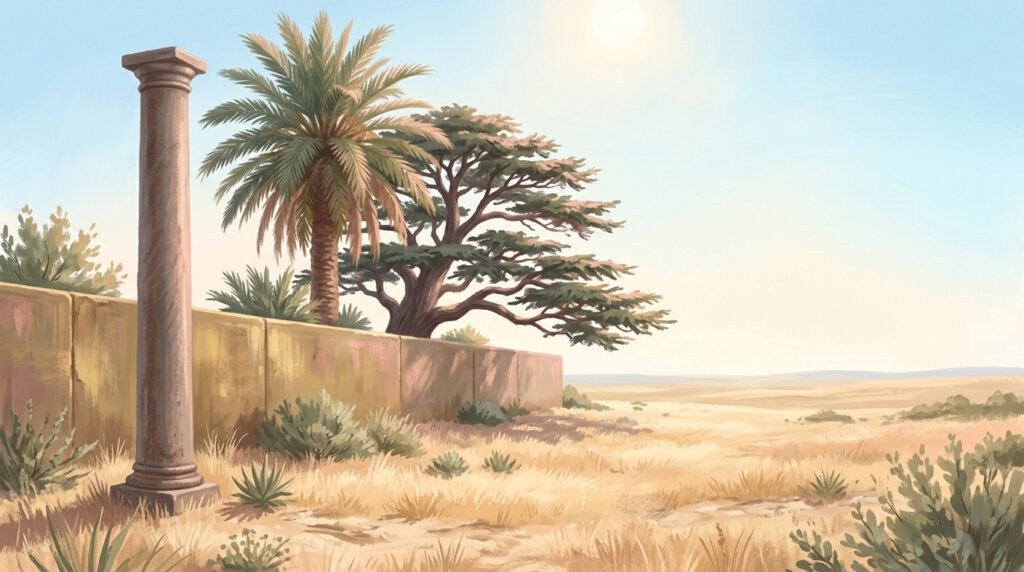
Ps. 91:13-14. The just shall flourish like the palm tree: he shall grow up like the cedar of Libanus in the house of the Lord.
Ps. 91:3. To shew forth thy mercy in the morning, and thy truth in the night.
Alleluia, alleluia. Osee 14:6. The just shall blossom like the lily: and shall flourish for ever before the Lord. Alleluia.
VII
Gospel
Continuation of the holy Gospel according to St. Mark. Mark 6:17-29
At that time, Herod himself had sent and apprehended John, and bound him in prison for the sake of Herodias the wife of Philip his brother, because he had married her. For John said to Herod: It is not lawful for thee to have thy brother’s wife. Now Herodias laid snares for him: and was desirous to put him to death, and could not.
For Herod feared John, knowing him to be a just and holy man: and kept him, and when he heard him, did many things: and he heard him willingly.
And when a convenient day was come, Herod made a supper for his birthday, for the princes, and tribunes, and chief men of Galilee. And when the daughter of the same Herodias had come in, and had danced, and pleased Herod, and them that were at table with him, the king said to the damsel: Ask of me what thou wilt, and I will give it thee. And he swore to her: Whatsoever thou shalt ask I will give thee, though it be the half of my kingdom.
Who when she was gone out, said to her mother, What shall I ask? But she said: The head of John the Baptist. And when she was come in immediately with haste to the king, she asked, saying: I will that forthwith thou give me in a dish, the head of John the Baptist.
And the king was struck sad. Yet because of his oath, and because of them that were with him at table, he would not displease her: but sending an executioner, he commanded that his head should be brought in a dish.
And he beheaded him in the prison, and brought his head in a dish: and gave it to the damsel, and the damsel gave it to her mother. Which his disciples hearing came, and took his body, and laid it in a tomb.
The Offering
Daily Homily | They Shall Fight Against Thee, and Shall Not Prevail
Start with the promise, because everything else today is measured against it. They shall fight against thee, and shall not prevail. God does not tell Jeremias that nobody will come for him. God tells…
Start with the promise, because everything else today is measured against it. They shall fight against thee, and shall not prevail. God does not tell Jeremias that nobody will come for him. God tells him that when they come, they shall not prevail, which is a different sentence entirely and does a different job.
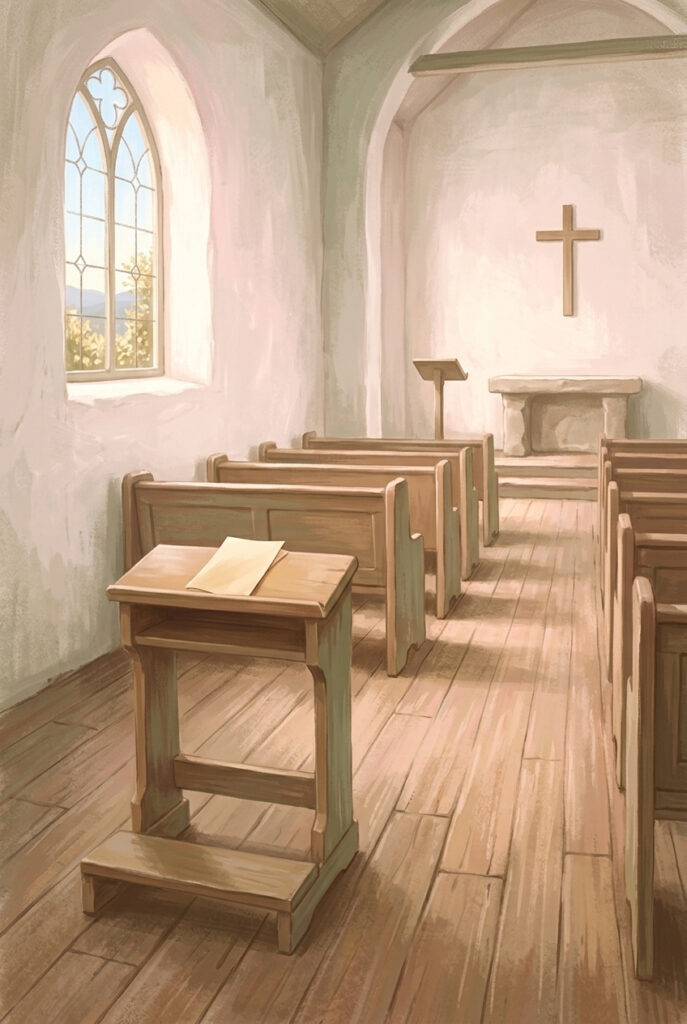
Look at what God actually offers in the verse before it. A fortified city. A pillar of iron. A wall of brass. Every one of those is a thing that gets hit, which is already a large hint about what shall not prevail is going to mean.
Nobody builds a wall of brass in a place where nothing is thrown. The images are defensive, and defensive images assume the attack. So when the Lord finishes by saying they shall not prevail, He has already conceded the siege and is telling Jeremias only what the siege will and will not accomplish.
And then the Church takes that sentence and reads it over the body of a man beheaded in a cell on somebody’s birthday. That is either a blunder or a claim, and the Church has been making it every August for a very long time, so let us assume it is a claim.
If you want to know whether a promise is any good, this is the test to put it to. Not the day it is made. The day it looks broken. John the Baptist died badly, alone, and by an order given at a party, and over his body the Church still says that his enemies shall not prevail.
So let us be exact about what happened at that party, because Mark is unusually detailed and most of the detail concerns Herod’s inner life. That matters for how we hear shall not prevail, because the Gospel is about to show us precisely what the fighting looked like.
Herod feared John. Herod knew him to be a just and holy man. Herod kept him, which in that sentence means protected him. And when he heard him, he did many things, and he heard him willingly.
That is four concessions in one verse, and Mark did not have to give us any of them. A simpler story would have Herod hating the prophet. This story has Herod liking him, listening to him, and doing things because of him. The man who had John killed was the man who most enjoyed his company, and that is the first thing shall not prevail has to survive.
Then: and the king was struck sad.
The Gospel records Herod’s grief. It puts his sorrow in writing, in the same sentence as the order to fetch an executioner. That is where most of the harm in this passage lives, so I want to stay on it a while. The text says he was sad, and then the text says exactly what his sadness produced, which was a dish.
Yet because of his oath, and because of them that were with him at table. There is the mechanism, stated flatly. Not conviction. Not hatred, which belonged to Herodias and not to him. What killed John the Baptist was a room, and a man who could not survive being seen in that room going back on something he had said.
So the sentence they shall not prevail is being read this morning over a death caused by embarrassment. Hold that, because a great deal of what gets done to people is not done by their enemies. It is done by people who like them, in front of other people.
Reluctance is not innocence, and shall not prevail is not a promise that reluctant people will change their minds. Herod’s sadness is real and it is worth nothing, and the Gospel is what tells us so, by reporting the sadness and the execution in one breath and letting us do the arithmetic. If you have ever been on the receiving end of somebody’s regretful harm, the Gospel agreed with you about it long before I did, this morning, in red vestments.
Which brings us to what John actually said to get himself arrested, because it is one sentence and worth reading slowly. It is not lawful for thee to have thy brother’s wife.
One man, to a king, about that king’s own household, at a distance of about three feet. That is the setting in which the words were first spoken, and it is the setting shall not prevail was addressed to.
Now watch where that sentence has travelled since. It is one of the standing proof texts for the claim that the Church must declare somebody’s marriage unlawful and take whatever comes of it. On that basis gay, lesbian and bisexual people have been told for a very long time that the household they built is not a household, by people quoting this verse. I want to put the fruit test to that use of the verse, and not to anybody’s identity.
The test turns entirely on direction, and once you have seen it you cannot unsee it. John spoke upward, to the one man in the room who could have him killed, about that man’s own conduct, and it cost him his head inside a year. The modern quotation runs downward, from a pulpit or a committee or a family kitchen, at people who hold no power at all over the speaker, and it costs the speaker an uncomfortable afternoon at the very most. That asymmetry is exactly what shall not prevail was written against.
Same words. Opposite direction. The fruit test does not ask which words you used; it asks what grew where you planted them. And it is the people on the receiving end of that planting who need to hear that the fighting shall not prevail.
What has grown is measurable, and I am not going to soften it. Households broken up, children moved away from parents, people who stopped eating, people who stopped calling home, and a great many adults who cannot enter a church building without their hands going cold. That is the harvest. It was gathered by people who were often sad about it, exactly as sad as Herod was, and their sadness changed nothing at all about the harvest.
We said something adjacent to this on the Sunday of the letter and the spirit, but the claim there was about law used as a weapon in general. Today’s claim is narrower and harder. Today the accusation is not that the words were misquoted; it is that they were quoted correctly and aimed the wrong way, at people who could not answer back, by speakers at no risk. John’s sentence and its modern use are grammatically identical and morally opposite, and shall not prevail belongs to the ones being aimed at.
And here is why today’s promise belongs to them. They shall fight against thee, and shall not prevail. Not: nobody will fight. Not: it will not cost you.
John’s head came off and the promise stands anyway, because the promise was never about the head. It is that the fighting does not get to settle the question. They shall not prevail is a ruling about jurisdiction and not about safety.
That distinction is worth saying plainly, because the cheerful version of this verse has done real damage. The cheerful version promises safety. It tells people that if they are faithful the opposition will melt, and when the opposition does not melt they conclude that the fault was theirs.
The true version is harder and steadier: they shall fight against thee, and shall not prevail. You may lose the argument in that room. You may lose the room. What you do not lose is the truth of the matter, which was never in that room’s gift to begin with.
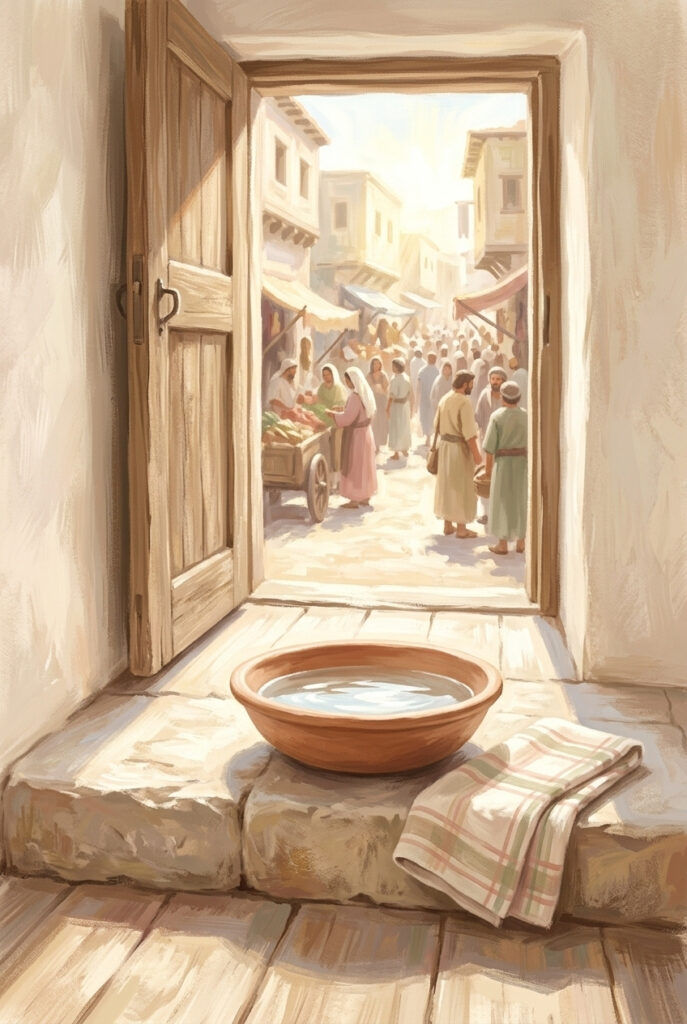
There is a story sometimes told of a woman who transitioned in her fifties in a small town, and of the eleven months that came after. The version I have heard has no confrontation anywhere in it. Nobody threw her out and nobody said a word to her face. The rota she had run for nine years was quietly reassigned, the group chat stopped producing notifications, and when she asked, three separate people told her the same untrue thing about scheduling.
She kept turning up on Wednesday mornings anyway, because Wednesday morning was when the food bank ran and she knew where the tins went. Nobody in that building would have called what was happening a fight, which is exactly the sort of fight shall not prevail was written for.
I am not going to tell you the rota came back. It did not. Nobody apologised, and as far as I know nobody has. What she said much later, when somebody asked how she had stood it, was neither brave nor bitter. She said she had worked out early on that she was not going to let the question of whether she belonged there be decided by whoever had the most people at their table.
That is this verse, said by somebody who had probably never read it. They shall fight against thee, and shall not prevail. She did not win and she was not restored. What she refused to hand over was the question itself, and on that one point shall not prevail is a sentence with actual content.
Yesterday we said that standing is not established by a record, that no count of good days confers it and no count of bad days revokes it. This morning puts the same knife in from the other side. Standing is not established by a vote of the room either. Herod’s table could take John’s life; it could not take the fact that he had been right, and that is the exact boundary the Lord draws for Jeremias when He says they shall not prevail.
We named trans people three days ago, on a Church that fractured while trying to protect itself, and that argument was about sincerity ending in schism. This morning names different people on a different claim, and the claim is about audience. Herod did not stop believing John; he stopped being able to afford him publicly, and the two are not the same failure. What they share is the table, and what shall not prevail says to both is that the table was never the court.
Now the commemoration, briefly and honestly. Of St. Sabina almost nothing survives. The account of her martyrdom carries no historical value, and what is left is a name, a hill in Rome, a basilica on the Aventine standing there since her relics were brought to it in 430, and this date. The Church set her on the calendar of the day it remembers the loudest death in the Gospels, and that placement is its own small argument about who shall not prevail is for.
Because the promise cannot only cover people whose deaths get written down. If shall not prevail applies only where there is a full account, it is a promise for the famous, and it is worth very little. Sabina has almost no account and she keeps her feast anyway, which is the Church saying that the sentence reaches the people nobody wrote about.
Then look at where today’s Mass goes for its music. The just shall flourish like the palm tree: he shall grow up like the cedar of Libanus. You can read the whole of Psalm 91 at drbo.org, and it is worth doing, because the Church has answered a beheading with two of the slowest-growing trees it could name. A palm and a cedar are not quick, and neither is the vindication that shall not prevail is pointing at.
The Alleluia verse today is not the one that usually follows that Gradual. On the feast of a confessor last week the same two psalm verses were answered by St. James on the crown of life. Today the Missal answers them from the prophet Osee instead: the just shall blossom like the lily, and shall flourish for ever before the Lord. That substitution is where shall not prevail gets its venue.
The antiphon is worth a note of its own. If you go to Osee 14 at drbo.org you will find that verse six reads Israel shall spring as the lily, and the liturgy has put the just man where the nation stood and added for ever before the Lord, which is not in the chapter at all. The Missal’s own Latin says what the Missal’s English says, so this is not a loose rendering of the prophet. It is the Church reading Osee and applying him to one man.
And the added words carry today’s whole weight. For ever before the Lord. That is the venue change the promise depends on. The room at Machaerus reached its verdict and the verdict stood in that room for one evening; the other venue does not adjourn, and it is there that they shall not prevail.
One more time, because this is the sentence to carry out of the building. They shall fight against thee, and shall not prevail. If you are in something now where the fighting is real, notice that the verse does not promise you the fighting stops. Notice what it does promise, and notice how much smaller and how much more durable that promise is. The people opposite you may take a great deal from you, and there is one thing that is not theirs to take.
We ask a little of that this morning at the altar where the just are handed what they did not earn, and we ask it in the plainest form there is. Make us hard to move. Not loud, not certain, not vindicated. Hard to move, the way an iron pillar is hard to move, so that when they fight against us, as the Lord has already said they will, they shall not prevail.
↑ The order resumes below.
IX
Secret
We pray, O Lord, that the offerings we bring Thee in memory of the agonising death of Thy holy Martyr, John the Baptist, may, by his help, be of profit for our salvation. Through our Lord Jesus Christ, Thy Son, Who liveth and reigneth with Thee in the unity of the Holy Ghost, God, world without end. Amen.
X
The Holding
If you believe, take it like this. You were made a fortified city before anybody laid a hand on you, and the making was God’s work and not your achievement. The siege is real and the promise is not that it lifts. The promise is that the Lord is with thee to deliver thee, and that whatever those outside your wall manage to take, they shall not prevail on the question of who you are. Go in that.
If you do not believe, take it like this, because it holds without a word of the theology. The people who oppose you do not have the authority to decide the truth about you, and their number does not increase that authority. A room can outvote you and cannot make itself right. Hold the question yourself, and keep turning up on Wednesdays, and let the fighting be what it is: real, costly, and not the last word. That is shall not prevail with no God in it at all, and it still holds.
May God bless you and keep you, and may you be hard to move today. In the name of the Father, and of the Son, and of the Holy Ghost. Amen.
The propers for today are those of the Beheading of St. John the Baptist in the 1962 Roman Rite, with the commemoration of St. Sabina, Virgin and Martyr. Scripture is given in the Douay-Rheims. The liturgical spine of this offering is The New Marian Missal for Daily Mass by Sylvester P. Juergens, S.M., S.T.D.
Faith in Bloom is offered by Bloom Ministries in the Independent Catholic tradition, and is not affiliated with or recognised by the Roman Catholic Church.
