


Sunday Mass · 23 August 2026 · XIII Sunday after Pentecost
Sunday Mass: August 23, 2026 | Thy Faith Hath Made Thee Whole
Welcome to Bloom’s Sunday Mass for the thirteenth Sunday after Pentecost. Today’s Gospel gives us ten people healed and one person told something the other nine never heard, and the whole morning turns on that one sentence: thy faith hath made thee whole. This…
The order of this offering
Before the readings
Communion and close
Offering and Canon
I
Opening Address
Welcome to Bloom’s Sunday Mass for the thirteenth Sunday after Pentecost. Today’s Gospel gives us ten people healed and one person told something the other nine never heard, and the whole morning turns on that one sentence: thy faith hath made thee whole. This is offered in the Independent Catholic tradition, from the 1962 Roman Rite, and Bloom is not affiliated with or recognized by the Roman Catholic Church. We name that plainly, the way Old Catholic and Anglo-Catholic communities have named it for more than a century, because you deserve to know exactly whose table you are sitting at.
Wherever you are, you are welcome here. If you came in certain of everything, you are welcome. If you came in with nothing but a habit and a hope, you are welcome, and you are not required to produce anything at the door.
The vestments today are green. There is no feast layered over this Sunday and no saint commemorated in the prayers, which means the Church gives us the plain temporal cycle and asks us to sit with it as it is.
II
The Penitential Rite
(The Confiteor and Kyrie are said here, from the Missal.)
We begin the way the Church has always begun, not with achievement but with an honest accounting. There is something clarifying about a liturgy that opens by admitting failure out loud, in company, before anyone has said a word about grace. Nobody in this room is here on merit. That is the point of starting here.
III
The Gloria
(The Gloria is said here, from the Missal.)
Then, immediately, praise. The order is deliberate. We tell the truth about ourselves and then we sing anyway, because the singing was never conditional on the accounting coming out clean.
IV
Introit
Ps 73:20, 73:19, 73:23; Ps 73:1
Have regard, O Lord, to thy covenant, and forsake not to the end the souls of thy poor: arise, O Lord, and judge thy cause, and forget not the voices of them that seek thee.
(Glory be to the Father, and to the Son, and to the Holy Ghost. As it was in the beginning, is now, and ever shall be, world without end. Amen. The antiphon is repeated.)
Hold onto the first word of that antiphon. The Mass opens by asking God to remember a covenant, which is to say a promise. Keep that in your ear, because the Epistle is about to argue that the promise came first and has never been replaced.
V
Collect
Almighty and everlasting God, give unto us an increase of faith, hope, and charity; and, that we may deserve to obtain that which Thou dost promise, make us to love that which Thou dost command. Through our Lord Jesus Christ, Thy Son, Who liveth and reigneth with Thee in the unity of the Holy Ghost, God, world without end. Amen.
Notice the direction of that prayer. It does not ask for the strength to obey. It asks to be made to love what is commanded, which is a different request entirely, and a harder one.
VI
Epistle
Brethren: To Abraham were the promises made and to his seed. He saith not, And to his seeds, as of many: but as of one, And to thy seed, which is Christ. Now this I say, that the testament which was confirmed by God, the law which was made after four hundred and thirty years, doth not disannul, to make the promise of no effect.
For if the inheritance be of the law, it is no more of promise. But God gave it to Abraham by promise. Why then was the law? It was set because of transgressions, until the seed should come, to whom he made the promise, being ordained by angels in the hand of a mediator.
Now a mediator is not of one: but God is one. Was the law then against the promises of God? God forbid. For if there had been a law given which could give life, verily justice should have been by the law.
But the scripture hath concluded all under sin, that the promise, by the faith of Jesus Christ, might be given to them that believe.
VII
Gradual and Alleluia
Ps 73:20, 73:19, 73:22; Ps 89:1
Have regard, O Lord, to thy covenant, and forsake not to the end the souls of thy poor. Arise, O Lord, and judge thy cause: remember the reproach of thy servants.
Alleluia, alleluia. Lord, thou hast been our refuge from generation to generation. Alleluia.
VIII
Gospel
And it came to pass, as he was going to Jerusalem, he passed through the midst of Samaria and Galilee. And as he entered into a certain town, there met him ten men that were lepers, who stood afar off; And lifted up their voice, saying: Jesus, master, have mercy on us. Whom when he saw, he said: Go, shew yourselves to the priests. And it came to pass, as they went, they were made clean.
And one of them, when he saw that he was made clean, went back, with a loud voice glorifying God. And he fell on his face before his feet, giving thanks: and this was a Samaritan.
And Jesus answering, said, Were not ten made clean? and where are the nine? There is no one found to return and give glory to God, but this stranger. And he said to him: Arise, go thy way; for thy faith hath made thee whole.
IX
The Creed
(The Nicene Creed is said here, from the Missal.)
We say it together, in the plural, because it was never meant to be a personal inventory of certainties. It is the faith of the whole body, held out loud, and on the mornings when you cannot manage a line of it the rest of us are still saying it around you.
The Offering
Sunday Homily | Thy Faith Hath Made Thee Whole
Ten men stood at the edge of a village and shouted. They did not walk up to Christ, because the law did not permit it. Leprosy in that world was not only an illness;…
Ten men stood at the edge of a village and shouted. They did not walk up to Christ, because the law did not permit it. Leprosy in that world was not only an illness; it was a legal status, and the status came with a required distance. They stood afar off and lifted up their voice, and every one of them wanted the same thing, and only one of them would hear the words thy faith hath made thee whole.

Christ does not abolish the procedure. He tells them to go and show themselves to the priests, which is precisely what the law required of anyone claiming to be clean. He sends them into the system, and the system does its work. All ten are cleansed on the road, before anyone has examined anything.
Nine of them keep walking. That is not villainy, it is obedience. They were told to go, and they went, and they arrived at the place where a person’s condition gets ruled on officially. What they did not receive was a voice saying that faith hath made thee whole.
One of them turned around. He saw that he was made clean, and instead of continuing on toward certification he went back to the person. He fell on his face and gave thanks, and Luke tells us plainly that this was a Samaritan. To him alone Christ says the sentence: thy faith hath made thee whole.
Consider what this man’s actual situation was. As a Samaritan he had no standing at the temple in Jerusalem and no priest there who would examine him. The road the other nine were walking did not open the same door for him at the far end of it. He turned back because the road ahead would not have finished anything, and what he received instead was the sentence that faith hath made thee whole.
Christ names him for what the record would have called him. There is no one found to return and give glory to God, but this stranger. The word sits there in the middle of the Gospel without apology. The one who came back was the one with no papers to collect, and the one with no papers to collect is the one told that faith hath made thee whole.
This is the hinge, and it turns on two different words. All ten were made clean. One was made whole. The word Luke reaches for at the end is the word for being saved, not the word for being declared fit, and that gap between the two is the entire distance this Gospel is asking us to see.
Paul is arguing the same thing in today’s Epistle, and he argues it with dates. The promise was made to Abraham. The law arrived four hundred and thirty years afterward. A thing that shows up four centuries after the promise cannot be the thing the promise was resting on, and Paul says so about as plainly as a man can: if there had been a law given which could give life, verily justice should have been by the law.
Read that sentence slowly, because it is a concession and a verdict at once. Paul is not saying the law is bad. He is saying it cannot do the one thing people keep demanding of it. It cannot give life, which is another way of saying that no volume of correct procedure has ever managed to tell a single human being that faith hath made thee whole.
So the Epistle and the Gospel are making one argument in two registers. Paul says the law was set because of transgressions, a custodian for a stretch of road, useful and temporary and never the destination. Luke shows us ten men on that exact road. Nine of them treat the custodian as the destination, and one of them does not.
This is the test Christ hands us for every teaching and every institution, and we have used it here before: by their fruits you shall know them. So apply it to a certification system. What does it actually produce? It produces clean people who are still standing afar off, and in two thousand years it has not once produced the sentence that faith hath made thee whole.
Last Sunday we sat with Paul’s harder line, that the letter killeth, and the claim that day was about law turned into a weapon against people. Today’s claim is a different one, and the difference is the whole reason to preach it twice. Today the law is not being abused at all. It is working exactly as designed, examining honestly, certifying accurately, and it still cannot say to anyone that faith hath made thee whole.
That distinction matters because the comfortable version of this Gospel is that bad rules hurt people. The harder version is that even good rules, applied correctly by decent people, cannot do this particular thing. A rule can establish that a condition has been met. Only a person can say to another person that faith hath made thee whole.
The teaching this Gospel takes apart is the one that says a human being becomes acceptable at the moment the paperwork clears. Anyone who has been held at a distance by their own family knows that teaching in their body. They are handed a list of conditions, they meet the conditions, and the distance does not close. Meeting them was never what would have closed it.
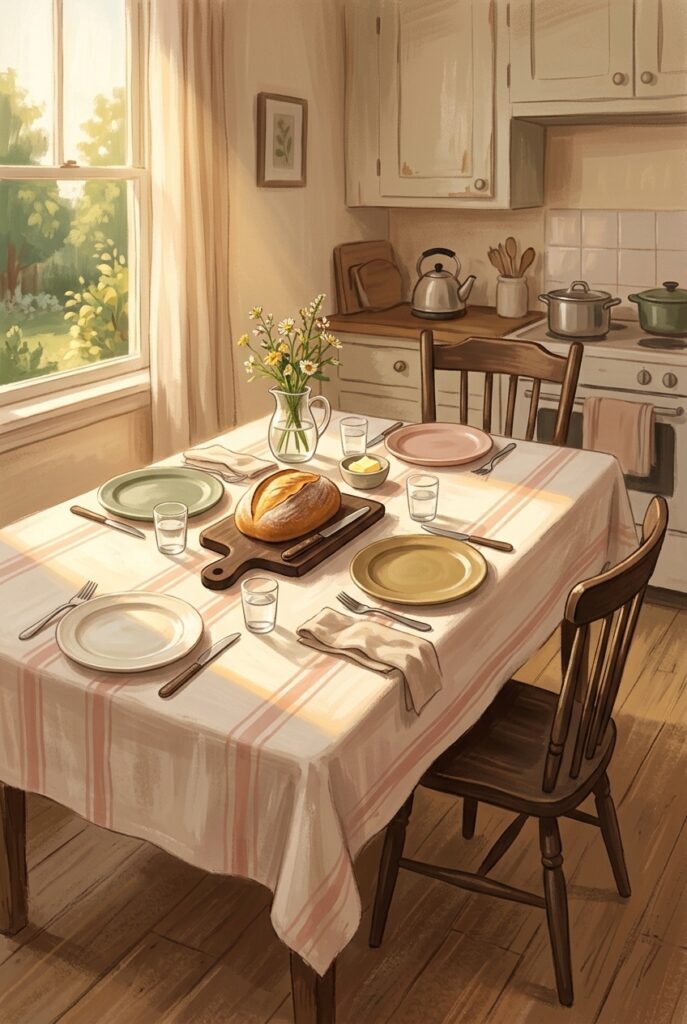
There is a story sometimes told of a man whose family sent him away with a list. Steady work, two years sober, and put it in writing. He did all three, and he mailed the letter, and the answer he got back thanked him for the update.
He drove out to the house anyway on a Sunday afternoon and stood at the end of the driveway a long while, because he had the paper in his pocket and the paper had not opened the door. What he was standing there waiting for was not one more requirement. He was waiting for somebody to come out and say the thing a document is structurally incapable of saying, which is the thing Christ said to the man who turned around: faith hath made thee whole.
We have sat with this ache before, on the day of a saint who died unrecognized by your own family. The wound in that story is not the absence of proof. It is the presence of proof that changed nothing, and the silence where a voice should have said that faith hath made thee whole.
If you do not believe in God, the shape of this still holds and you can test it against your own life. A rule can certify that someone satisfied a requirement. It cannot make them welcome in your kitchen. Those are two separate acts, and the second one has never belonged to any institution.
Here is what I keep coming back to in this Gospel. The one who turned around had already obeyed. He went when he was sent, the same as the others, and then he did the single thing nobody had asked of him, which was to turn back. Obedience got him cleansed, and the turning is where he heard that faith hath made thee whole.
That order matters enormously, because it means the turning was not a shortcut around obedience. It was added on top of obedience. He did not skip the priests out of contempt for the law; he simply understood that the person mattered more than the ruling, and that understanding is what the sentence thy faith hath made thee whole is actually naming as faith.
So the instruction in this Gospel is not complicated, though it is hard. Stop waiting to be certified before you come back. In yesterday’s offering we heard that we may come to the throne of grace with confidence, and confidence is precisely the thing a person without documentation does not feel. Come anyway. The sentence faith hath made thee whole is spoken over a man who showed up with empty hands and a Samaritan’s name.
And it is faith, not certainty. On the Assumption we heard a woman told blessed art thou that hast believed, and believing there was never the same thing as having no questions left. The Samaritan did not come back with a worked-out theology. He came back with gratitude, and gratitude was enough to be told that faith hath made thee whole.
I want to be careful about the nine, because they are usually treated as a sermon’s villains and the text does not treat them that way. Christ asks where they are, and the question has an edge to it, but he does not take the healing back. They kept what they were given. They simply never heard the second thing, and the second thing is the one that reaches all the way down.
Whatever you are standing at the edge of this morning, whatever list somebody handed you, hear the order of events in this Gospel. Christ cleansed ten people who had done nothing yet to earn it. Then he waited to see who would come back. And to the one who did, the foreigner, the man with no temple to report to and no priest to sign anything, he said the sentence this entire Gospel exists to deliver: arise, go thy way, thy faith hath made thee whole.
↑ The order resumes below.
XI
Offertory
Ps 30:15-16
But I have put my trust in thee, O Lord: I said: Thou art my God. My lots are in thy hands.
My lots are in thy hands. That is the Samaritan’s posture rendered as a single line, and it is what we bring to the altar in place of credentials. It is the only thing ever brought by anyone who was told that faith hath made thee whole.
XII
Secret
Be merciful unto us, O Lord, we beseech Thee, and look with favour upon these our offerings; that, being appeased by this oblation, Thou mayest grant us pardon and give us what we ask. Through our Lord Jesus Christ, Thy Son, Who liveth and reigneth with Thee in the unity of the Holy Ghost, God, world without end. Amen.
XIII
The Canon and Consecration
(The Canon of the Mass and the words of Consecration are said here, from the Missal.)
This is the oldest and quietest part of the rite, and it is not a performance. What the Church has always claimed happens here does not depend on how anyone in the room is feeling about it this morning. That is a mercy on the mornings when you feel nothing at all.
XIV
Act of Spiritual Communion
(Said by all who are not receiving sacramentally.)
My Jesus, I believe that Thou art present in the Most Holy Sacrament. I love Thee above all things and I desire to receive Thee into my soul. Since I cannot now receive Thee sacramentally, come at least spiritually into my heart. I embrace Thee as if Thou wert already there, and I unite myself wholly to Thee. Never permit me to be separated from Thee.
If you are homebound, or in a hospital bed, or in a body that could not get to a church building today, that prayer is not a lesser version of anything. It is the door the Church left open on purpose.
XV
Communion
Thou hast given us, O Lord, bread from heaven, having in it all that is delicious, and the sweetness of every taste.
XVI
Postcommunion
Having received Thy heavenly sacrament, O Lord, may we advance, we beseech Thee, toward the increase of our eternal redemption. Through our Lord Jesus Christ, Thy Son, Who liveth and reigneth with Thee in the unity of the Holy Ghost, God, world without end. Amen.
XVII
The Closing Blessing
Go, then, the way the man in the Gospel went. Turn around. Say the thank-you you have been putting off until you felt more qualified to say it, and say it to a person and not to a file.
And to anyone still standing at the edge of a village this week, waiting on a ruling that will not come, or holding a paper that opened nothing: you are not required to wait for it here, and the sentence you are waiting to hear is the one already spoken on that road: thy faith hath made thee whole. May the Almighty God bless you, the Father, and the Son, and the Holy Ghost. Amen.
Propers for the XIII Sunday after Pentecost are taken from the 1962 Roman Missal. Scripture is quoted from the Douay-Rheims Bible. The liturgical spine of Faith in Bloom is The New Marian Missal for Daily Mass by Sylvester P. Juergens, S.M., S.T.D., Regina Press, Imprimatur 1961.
Faith in Bloom is offered by Bloom Ministries in the Independent Catholic tradition and is not affiliated with or recognized by the Roman Catholic Church.
