
Daily Offering · 1 August 2026 · V Mass of the B. V. M. – Salve, Sancta Parens
Daily Offering: August 01, 2026 | The Chains Fell Off
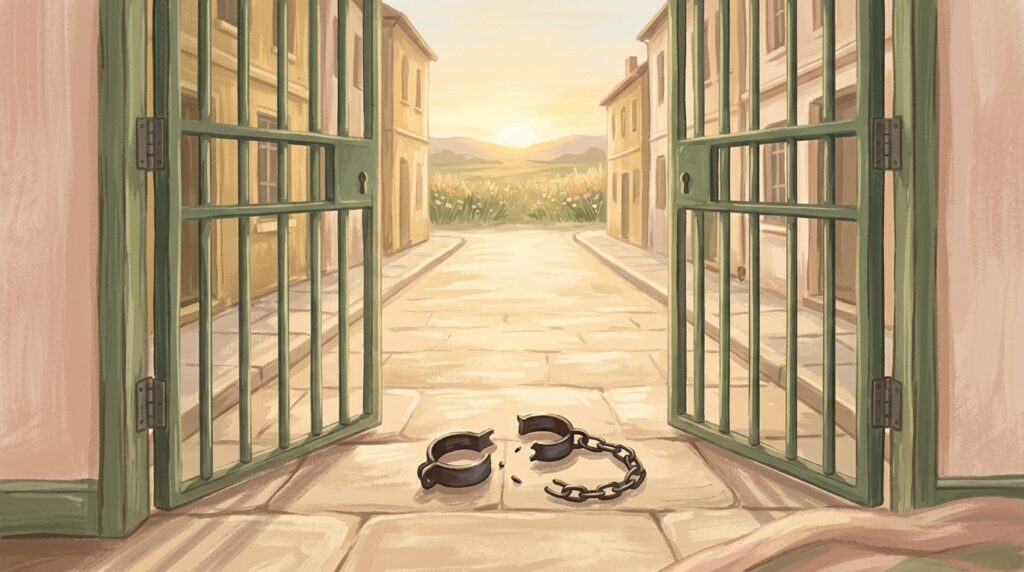
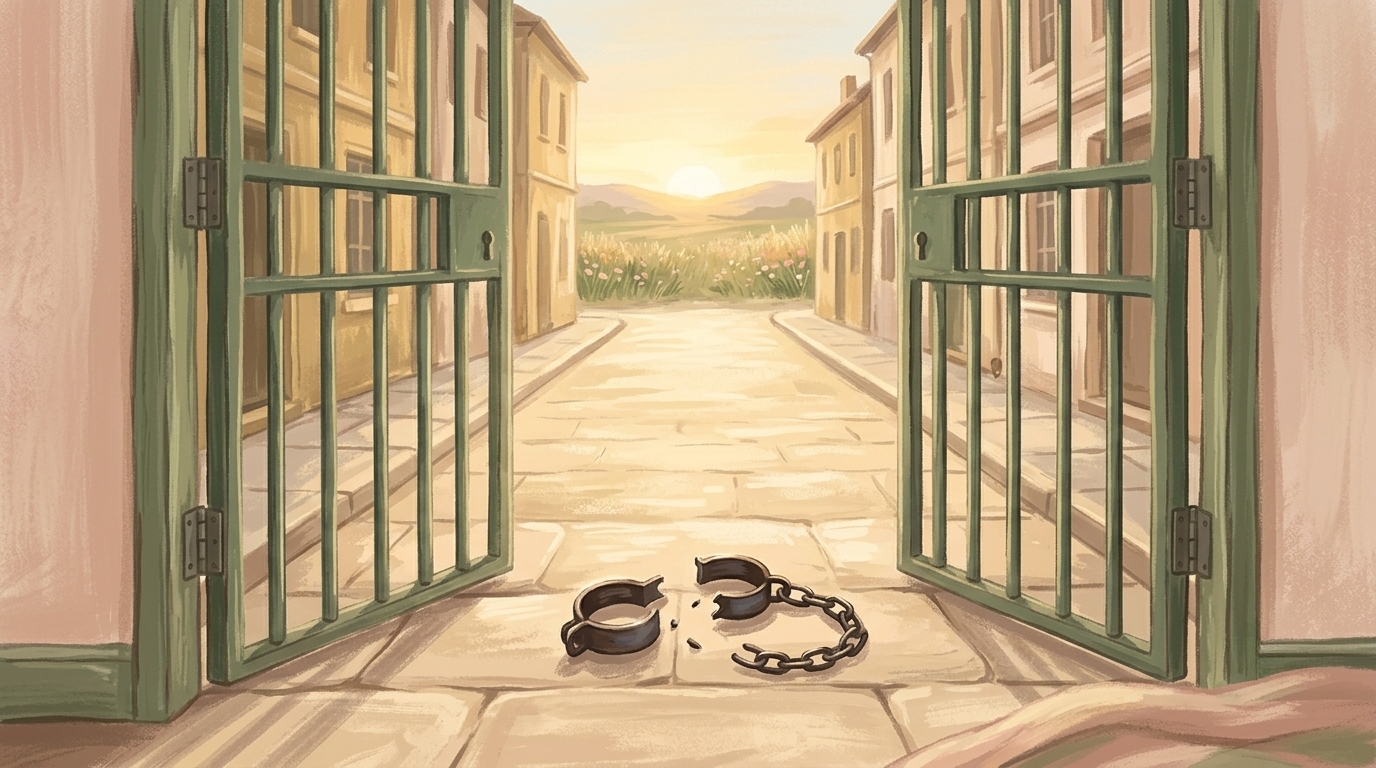
The chains fell off — three of the plainest, most physical words in all of Scripture, and today’s whole feast is built around them. Beloved, grace and peace to you this morning: however you arrive here, tired or hopeful, certain or doubting, welcomed elsewhere…
The order of this offering
Before the readings
Offering and Canon
I
Opening Address
The chains fell off — three of the plainest, most physical words in all of Scripture, and today’s whole feast is built around them. Beloved, grace and peace to you this morning: however you arrive here, tired or hopeful, certain or doubting, welcomed elsewhere or shut out elsewhere. Bloom is not a room you have to earn your way into. Sit with us a while today, offered in the spirit of a low Mass — Word, prayer, and offering, without pretense to more than that, and with a little more room than usual, since today’s story deserves it.
II
Introit
(Ps. 138:1, 2)
Now I know in very deed, that the Lord hath sent His angel, and hath delivered me out of the hand of Herod, and from all the expectation of the people of the Jews. O Lord, Thou hast proved me, and known me: Thou hast known my sitting down, and my rising up.
III
Collect
(Confirmed, directly sourced — Missale Romanum 1962, proper to St. Peter’s Chains, not adapted)
O God, Who didst cause blessed Peter the Apostle to depart, loosed from his chains and unhurt, loose, we beseech Thee, the chains of our sins, and graciously keep all evils far from us. Through our Lord…
IV
The Commemoration
(Collect for the Holy Maccabees, Martyrs — confirmed, directly sourced, not adapted)
O Lord, Who before the Passion of Thine only-begotten Son didst give the Holy Machabees the strength to suffer for the precepts of Thy law: we beseech Thee, that through their example and prayers, we too may love what You have commanded and desire what You promise. Through our Lord…
V
Epistle
Acts 12:1-11, Douay-Rheims
At that time, Herod the king stretched forth his hands, to afflict some of the church. And he killed James, the brother of John, with the sword. And seeing that it pleased the Jews, he proceeded to take up Peter also. Now it was in the days of the Azymes. And when he had apprehended him, he cast him into prison, delivering him to four files of soldiers to be kept, intending, after the pasch, to bring him forth to the people. Peter therefore was kept in prison. But prayer was made without ceasing by the church unto God for him. And when Herod would have brought him forth, the same night Peter was sleeping between two soldiers, bound with two chains: and the keepers before the door kept the prison. And behold an angel of the Lord stood by him: and a light shined in the room: and he striking Peter on the side, raised him up, saying: Arise quickly. And the chains fell off from his hands. And the angel said to him: Gird thyself, and put on thy sandals. And he did so. And he said to him: Cast thy garment about thee, and follow me. And going out, he followed him, and he knew not that it was true which was done by the angel: but thought he saw a vision. And passing through the first and the second ward, they came to the iron gate that leadeth to the city, which of itself opened to them. And going out, they passed on through one street: and immediately the angel departed from him. And Peter coming to himself, said: Now I know in very deed, that the Lord hath sent His angel, and hath delivered me out of the hand of Herod, and from all the expectation of the people of the Jews.
VI
Gradual
(Ps. 106:14, 16)
He brought them out of darkness, and the shadow of death; and burst their bonds asunder. He hath broken the gates of brass, and burst the bars of iron.
VII
Gospel
(Matthew 16:13-19, Douay-Rheims)
At that time, Jesus came into the quarters of Cæsarea Philippi: and He asked His disciples, saying: Whom do men say that the Son of man is? But they said: Some John the Baptist, and other some Elias, and others Jeremias, or one of the prophets. Jesus saith to them: But whom do you say that I am? Simon Peter answered and said: Thou art Christ, the Son of the living God. And Jesus answering, said to him: Blessed art thou, Simon Bar-Jona: because flesh and blood hath not revealed it to thee, but My Father who is in heaven. And I say to thee: That thou art Peter; and upon this rock I will build My church, and the gates of hell shall not prevail against it. And I will give to thee the keys of the kingdom of heaven. And whatsoever thou shalt bind upon earth, it shall be bound also in heaven: and whatsoever thou shalt loose upon earth, it shall be loosed also in heaven.
The Offering (Homily)
Daily Homily | The Chains Fell Off
Notice, before anything else, what Peter is doing on the last night he expects to be alive. Herod had already killed James with the sword, and the plan, everyone understood, was to do the…
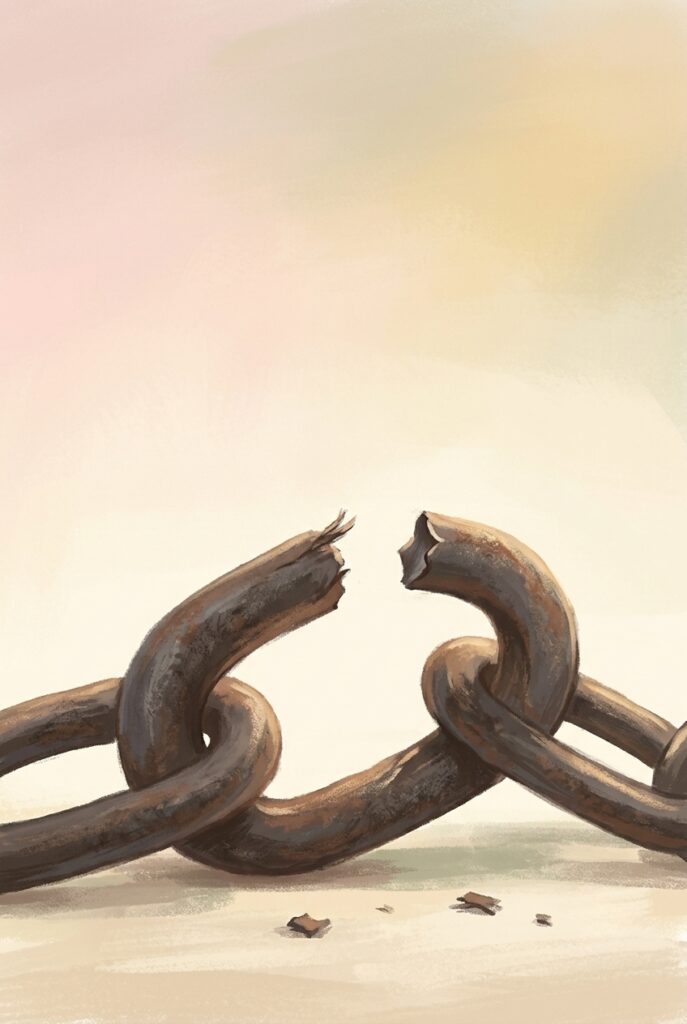
Notice, before anything else, what Peter is doing on the last night he expects to be alive. Herod had already killed James with the sword, and the plan, everyone understood, was to do the same to Peter the following morning. A person facing that would have every reason to spend the night awake — pacing, praying frantically, testing the chains for any give. Instead, Scripture says plainly: Peter was sleeping. Bound between two soldiers, guarded, condemned, and asleep. Whatever fear he carried, it hadn’t cost him his rest.
That detail matters more than it first seems to. The chains fell off while Peter was unconscious of the moment it happened — he didn’t fight them loose, didn’t work a hand free through effort or cunning. An angel struck him on the side to wake him up, and only then did he discover that the thing he might have spent the whole night straining against had simply come undone, from outside, while he wasn’t watching. Some kinds of freedom really do have to be fought for. This one didn’t. It arrived while Peter was doing nothing but resting.
Notice, too, the grammar of it. Scripture doesn’t say Peter broke his chains, or worked them loose, or finally found the strength to snap them. It says the chains fell off — the chains are the subject of that sentence, not Peter. He is, grammatically as well as literally, the passive party in his own liberation. That’s a strange thing for a religion this fond of effort and discipline to preserve so plainly in its own sacred account, and it’s worth taking seriously rather than smoothing over: sometimes the honest description of freedom is that it happened to you, not that you achieved it.
Behind that scene, Luke gives us one more detail easy to read past: “prayer was made without ceasing by the church unto God for him.” Peter wasn’t the only one awake to the situation, even if he himself was asleep. A whole community was holding vigil on his behalf, in the background, unseen by him, the entire time his chains were still fastened. Whatever happened in that cell didn’t happen to a man alone. It happened to a man surrounded, even in his sleep, by people who refused to stop asking on his behalf.
And then, almost comically, Luke tells us what happened next: Peter, now free, walks to the house where the community was gathered praying for exactly this outcome, knocks at the gate, and the servant girl Rhoda is so overjoyed to hear his voice that she runs back inside to announce it — without actually opening the gate to let him in. The others, hearing her, tell her flatly that she’s out of her mind. They had been praying without ceasing for Peter’s release, and when it actually happened, their first instinct was disbelief. That’s a very human detail to leave in a sacred text: sometimes we ask for things so long, and so earnestly, that we forget to expect them to actually arrive.
Today’s Collect takes this entire physical scene and turns it, deliberately, into a metaphor: “loosed from his chains and unhurt, loose, we beseech Thee, the chains of our sins.” The prayer doesn’t ask God for a miracle story about ancient Rome. It asks for the same kind of liberation, applied to whatever actually holds a person now — shame carried for years, an old harm never quite set down, a version of yourself you’ve been chained to that never really fit. The Church has always read Peter’s iron shackles as a picture of something less visible and, for most of us, considerably more relevant.
Today’s Gospel, read alongside that, adds something the Epistle doesn’t quite say on its own: the same Peter who would eventually need his own chains broken is the same Peter who, earlier in his life, was handed something enormous while still visibly unfinished. “Thou art Peter; and upon this rock I will build My church… I will give to thee the keys of the kingdom of heaven.” This isn’t a commissioning ceremony for a man who had already proven himself flawless. Read a little further in this same chapter of Matthew, and you find Christ, only verses later, telling this same newly-named Peter, “Get behind me, Satan” — a rebuke as sharp as the blessing was generous. The keys were given to someone who would go on to deny Christ three times before a single rooster finished crowing.
That sequencing is worth sitting with on purpose. Authority, in this story, isn’t a reward handed out after a person has already become trustworthy. It’s given first, to someone still very much in progress, and then lived into — badly, some days; astonishingly well, on others — over the rest of a whole life. Peter’s chains would fall off in Acts 12 the same way his failures kept surfacing throughout the Gospels: not because he had finally earned the ending, but because grace kept arriving ahead of his readiness for it.
Today’s added commemoration offers a striking counterweight to all of this. The Holy Maccabees — a mother and her seven sons, according to the account preserved in the Books of Maccabees — were tortured and executed one by one under a foreign king who demanded they violate their own religious law, and each of them, in turn, refused. Their chains, so to speak, never fell off. Nothing about their story involves liberation arriving from outside while they rested. What makes them holy, in the Church’s own memory, is precisely that certain convictions held firm under maximum pressure, right up to the end.
Put those two stories side by side, and a real question opens up, one worth asking of your own life rather than just admiring from a distance: which of these is actually in front of you right now? Some chains genuinely need to fall away — shame that was never yours to carry, an old identity that was only ever a cage, a fear that’s outlived whatever originally justified it. Those chains, like Peter’s, are meant to break, and it’s not weakness to let them, even if the breaking comes from outside you rather than through your own effort. But some things are not chains at all, however much pressure is applied to make you believe otherwise. They are more like the Maccabees’ convictions: the very thing a person is being pressured to abandon precisely because it’s true, solid, and worth keeping. Wisdom, most days, is telling the difference.
There is a story sometimes told of a woman who spent years after a sexual assault believing that her own silence was a kind of chain she had to break entirely on her own — that healing meant fighting her way, alone, out of every bit of shame she carried, through sheer willpower, before she’d be allowed to call herself free. What actually changed things wasn’t a private act of will. It was a small group of people — a sister, a therapist, eventually a whole support group of other survivors — who simply kept showing up, kept believing her, kept saying the same true things to her long after she’d stopped being able to say them to herself, until one day, without any single dramatic breakthrough she could point to afterward, she realized the chains fell off sometime while she wasn’t looking, the exact way Peter’s did. She has said since that it felt precisely like waking up already free, the way Peter must have felt an angel’s hand on his side before he understood what had already happened to his own hands — not a victory she’d won, but a gift she’d finally been able to receive because other people refused to stop offering it.
Whether or not the words “angel” or “grace” carry any particular weight for you, the plain principle in today’s readings holds regardless: freedom from what genuinely imprisons a person rarely comes purely from private effort, and it is not a failure of willpower to need other people, prayer, time, or simple rest before something finally gives way. At the same time, not everything that feels like a chain actually is one — some convictions are worth holding onto with the same stubbornness the Maccabees showed, even when everything around you insists it would be easier to let go.
We’ve sat with a related promise before: God is faithful, the feast of Ss. Abdon and Sennen, on the assurance that no pressure exceeds what a person can actually bear, and that a way through is always made available alongside it. Today’s feast adds the other half of that same truth: sometimes the way through isn’t a path you walk yourself at all. Sometimes it’s a night of sleep, a community that keeps praying past the point of expecting an answer, and chains that simply aren’t there anymore by the time somebody finally taps you awake to check.
It’s worth saying plainly that this isn’t a call to passivity, as if the right move is always just to wait quietly for an angel. The church in Jerusalem wasn’t idle while Peter slept; they prayed without ceasing, which is its own kind of active labor, even when it doesn’t look like fighting. And the Maccabees weren’t passive either — holding a conviction under torture takes a different, harder kind of effort than breaking free of a chain ever could. What both stories refuse is a narrower idea: that the only respectable way to change is to white-knuckle your way there entirely alone, unaided, and unresting until it’s done. Scripture keeps offering other pictures instead — sleep, community, prayer, stubborn togetherness — as if it already knew how tempting, and how exhausting, the solitary version would eventually become for people who tried it.
So beloved, wherever you are right now — still straining against something in the dark, or freshly startled to discover the chains fell off a weight you’d already stopped hoping to be free of, or holding firm on something true that everyone around you keeps pressuring you to abandon — today’s feast doesn’t ask you to sort it all out alone. It asks you to notice, honestly, which kind of moment you’re actually in, and to let whichever one it is be exactly what it is: a chain worth breaking, or a conviction worth keeping, and either way, not something you were ever required to carry entirely by yourself.
↑ The order resumes below.
IX
Secret
Receive, O Lord, this small offering made in memory of an apostle who was freed while he slept and a mother and seven sons who would not be moved, and grant us the wisdom to know which of our own burdens are chains meant to fall away, and which are convictions meant to hold.
X
Commemoration Secret
(For the Holy Maccabees)
Look with favor, O Lord, we beseech Thee, upon the offerings we bring in honor of the triumphs of Thy holy Martyrs: that as they received from Thee the grace of suffering, so we, through them, may obtain Thy pardon. Through our Lord…
XI
The Holding
(Benediction — two readings, one truth)
For those who hold this in faith: Lord, You sent an angel while Peter slept, and You held the Maccabees firm when everything demanded they break. Give us the discernment to know which is which in our own lives, and the humility to accept help with the chains that were never meant to be carried alone. Amen.
For those still finding their footing: If you have ever noticed, one ordinary day, that the chains fell off some old weight you’d stopped even hoping to be free of, that wasn’t luck, and it wasn’t a fluke you should feel embarrassed for not having earned yourself. And if you’re holding firm on something true while everyone around you insists it would be easier to let go, that firmness has a long and honored history behind it too — one considerably older than whatever pressure is currently being applied against it.
XII
Frequently Asked Questions
Epistle and Gospel text: Douay-Rheims Bible, Bishop Challoner revision — the standard English scripture translation used across traditional hand missals. Collects (confirmed, directly sourced, not adapted) and liturgical structure: the Missale Romanum (1962), feast of St. Peter’s Chains, with commemoration of the Holy Maccabees, Martyrs, following The New Marian Missal for Daily Mass by Sylvester P. Juergens, S.M., S.T.D. (Regina Press, Imprimatur 1961).
Faith in Bloom offers this reflection in the spirit of the traditional Roman Rite — a daily offering, not a Mass — welcoming all people, of every faith background, into the shelter of the Word.
