
Daily Offering · 18 November 2025 · Dedication of the Basilicas of Sts. Peter & Paul
Daily Offering: November 18, 2025 | This Place Was Made by God
Good morning, and grace and peace to you. Today’s Gradual says six words about the room you are standing in, whatever room that is: this place was made by God. It says it about a Roman basilica and it says it about a borrowed…
The order of this offering
Before the readings
Offering and Canon
I
Opening Address
Good morning, and grace and peace to you. Today’s Gradual says six words about the room you are standing in, whatever room that is: this place was made by God. It says it about a Roman basilica and it says it about a borrowed upstairs room with a kettle in the corner, in exactly the same syllables, because the prayer never asks which one you meant.
Today is the Dedication of the Basilicas of Ss. Peter and Paul, third class, and we are in white. There is no saint’s Mass today and no commemoration of any kind. The Tuesday of this week yields the whole day and is not commemorated either.
You do not need to hold any particular belief for the next quarter of an hour to be worth your time. If you have ever been in a room that other people described as a stopgap while you were sitting in it, the argument is already yours.
II
A Word on Today’s Propers
I want to be plain about something before we pray a word of it. Every single prayer of today’s Mass is the same as the Mass we kept nine days ago, on the ninth of this month, for the Dedication of the Archbasilica of Our Holy Savior. Not most of them. All ten.
The Introit, the Collect, the Lesson, the Gradual, the Alleluia verse, the Gospel, the Offertory, the Secret, the Preface, the Communion and the Postcommunion are word for word what we prayed then. Nothing has been swapped in for the two Apostles whose churches are being kept today. That has never happened before in this series between two different feasts, and it is the whole reason I have something to say.
This place was made by God is the one sentence in the Mass that never needed changing, and today is the proof of it.
So I am not going to print the Lesson and the Gospel a second time. They were read out in full on the ninth, in the offering called could not for the crowd, and you can read them there beside a homily that stays with them. The Lesson is Apocalypse 21:2-5 and the Gospel is Luke 19:1-10.
What I am going to print is the three short prayers that name the day, in the same wording we used then, because the same antiphon should read the same way twice in one archive. And I am going to stand the whole offering on the Gradual, which nobody has preached here yet: this place was made by God.
One more piece of housekeeping. The Sunday this week hangs from is the Twenty-Third after Pentecost, kept on Sunday in the Mass called thoughts of peace, and today it does not even get a commemoration.
III
Introit
(Genesis 28:17; Ps. 83:2-3)
How terrible is this place! This is no other but the house of God, and the gate of heaven: and it shall be called the court of God.
How lovely are thy tabernacles, O Lord of hosts! My soul longeth and fainteth for the courts of the Lord. Glory be to the Father, and to the Son, and to the Holy Ghost.
The closing clause, “and it shall be called the court of God,” stands in no verse of Genesis. The Missal adds it to Jacob’s sentence and the Church has sung it that way for centuries.
IV
Collect
O God, who dost every year bring round unto us again the day whereon this Thine holy temple was hallowed, and bringest us again in soundness of body and mind to be present at Thine holy worship, graciously hear the supplications of Thy people, and grant that whosoever shall come into this Thine house to ask good at Thine hand, may be rejoiced in the obtaining of all his request. Through our Lord Jesus Christ, Thy Son, who liveth and reigneth with Thee in the unity of the Holy Ghost, God, world without end.
V
Epistle
(Apocalypse 21:2-5, Douay-Rheims)
Read on the ninth of this month and not reprinted here. St. John sees a city coming down out of heaven already finished, and hears the dwelling of God given as an address among people rather than as a set of measurements.
VI
Gradual
(The Roman Missal, the Common of the Dedication of a Church; the antiphon and its verse are liturgical texts rather than scripture)
This place was made by God, a priceless mystery; it is without reproof. O God, before whom standeth the choir of angels, give ear to the prayers of thy servants.
VII
Alleluia
(Ps. 137:2)
Alleluia, alleluia. I will worship towards thy holy temple, and I will give glory to thy name. Alleluia.
VIII
Gospel
(Luke 19:1-10, Douay-Rheims)
Read on the ninth of this month and not reprinted here. A man in Jericho gets himself above a street he cannot see over, and Christ tells him that salvation has come to his house today.
The Offering
Daily Homily | This Place Was Made by God
Here is the sentence, and I want you to hear how little it commits to.
Here is the sentence, and I want you to hear how little it commits to.
This place was made by God, a priceless mystery; it is without reproof.
Six words at the front of it, and they are the six words the Church has said over every dedication it has ever kept: this place was made by God. Nine days ago it said them over the cathedral of Rome. This morning it says them, unaltered, over two basilicas on the far side of the city wall.
The sentence the Church declines to adjust
Think about what a liturgy would look like if it graded buildings.
There would be a fuller form for the great churches and a plainer one for everything else. There would be a clause about antiquity somewhere, and a clause about scale, and a line in the Collect distinguishing a cathedral from a chapel in a field. None of that exists. This place was made by God is the whole of the Church’s judgment on the room, and it is given before anybody has looked round.
No survey, no grading, no shortlist. This place was made by God is what the Church says instead.
The reason the prayer can be reused is that it never fills in the name. It says this place. The Collect says this Thine house. The Introit says this place again, and the Missal is content to leave a blank there for a thousand years, because a form that had to be edited to fit a smaller room would be a form that ranks rooms.
Every dedication the Western church has ever kept has been kept in that blank. This place was made by God is what goes into it, every time.
There is nothing in it to edit. This place was made by God works in a basilica because it was never about the basilica.
What the six words do not contain
Now run the subtraction, because it is remarkable on a feast whose entire subject is architecture.
No architect is named. No donor is named, no emperor, no bishop, no date of building, no dimension, no material, no cost, no age. On the anniversary of a building, the Church declines to say one word about the building.
Not one word, on the building’s own anniversary. This place was made by God is the whole entry.
What it says instead is that the making was not ours. This place was made by God, and everything that human beings actually did here is left out of the sentence entirely. That is not modesty about the stonework. It is a claim about where a place gets its standing from, and the claim is that the standing did not come from the works.
A week ago today we prayed a Collect asking to be lifted up when we had no power of our own, and I said then that the prayer was about a person with nothing left to bring. Today the same grammar is applied to a floor and four walls. That was about a body’s strength; this is about a building’s pedigree, and the answer both times is that the thing was not achieved.
This place was made by God, and there is no name on the receipt.
Without reproof
Then the clause I cannot get past. It is without reproof.
Irreproachable. Not open to accusation. And the antiphon says it about the place, before anybody has arrived in it, before a single service has been held, before the congregation has had a chance to be good or bad. Nothing in the sentence is conditional on conduct. This place was made by God, and it is without reproof, and the Church says both of those things about an empty room at the moment the doors are first opened.
It is said over bare boards. This place was made by God, and the room has done nothing yet.
We are used to the opposite. We are used to a room being holy because of what happens in it, and therefore losable, and therefore something a congregation can spoil and a person can be blamed for spoiling.
This place was made by God is in the past tense, and nothing that happens in the room can put it back into the future.
Read the antiphon slowly and that whole arrangement drops out. There is no if in it. This place was made by God is stated the way you would state a fact of ownership, and a priceless mystery refuses even to let us put a number on it, on a feast for buildings that cost fortunes.
Jacob says it lying on the ground
And where does the Church get its entrance chant for every dedication? From a man asleep outdoors.
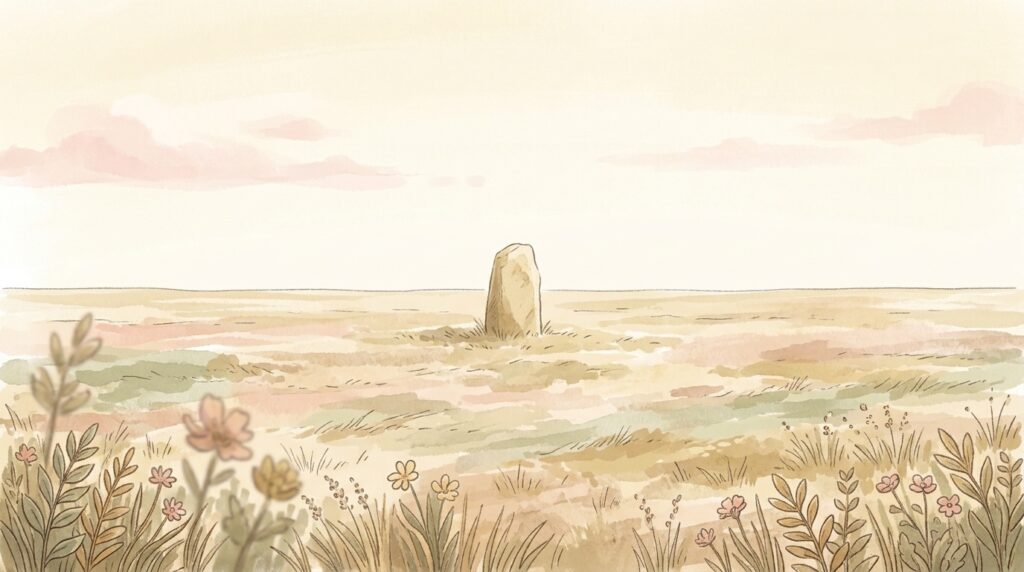
How terrible is this place! This is no other but the house of God, and the gate of heaven. Jacob says that on waking, on open ground, with a stone under his head and nothing built anywhere in sight. There is no roof over the first house of God in scripture. There is no door on it, no floor, no title deed and no address.
The Church took a sentence spoken by a man sleeping rough and made it the first words of every dedication liturgy it has. Hold that beside the Gradual and you get the day’s argument whole: this place was made by God is a sentence that was born outside.
I am going to name who a contrary teaching lands on, and it is the Introit that sends me there. There is a common and unexamined idea that a house of God is for people who arrive from a house, and it works on people who sleep outside, and on people with no fixed address, and on anyone whose post goes to a hostel or a friend’s flat or a solicitor’s office. Nobody teaches it out loud. It gets taught by the arrangement.
This place was made by God, and it is not addressed to householders.
Look at what that idea grows, and apply the fruit-test where it belongs, to Christianity’s own record. Buildings called houses of God that are locked at every hour a person without a bed might need one. Porches where somebody is moved along at eight in the morning. And the slow arithmetic by which a person with nowhere to live comes to understand that they are a visitor in every room in the world, including this one.
This place was made by God, and that takes in every square foot of ground somebody has been asked to leave.
Nine days ago the claim here was about reach, and about a man who could not for the crowd see past a street full of people standing at their own height. Today’s claim is a different one and I want the difference on the record. That was about whether a room can be got into. This is about whether you have to come from somewhere to belong in it.
This place was made by God is not a remark about arrivals.
The Collect asks that whosoever shall come into this Thine house to ask good at Thine hand be rejoiced in obtaining all his request, and it does not ask where he slept. This place was made by God, and so was the ground Jacob was lying on.
A room above a hardware shop
There is a story sometimes told of a woman who held the key to a room above a hardware shop for eleven years.
She is a trans woman in her sixties, a retired upholsterer, and the room ran a repair group on Wednesday afternoons: kettles, lamps, a sewing machine, two teenagers learning to solder. She always arrived first. She said she preferred to be already inside a room when other people came into it, rather than walking into a room where everyone was settled, and so every Wednesday at one o’clock she went up the stairs in front of whoever was waiting on them and set the chairs out while they came in behind her.
Then the family who owned the shop decided the upstairs would earn more as storage. There was a meeting about it, in the room, with thirty-one people in it, and she read out a letter she had written.
The letter did not argue that the room was nice. It did not say the group deserved the space, or list what the group had achieved, or offer to pay more. It said that these people were already here on Wednesdays, that this was where they were, and that a place is not a reward.
This place was made by God was the argument she was making, without ever having the words for it.
She lost. The room shut in March and the group met twice in the corner of a car park and then did not meet again. I am not going to tell you it worked out, because it did not, and I am not going to turn her letter into a lesson about persistence. Nothing in this story gets fixed.
But she had the antiphon exactly right, and she had it right in the only place it is hard to have right, which is on the losing side of a decision. She did not defend the room on its merits. This place was made by God is not a verdict a room earns, and she declined to argue as though it were.
The eighteenth of November
There is one hard fact in today’s calendar and it is worth having.
The new Saint Peter’s took a hundred and twenty years to build. Julius II began it in the spring of 1506, and Urban VIII dedicated the new basilica on the eighteenth of November, 1626. That date is where today comes from.
The other church kept today, Saint Paul’s, stands outside the walls, on the road to Ostia, where Constantine turned an earlier memorial into a basilica and Theodosius began a far larger one in 386.
Both of them stand outside the old city. The one on the Vatican was raised where the gardens of Agrippina had lain and where Caligula built his circus, the ground where Nero held the spectacles in which Christians were killed. On the third of this month we prayed eternal rest give to them over the whole company of the dead, and here are two churches standing on that kind of ground, with vast roofs put up over what the city had done there.
This place was made by God. Over that ground, and without a syllable of adjustment.
That is the sentence at work. This place was made by God is said over a circus outside the wall in the same breath and the same words as over the ground an emperor handed to the Church inside it, and the liturgy shows no sign of finding the second more impressive than the first.
The only other day this month that stood on Peter was the twelfth, when the Lesson asked that the flock be fed not by constraint but willingly. That day was about how a charge is held. Today is about where a charge is held, and the answer turns out to be anywhere at all.
This place was made by God, and the sentence comes with no map attached.
Where this leaves us
So take the six words out with you and use them somewhere unlikely.
The kitchen you are reading this in. The ward. The van. The stairwell where two people talk every evening because it is the only place in the building with a radiator. This place was made by God is not a compliment paid to fine architecture; it is a description the Church applies without looking first, and it has been applied to worse rooms than yours.
This place was made by God. Say it about the room you are actually sitting in.
And if you are the one who decides about rooms this week, and some of you are, then decide the way the antiphon does. Ask who is already there. Do not ask what the room deserves, and do not ask the people in it to justify the floor they are standing on, because this place was made by God and the paperwork was never in their name to begin with.
↑ The order resumes below.
X
Secret
Look with favour upon our prayers, we beseech Thee, O Lord, that as we offer our prayers before Thee, we may with Thy help attain eternal rewards. Through our Lord Jesus Christ.
XI
The Holding
Go gently today, and go with this.
If you believe: the Church has just told you, in six words it has not changed in centuries, that the room was hallowed before you got there and is without reproof before you have done anything in it. This place was made by God is said over you as much as over the stone, and there is no clause in it about where you slept last night or whether the lease is yours.
This place was made by God, and nobody asked your permission, and that is the good news in it.
And if you believe none of it, the same thing holds with the theology lifted out. A place gets its standing from the people already in it, not from its pedigree, and any judgment about a room that starts by asking what the room is worth has begun in the wrong place. This place was made by God translates, without loss, into this: nobody has to earn the ground they are standing on.
This place was made by God, and so, if you will let the sentence stretch that far, was the person standing on it.
May you be met where you are, and not where you ought to have been. May every room you enter this week be one you do not have to justify. And may somebody hold a door open for you before you have to ask.
In the name of the Father, and of the Son, and of the Holy Spirit. Amen.
XII
Frequently Asked Questions
Because both days keep the dedication of a church, and the Missal provides one Mass for all of them. Every proper today is word for word what was prayed on the ninth for the Archbasilica of Our Holy Savior, orations included, which is why the Lesson and the Gospel are cited here rather than printed a second time. You will find them in full, with a homily that stays with them, in that day’s offering.
No, and the wording of the citation can mislead. The scriptural reference attached to that block belongs to the Alleluia verse, which is Psalm 137:2. The Gradual antiphon itself—”This place was made by God, a priceless mystery; it is without reproof”—and its verse about the choir of angels are liturgical compositions of the Church rather than quotations from any book of the Bible.
The Catholic Encyclopedia gives a firm date for one half of it: Urban VIII solemnly dedicated the rebuilt Saint Peter’s on 18 November 1626, a hundred and twenty years after Julius II began the work. Its article on Saint Paul’s outside the walls gives no feast date at all, so nothing here is claimed about how that basilica came to share the day.
It means the building is not what makes the place holy, which is a different claim. Buildings matter enormously to the people who use them, and losing one is a real loss—today’s offering is partly about exactly that. What the antiphon rules out is ranking, and the idea that a grander room is a holier one.
A third-class feast takes the day whole. The Tuesday after the Twenty-Third Sunday after Pentecost is named in the calendar and receives no prayer of its own, no oration and no reading, so today’s Mass is the Dedication’s from beginning to end.
No. The argument stands without any of the theology: the prayer the Western church uses at every dedication refuses to grade buildings, and describes a place without reference to its size, its cost, its age or the standing of the people in it. That is a usable principle in any room you are responsible for. Bloom’s whole thesis fits in three words—truth, love, acceptance. Belief is welcome here and was never the entry fee.
Faith in Bloom is the daily liturgical work of Bloom Ministries, a 501(c)(3) nonprofit, and it is free to read and always will be. If it has been worth something to you and you are able, you can give once or give monthly below. Sending a post to one person who needs it does real work too.
Epistle and Gospel citations: Douay-Rheims Bible, Bishop Challoner revision—the standard English scripture translation used across traditional hand missals. Introit, Collect, Gradual, Alleluia verse and Secret: the Missale Romanum (1962), the Common of the Dedication of a Church, following The New Marian Missal for Daily Mass by Sylvester P. Juergens, S.M., S.T.D. (Regina Press, Imprimatur 1961). Historical detail on the two basilicas: the Catholic Encyclopedia.
Faith in Bloom, under the Church of Bloom, is a ministry of Bloom Ministries, a nonprofit organization tax-exempt under section 501(c)(3) of the Internal Revenue Code. It is offered in the Independent Catholic tradition and is not affiliated with or recognized by the Roman Catholic Church.
